

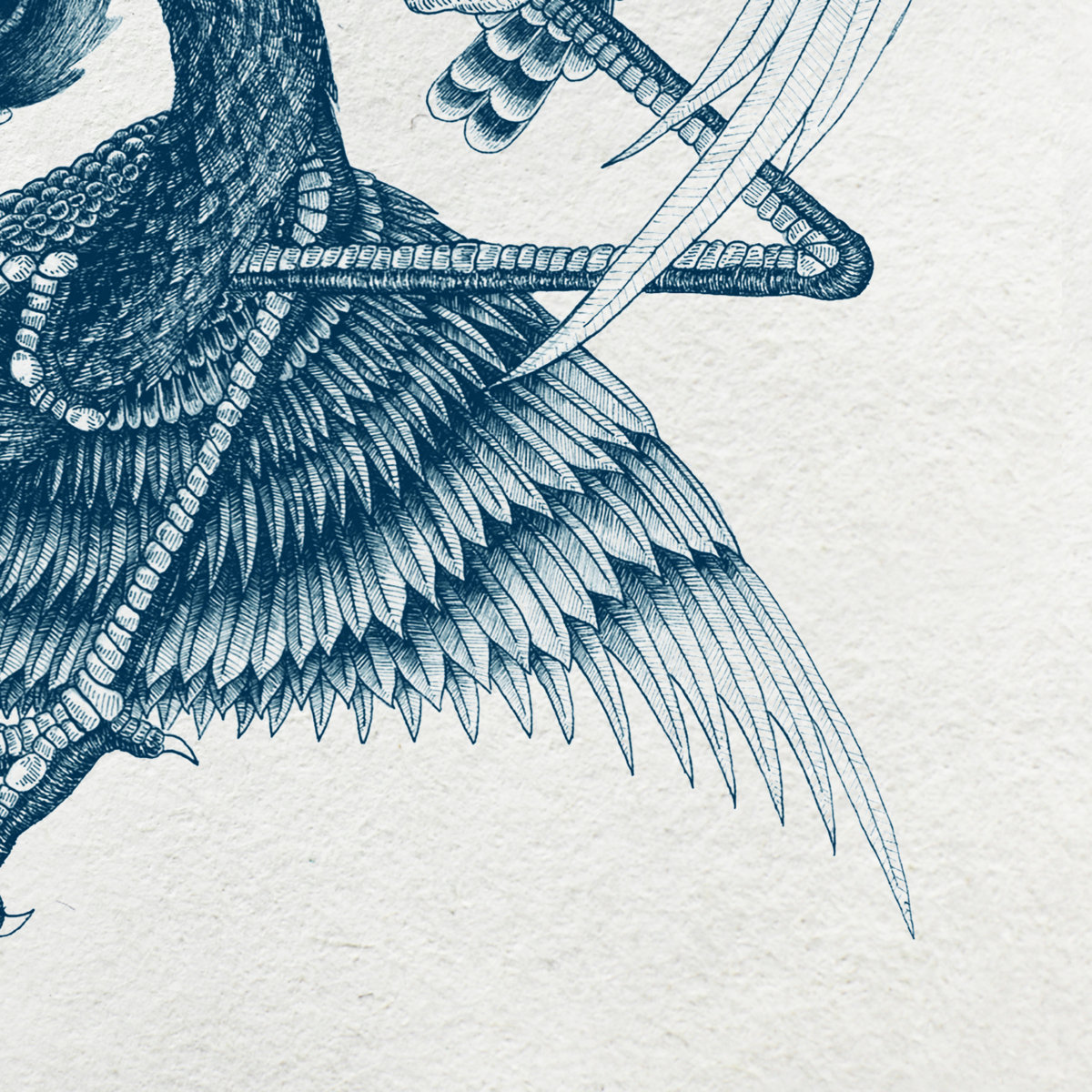
London’s acclaimed indie rock outfit ME REX has initiated 2026 with a notable shift in their sonic landscape, following the release of their new single "Angel Hammer," which hinted at a more experimental direction. This week, the band has further cemented this evolution with their latest offering, "Protection Runes," a track that marks an even more pronounced departure from the "hook-heavy guitar pop" that has largely defined their burgeoning reputation. The single, characterized by a drum ‘n’ bass-inspired rhythm, shimmering synths replacing traditional guitar riffs, and ethereal, processed vocals, delves into themes of profound desperation and existential questioning, setting a contemplative yet urgent tone.
The lyrical core of "Protection Runes" poses a series of stark, introspective inquiries: "Do you believe in evil people?/ Do you believe in transformation?/ Do you believe the world will love you?/ What will you do while you’re waiting?" These lines not only reflect a heightened lyrical maturity but also underscore a thematic engagement with contemporary anxieties and societal introspection, positioning the track as more than just a musical experiment but a significant cultural commentary.
A Sonic Metamorphosis: Beyond Guitar Pop
ME REX, comprising Myles McCabe, Phoebe Cross, Rich Mandell, and Max Whatley, has consistently garnered praise for their intricate song structures, evocative lyricism, and McCabe’s distinctive vocal delivery. Their earlier works, often characterized by catchy melodies, intricate guitar work, and a youthful exuberance, established them as a prominent voice within the UK indie scene. Albums like ‘ME REX’ and ‘Plesiosaur’ showcased their ability to craft emotionally resonant narratives wrapped in accessible, energetic arrangements. The release of "Angel Hammer" at the outset of the year signaled an initial foray into less conventional territories, integrating electronic elements and broader sonic textures.
"Protection Runes" accelerates this transformation. The strategic deployment of a drum ‘n’ bass framework provides an urgent, pulsating undercurrent that diverges sharply from the rock-oriented rhythms of their past. This rhythmic foundation is complemented by the ‘twinkly synths,’ which eschew the traditional riff-centric approach of indie guitar music, creating an expansive, almost otherworldly sonic environment. The ‘dreamy processed vocals’ further enhance this atmospheric quality, adding layers of detachment and introspection that align perfectly with the song’s existential queries. This deliberate shift demonstrates ME REX’s artistic ambition and willingness to push the boundaries of their established sound, risking alienating some long-time fans in pursuit of new creative expressions. The move also places them within a broader trend of contemporary indie artists integrating diverse electronic genres, reflecting a fluid musical landscape where genre boundaries are increasingly blurred.
Lyrical Inquiry: Confronting Evil and Apathy
The lyrical content of "Protection Runes" transcends personal introspection to address universal human dilemmas. The opening questions — "Do you believe in evil people?/ Do you believe in transformation?" — immediately plunge listeners into a philosophical debate about morality, human nature, and the capacity for change. In an era marked by heightened social and political polarization, these questions resonate deeply, forcing a confrontation with uncomfortable truths about societal ills and individual responsibility. The subsequent lines, "Do you believe the world will love you?/ What will you do while you’re waiting?", introduce a poignant layer of vulnerability and agency. They tap into a collective yearning for acceptance and security, while simultaneously challenging the listener to consider their active role in shaping their environment, rather than passively awaiting external validation or resolution. This blend of existential dread and a call to action forms the thematic backbone of the track, mirroring the band’s own experiences that inspired its creation.
The Genesis of "Protection Runes": Runic Symbols and Ambiguous Meanings
The profound inspiration for "Protection Runes" emerged from a chance observation by a band member, as detailed in a recent Instagram post. The sight of runic symbols spray-painted on electrical panel boxes near their home sparked an investigation into their meaning and intent. Specifically, the symbols identified were Algiz and Ansuz.
Algiz, often depicted as a three-pronged upward-pointing symbol, is historically associated with protection, defence, and a connection to the divine or higher consciousness. It signifies the drawing of energy from the cosmos for safeguarding. Ansuz, typically represented as an ‘F’ shape with the crossbar pointing downwards, is linked to divine inspiration, communication, truth, and wisdom, often connected to the Norse god Odin. Both runes, in their traditional contexts, carry positive connotations of guidance and safety.
However, the band’s statement immediately acknowledges the unsettling ambiguity surrounding their appearance in a public urban space: "I don’t know who they are meant to protect or against what. I don’t know the intention behind using the electrical boxes." This uncertainty is crucial to the song’s underlying tension. The act of spray-painting itself suggests a clandestine or unofficial message, contrasting with the public utility of the electrical boxes.
The Shadow of Misappropriation: Runes and Far-Right Nationalism
The band’s reflection quickly moves to a critical concern: "I do know that germanic runes have at times been co-opted by far right groups and displayed with the intention to intimidate." This observation is historically and contemporarily accurate. Throughout the 20th and 21st centuries, various Germanic and Norse runic symbols have been regrettably appropriated by white supremacist, neo-Nazi, and far-right nationalist movements. These groups exploit the symbols’ ancient heritage and perceived strength to project an image of racial purity, power, and often, aggression.
For instance, the Algiz rune, due to its protective connotations, has been adapted by some far-right groups to symbolize "life" or "defence of the white race." The Odal (Othala) rune, associated with heritage and ancestral land, has also been widely used by such groups. The Anti-Defamation League (ADL), an international Jewish non-governmental organization, extensively documents the use of such symbols by hate groups, noting how their original meanings are distorted to serve racist and extremist ideologies. This misappropriation creates a chilling duality: a symbol of ancient wisdom or protection can, in certain contexts, become a signifier of threat and intimidation, particularly for marginalized communities. The band member’s awareness of this dual meaning underscores the precariousness of symbolic interpretation in a politically charged environment.
The deliberate placement of these runes on public infrastructure like electrical boxes adds another layer of complexity. Such locations can serve as markers of territory, subtle warnings, or attempts to normalize extremist symbols within a community, a tactic frequently employed by far-right groups to test boundaries and assert presence. Thus, "These characters could signify a threat, a protective spell, a marker of territory or a cry for safety," as the band aptly summarizes, encapsulating the profound uncertainty and potential menace inherent in the symbols’ appearance.
A Confrontation in Brighton: Resisting Far-Right Symbolism
The band’s commentary extends beyond the enigmatic runes to a direct personal encounter with far-right nationalism. The Instagram post recounts an incident from the previous summer in Brighton: "Last summer I tore down a St George’s Cross that had just been ziptied to a lamppost in Churchill Square in Brighton. I dragged it through the road as I cycled away." This act of defiance was met with hostility: "Men in masks and hi-vis jackets shouted after me, but they had unfortunately hundreds more flags in their cardboard boxes."
The St. George’s Cross, while England’s national flag and a symbol with centuries of history, has, like the runes, been increasingly co-opted by elements of the far-right in the UK. Groups such as the English Defence League (EDL), Britain First, and other anti-immigrant or white nationalist organizations frequently deploy the flag at rallies and demonstrations, often alongside other divisive symbols, to project an image of aggressive English nationalism that excludes non-white or non-native populations. In these contexts, the flag’s meaning shifts from benign national pride to a declaration of exclusionary identity and often, xenophobia.
Brighton, a city known for its progressive politics and diverse population, has nonetheless been a site for far-right demonstrations, particularly around issues of immigration and national identity. The presence of "men in masks and hi-vis jackets" suggests an organized group, likely intent on public display and intimidation. The sheer quantity of flags ("hundreds more flags in their cardboard boxes") points to a deliberate and sustained effort to make a visible statement, often timed around national events or local tensions.
The band member’s decision to remove the flag, despite the potential for confrontation, exemplifies a proactive stance against the normalization of such symbolism. It represents a refusal to allow public spaces to be unilaterally claimed by ideologies of hate and division. This direct action resonates powerfully with the song’s concluding lyrical question, "What will you do while you’re waiting?", transforming it from an abstract query into a tangible call for engagement.
The Broader Context: Rising Nationalism in the UK
The incidents described by ME REX are not isolated but reflect a broader pattern of rising far-right activity and nationalist sentiment across the United Kingdom. Various socio-political factors, including economic anxieties, debates over immigration, and the aftermath of Brexit, have contributed to an environment where nationalist rhetoric finds fertile ground.
Organizations like Hope Not Hate and the Centre for Fascist, Anti-Fascist and Post-Fascist Studies (CFAP) at Teesside University consistently monitor and report on the activities of far-right groups in the UK. Their research indicates a persistent, albeit sometimes fluctuating, presence of organized extremist groups employing a range of tactics from street demonstrations and leafleting to online propaganda and symbolic displays. The use of symbols, whether ancient runes or national flags, is a critical component of their strategy, designed to convey messages, recruit members, and intimidate opponents.
The act of displaying flags or symbols in public spaces is a common tactic to assert territoriality and challenge perceived liberal dominance. These displays are often strategically placed to provoke reactions, generate media attention, and test the resolve of communities and authorities. The band’s encounter in Brighton highlights the everyday reality of confronting these ideologies, often at a grassroots, individual level, where citizens are faced with the choice of ignoring or actively challenging such displays.
Artists as Activists: ME REX’s Stance and the Power of Music
ME REX’s decision to imbue "Protection Runes" with such explicit social and political commentary, and to openly share the personal experiences that inspired it, positions them firmly within a long tradition of artists using their platform for activism. From folk protest songs of the 1960s to punk’s anti-establishment anthems, music has consistently served as a powerful medium for reflecting societal tensions, challenging injustice, and inspiring collective action.
By linking the ambiguous threat of the runes to the overt aggression of the far-right flag display, ME REX is not only making a personal statement but also contributing to a broader cultural dialogue about vigilance and resistance. Their final declaration, "Either way, it’s important to fight far right nationalism wherever you see it," is a clear and unequivocal call to action, echoing the sentiments of anti-racism organizations and civil liberties advocates globally.
This artistic choice carries implications. It may deepen the band’s connection with fans who share their values, fostering a sense of community and shared purpose. Conversely, it could alienate those who prefer their music devoid of overt political messaging or who hold differing political views. However, for artists like ME REX, the imperative to speak out against what they perceive as societal harms often outweighs such considerations. Their art becomes a vehicle for ethical engagement, a means to process complex realities and galvanize thought.
Implications and The Path Forward
"Protection Runes" thus stands as a multifaceted artistic statement. Musically, it showcases ME REX’s willingness to evolve and experiment, pushing their sound into more intricate and genre-fluid territories. Lyrically, it grapples with fundamental questions of good and evil, transformation, and individual agency in a challenging world. Most significantly, it is a deeply personal and overtly political track, born from direct encounters with the unsettling ambiguities of symbolic meaning and the overt threat of far-right nationalism.
The song serves as a reminder of the subtle and overt ways extremist ideologies manifest in public spaces. It highlights the importance of critical engagement with symbols and the courage required to challenge narratives of hate. In an increasingly complex global landscape, where misinformation and divisive rhetoric are rampant, the role of artists in stimulating critical thought and fostering resistance becomes ever more vital. ME REX, with "Protection Runes," has not merely released a new single; they have contributed a significant, resonant piece to the ongoing cultural conversation about vigilance, transformation, and the collective responsibility to combat intolerance.
The track, available for streaming, invites listeners not just to experience a new sound but to actively engage with its weighty themes, reflecting on the questions it poses and considering their own answers to the urgent query: "What will you do while you’re waiting?"