

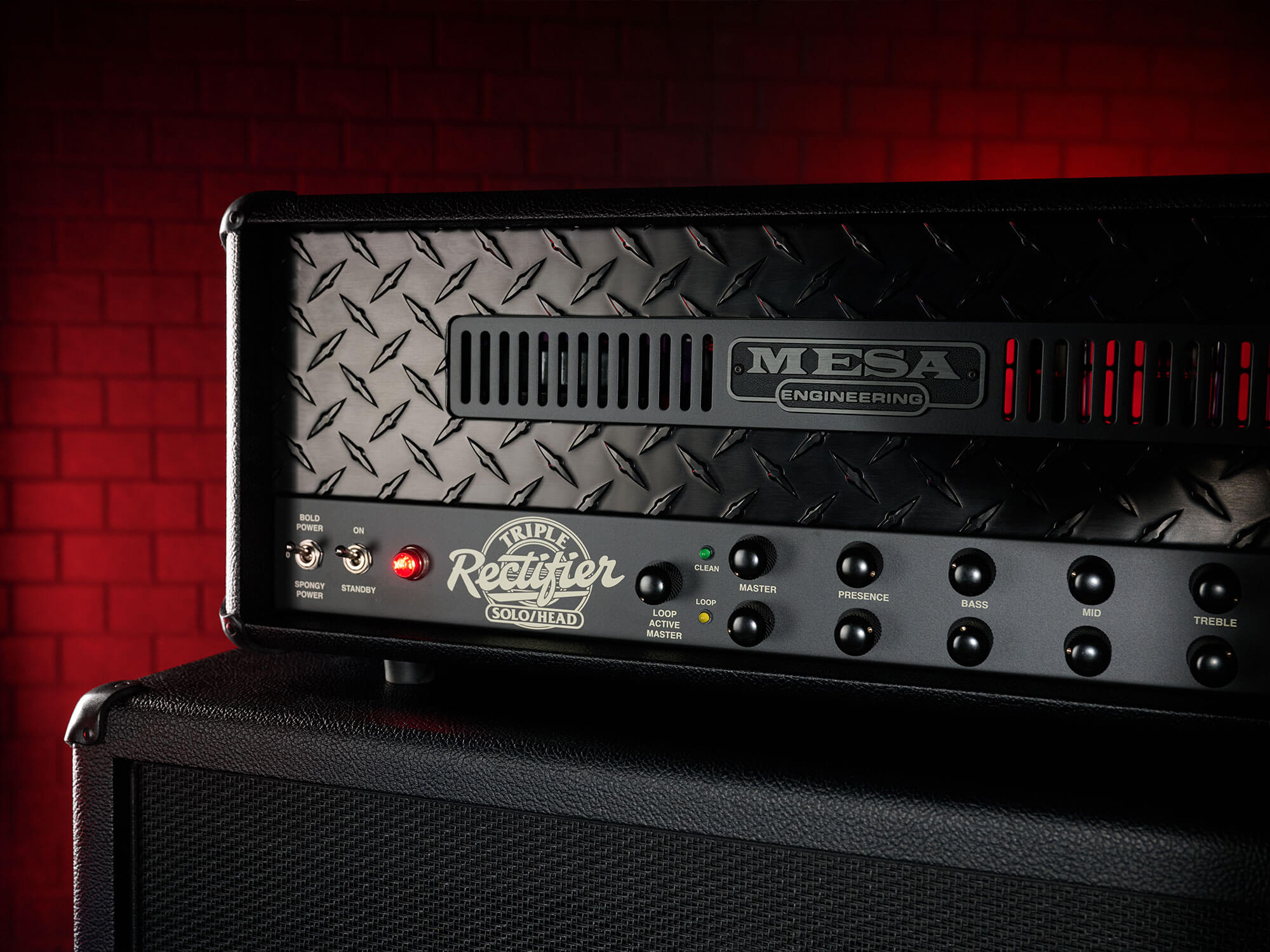
Mesa/Boogie, a name synonymous with groundbreaking amplification, has announced the highly anticipated reissue of its iconic Triple Rectifier amp head, a behemoth that, alongside its slightly less powerful sibling, the Dual Rectifier, fundamentally reshaped the sonic landscape of rock and metal since its debut in the early 1990s. This move follows the successful reintroduction of the Dual Rectifier last year, signaling a strategic return to the brand’s most celebrated designs under its current ownership. The new iteration, officially dubbed the "90s Triple Rectifier Solo Head," arrives promising to faithfully reproduce the original’s revered tonal characteristics—including its distinctive "layered harmonics, tight low end, and percussive mid hit"—while presenting a striking "blacked-out" aesthetic, featuring a black chassis, black Speed knobs, and a black Diamond Plate finish, a visual nod to some of the most coveted custom options from the amplifier’s formative years.
The Return of a Legend: The 90s Triple Rectifier Solo Head
The reissued Triple Rectifier is not merely a cosmetic update; it is engineered to capture the precise sonic essence that made the original a foundational pillar in heavy music. Built with meticulous attention to detail in Petaluma, California, the 90s Triple Rectifier Solo Head is a formidable 150-watt, Class A/B, all-tube amplifier designed for the demands of modern and classic metal. At its core are six Mesa 6L6 power tubes, known for their robust power and articulate response, complemented by three 5U4GB rectifier tubes, which are crucial to the amplifier’s distinctive sag and dynamic feel. The inclusion of a maintenance-free fixed-bias design, coupled with a bias switch, offers players the flexibility to utilize alternate power tube types such as EL34s, further expanding its tonal versatility. This adaptability allows musicians to sculpt their sound from the classic American high-gain roar of the 6L6s to the more aggressive, British-flavored bite of EL34s, catering to a broad spectrum of heavy music subgenres.
Beyond its impressive tube complement, the amplifier features selectable Tube or Silicon Diode rectification, a critical component in shaping the amplifier’s response and feel. Tube rectification provides a "spongier" feel with more sag and compression, ideal for expressive lead playing and dynamic rhythms, while silicon diode rectification offers a tighter, faster response with increased headroom, often favored for percussive, palm-muted riffing. This choice is further enhanced by a two-position BOLD/SPONGY power switch, allowing players to fine-tune the amplifier’s attack and dynamics to suit their individual playing style and desired sonic texture.
In a direct homage to the original Triple Rectifier’s initial design, which famously featured two channels (the "Triple" moniker referred to the three rectifier tubes, not the channel count as in later revisions), the new reissue maintains this classic architecture. It offers two independent channels, each equipped with Channel Style/Cloning voicing options, along with comprehensive control over Gain, Treble, Middle, Bass, Presence, and Master volume. This dual-channel setup provides immense flexibility, allowing players to dial in distinct clean and high-gain sounds, or two variations of crushing distortion, each meticulously shaped. A tube-driven FX loop is also onboard, featuring a global output level control that activates when the loop is engaged, and can be externally switched, offering seamless integration with external effects processors.
The physical construction of the 90s Triple Rectifier Solo Head is as robust as its sonic output. Weighing just over 22kg (approximately 48.5 lbs), its chassis is crafted from marine-grade Baltic birch, renowned for its acoustic properties and durability. It is finished in Black Bronco vinyl, accented by the signature black Diamond Plate grille, which contributes to its "blacked-out" aesthetic and provides a formidable visual presence on any stage. Each unit also comes with a fitted slipcover, ensuring its protection during transport and storage.
A Sonic Legacy: The Rectifier’s Impact on Modern Metal
The Rectifier series, particularly the Dual and Triple Rectifiers, emerged in 1992 at a pivotal moment in music history. The landscape of rock was shifting dramatically, with grunge challenging the dominance of hair metal and new, heavier genres beginning to take root. Mesa/Boogie, founded by Randall Smith in the late 1960s, had already established itself as a premier amplifier manufacturer, renowned for its innovative Mark Series amplifiers that delivered unprecedented gain and sustain. However, the Rectifier series represented a radical departure, offering a darker, more aggressive, and immensely powerful tone that perfectly aligned with the burgeoning sounds of alternative metal, nu-metal, and modern rock.
Before the Rectifier, many heavy bands relied on modified Marshall JCM800s or JCM900s, often boosted with external pedals, to achieve their desired high-gain sounds. While effective, these setups often lacked the sheer low-end weight, tight attack, and massive headroom that the Rectifier effortlessly provided. Mesa/Boogie’s design philosophy with the Rectifier was to create an amplifier that could deliver crushing high-gain tones without compromise, specifically catering to downtuned guitars and bass-heavy arrangements that were becoming increasingly prevalent.

The "walls of crushing high gain for detuned crunch rhythms and bass lines" that Mesa/Boogie references became the definitive sound for a generation of musicians. Bands like Metallica, Korn, Deftones, Limp Bizkit, Tool, and countless others adopted the Rectifier, cementing its status as the amplifier for modern heavy music. Its ability to maintain clarity and tightness even at extreme gain levels, combined with its formidable low-end punch, made it indispensable for the drop-tuned, chugging riffs that defined the era. The Rectifier wasn’t just an amp; it was an instrument of sonic destruction that empowered a new wave of guitarists to push the boundaries of heavy music.
Technical Prowess: Unpacking the Triple Rectifier’s Engineering
Understanding the Triple Rectifier’s enduring appeal requires a closer look at its core engineering principles. The 150-watt Class A/B power section, driven by six 6L6 tubes, provides immense headroom and volume, allowing the amplifier to remain articulate and powerful even in large venues or alongside a thunderous rhythm section. The Class A/B operation offers a balance of efficiency and rich harmonic content, delivering both punch and sustain.
The unique rectification circuit is arguably the heart of the Rectifier’s distinctive sound. Unlike many amplifiers that use solid-state (silicon diode) rectification exclusively, the Triple Rectifier’s inclusion of three 5U4GB rectifier tubes allows for a dynamic interplay between the power supply and the output tubes. When tubes are used for rectification, they introduce a slight "sag" or compression to the power supply, especially during loud transients. This sag contributes to a more elastic, touch-sensitive feel, where the amplifier seems to "breathe" with the player’s attack. The optional silicon diode rectification, conversely, provides a stiffer, more immediate power delivery, resulting in a tighter low end and quicker response, often preferred for fast, aggressive riffing where maximum punch and definition are paramount.
The BOLD/SPONGY switch further refines this interaction. In BOLD mode, the power supply operates with minimal sag, offering maximum headroom and a tighter, more immediate response. SPONGY mode introduces more sag, creating a more compressed, vintage-like feel with a softer attack and increased sustain, allowing for greater dynamic expression. This combination of selectable rectification and power modes provides an unparalleled degree of control over the amplifier’s fundamental feel and responsiveness, enabling players to dial in anything from a vintage rock crunch to a modern, face-melting high-gain assault.
The dual-channel design, with its independent EQ and voicing options, is another critical aspect. Each channel is essentially a complete amplifier voice, allowing for versatile setups. For instance, Channel 1 could be configured for pristine cleans or a classic rock crunch, while Channel 2 unleashes the full, unadulterated high-gain power the Rectifier is famous for. The Channel Style/Cloning options further expand this flexibility, allowing for subtle variations within each channel’s inherent character, making the amplifier an incredibly versatile tool for diverse musical applications.
The Evolution of Mesa/Boogie and the Rectifier Series
Mesa/Boogie’s journey began in the late 1960s with Randall Smith modifying Fender Princeton amplifiers for increased gain, inadvertently creating the "Boogie" sound. This led to the development of the groundbreaking Mark Series amplifiers, which revolutionized guitar amplification in the 1970s and 80s. However, the 1990s demanded something different, something heavier, and the Rectifier series was Mesa/Boogie’s audacious answer.
Launched in 1992, the Dual Rectifier was quickly followed by the Triple Rectifier, offering even more power and headroom. Initially, both featured two channels. Over time, Mesa/Boogie refined the design, introducing three-channel versions that offered even greater versatility. These later models became staples for touring musicians needing a broader palette of sounds from a single amplifier. The Rectifier series wasn’t static; it evolved, adapting to the changing demands of the music industry while maintaining its core identity.
A significant turning point for Mesa/Boogie occurred in 2021 when the company was acquired by Gibson Brands. This acquisition sparked both excitement and apprehension among enthusiasts. However, Gibson’s strategy appears to be focused on preserving and reissuing Mesa/Boogie’s most beloved and influential designs, rather than radically altering them. The successful reissue of the Dual Rectifier last year under Gibson’s stewardship demonstrated a commitment to this legacy, paving the way for the Triple Rectifier’s return. This chronology underscores a deliberate effort to honor the brand’s heritage and make these legendary tones accessible to a new generation of players and long-time aficionados alike.

The "Blackout" Aesthetic: A Nod to Custom Heritage
The choice of a "blacked-out" aesthetic for this reissue is a deliberate and historically significant one. As Doug West, Director of Tone Lab for Gibson Amplifiers and MESA/Boogie, explains, this particular finish option holds a special place in the brand’s history. "Following the excitement around last year’s Chrome edition of the ’90s Dual and Triple Rectifier Solo Heads, we wanted to honour one of the most iconic Custom Dress options in our history with a limited run of stealth-inspired ‘Blackout’ Triple Rectifiers," West stated. "These coveted heads feature the original black chassis, replacing the polished aluminium diamond plate and grille vent with black anodised versions, and swapping chrome speed knobs for sleek black ones."
This "Blackout" look was not just a design choice; it was a statement. In the 90s, these custom models were frequently seen on stages behind some of the biggest names in rock and metal, projecting an aura of raw power and understated aggression. West further elaborated on the rarity and desirability of these original "blackout" units: "Back in the ’90s, these upscale, blacked-out models dominated stages behind some of the biggest names in rock. Today, finding one on the pre-owned market usually means heavy wear from years of touring – so this is a rare chance to own one in pristine, brand-new condition." This reissue, therefore, offers collectors and players a unique opportunity to own a piece of that custom legacy, combining vintage aesthetics with brand-new reliability and performance.
Market Resonance and Future Implications
The reissue of the 90s Triple Rectifier Solo Head is poised to resonate deeply within the guitar community. For veteran players who came of age during the Rectifier’s initial reign, it offers a chance to revisit a foundational tone, perhaps even replacing a worn-out original. For younger musicians discovering the raw power of the 90s sound, it provides direct access to the amplifier that defined it, sidestepping the uncertainties and often prohibitive costs of the vintage market.
The move by Mesa/Boogie under Gibson’s direction also highlights a broader trend in the music instrument industry: the enduring appeal of reissues and vintage-inspired gear. In an era of digital modeling and increasingly sophisticated emulation, there remains a strong demand for authentic, all-tube amplification that delivers a tangible, visceral playing experience. Reissues like the Triple Rectifier tap into nostalgia while also serving the practical needs of modern musicians who value proven designs.
The pricing of the 90s Triple Rectifier Solo Head at £3,799 positions it firmly in the premium amplifier market, reflecting its handcrafted quality, iconic status, and comprehensive feature set. While a significant investment, it is competitive within its class, especially given the rising costs and limited availability of pristine original units. This reissue not only reinforces Mesa/Boogie’s legacy but also strategically positions the brand to capture both the vintage enthusiast and the professional musician seeking uncompromising tone and reliability. It signifies Gibson’s understanding of the Mesa/Boogie brand’s core identity and its commitment to nurturing its heritage for future generations of guitarists.
The Triple Rectifier’s return is more than just a product launch; it’s a reaffirmation of an amplifier’s indelible mark on music history and a testament to the enduring power of classic design. It ensures that the thunderous roar, tight low-end, and percussive mid-range punch that defined a generation will continue to inspire and empower guitarists for years to come.
Pricing and Availability
The 90s Triple Rectifier Solo Head is priced at £3,799. Further details and purchasing information can be found on the official Mesa/Boogie website, accessible via Gibson’s product pages.