

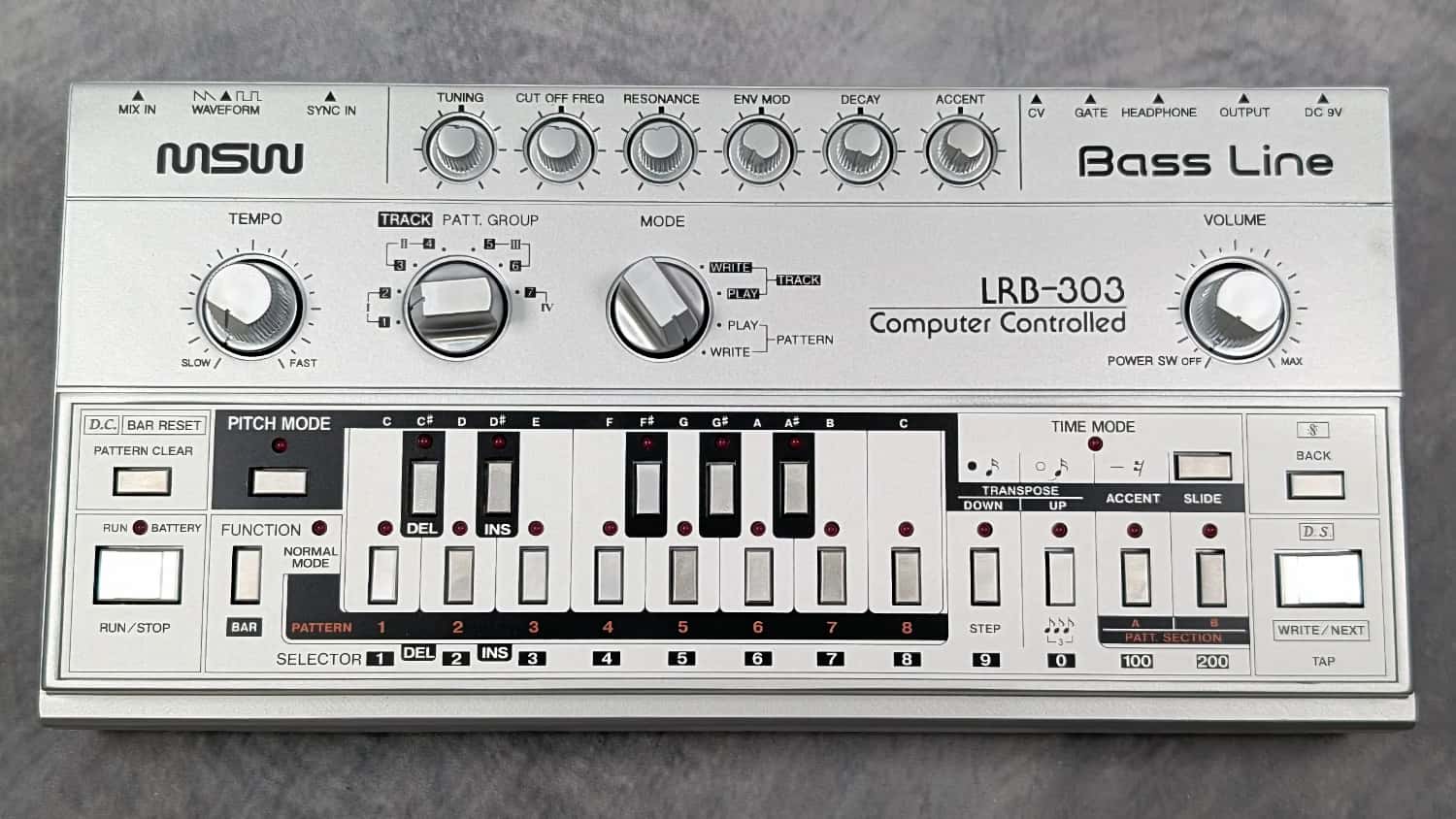
In a significant development for the electronic music hardware community, Michigan Synth Works has officially unveiled the LRB-303, a full-sized, open-source recreation of the legendary Roland TB-303 Computer Controlled Bassline synthesizer. Announced to coincide with "303 Day"—the annual celebration of the instrument held on March 3rd—the LRB-303 represents a shift toward open-platform hardware in the boutique synthesizer market. Central to this new release is the OS-303 processor, a modern, open-source replacement for the aging and increasingly rare microcontrollers found in original vintage Roland units.
The LRB-303 is designed as a comprehensive DIY kit and a complete hardware platform, aiming to provide enthusiasts with an authentic "acid" sound while offering the transparency and flexibility of open-source software. By utilizing the OS-303 processor, Michigan Synth Works has created a device that is not only a functional musical instrument but also a hackable tool for developers and hardware modifiers.
Technical Specifications and the OS-303 Processor
The core innovation of the LRB-303 is the OS-303 processor. Historically, the original Roland TB-303, TR-606, and TR-808 utilized the u650 (NEC μPD650C) 4-bit microcontroller. These chips, manufactured in the early 1980s, have become a significant point of failure for vintage gear owners. Because the original code was "masked" onto the chips during manufacturing, they cannot be easily replicated or reprogrammed, and when a chip fails, the instrument often becomes a "brick" unless a donor part can be found.
The OS-303 serves as a drop-in replacement for this original u650 processor. Developed as an open-source project by the contributor known as djphazer, the firmware replicates the complex and often idiosyncratic behavior of the original 303 sequencer. This includes the specific handling of slides, accents, and the unique timing fluctuations that define the "groove" of early house and techno music. Because the firmware is hosted on platforms like GitHub, users can modify the code to add new features—such as expanded MIDI functionality, alternative sequencing modes, or custom swing settings—without altering the analog signal path.
The LRB-303 hardware itself is a full-size clone, adhering to the original physical dimensions and layout of the TB-303. This is a departure from many modern recreations, such as the Roland Boutique TB-03, which utilize miniaturized controls and digital modeling (ACB technology). The LRB-303 maintains an analog signal path, ensuring that the distinctive 18dB/octave (often debated as 24dB) resonant low-pass filter remains faithful to the original hardware’s character.
Historical Context: From Commercial Failure to Cultural Icon
The release of the LRB-303 is the latest chapter in the long and storied history of the Transistor Bass (TB) series. When Roland released the TB-303 in 1981, it was marketed to guitarists as a practice tool for bass accompaniment. However, its "rubbery" tone and notoriously difficult programming interface led to poor sales, and the unit was discontinued in 1984.
The instrument’s second life began in the mid-to-late 1980s when second-hand units were adopted by musicians in Chicago and Detroit. Producers like Phuture (with the 1987 track "Acid Tracks") discovered that by turning the resonance to maximum and manipulating the cutoff frequency while the sequencer ran, they could create squelching, psychedelic textures. This sound became the foundation of the Acid House genre and, eventually, a cornerstone of global electronic dance music.
As prices for original units soared—often reaching between $3,000 and $4,000 on the secondary market—a vacuum was created for affordable alternatives. The LRB-303 enters a market already populated by several tiers of clones:
- The Budget Tier: The Behringer TD-3, priced at approximately $150, brought the 303 sound to the masses but utilizes a closed-source digital control system and surface-mount technology (SMT) that is difficult for hobbyists to repair or modify.
- The Boutique/DIY Tier: The DinSync RE-303 is widely considered the "gold standard" for component-level accuracy, requiring users to source specific rare parts to achieve a 1:1 replica.
- The Modernized Tier: The Future Retro 777 and various Cyclone Analogic units offer the 303 sound with expanded synthesis options but do not provide the open-source hardware transparency of the LRB-303.
The Significance of Open Source in Vintage Restoration
Beyond the production of new synthesizers, the OS-303 processor included in the LRB-303 kit has profound implications for the preservation of musical history. Because the chip is a drop-in replacement for the u650, it can be used to repair original Roland TR-808 and TR-606 drum machines, as well as original TB-303 units with dead processors.

For the vintage restoration community, this is a major milestone. For decades, the failure of a CPU meant the end of an instrument’s life. Michigan Synth Works’ commitment to an open-source solution ensures that even if the company were to cease operations, the code and hardware designs would remain available to the public. This "Right to Repair" philosophy is increasingly popular among synthesizer enthusiasts who view their instruments as lifelong investments rather than disposable electronics.
Market Positioning and Pricing Analysis
Michigan Synth Works has indicated that a complete build of the LRB-303 is expected to cost approximately $700. This pricing positions the unit in the "mid-range" of the synthesizer market, appealing to serious hobbyists, professional producers, and DIY enthusiasts.
While significantly more expensive than mass-produced alternatives like the Behringer TD-3, the LRB-303 offers several advantages that justify its price point:
- Full-Size Interface: The use of full-sized potentiometers and switches provides a tactile experience that many performers find superior for live manipulation.
- Open Firmware: The ability to update or customize the sequencer via the OS-303 processor provides a future-proof platform.
- Component Quality: Boutique kits typically use higher-grade components than mass-market electronics, often leading to better signal-to-noise ratios and longer-lasting hardware.
- Community Support: As an open-source project, the LRB-303 benefits from a community of developers who can contribute bug fixes and feature enhancements independently of the manufacturer.
Industry Reactions and Implications
While official statements from Roland Corporation regarding third-party clones are rarely issued, the industry at large has seen a move toward "open" hardware. Companies like Adafruit and various Eurorack module manufacturers have proven that transparency can foster a loyal user base.
Technical analysts suggest that the LRB-303 may force other boutique manufacturers to reconsider their proprietary designs. "The era of the ‘black box’ synthesizer is fading," says one industry observer. "Users want to know what is running under the hood, especially when they are spending hundreds of dollars on a kit they have to build themselves. Michigan Synth Works is tapping into the ethos of the maker movement."
The release also highlights the continued relevance of the 303 sound. Despite being over 40 years old, the demand for the specific "acid" growl shows no signs of waning. By providing a platform that is both historically accurate and modernly flexible, Michigan Synth Works is catering to both the purists who want the classic sound and the innovators who want to push the sequencer’s logic into new territory.
Chronology of Development
The path to the LRB-303 has been one of incremental innovation within the DIY community:
- 2014-2018: Rise of the "RE-303" project by DinSync, which focused on recreating the analog PCB (Printed Circuit Board) with 100% accuracy.
- 2020-2022: The development of the OS-303 firmware by djphazer on GitHub. This project sought to reverse-engineer the original Roland CPU logic to allow for modern replacements.
- 2023: Michigan Synth Works begins integrating the OS-303 into their hardware designs, leading to the development of the LRB-303.
- March 3, 2026: Official announcement of the LRB-303 on 303 Day, signaling the move from experimental firmware to a commercialized, full-scale kit.
Conclusion and Future Outlook
The LRB-303 is more than just another clone in a crowded market; it is a statement on the sustainability of electronic musical instruments. By bridging the gap between vintage analog design and modern open-source computing, Michigan Synth Works has provided a blueprint for how classic gear can be reimagined for the 21st century.
As the units begin to ship and the community starts to experiment with the OS-303 code, it is likely that we will see a surge in "custom" 303 behaviors, ranging from generative sequencing to advanced polyrhythmic capabilities. For now, the LRB-303 stands as a tribute to the enduring legacy of Tadao Kikumoto’s original design, ensuring that the "squelch" of the 303 will continue to be heard for decades to come, powered by hardware that is as open as the music it helped create.
Further details regarding the specific availability of the DIY kits and pre-assembled units are expected to be released via the Michigan Synth Works website in the coming weeks. With a target price of $700, the LRB-303 is set to become a primary choice for those who value the intersection of heritage, quality, and technical freedom.