

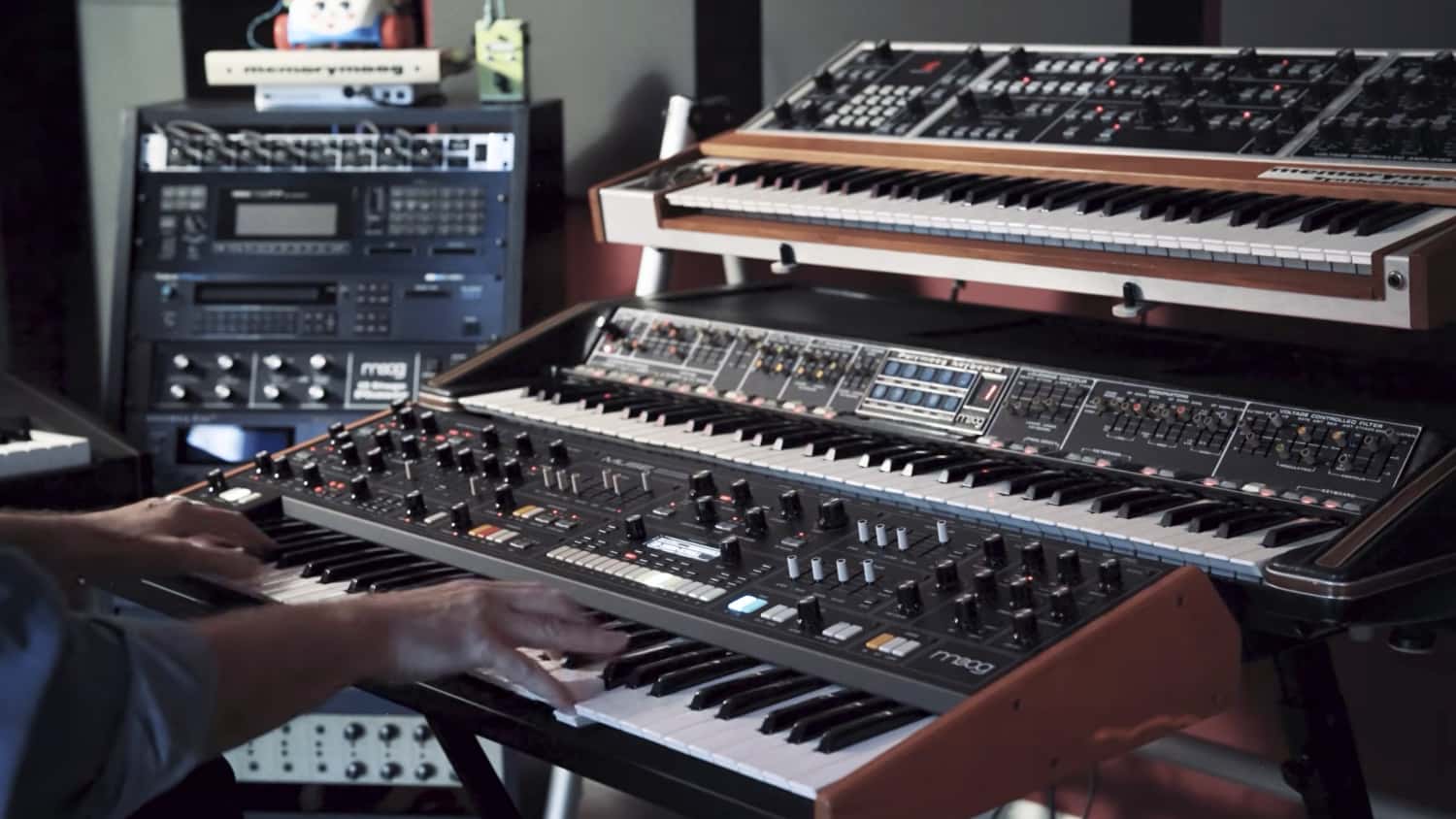
Moog Music, a seminal name in the development of electronic musical instruments, has officially announced the release of the Memorymoog Preset Collection specifically designed for the Moog Muse synthesizer. This new expansion pack, meticulously crafted by renowned synthesist and sound designer Eric Frampton, serves as a digital bridge between the company’s storied analog past and its cutting-edge contemporary hardware. By recreating all 100 original factory presets of the legendary 1982 Memorymoog, Moog Music provides modern musicians with access to the textures that defined an era of progressive rock, synth-pop, and early electronic film scores. This release is currently available as a free download for all registered owners of the Moog Muse, marking a significant addition to the instrument’s expanding sound library.
The release of this collection is more than a simple exercise in nostalgia; it represents a technical achievement in cross-generational sound design. The Moog Muse, which debuted earlier in 2024, is an eight-voice polyphonic analog synthesizer that serves as a spiritual successor to the polyphonic powerhouses of the 1980s. By porting the Memorymoog’s original patches to the Muse’s architecture, Moog Music is effectively demonstrating the versatility and sonic depth of their latest flagship instrument. The collection aims to capture the raw, "wall of sound" character that made the original Memorymoog a favorite among artists like Rick Wakeman, Keith Emerson, and Jean-Michel Jarre, while utilizing the Muse’s modernized stability and expanded modulation capabilities.
The Legacy of the Memorymoog: A Historical Perspective
To understand the significance of this preset collection, one must first examine the historical weight of the Memorymoog. Released in 1982, the Memorymoog was Moog Music’s final major product before the company’s original iteration faced bankruptcy. It was designed to compete with the Sequential Circuits Prophet-5 and the Roland Jupiter-8, which were dominating the high-end polyphonic synthesizer market at the time.
The Memorymoog was a technical marvel, offering six voices of polyphony, with each voice featuring three voltage-controlled oscillators (VCOs). This three-oscillator-per-voice design gave the instrument a richness and harmonic density that was virtually unmatched by its competitors, most of which utilized two oscillators per voice. However, the instrument was also notorious for its complexity and thermal instability. The original units were prone to tuning issues and hardware failures, leading to the development of the "LAMM" (Lintronics Advanced Memorymoog) modification in later years to improve reliability.
Despite its temperamental nature, the Memorymoog’s factory presets became iconic. They showcased the power of the Moog ladder filter applied to polyphonic chords, producing massive brass stabs, ethereal pads, and aggressive lead sounds. The new Memorymoog Preset Collection for the Muse aims to preserve these specific timbres while removing the technical headaches associated with the vintage hardware.
Technical Execution: Translating Analog Heritage to Modern Architecture
The task of recreating these 100 presets fell to Eric Frampton, a sound designer with a deep understanding of Moog’s subtractive synthesis lineage. The process involved a head-to-head comparison between a vintage Memorymoog and the Muse to ensure that the harmonic content, filter resonance, and envelope shapes remained faithful to the 1982 originals.
While the original Memorymoog and the Muse both utilize a three-oscillator design, the underlying technology has evolved significantly. The Muse features a more sophisticated modulation matrix and digital control over analog parameters, which allowed Frampton to go beyond a 1:1 replica. According to technical documentation released alongside the collection, the Muse versions of these presets incorporate modern performance features that were not available in 1982. These include:
- Velocity and Aftertouch Sensitivity: The original Memorymoog keyboard was not velocity-sensitive. The Muse versions utilize the modern keybed’s capabilities to allow for expressive playing, where the intensity of a keystroke can influence filter cutoff or volume.
- Advanced Macro Controls: The Muse allows users to map multiple parameters to a single macro knob. The Memorymoog Collection utilizes this to provide "performance-ready" tweaks for each preset.
- Expanded Modulation: Utilizing the Muse’s two LFOs and dedicated Pitch LFO, the recreated patches offer more movement and complexity than the original hardware could sustain.
- Integrated Effects: The Muse features a powerful "Diffusion Delay" and other digital effects. While the original Memorymoog was a "dry" instrument, the new collection uses subtle internal effects to emulate the studio processing often applied to Memorymoog recordings in the 1980s.
The Moog Muse: A New Era of Polyphony
The Moog Muse itself represents a turning point for the company. Following Moog Music’s acquisition by InMusic in 2023, there was significant speculation regarding the future of the brand’s high-end analog production. The Muse, released in mid-2024, answered many of these concerns by delivering a premium, 8-voice bitimbral synthesizer that maintains the classic "Moog Sound" while introducing a more intuitive, knob-per-function interface.
The Muse’s architecture is uniquely suited for this Memorymoog tribute. Like its ancestor, it relies on a discrete analog signal path and the famous Moog transistor ladder filter. However, it also includes a powerful 64-step sequencer and an arpeggiator, which allow the Memorymoog presets to be used in modern rhythmic contexts. By offering this collection for free, Moog is positioning the Muse as the definitive tool for those seeking the heritage sound without the five-figure price tag and maintenance costs of a vintage Memorymoog.
Chronology of Moog’s Polyphonic Development
The release of the Memorymoog Preset Collection marks the latest chapter in a timeline of polyphonic innovation at Moog Music:
- 1975 – The Polymoog: Moog’s first foray into polyphony used divide-down circuitry. While successful, it lacked the individual voice articulation of later designs.
- 1982 – The Memorymoog: The pinnacle of Moog’s 20th-century polyphonic synthesis, featuring 18 oscillators across six voices.
- 2018 – The Moog One: An ultra-high-end flagship (available in 8 and 16 voices) that attempted to be the "ultimate" synthesizer, though its complexity and price point kept it out of reach for many.
- 2024 (July) – The Moog Muse: A more streamlined, performance-oriented 8-voice polyphonic synth designed for both studio and stage.
- 2024 (October) – Memorymoog Preset Collection: The official release of the 100-patch bank, bridging the 42-year gap between the Memorymoog and the Muse.
Market Analysis and Industry Implications
The decision to release this collection as a free download is a strategic move in a highly competitive synthesizer market. Companies like Behringer have gained significant market share by creating affordable clones of vintage Moog hardware, including their own version of the Memorymoog (the "Linndrum" and "BM-10" projects). By providing official, high-quality recreations of legacy sounds for their own hardware, Moog Music is reinforcing the value of the "Official Moog" ecosystem.
Industry analysts suggest that this move is also aimed at building goodwill within the synthesizer community following the transition to InMusic ownership. By celebrating the company’s history and providing free content to existing customers, Moog is signaling that it remains committed to the enthusiasts and professionals who have supported the brand for decades.
Furthermore, the involvement of Eric Frampton highlights a trend of manufacturers collaborating with specialized sound designers to maximize the potential of new hardware. In an era where software synthesizers (VSTs) can emulate almost any hardware, the physical experience of playing an analog instrument like the Muse, paired with historically accurate sounds, remains a significant selling point for professional musicians and collectors.
Broader Impact on Modern Music Production
The availability of these 100 presets allows a new generation of producers to explore the specific "Moog Poly" aesthetic. The Memorymoog was known for its ability to cut through a mix, a quality that is highly sought after in modern electronic dance music (EDM), synthwave, and cinematic scoring.
The "head-to-head" comparison video released by Moog Music demonstrates that the Muse is capable of matching the raw power of the Memorymoog while offering a cleaner signal-to-noise ratio. For touring musicians, the Muse provides a reliable alternative to bringing a fragile vintage unit on the road. The inclusion of modern MIDI implementation and stable tuning means that the classic sounds can now be integrated into a contemporary DAW-based workflow with ease.
Conclusion and Availability
The Memorymoog Preset Collection for the Moog Muse is a significant contribution to the world of sound design, offering a meticulous restoration of one of the most important sound sets in electronic music history. It validates the Muse as a worthy successor to the Moog legacy and provides users with a powerful set of tools for creative exploration.
The collection is currently available via the Moog Music website. Muse owners can download the patch bank and transfer it to their instrument via a standard USB drive. As Moog continues to expand the capabilities of the Muse through firmware updates and sound expansions, the release of the Memorymoog presets stands as a definitive statement on the enduring relevance of the "Moog Sound" in the 21st century. By honoring its past, Moog Music is effectively securing its place in the future of musical expression.