

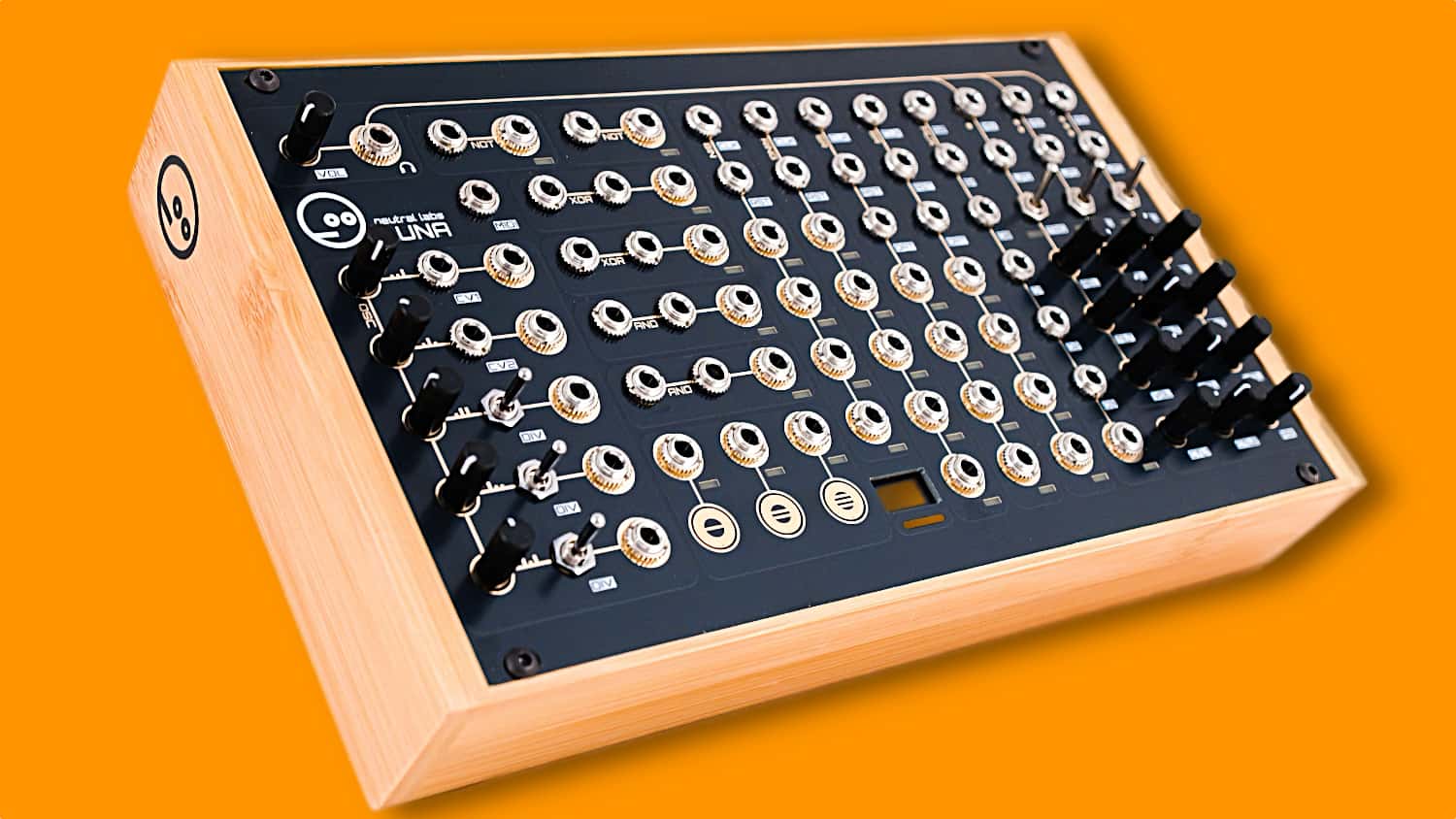
Neutral Labs has officially announced the release of Luna, a specialized synthesizer and groovebox that utilizes CMOS (Complementary Metal-Oxide-Semiconductor) logic chips to generate sound and rhythm. Drawing direct inspiration from the pioneering work of the late Stanley Lunetta, a central figure in the experimental electronic music scene of the 1970s and 1980s, Luna represents a bridge between historical DIY circuit-bending aesthetics and modern modular synthesis standards. The device is currently available for pre-order with a retail price of $799 USD, positioning it as a premium boutique instrument for sound designers, modular enthusiasts, and avant-garde composers seeking a departure from conventional subtractive or FM synthesis.
The release of Luna marks a significant moment for the boutique hardware market, as it formalizes a style of synthesis that has largely remained in the realm of "do-it-yourself" (DIY) forums and experimental workshops for decades. By integrating these logic-based circuits into a dual-format housing—capable of functioning as both a standalone desktop groovebox and a Eurorack-compatible module—Neutral Labs aims to provide a stable, "weaponized" version of the notoriously unpredictable Lunetta-style machines.
The Historical Context of Lunetta Synthesis
To understand the significance of Luna, one must look back at the contributions of Stanley Lunetta (1937–2016). Lunetta was an American percussionist, composer, and artist who became a legendary figure in the DIY synthesizer community. During the 1970s, while many commercial manufacturers like Moog and ARP were perfecting voltage-controlled oscillators (VCOs) and filters (VCFs) to create melodic, "musical" tones, Lunetta began experimenting with inexpensive digital logic chips from the 4000 series.
These CMOS chips were originally designed for simple computing tasks, such as counting pulses or performing basic Boolean operations (AND, OR, XOR, NAND). Lunetta discovered that by "misusing" these chips—patching them together in feedback loops and running them at audio rates—he could create complex, self-generating rhythmic structures and harsh, aliased digital tones. These creations, which he often housed in unconventional enclosures like cigar boxes or art installations, became known as "Lunettas." Unlike traditional synthesizers, a Lunetta machine often lacks a keyboard; instead, it relies on the interaction of logic gates to produce evolving patterns that feel more like a living organism than a programmed computer.
Technical Architecture and the CMOS Philosophy
Luna operates on the principle that digital synthesis does not always have to be synonymous with high-resolution digital signal processing (DSP). While modern digital synths use powerful microprocessors to simulate analog waves or play back samples, Luna uses "primitive" digital logic. In a CMOS-based system, the signal is binary—either high or low (on or off). When these on/off signals are oscillated at high speeds, they produce square waves.
The complexity of Luna arises from how these square waves interact. By using logic gates, the machine can compare two different pulse waves. For example, an XOR (Exclusive OR) gate will output a signal only when its two inputs are different. When two oscillators are fed into an XOR gate, the result is a complex, harmonically rich waveform that shifts and evolves based on the frequency relationship between the two sources. This is the foundation of the "raw" and "weaponized" sound described by Neutral Labs.
Furthermore, CMOS logic allows for easy clock division. A high-speed oscillator can be fed into a counter chip (like the CD4040), which outputs several slower pulses. These pulses can then be used as rhythmic triggers or sub-oscillators. This inherent architectural trait makes Luna both a sound generator and a rhythmic sequencer simultaneously, blurring the lines between a drum machine and a drone synthesizer.
Features and Design of the Luna System
Neutral Labs has designed Luna to be a comprehensive ecosystem within a single unit. While the original Lunetta machines were often fragile and required deep technical knowledge to maintain, Luna is built for the rigors of modern studio and live performance.
Dual-Format Versatility
One of the most prominent features of Luna is its hybrid design. It can sit on a desktop as a standalone groovebox, powered by a standard DC input, or it can be removed from its case and mounted into a standard Eurorack modular system. This flexibility ensures that it can serve as the centerpiece of a small setup or as a complex logic hub within a larger modular rig.
Interface and Control
The front panel of Luna reflects its chaotic nature, featuring an array of knobs, switches, and patch points. Unlike traditional synthesizers that follow a linear signal path (Oscillator > Filter > Amplifier), Luna encourages a non-linear workflow. Users can patch outputs back into inputs, creating chaotic feedback loops that result in unpredictable sonic "explosions" or delicate, generative textures.
Weaponized Sonic Confusion
Neutral Labs describes the instrument as a "weaponized instrument of sonic confusion." This refers to the high-gain, aggressive nature of CMOS circuitry. When pushed to its limits, the digital logic produces "aliasing" and "quantization noise" that are often considered errors in high-end audio gear but are celebrated here as aesthetic choices. This makes Luna particularly appealing to genres such as industrial, noise, techno, and experimental film scoring.
Market Positioning and Pricing Analysis
At a street price of $799 USD, Luna enters a competitive but niche market. It stands alongside other high-end boutique instruments like those from Ciat-Lonbarde or Soma Laboratory. While the price point is higher than many mass-produced digital synthesizers, it reflects the specialized engineering required to stabilize CMOS logic for professional use.
The $799 price also accounts for the dual-format hardware design. Typically, a high-quality Eurorack module of this complexity can cost between $400 and $600, while a standalone desktop unit adds additional costs for the enclosure, power supply, and output stage. By combining both, Neutral Labs provides a value proposition for users who may want to transition from desktop use to a modular rack in the future.
Industry Reactions and Implications
The announcement of Luna has generated significant interest within the electronic music community, particularly among those who value the "lo-fi" and "DIY" aesthetic. Early reactions from industry observers suggest that Luna could spark a renewed interest in logic-based synthesis.
"The move toward ‘primitive’ digital is a reaction to the perfection of modern software," says one independent synthesizer analyst. "We have reached a point where software can perfectly emulate a Moog or a Prophet. Musicians are now looking for the ‘ghost in the machine’—the unpredictable errors and raw textures that only hardware like Luna can provide."
Furthermore, the release highlights a broader trend in the music technology industry: the "commodification of the boutique." Features that were once the sole province of underground DIY builders are now being refined and sold as professional-grade products. This allows a wider range of artists to access these unique sounds without needing a degree in electrical engineering or the ability to solder complex circuits.
Chronology of Development
The development of Luna follows a series of successful releases from Neutral Labs, including the Elmyra (a drone synth inspired by the Lyra-8) and various Eurorack modules known for their experimental edge.
- Conceptualization: Neutral Labs began exploring the idea of a commercial Lunetta-style machine several years ago, citing a gap in the market for logic-based grooveboxes.
- Prototyping: Throughout 2023, various iterations of the Luna circuit were tested, focusing on how to make the chaotic CMOS chips play well with standard 1V/Octave pitch CV (Control Voltage) and other Eurorack standards.
- Teasing: In early 2024, Neutral Labs released cryptic videos showing the "raw" digital output of the machine, generating buzz on social media and synthesizer forums.
- Official Launch: The formal announcement and pre-order phase began recently, with shipping expected to commence in the coming months.
Broader Impact on Electronic Music Production
Luna’s arrival is likely to influence how producers approach rhythm and texture. In a standard Digital Audio Workstation (DAW) environment, rhythms are usually placed on a rigid grid. Luna, by contrast, generates rhythms based on the mathematical relationships between oscillators. This "generative" approach allows for the creation of polyrhythms and evolving patterns that would be difficult to program manually.
For the Eurorack community, Luna serves as a powerful "logic master." It can take simple clock signals from other modules and transform them into a web of related triggers, effectively acting as the "brain" of a modular percussion system.
Conclusion and Availability
Neutral Labs’ Luna is more than just a synthesizer; it is a functional tribute to the experimental spirit of the 1970s. By taking the "fragile experiments" of Stanley Lunetta and turning them into a robust, "weaponized" instrument, Neutral Labs has provided the modern musician with a tool that embraces chaos over clinical precision.
As of the current announcement, Luna is available for pre-order through the official Neutral Labs website and authorized boutique retailers. With its $799 price point and unique CMOS architecture, it is poised to become a staple for those looking to inject raw, digital energy into their sonic palette. As the first units reach studios, the electronic music world will likely see a surge in logic-based compositions, continuing the legacy of the DIY pioneers into the 21st century.