

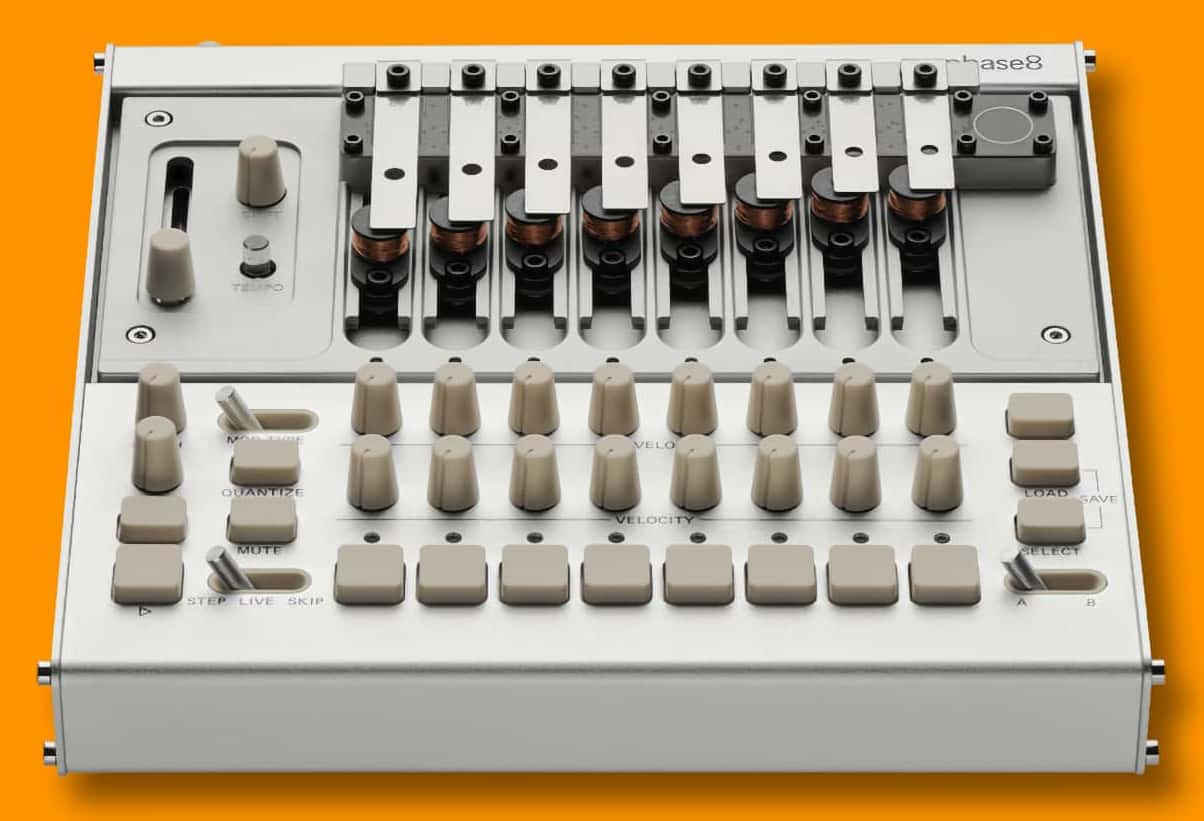
The landscape of modern electronic music production has shifted toward a synthesis of physical tactile response and digital precision, a trend exemplified by the recent collaboration between renowned sound designer Richard Devine and Korg. Following the high-profile debut of the Korg Phase8 Acoustic Synthesizer at the 2026 NAMM Show in Anaheim, California, Devine has released a comprehensive technical demonstration that pushes the instrument beyond its intended musical boundaries. The demonstration serves not only as a showcase for the Phase8’s unique electromechanical architecture but also as a masterclass in generative composition and physical sound manipulation. By integrating complex MIDI scripting with a variety of external physical objects, Devine has illustrated the potential of the Phase8 to serve as a cornerstone for avant-garde sound design and experimental rhythmic structures.
The Architecture of the Korg Phase8 Acoustic Synthesizer
The Korg Phase8 represents a significant departure from the company’s recent focus on digital FM and wavetable synthesis. Classified as an "acoustic synthesizer," the Phase8 utilizes a system of physical tines and electromagnetic pickups, reminiscent of the classic electric pianos of the 1970s, but augmented with modern solenoid triggers and digital control systems. Unlike a traditional synthesizer that generates sound via oscillators, the Phase8 generates sound through the physical vibration of metal elements. These vibrations are then captured, processed, and modulated through an onboard analog signal path.
The instrument features an eight-voice polyphonic structure—hence the "8" in its nomenclature—with each voice dedicated to a specific set of tines. What distinguishes the Phase8 from its electromechanical ancestors is the "Phase" engine, which allows users to manipulate the phase relationship between the physical vibrations and the electronic pickups. This capability enables the creation of complex overtones and harmonic shifts that are impossible to achieve on a standard Rhodes or Wurlitzer. At NAMM 2026, industry analysts noted that Korg’s move into the acoustic synthesis market reflects a growing demand among professionals for "organic" sound sources that can be integrated into a digital workflow.
Richard Devine’s Methodology and Technical Workflow
Richard Devine, a figure synonymous with intricate modular synthesis and high-end sound design for global tech firms, approached the Phase8 not as a keyboardist, but as a laboratory technician. His experiment focused on bypassing the traditional keyboard interface to interact directly with the instrument’s internal mechanics. The core of his setup involved a series of sophisticated MIDI scripts running within Logic Pro’s MIDI Scripter plugin. These scripts were designed to generate non-linear, algorithmic rhythms that Devine characterized as "Autechre-like," referring to the legendary electronic duo known for their complex, generative sequencing.
The MIDI data was routed to the Phase8’s solenoid triggers, which act as mechanical "fingers" that strike the tines. By using JavaScript-based scripts to control the velocity, timing, and repetition of these strikes, Devine was able to create rhythmic patterns that exceed human performance capabilities. This method highlights the Phase8’s low-latency response to external MIDI commands, a critical factor for producers working in the realms of IDM (Intelligent Dance Music) and glitch-based composition.
Beyond the digital control, Devine engaged in "prepared" synthesis by introducing foreign objects into the Phase8’s internal chamber. This technique, rooted in the "prepared piano" traditions of John Cage, involved the use of:
- Magnets and Metal Rods: Used to alter the magnetic field around the pickups, resulting in distorted harmonic profiles and pitch-shifting effects.
- Tin Foil and Springs: Placed directly on the tines to introduce mechanical buzz, metallic friction, and unpredictable rattling.
- Extra Solenoid Triggers: Devine added secondary external triggers to strike different parts of the instrument’s frame, effectively turning the entire chassis into a resonant percussion surface.
Historical Context and Korg’s Innovation Timeline
To understand the significance of the Phase8, one must look at Korg’s history of experimental hardware. Since the release of the MS-20 in 1978, Korg has balanced mainstream success with niche, engineer-driven products. The 2010s saw the company revitalize the analog market with the Volca and Minilogue series, followed by the "digital revolution" of the Opsix and Wavestate in the early 2020s.
The development of the Phase8, however, traces back to Korg’s acquisition of specific patents related to electromagnetic resonance in 2024. The project was reportedly a secret collaboration between Korg’s Tokyo-based engineers and their California-based research and development team. The goal was to bridge the "tactile gap"—the perceived loss of physical soul in purely software-based instruments. The Phase8 is the first flagship product to emerge from this "Acoustic-Digital Hybrid" initiative.
The timeline of the Phase8’s rollout is as follows:
- January 2025: Initial rumors of a "mechanical Korg" surface on industry forums.
- June 2025: Beta units are sent to key influencers, including Richard Devine and Hans Zimmer’s Remote Control Productions.
- January 22, 2026: Official debut at the NAMM Show, where it won the "Best in Show" award for innovation.
- March 2026: Release of the Devine technical demonstration, marking the transition from product launch to professional application.
Industry Reactions and Technical Analysis
The response from the professional audio community to Devine’s demonstration has been one of analytical intrigue. Sound designers have pointed out that the Phase8’s ability to interact with physical objects makes it a superior tool for Foley and cinematic soundscapes. Unlike a sample library, which is static, the Phase8 provides a reactive environment where the physics of the room and the materials used influence the final output.
Technical analysts have highlighted the "Solenoid Interaction" as the most revolutionary aspect of the instrument. Traditional solenoids are often binary (on or off), but Korg has implemented a high-resolution velocity-sensitive system. This allows for "micro-strikes" that barely touch the tine, creating ghost notes and subtle harmonic excitation. When combined with Devine’s MIDI scripts, the result is a "living" instrument that seems to breathe and evolve.
In terms of data, the Phase8 boasts a signal-to-noise ratio that exceeds 110dB, an impressive feat for an electromechanical device. It features balanced XLR outputs and a dedicated "Dry Acoustic" microphone output, allowing engineers to blend the internal electromagnetic signal with the actual sound of the tines vibrating in the air. This dual-source capability is what allowed Devine to capture the "metallic friction" and "spring coils" with such clarity in his demonstration.
Broader Implications for the Future of Synthesis
The Korg Phase8 and Richard Devine’s subsequent exploration signify a broader shift in the music technology industry. After decades of striving for "perfect" digital emulations of analog gear, manufacturers are realizing that the imperfections of the physical world are what musicians actually crave. The Phase8 does not attempt to hide its mechanical nature; it celebrates it.
This shift has several implications for the future:
- The Return of the Physical: We are likely to see more "hybrid" instruments that use physical actuators (solenoids, motors, fans) controlled by digital brains.
- Generative Integration: As MIDI scripting becomes more accessible in DAWs like Logic Pro and Ableton Live, instruments will be designed from the ground up to be played by algorithms rather than just human hands.
- Sustainability in Sound: There is a growing movement toward instruments that are "repairable" and "mechanical," moving away from the "disposable" nature of software licenses and planned obsolescence in digital hardware.
Richard Devine’s experiment with the Korg Phase8 is more than a simple product endorsement. It is a validation of a new philosophy in instrument design—one where the boundary between the computer and the physical world is blurred. By using magnets, springs, and tin foil to disrupt the Phase8’s internal logic, Devine has shown that the most interesting sounds often happen at the point of failure, where the digital instruction meets the unpredictable resistance of the physical world. As the Phase8 begins to ship to the general public in late 2026, it is expected to become a staple in the studios of film composers and experimental artists alike, marking a new era of acoustic-digital synthesis.