

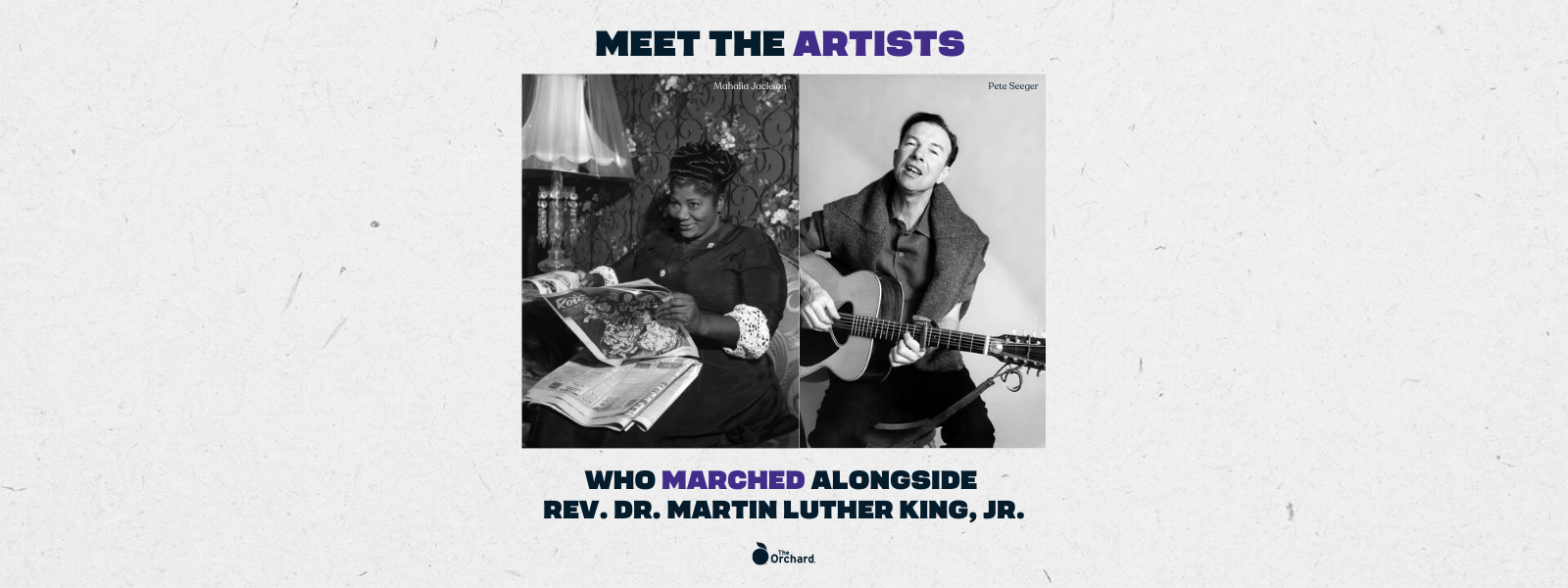
On this Rev. Dr. Martin Luther King, Jr. Day of Service, January 19, 2026, it is a fitting moment to reflect on the profound influence of artists whose voices and presence amplified the Civil Rights Movement, marching alongside its most iconic leader. Among them, Mahalia Jackson and Pete Seeger stand as towering figures, their contributions both on and off the stage serving as a vital source of inspiration and a soundtrack to the struggle for equality. Their legacies, deeply intertwined with the fight for justice, continue to resonate, reminding us of the power of art to fuel social change.
The Civil Rights Movement, a pivotal era in American history, spanned roughly from the mid-1950s to the late 1960s. It was a period marked by widespread nonviolent protests, civil disobedience, and acts of resistance against racial segregation and discrimination. At its heart was a yearning for fundamental human rights and equal opportunity for African Americans, who had endured centuries of oppression. This movement was not solely driven by political speeches and legislative battles; it was also profoundly shaped by the cultural landscape, with music and art playing an indispensable role in galvanizing support, fostering solidarity, and articulating the aspirations of millions.
Mahalia Jackson: The Voice of the Movement
Mahalia Jackson, often hailed as the "Queen of Gospel," was more than just a close friend to Rev. Dr. Martin Luther King, Jr.; she was an integral force within the Civil Rights Movement. Her powerful, soul-stirring voice possessed an unparalleled ability to connect with audiences, providing spiritual sustenance and unwavering encouragement to those on the front lines of the struggle. Jackson’s performances were not mere concerts; they were spiritual rallies, imbued with the collective hope and determination of a people seeking freedom.
Born in New Orleans in 1911, Jackson rose to prominence in the 1930s and 40s, becoming a celebrated gospel singer whose music transcended racial and denominational lines. Her association with Rev. Dr. Martin Luther King, Jr. began early in his activism. She frequently performed at Southern Christian Leadership Conference (SCLC) events and fundraisers, her presence a significant draw and a source of immense morale. It is widely documented that Jackson’s powerful interjection during King’s iconic "I Have a Dream" speech at the 1963 March on Washington for Jobs and Freedom was instrumental in propelling the speech into its most memorable and impactful passages. As King deviated from his prepared remarks, Jackson, from her seat on the platform, famously called out, "Tell them about the dream, Martin!" This pivotal moment is etched in history, highlighting the symbiotic relationship between the movement’s leaders and its artistic proponents.
The March on Washington, held on August 28, 1963, was a watershed moment. Over 250,000 people gathered peacefully at the Lincoln Memorial, a testament to the widespread support for civil rights legislation. Jackson’s rendition of "I’ve Been ‘Buked and I’ve Been Scorned" prior to King’s speech served as a powerful prelude, resonating with the shared experiences of hardship and resilience within the African American community. Her performance, imbued with the raw emotion and spiritual depth of gospel music, underscored the moral imperative of the movement.
Jackson’s musical contributions were not confined to major public events. She used her platform to advocate tirelessly for civil rights, lending her voice and influence to numerous campaigns and organizations. Her unwavering commitment to justice, coupled with her immense talent, made her a beloved and respected figure, both within the movement and among the broader American public. The music published by The Orchard’s distributed partner, Smithsonian Folkways, offers a rich repository of such freedom songs, providing invaluable insight into the sonic landscape of the Civil Rights era.
Pete Seeger: The Folk Balladeer of Social Justice
Pete Seeger, a quintessential American folk singer, songwriter, and tireless social activist, dedicated a significant portion of his life to championing interconnected causes, including civil rights, workers’ rights, and environmentalism. His music, characterized by its accessible melodies and potent lyrical messages, served as a rallying cry for progressive movements throughout the 20th century.
Seeger’s engagement with the Civil Rights Movement intensified in the 1960s. He recognized the power of folk music to convey messages of solidarity and inspire collective action. His iconic songs, such as "Solidarity Forever" and "Which Side Are You On?", originally labor anthems, found new resonance within the civil rights context, speaking to the shared struggle for dignity and fair treatment across different marginalized groups. "If I Had a Hammer," co-written with Lee Hays, became a powerful protest song, its hopeful refrain envisioning a world built on love and justice, a sentiment that deeply aligned with the aspirations of the Civil Rights Movement.
Perhaps Seeger’s most profound connection to the movement lies in his role in popularizing "We Shall Overcome." While the song’s origins are complex, tracing back to earlier spirituals and union songs, Seeger played a crucial role in adapting and disseminating it. His version of the song introduced it to a wider audience, and it was through his efforts that Rev. Dr. Martin Luther King, Jr. first encountered it. "We Shall Overcome" quickly evolved into the unofficial anthem of the Civil Rights Movement, its simple yet profound message of hope and perseverance providing solace and strength during moments of profound challenge. Dr. King himself quoted the song in his final speech in Memphis in March 1968, just days before his assassination, underscoring its enduring power and significance.
Seeger’s personal commitment to the cause was further demonstrated when he performed at Dr. King’s invitation during the historic 1965 Selma to Montgomery March. This march, a critical event in the fight for voting rights, saw thousands of activists walk 54 miles from Selma to the state capital of Montgomery, Alabama, facing brutal opposition from state and local law enforcement. Seeger’s presence and performance at such a pivotal moment underscored the solidarity between the artistic community and the civil rights activists. His legacy as a "musician of the people" who used his talents to advocate for a more just and equitable society continues to inspire generations of activists and artists.
The Interplay of Art and Activism
The contributions of artists like Mahalia Jackson and Pete Seeger were not peripheral to the Civil Rights Movement; they were fundamental. Music, in particular, served as a powerful tool for:
- Mobilization and Recruitment: Upbeat and anthemic songs could energize crowds, encouraging participation in protests and marches.
- Solidarity and Unity: Singing together in the face of adversity fostered a sense of shared purpose and belonging, crucial for sustaining morale.
- Emotional Expression and Catharsis: Songs provided an outlet for the pain, frustration, and hope experienced by those fighting for their rights.
- Communication of Ideals: Lyrics could effectively articulate the movement’s goals, values, and vision for a better future, reaching a broader audience.
- Documentation and Legacy: Music served as a historical record, preserving the stories and struggles of the movement for future generations.
The statistical impact of the Civil Rights Movement is profound. The Civil Rights Act of 1964 outlawed discrimination based on race, color, religion, sex, or national origin, and the Voting Rights Act of 1965 aimed to overcome legal barriers at the state and local levels that prevented African Americans from exercising their right to vote. These legislative victories, while monumental, were the culmination of years of struggle, amplified by the cultural forces that sustained the movement. Data from the era shows a significant increase in voter registration among African Americans in the Southern states following the passage of the Voting Rights Act, a direct outcome of the sustained activism that art helped to foster.
Broader Impact and Implications
The enduring legacy of artists like Jackson and Seeger extends far beyond their direct involvement in the Civil Rights Movement. Their work serves as a powerful reminder that art is not merely entertainment; it is a vital force for social commentary, a catalyst for change, and a means of preserving collective memory. Their commitment to using their talents for the greater good continues to inspire contemporary artists and activists.
The music of these freedom fighters, as made available through initiatives like those supported by Smithsonian Folkways, remains a critical resource for understanding the historical context and emotional weight of the Civil Rights era. By engaging with their songs, contemporary audiences can gain a deeper appreciation for the sacrifices made and the challenges overcome.
On this MLK Day of Service, the call to action is clear: to not only remember the past but to actively participate in building a more just and equitable future. The spirit of Mahalia Jackson and Pete Seeger, embodied in their music and their activism, encourages us to "show up" in our communities. Exploring resources like YourCause Connect and engaging with organizations dedicated to social justice are tangible ways to honor their legacies. By following and amplifying social media accounts dedicated to these causes, we can continue to spread awareness and foster collective action, ensuring that the fight for equality, so powerfully championed by the artists who marched with Dr. King, continues to resonate and inspire progress. The echoes of their voices, carrying messages of hope, resilience, and unwavering justice, remain a beacon for those who continue the struggle for a better world.