

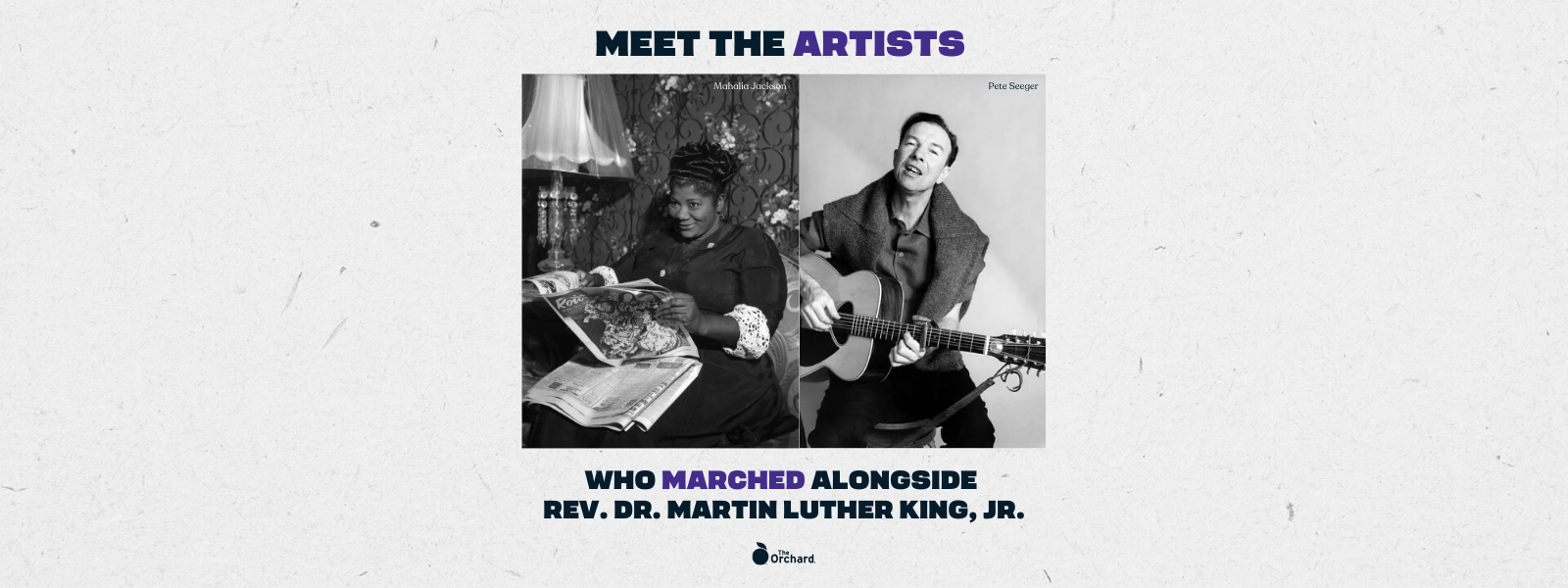
On this Rev. Dr. Martin Luther King, Jr. Day of Service, the enduring legacy of the Civil Rights Movement is illuminated not only by the profound words and actions of its central figures but also by the powerful artistic voices that amplified its message and sustained its spirit. Among those who marched alongside Dr. King and whose music served as a vital soundtrack to the struggle for equality were Mahalia Jackson and Pete Seeger. Their contributions, both on and off the stage, provided solace, inspiration, and a rallying cry for a nation grappling with injustice. This commemoration offers a moment to reflect on their indelible impact and to explore the rich catalog of freedom songs, many of which are preserved and distributed by The Orchard through partners like Smithsonian Folkways.
The Unifying Power of Music in the Civil Rights Era
The Civil Rights Movement, a transformative period in American history spanning roughly from the mid-1950s to the late 1960s, was characterized by a series of nonviolent protests, legal challenges, and acts of civil disobedience aimed at dismantling institutionalized racism and securing equal rights for African Americans. Music was not merely an incidental element of this struggle; it was a fundamental force. Spirituals, gospel hymns, folk songs, and protest anthems served multiple crucial roles: they fostered a sense of community and solidarity among activists, provided emotional sustenance in the face of adversity and violence, and communicated the movement’s message of hope and justice to a wider audience.
Songs like "We Shall Overcome," "This Little Light of Mine," and "Ain’t Gonna Let Nobody Turn Me Around" became anthems sung at marches, sit-ins, and rallies. These melodies and lyrics instilled courage, reinforced the moral righteousness of their cause, and served as a testament to the enduring power of faith and resilience. Artists who lent their voices and talents to this cause became integral to the movement’s success, their performances often acting as emotional anchors during periods of intense struggle.
Mahalia Jackson: The Queen of Gospel and a Confidante of Dr. King
Mahalia Jackson, widely hailed as the "Queen of Gospel," was more than just a celebrated recording artist; she was a deeply committed advocate for civil rights and a close confidante of Rev. Dr. Martin Luther King, Jr. Her powerful, soul-stirring voice resonated with audiences across racial and denominational lines, making her a natural and potent ally for the movement.
Jackson’s association with Dr. King began early in his leadership of the Southern Christian Leadership Conference (SCLC). She frequently performed at SCLC events and fundraisers, her performances often preceding Dr. King’s sermons, setting a tone of spiritual uplift and communal resolve. Her presence at these gatherings lent immense credibility and visibility to the nascent movement.
One of the most poignant and historically significant moments of their collaboration occurred at the 1963 March on Washington for Jobs and Freedom. While Dr. King was delivering his iconic "I Have a Dream" speech at the Lincoln Memorial, Jackson, standing near him on the dais, famously shouted, "Tell them about the dream, Martin!" This impassioned interjection is widely credited with prompting Dr. King to move away from his prepared remarks and deliver the extemporaneous, prophetic vision that would become etched in the annals of American history. The raw emotion and spiritual conviction in Jackson’s voice, echoing through the vast crowd, underscored the deeply felt aspirations of the movement.
Jackson’s musical contributions provided a spiritual bedrock for the movement. Her ability to convey profound emotion and unwavering faith through her singing inspired countless individuals who faced discrimination and violence. Her discography, featuring songs like "Move On Up a Little Higher," "His Eye Is on the Sparrow," and "Amazing Grace," continues to be a source of inspiration and a testament to her role as a musical force for social change. Smithsonian Folkways, a key distributor through The Orchard, has been instrumental in preserving and disseminating the legacy of artists like Jackson, ensuring that their contributions remain accessible for future generations.
Pete Seeger: The Folk Bard of Social Justice
Pete Seeger, an American folk singer, songwriter, and tireless social activist, dedicated a significant portion of his life to advocating for interconnected causes, including civil rights, workers’ rights, and environmental protection. His authentic voice and commitment to social justice made him a beloved figure and a powerful advocate for marginalized communities.
Seeger’s activism in the 1960s saw him actively supporting the Civil Rights Movement. He understood the power of music to mobilize people and articulate grievances. Many of his most enduring songs served as anthems for social change. The iconic labor song "Solidarity Forever," with its stirring call for unity and collective action, resonated deeply with the spirit of the civil rights struggle. "Which Side Are You On?" became a potent question posed to individuals and institutions, demanding a commitment to justice. Perhaps his most widely recognized protest song, "If I Had a Hammer," co-written with Lee Hays, became a universal anthem for peace and equality, its simple yet profound message echoing the hopes of millions.
Crucially, Pete Seeger played a pivotal role in popularizing the song that would become the unofficial anthem of the Civil Rights Movement: "We Shall Overcome." Seeger learned the song from Zilphia Horton at the Highlander Folk School in Tennessee and adapted it, adding verses and popularizing it among activists. His version was an early inspiration for Dr. King, who first encountered the song through Seeger’s efforts. Dr. King later quoted the song in his final public address, delivered in Memphis on March 18, 1968, just days before his assassination, underscoring its deep significance and enduring power.
In 1965, Seeger accepted an invitation from Dr. King to perform at the historic Selma to Montgomery March. This march, a critical moment in the struggle for voting rights, saw thousands of activists facing brutal opposition from state and local law enforcement. Seeger’s presence and his performance of uplifting songs provided a vital source of morale and solidarity for the marchers who endured hardship and violence in their pursuit of suffrage. His commitment to performing at such critical junctures solidified his reputation as a musician of the people, deeply intertwined with the fabric of the social justice movements of his time. Seeger’s extensive catalog, available through distributors like The Orchard, continues to inspire activists and listeners alike, a testament to his enduring legacy.
The Enduring Impact and Broader Implications
The contributions of Mahalia Jackson and Pete Seeger, alongside countless other artists and activists, underscore the symbiotic relationship between art and social change. Their music transcended mere entertainment; it was a tool for empowerment, a vehicle for protest, and a balm for weary souls.
The Civil Rights Movement demonstrated that collective action, fueled by deeply held beliefs and amplified by powerful cultural expressions, can bring about profound societal transformation. The songs sung by Jackson and Seeger, and by the movement’s participants, are more than just historical artifacts; they are living testaments to the power of human spirit and the unyielding pursuit of justice.
Data from the period indicates a significant correlation between the increased visibility of the Civil Rights Movement and its artistic output. For instance, sales of records by artists like Jackson and Seeger saw a notable rise during the peak years of the movement, reflecting a public hunger for music that articulated their hopes and grievances. The widespread adoption of protest songs in community gatherings and marches further highlights their functional role in sustaining momentum and fostering a shared identity among activists.
The legacy of these artists and the movement they supported continues to resonate. The fight for civil rights paved the way for subsequent social justice movements, and the musical traditions that emerged from this era remain influential. The "Day of Service" in honor of Rev. Dr. Martin Luther King, Jr. serves as a crucial reminder to engage with these historical narratives, to understand the sacrifices made, and to recognize the ongoing work required to achieve a more just and equitable society.
Further Engagement and Action
In recognition of MLK Day, individuals are encouraged to explore the music and stories of these freedom fighters. Resources such as Smithsonian Folkways offer a deep dive into the rich catalog of music from the Civil Rights era. Beyond listening, active engagement is vital.
SHOW UP: Organizations like YourCause Connect provide platforms for individuals to discover ways to support and mobilize with communities dedicated to social justice. Exploring these avenues allows for tangible contributions to ongoing efforts to address inequality and advocate for human rights.
GET SOCIAL: Following and amplifying the voices of organizations and individuals committed to social justice on social media can help raise awareness and foster broader public discourse. Sharing historical context, celebrating achievements, and highlighting contemporary challenges are all crucial components of sustained advocacy.
The enduring impact of Mahalia Jackson and Pete Seeger serves as a powerful reminder that artistic expression is an indispensable force in the struggle for a better world. Their music, born from the heart of the Civil Rights Movement, continues to inspire and guide those who believe in the promise of equality and justice for all.