

Looper pedals have revolutionized how musicians create, practice, and perform, transforming solo acts into multi-layered sonic experiences and offering unprecedented creative freedom. Once a niche tool primarily for experimental artists, the looper has surged in popularity, becoming an indispensable part of countless guitarists’, vocalists’, and instrumentalists’ rigs, enabling instant multitracking and intricate soundscapes with remarkable ease. This comprehensive guide explores the historical trajectory, technological advancements, and diverse applications of these powerful devices, highlighting key models that define the current market.
The Historical Evolution of Looping Technology
The concept of looping in music predates digital technology by decades, tracing its origins to early 20th-century experimental music. Composers like Pierre Schaeffer, a pioneer of musique concrète in the 1940s, extensively used tape loops to manipulate and repeat recorded sounds, laying foundational principles for sonic layering and repetition. This analogue era saw artists physically cutting, splicing, and reassembling magnetic tape to create rhythmic and textural patterns, a painstaking process that yielded groundbreaking, albeit labor-intensive, results.
A significant leap in the analogue domain came with "Frippertronics," developed by guitarist Robert Fripp in the 1970s. This technique utilized two reel-to-reel tape recorders to create long, decaying loops, allowing Fripp to improvise over sustained sonic backdrops. While still analogue and somewhat cumbersome, Frippertronics demonstrated the immense creative potential of real-time looping for live performance and composition, inspiring a generation of musicians to explore similar sonic territories.

The advent of digital signal processing (DSP) in the late 20th century marked the true dawn of the modern looper. Early digital delay units, which could hold and repeat short audio phrases, were rudimentary precursors. However, dedicated digital looping devices began to emerge, offering greater control and longer loop times. The Lexicon JamMan, introduced in 1994, is often cited as one of the first commercially available digital loopers, providing musicians with the ability to record, layer, and play back loops with unprecedented fidelity and ease. This pivotal moment initiated the shift from studio-bound experimentation to real-time performance and practice applications.
By the early 2000s, the market saw the introduction of more compact and user-friendly pedals, such as the influential Boss RC-20 Loop Station in 2001. These devices began to democratize looping, making it accessible to a broader range of musicians. The subsequent release of pedals like the original TC Electronic Ditto further simplified the interface, distilling the complex act of looping into a single footswitch operation, effectively "kickstarting the looping craze" by proving that powerful creative tools could also be intuitive and affordable.
The Rise of the Looper Pedal: A Creative Catalyst
The widespread adoption of looper pedals is directly linked to their multifaceted utility across various musical contexts. They have become a creative catalyst for numerous reasons:
- Democratizing Multitracking: For solo musicians, loopers provide an instant "virtual band." A guitarist can lay down a rhythm track, then add bass lines, lead melodies, and harmonies, creating a full-sounding arrangement without the need for additional musicians or complex studio equipment. This capability has profoundly impacted solo artists, allowing them to perform intricate compositions live that would otherwise require multiple band members.
- Enhancing Live Performance: Beyond solo acts, loopers empower performers to build dynamic, evolving soundscapes on stage. Musicians can create layers of texture and rhythm, transforming simple arrangements into rich, immersive experiences. The ability to spontaneously create and manipulate loops adds an element of improvisation and freshness to live shows.
- Aiding Songwriting and Practice: Loopers serve as invaluable tools for composition and practice. Songwriters can quickly record a riff or chord progression, then experiment with melodies, harmonies, and lyrical ideas over the top. For practice, loopers allow musicians to isolate challenging sections, jam along to their own backing tracks, or work on timing and improvisation in a self-contained environment. This eliminates the need for external backing tracks or metronomes for complex practice routines.
Key Features and Technological Advancements
Modern looper pedals incorporate a range of features and technological advancements that enhance their versatility and usability:

- Memory and Storage Capabilities: Contemporary loopers boast significant internal memory, often offering hours of recording time. Many also include USB connectivity for transferring loops to a computer for backup or further production, blurring the lines between a live performance tool and a studio aid.
- Multi-Track Functionality and Overdubbing: While basic loopers offer a single track for continuous overdubbing, advanced models feature multiple independent stereo tracks. This allows for complex arrangements where different musical parts can be started, stopped, and manipulated independently, offering unprecedented control over the sonic layers.
- Integrated Effects and Connectivity: Many loopers now come with onboard effects, ranging from basic modulation and delay to sophisticated sound-sculpting tools. Connectivity options have also expanded to include MIDI for synchronization with other gear, expression pedal inputs for real-time control, and diverse input/output configurations (mono, stereo, XLR for microphones) to cater to various instruments and vocalists. Battery power options are crucial for buskers and musicians needing portability.
Spotlight on Diverse Looper Pedal Categories and Noteworthy Models
The current market offers a vast array of looper pedals, each designed to meet specific creative needs. From minimalist designs to feature-rich workstations, the diversity reflects the evolving demands of musicians.
The Essentials: Simplicity and Accessibility
For many, the appeal of a looper lies in its straightforward operation, allowing for immediate creative flow without a steep learning curve. These pedals prioritize ease of use while still delivering robust looping capabilities.
- TC Electronic Ditto 2: This pedal is a direct descendant of the original Ditto, widely credited with democratizing looping through its extreme simplicity. The Ditto 2 retains a single footswitch and a loop level knob but adds crucial features like LoopSnap mode, which intelligently corrects slightly mistimed taps for seamless loop creation. Its intuitive design makes it an ideal entry point for beginners and a reliable workhorse for experienced players who value efficiency. The original Ditto’s enduring popularity, still in production, underscores the timeless appeal of its "less is more" philosophy.
- Electro-Harmonix Nano Looper 360: Embodying the "simplicity first" ethos, the Nano Looper 360 could be mistaken for a basic single-track looper, were it not for its innovative multi-memory functionality. This pedal allows musicians to store up to 11 distinct loops, making it an excellent tool for organizing song ideas or creating a "live backing band" with pre-recorded parts. This feature transforms it from a mere practice tool into a viable option for performances requiring multiple backing tracks.
Advanced Workstations: Power and Versatility
At the other end of the spectrum are loopers designed for musicians who demand extensive control, multiple tracks, and a wide array of features for intricate compositions and complex live setups.
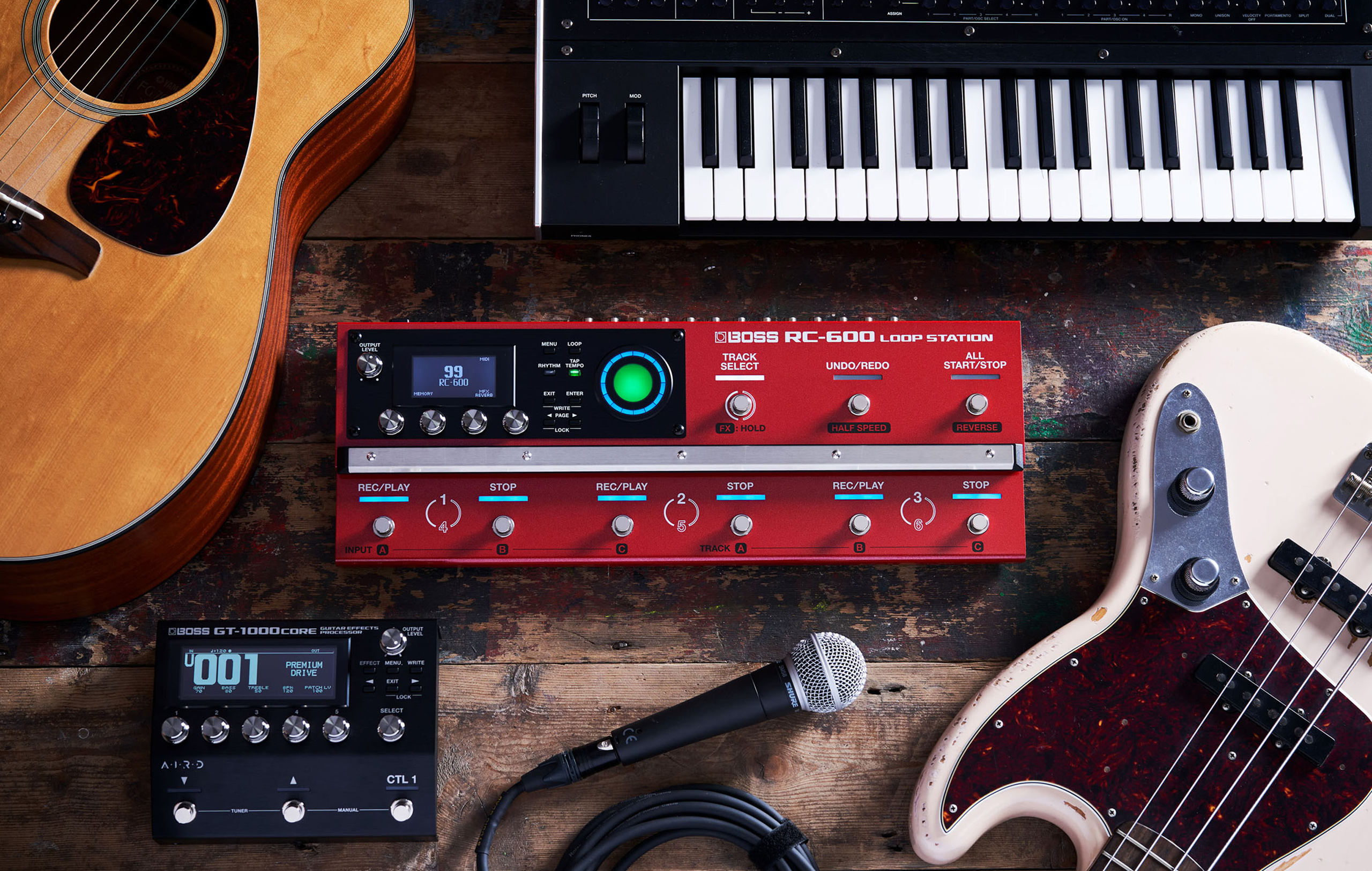
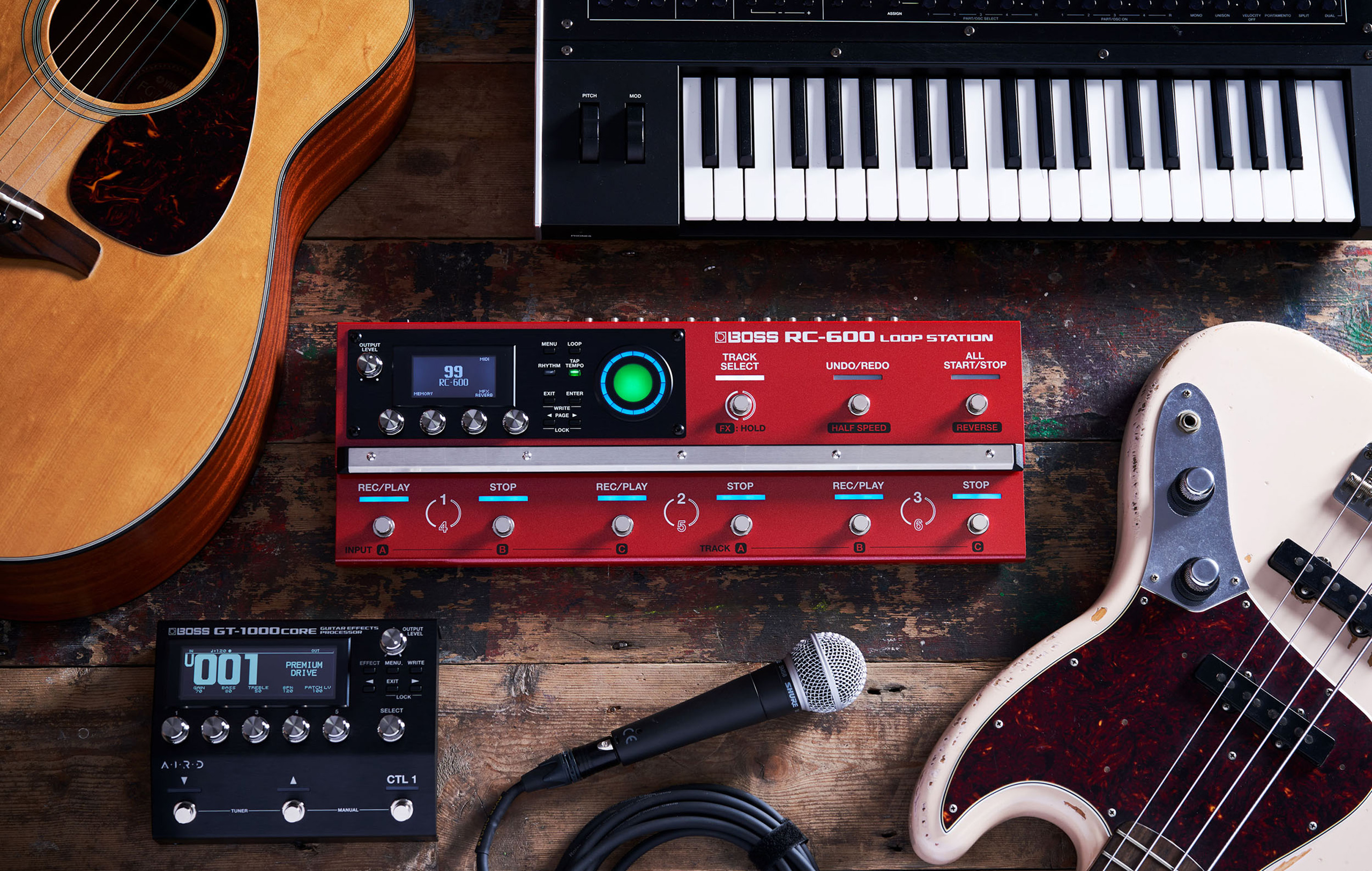
- Boss RC-600 Loop Station: As the flagship of Boss’s revered Loop Station line, the RC-600 is a formidable "do-it-all" device. It boasts six independent stereo tracks, an impressive 13 hours of internal storage, and a comprehensive suite of onboard effects. Its large LCD screen facilitates navigation through its deep features. Despite its complexity, Boss has engineered the RC-600 to be accessible, allowing users to start with basic looping and gradually explore its advanced capabilities, making it suitable for artists pushing the boundaries of sonic architecture.
- Pigtronix Infinity 2: This pedal excels in its intuitive approach to two-channel looping. Musicians can record independent loops on two separate tracks, then seamlessly switch between them for overdubbing and arrangement. The Infinity 2 automatically synchronizes these transitions, ensuring musical cohesion. Beyond its core looping function, it includes bonus features like an octave-down effect, offering creative possibilities for bass lines or textural depth. Its straightforward interface belies its powerful dual-track functionality.
- Boss RC-5 Loop Station: Demonstrating Boss’s expertise in compact engineering, the RC-5 packs an astonishing amount of functionality into a standard pedal enclosure. Following the classic Boss design, it offers 57 backing rhythms, 13 hours of stereo recording time across 99 memory slots, and extensive connectivity options including MIDI, expression pedal control, and USB backup. The RC-5 represents a significant achievement in miniaturization, delivering a "big looper hiding in a small box" for musicians who need advanced features without sacrificing pedalboard real estate.
Specialized Tools: Beyond Traditional Looping
Some loopers push the boundaries of the traditional loop, integrating unique effects or specific functionalities to cater to niche creative demands.
- Chase Bliss Audio Mood MkII: This pedal is less about pristine loop reproduction and more about experimental sound manipulation. Described as a "cinematic loop-scaping leviathan," the Mood MkII combines delay and reverb with randomized micro-looping. Its "clock" control allows for radical manipulation of time and pitch, creating unpredictable and evolving sonic textures. It continuously listens to incoming audio, generating spontaneous loops and effects, making it a unique tool for ambient, experimental, and generative music.
- Keeley Eccos: The Eccos ingeniously combines a full-featured looper with a sophisticated delay pedal. Recognizing the inherent relationship between delay and looping, Keeley created a unit where both effects can operate independently or interact in novel ways. The looper offers standard functions alongside reverse and half-speed modes, while the delay provides modulated repeats and multiple preset slots. The ability to set a loop to gradually decay blurs the line between a repeated phrase and an extended echo, offering new creative avenues.
- DigiTech Trio+: This "band creator and looper" offers a distinct solution for practice and songwriting. It intelligently listens to what a musician plays and automatically generates accompanying bass and drum parts in a chosen genre and style. With 12 musical genres and 12 song styles per genre, along with up to five song parts, the Trio+ provides a sophisticated virtual band. While it doesn’t replicate the nuances of real musicians, it’s an exceptional home practice tool for developing ideas and improving timing.
- Sheeran Looper +: Endorsed by the artist who arguably did more than anyone to popularize looping to a mainstream audience, the Sheeran Looper + is designed with buskers and solo performers in mind. This entry-level model offers two tracks, instrument and microphone inputs, a full-color LCD screen, and critically, the ability to run off four AA batteries. This battery power, combined with optional accessories like the Sheeran Busker PA speaker, makes it an ideal, self-contained solution for street performances, directly addressing the needs of mobile musicians.
The "Ed Sheeran Effect" and Mainstream Adoption
The impact of artists like Ed Sheeran on the popularization of looper pedals cannot be overstated. Sheeran’s stadium-filling performances, built entirely around his acoustic guitar, vocal harmonies, and a looper pedal, showcased the creative potential of the device to millions globally. While his method sparked debate among purists regarding the definition of "live" performance, it undeniably inspired countless aspiring musicians to explore looping. This mainstream visibility transformed the looper from a niche studio or experimental tool into a widely recognized and coveted piece of musical equipment, leading to increased demand and innovation in the pedal market.
The Future of Looping: Trends and Innovations
The evolution of looper pedals continues at a rapid pace. Future trends are likely to include further integration of artificial intelligence for more intelligent beat detection and accompaniment generation, enhanced cloud connectivity for seamless sharing and collaboration, and deeper integration with digital audio workstations (DAWs). We may also see continued miniaturization without sacrificing features, alongside the development of more intuitive interfaces, possibly incorporating touchscreens or advanced gesture controls. The potential for augmented reality applications in live performance, where visual elements are synchronized with layered loops, also presents an exciting frontier.
In conclusion, looper pedals have transcended their humble origins as experimental audio tools to become a cornerstone of modern music creation and performance. From simple, single-footswitch units that democratized multitracking to sophisticated multi-track workstations and specialized sound-sculpting devices, loopers offer unparalleled versatility. They empower solo artists, inspire songwriters, facilitate practice, and enable unique live performances, continually reshaping the landscape of contemporary music. As technology advances, the capabilities and creative applications of looper pedals are only set to expand further, cementing their status as an indispensable musical innovation.
Guitar.com’s expert reviewers possess decades of collective experience across a vast array of musical equipment, from vintage instruments to cutting-edge effects. Our buying guides are meticulously crafted by passionate guitar enthusiasts, ensuring that every product recommendation is based on deep practical knowledge and a commitment to helping musicians make informed decisions.