

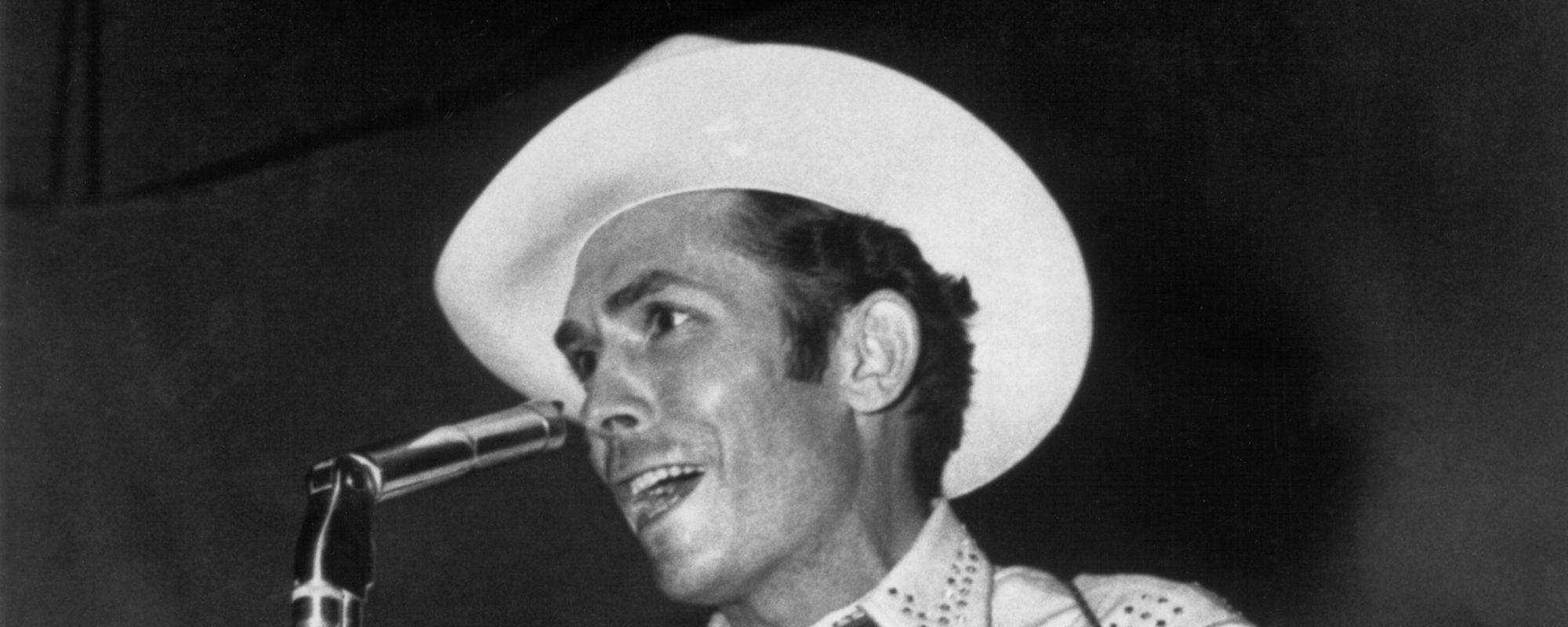
The decade of the 1950s represents a transformative era in the history of American music, serving as the bridge between the raw, unvarnished sounds of traditional honky-tonk and the sophisticated, commercially oriented "Nashville Sound." At the heart of this transition were the country ballads—compositions characterized by deceptive simplicity, emotional transparency, and a reliance on a core set of instrumental signatures including the acoustic guitar, the fiddle, and the pedal steel guitar. While the technical requirements for writing a country ballad are seemingly accessible, the creation of a lasting standard requires a rare convergence of lyrical depth, vocal sincerity, and production innovation. As the genre sought to expand its reach to broader pop audiences during the mid-to-late 1950s, several key recordings emerged that not only defined the era but also established the foundational archetypes for the next half-century of country music.
The Architect of the Nashville Sound: Don Gibson and the Polished Ballad
In the late 1950s, the country music industry faced an existential threat from the rising popularity of rock and roll. In response, producers like Chet Atkins at RCA Victor began to cultivate a more refined aesthetic known as the Nashville Sound. This movement sought to replace the "hillbilly" tropes of the past with smooth background vocals and sophisticated arrangements. Don Gibson’s 1958 masterpiece, "I Can’t Stop Lovin’ You," stands as a primary exhibit of this evolution.
Originally conceived by Gibson as a "lost love ballad," the song’s creative trajectory changed when the songwriter struck upon the central hook. By framing the narrative in the present tense, Gibson elevated the song from a mere recollection of a breakup to a visceral exploration of ongoing emotional entrapment. Recorded on December 30, 1957, at RCA Victor Studio B in Nashville, the track was produced by Chet Atkins, who utilized a polished arrangement that featured a driving, rhythmic "gallop" rather than the slower, more traditional waltz time of previous eras.
The song’s commercial performance was unprecedented for the time. It was released as the B-side to "Oh Lonesome Me," yet it gained massive traction on its own merits. The single reached number one on the Billboard C&W Best Sellers chart and crossed over to the pop charts, signaling the genre’s new ability to compete in the mainstream market. The song’s legacy was further cemented in 1962 when Ray Charles recorded a soul-infused version for his landmark album Modern Sounds in Country and Western Music. Charles’s version became a global hit, yet musicologists often point to Gibson’s original as the essential blueprint, noting that its less dense arrangement allows the starkness of the lyric to remain the focal point.
The Standard of Heartache: Hank Williams and the Legacy of "Your Cheatin’ Heart"
If Don Gibson represented the future of country music in the 1950s, Hank Williams represented its soul and its most tragic reality. By late 1952, Williams was the undisputed king of the genre, but his personal life was in a state of catastrophic decline. His battle with alcoholism, chronic back pain, and a volatile relationship with his ex-wife, Audrey Sheppard, provided the grim inspiration for "Your Cheatin’ Heart."
The song was recorded during Williams’s final recording session on September 23, 1952, at Castle Studio in Nashville. At the time, Williams was in the midst of significant life changes, having recently divorced Sheppard and preparing for a new marriage to Billie Jean Jones. Despite the hope of a fresh start, the lyrics of "Your Cheatin’ Heart" were a bitter, prophetic indictment of infidelity and the inevitable guilt that follows. Williams’s delivery—raw, nasal, and unapologetically Southern—set the standard for the "confessional" style of country singing.
Hank Williams died on New Year’s Day, 1953, at the age of 29, just weeks before "Your Cheatin’ Heart" was released. The song subsequently spent six weeks at the top of the Billboard country charts. Its impact cannot be overstated; it has been covered by hundreds of artists, including Patsy Cline, Elvis Presley, and Norah Jones. From a musicological perspective, the song is analyzed for its perfect structural economy—there is not a wasted word or note. It remains the definitive example of the honky-tonk ballad, a subgenre that values emotional honesty over production sheen.
The Persistence of Narrative: Hank Snow and "I Don’t Hurt Anymore"
While Williams and Gibson are often the primary focuses of 1950s retrospectives, Hank Snow—known as "The Singing Ranger"—delivered one of the decade’s most enduring and complex hits with "I Don’t Hurt Anymore." Released in 1954, the song spent an astounding 20 weeks at the number one spot on the Billboard country charts, a record that remained nearly untouched for decades.
The thematic core of "I Don’t Hurt Anymore" is the psychological state of recovery following a devastating romantic failure. The narrator claims to have moved on from a pain so intense it induced a death wish. However, the musical arrangement, characterized by a swaying, almost unsteady rhythm, suggests a level of fragility. Critics often note that the "woozy" instrumentation creates a sense of irony; the singer may claim to be healed, but the music suggests he is merely numb or perhaps still reeling from the trauma. This ambiguity adds a layer of depth rarely found in the straightforward pop songs of the era.
The song’s longevity was proven once again in 2003 when Johnny Cash recorded it for his American IV: The Man Comes Around sessions, shortly before his death. In the hands of an aging Cash, the song was recontextualized as a meditation on mortality and spiritual peace. Where Snow’s version sounded like a man trying to convince himself he was over a lover, Cash’s version sounded like a man letting go of the world itself. This transition from a romantic ballad to a quasi-gospel reflection highlights the universal resonance of the song’s structure and lyrical content.
Chronology of a Decade: A Timeline of Significant Releases
To understand the broader impact of these ballads, it is essential to view them within the chronological framework of the 1950s music industry:
- 1952 (September): Hank Williams records "Your Cheatin’ Heart" in Nashville.
- 1953 (January): Hank Williams passes away; "Your Cheatin’ Heart" is released posthumously and becomes a massive hit.
- 1954 (May): Hank Snow releases "I Don’t Hurt Anymore," beginning a historic 20-week run at the top of the charts.
- 1957 (December): Don Gibson records "I Can’t Stop Lovin’ You," marking a shift toward the Nashville Sound.
- 1958 (February): "I Can’t Stop Lovin’ You" enters the charts, eventually becoming one of the most-played songs in the history of the genre.
- 1958 (November): The Country Music Association (CMA) is founded, largely to promote the new, polished sound that these ballads helped popularize.
Data and Market Impact
The commercial success of these three ballads provided the data points necessary for the country music industry to justify its shift toward more expensive, high-fidelity production. In the early 1950s, country music was largely a regional phenomenon. However, by the end of the decade, the success of artists like Don Gibson on the pop charts proved that the country ballad had universal appeal.
According to historical Billboard data, the mid-1950s saw a 25% increase in the number of country songs crossing over into the Top 40 of the Pop charts. This was driven primarily by ballads, which were more palatable to urban and suburban listeners than the faster-tempo, fiddle-heavy "hillbilly" tracks. The success of "I Don’t Hurt Anymore" and "I Can’t Stop Lovin’ You" demonstrated that listeners were hungry for stories of relatable human struggle, regardless of the listener’s geographic location.
Broader Implications and Genre Evolution
The influence of these 1950s ballads extends far beyond their initial chart runs. They established a set of "emotional standards" that every subsequent generation of country artists has had to address. The tension between the raw honesty of Hank Williams and the polished production of Don Gibson continues to define the internal conflict of country music today—the struggle between "authentic" roots and commercial viability.
Furthermore, these songs played a critical role in the preservation of the country music industry during the rock and roll revolution. By leaning into the sophisticated ballad, Nashville producers were able to retain an adult audience that found early rock and roll too aggressive or juvenile. The country ballad became the "prestige" format of the genre, attracting high-quality songwriters and session musicians who would go on to build the infrastructure of the modern music industry in Tennessee.
In conclusion, "I Can’t Stop Lovin’ You," "Your Cheatin’ Heart," and "I Don’t Hurt Anymore" are more than just nostalgic relics of a bygone era. They are foundational texts that transformed country music from a rural folk tradition into a sophisticated global industry. Through their exploration of heartbreak, resilience, and the human condition, these songs established a legacy that remains as potent today as it was when the needles first touched the vinyl in the 1950s. Their enduring popularity confirms a fundamental truth of the genre: while musical styles and production techniques may evolve, a well-crafted ballad remains the most effective vehicle for the expression of the human heart.