

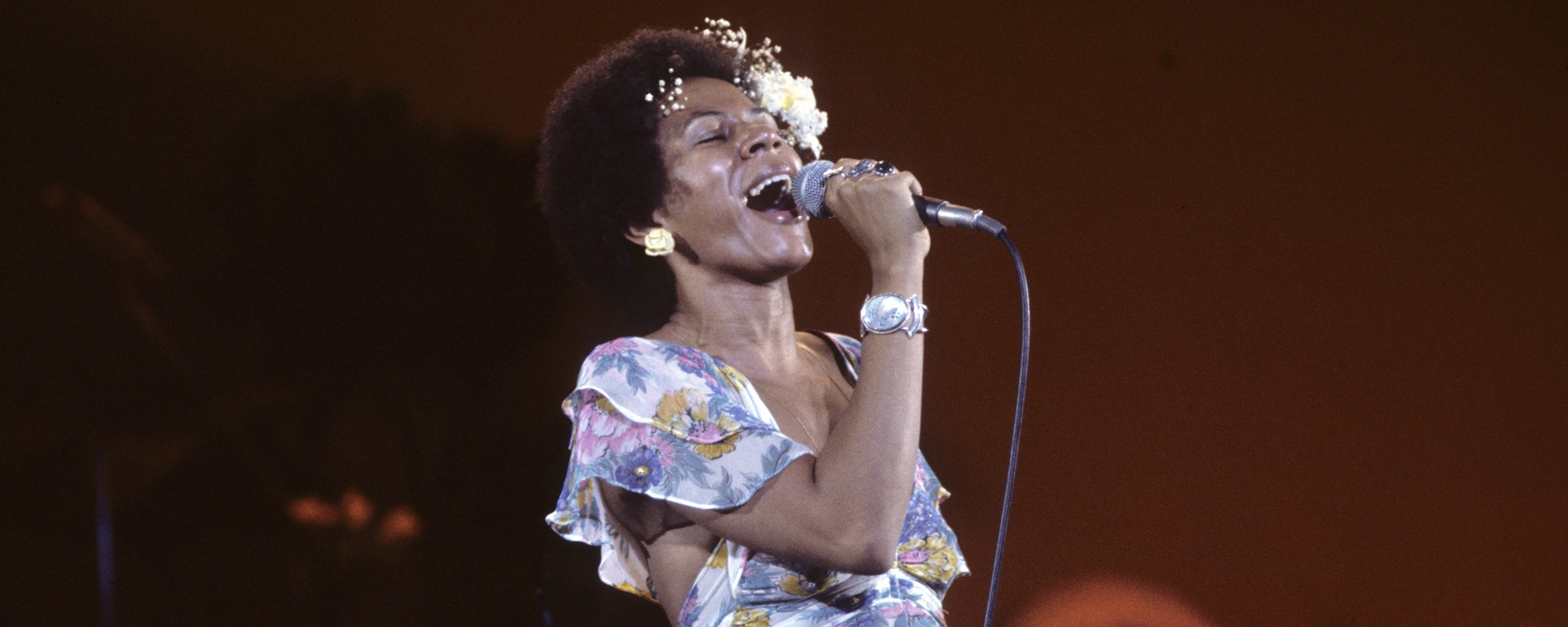
Released in 1974, Minnie Riperton’s "Lovin’ You" remains one of the most enduring and technically impressive ballads in the history of popular music. Defined by its minimalist arrangement, pastoral soundscape, and Riperton’s extraordinary five-and-a-half-octave vocal range, the song reached the pinnacle of the Billboard Hot 100 in April 1975. Beyond its commercial success, the track serves as a poignant family heirloom, a testament to a high-profile musical collaboration with Stevie Wonder, and a showcase for the "whistle register"—a vocal technique that few artists in history have mastered with such precision. As the song continues to resonate through covers, film soundtracks, and the enduring career of Riperton’s daughter, Maya Rudolph, its historical and cultural significance only deepens.
The Early Professional Development of Minnie Riperton
Minnie Riperton’s journey to the top of the charts began long before the 1970s. Born in Chicago in 1947, she was the youngest of eight children and was classically trained in music, drama, and dance at Chicago’s Lincoln Center. Her initial aspirations were in opera, a foundation that provided her with the breathing techniques and vocal control necessary to reach the stratospheric notes for which she would later become famous.
By the age of 15, Riperton had joined The Gems, a girl group signed to the legendary Chess Records subsidiary, Checker Records. During this period, she honed her skills as a session singer, providing backing vocals for established stars. Notably, she contributed to Fontella Bass’s 1965 soul anthem "Rescue Me." Her time at Chess Records was an apprenticeship in the mechanics of the music industry, allowing her to work alongside prolific producers and songwriters who were shaping the sound of Chicago soul.
In the late 1960s, Riperton’s career took a turn toward the avant-garde when she became the lead vocalist for Rotary Connection. The group, created by Marshall Chess, was an experimental soul-rock ensemble that blended psychedelic influences with orchestral arrangements. It was during her tenure with Rotary Connection that she met Richard Rudolph, a songwriter and producer who would become her creative partner and husband. This era was critical in establishing Riperton as a versatile artist capable of navigating complex, non-traditional musical structures, setting the stage for her solo breakthroughs.
The Genesis of Perfect Angel and the Stevie Wonder Collaboration
After the dissolution of Rotary Connection, Riperton and Rudolph moved to Florida for a brief period of semi-retirement before relocating to Los Angeles to pursue a solo career. Her debut solo album, Come to My Garden (1970), was critically acclaimed but failed to achieve significant commercial traction. However, her fortunes changed when she caught the attention of Stevie Wonder, who was then at the height of his "classic period."
Wonder was a profound admirer of Riperton’s voice and agreed to produce her second solo album, Perfect Angel. Due to contractual obligations with Motown Records, Wonder could not be officially credited under his own name. Instead, he used the pseudonym "El Toro Negro" (The Black Bull). The collaboration was a fusion of Riperton’s ethereal vocal style and Wonder’s pioneering use of the ARP 2600 synthesizer and soulful arrangements.
The recording sessions at the Record Plant in Los Angeles were characterized by a high degree of intimacy and experimentation. Wonder and Rudolph co-produced the album, ensuring that the instrumentation remained subservient to Riperton’s voice. This approach is most evident in "Lovin’ You," which was originally conceived not as a commercial single, but as a personal piece of the family’s domestic life.
The Composition and Technical Mastery of Lovin You
The origins of "Lovin’ You" are rooted in the domestic sphere. Richard Rudolph began writing the song in the early 1970s as a lullaby for the couple’s children, Marc and Maya. The song’s simplicity—consisting primarily of an electric piano and an acoustic guitar—was intentional, designed to create a soothing environment. Riperton eventually developed a melody to accompany Rudolph’s lyrics, and the couple used a demo of the song to quiet their children, reportedly to find moments of privacy in their busy household.
The track is famous for its inclusion of chirping birds, which were recorded in the background and kept in the final mix to enhance the song’s natural, organic feel. Technically, the song is a masterclass in vocal control. Riperton utilizes the "whistle register"—the highest register of the human voice—to hit notes that are often compared to the sound of a flute or a bird. In the song’s bridge and climax, she reaches a G#6, a feat that remains a benchmark for R&B and pop vocalists.
A significant detail often noted by fans is the "Maya" shout-out at the end of the unedited album version. As the song fades, Riperton repeatedly sings the name of her daughter, Maya Rudolph. This personal touch transformed the song from a standard love ballad into a profound expression of maternal affection, a fact that gained further cultural weight as Maya Rudolph rose to fame as a cast member on Saturday Night Live and a celebrated actress.
Chart Performance and Global Impact
While the record label, Epic Records, was initially hesitant to release "Lovin’ You" as a single—fearing it was too "soft" for the prevailing R&B market which favored funk and disco—the song’s popularity was undeniable. Released in January 1975, it began a steady climb up the charts.
Data from the era highlights the song’s massive success:
- Billboard Hot 100: Reached #1 on April 5, 1975.
- R&B Charts: Reached #3.
- Adult Contemporary: Reached #4.
- International Performance: The song was a top-five hit in the United Kingdom, peaking at #2 on the UK Singles Chart, and saw similar success in Australia, Canada, and the Netherlands.
The success of "Lovin’ You" propelled the album Perfect Angel to gold status, selling over 500,000 copies in its initial run. It established Riperton as a global star, proving that there was a massive audience for "quiet storm" ballads—a genre that would later be dominated by artists like Luther Vandross and Sade.
Tragedy and the Legacy of the American Cancer Society
The triumph of "Lovin’ You" was tragically followed by personal hardship. In 1976, Riperton was diagnosed with breast cancer. At the time, public discussion of the disease was often shrouded in stigma, but Riperton chose a path of transparency. She underwent a radical mastectomy and became one of the first high-profile celebrities to speak openly about her diagnosis.
In 1977, President Jimmy Carter presented her with the American Cancer Society’s Courage Award. She served as the National Women’s Chairman for the American Cancer Society, using her platform to advocate for early detection and research. Despite her declining health, she continued to record and perform, releasing the album Minnie in 1979.
Minnie Riperton passed away on July 12, 1979, at the age of 31. Her death was a significant loss to the music world, but her influence persisted. The American Cancer Society later noted that Riperton’s openness had a measurable impact on public awareness, encouraging thousands of women to seek screenings.
Cultural Implications and Modern Influence
The legacy of "Lovin’ You" extends far beyond the 1970s. The song has been covered by a diverse array of artists, including Shanice, who took the song back to the R&B charts in 1992, and Leona Lewis. Its influence is also visible in the vocal styles of modern "divas" such as Mariah Carey and Ariana Grande, both of whom have cited Riperton as a primary influence on their use of the whistle register.
Furthermore, the song has become a staple of popular culture, appearing in numerous films and television shows, often used to evoke a sense of innocence or, conversely, for comedic effect due to its extreme vocal heights. However, the most profound continuation of Riperton’s legacy is found in her daughter, Maya Rudolph. Maya has frequently discussed the emotional weight of hearing her mother’s voice on the radio, noting that the song serves as a permanent, living connection to a parent she lost at a young age.
In terms of musical evolution, "Lovin’ You" signaled a shift toward the "singer-songwriter" ethos within the R&B genre. It stripped away the heavy production typical of the era, focusing instead on lyrical intimacy and technical vocal prowess. It remains a definitive example of how a song born from a private, domestic moment can achieve universal resonance, maintaining its place as a cornerstone of American soul music nearly half a century after its release.
Through the combination of Stevie Wonder’s production, Richard Rudolph’s songwriting, and Riperton’s incomparable voice, "Lovin’ You" stands as a rare perfect moment in recording history—a song that is as much a technical marvel as it is a deeply felt emotional statement.