
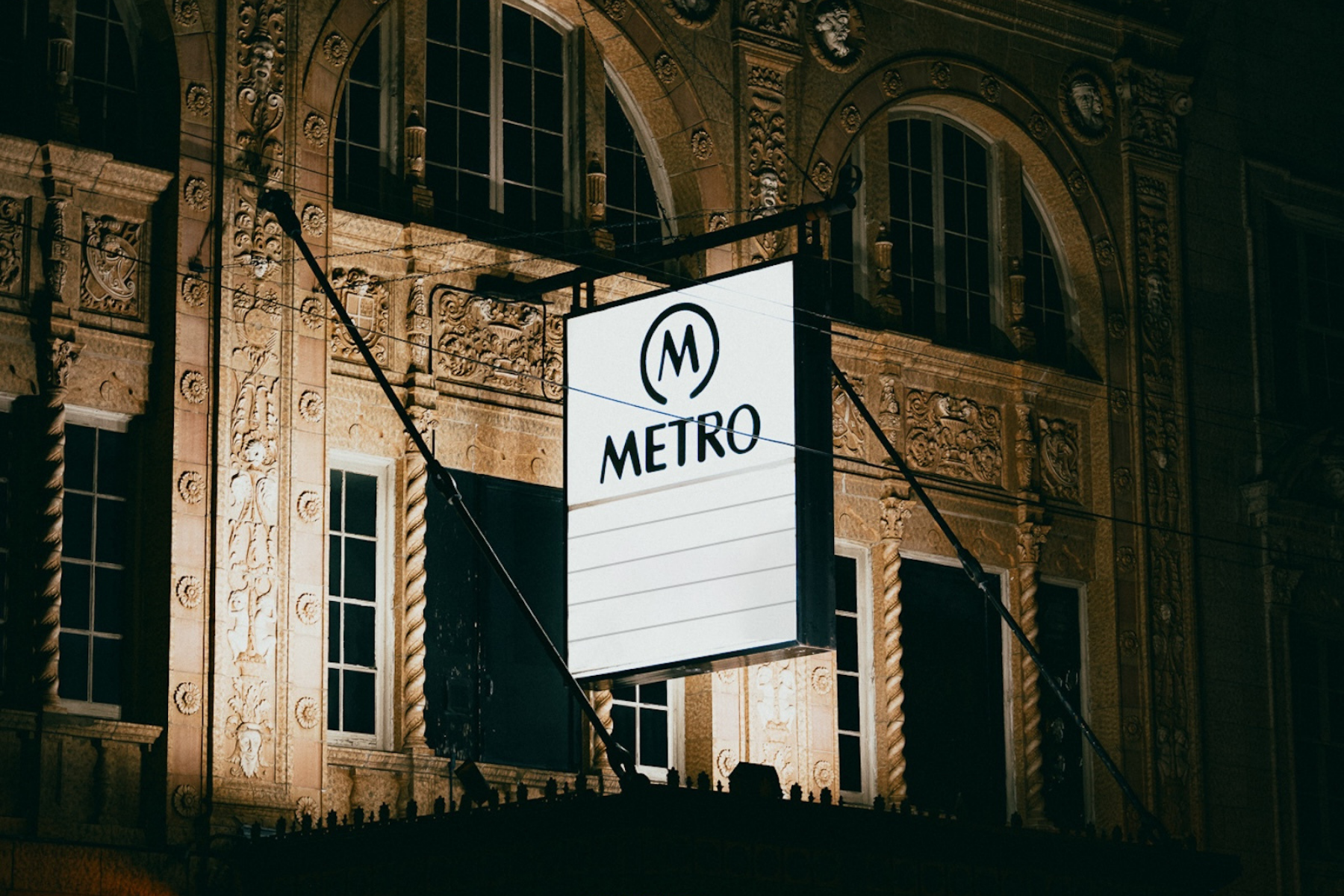
A singular, decades-old voicemail, now lost to the annals of forgotten technology, serves as the unlikely genesis for one of Chicago’s most iconic independent music venues, Metro. For over 40 years, owner Joe Shanahan has championed emerging talent and cemented Chicago’s place on the global music map, a journey that began with a bold invitation and a fortuitous call from the then-nascent band R.E.M. This pivotal moment not only launched Shanahan’s 1,100-capacity club but also set the stage for a venue that would witness the birth of house music, the rise of punk and alternative rock, and host a pantheon of musical legends from Metallica to Bob Dylan.
From Swedish Community Hub to Chicago’s Musical Heartbeat
The story of Metro is inextricably linked to the history of its physical space, a building rich with Chicago’s cultural tapestry. Constructed in 1927, the structure initially served as the Northside Auditorium Building, a vital community center for Chicago’s burgeoning Swedish immigrant population. Beyond its civic functions, it quickly established itself as a concert venue, hosting folk legends like John Prine and Bonnie Koloc, artists who, in a twist of fate, would later become connected to Shanahan’s own journey. The building later transitioned into Stages Music Hall, a precursor to its future identity, maintaining its role as a gathering place for music enthusiasts.
It was into this storied edifice that Joe Shanahan, a self-described "Chicago, South Side Irish hustler," injected his vision. Prior to Metro, Shanahan had cultivated a reputation for hosting vibrant DJ events, initially in his own loft where crowds of 200-300 people quickly outgrew the space. Recognizing the demand for a dedicated venue, he transitioned his talents to one of the upper floors of the former Swedish community center, establishing Smart Bar. Kicking off around midnight and extending into the early hours of 4 or 5 a.m., Smart Bar quickly became a nocturnal haven for Chicago’s burgeoning dance music scene.
The Dawn of House and Industrial: Smart Bar’s Pivotal Role
The summer of 1982 marked a watershed moment for Smart Bar and the global music landscape with the inaugural performance of house music pioneer Frankie Knuckles. Knuckles, often credited as the "Godfather of House Music," found a fertile ground at Smart Bar, allowing the venue to become a crucible for the genre. Shanahan recalls this period as a cultural "fulcrum" in Chicago, distinct from other bars predominantly playing Top 40 hits. "While New York was birthing rap and hip-hop," Shanahan tells Billboard, "Chicago was birthing house and industrial." This unique fusion of house and punk, fostered within Smart Bar’s walls, gave Chicago a distinctive musical identity that reverberated internationally. The venue’s role in cultivating these genres not only solidified its local significance but also cemented its place in music history, contributing to the broader narrative of electronic dance music’s evolution.

A Bold Invitation and the Fateful R.E.M. Voicemail
The narrative of Metro’s founding pivots on Shanahan’s audacious entrepreneurial spirit and a serendipitous encounter. A devoted music fan, Shanahan had traveled to New York City to witness R.E.M. perform at Danceteria, a legendary club synonymous with the city’s vibrant new wave and post-punk scene. Captivated by the band’s innovative sound, Shanahan, without a venue or even a solidified plan, made his move. Armed with a simple business card bearing only his name and phone number, he ventured backstage. His proposition to R.E.M. was disarmingly straightforward: "Hey, if you ever get stuck and don’t have a gig in Chicago and don’t have a promoter or don’t have a venue, call me. I will help. I will be there for you." This audacious, speculative offer, made without any established infrastructure, underscored Shanahan’s deep belief in the music and his commitment to supporting artists.
In 1982, R.E.M., remembering Shanahan’s unexpected gesture, left the voicemail that would become Metro’s accidental cornerstone. The band was looking for a venue in Chicago, and Shanahan’s unsolicited offer proved prescient. "These guys remembered that," Shanahan recounts, leading to Metro’s inaugural concert. The ticket price was set at an accessible $7 at the door and $5 in advance, a reflection of the era’s concert economy and Shanahan’s commitment to making live music accessible. The show broke even, but for Shanahan, the financial outcome was secondary to the experience. "Gosh, that was fun. What are we going to do next weekend?" he recalls thinking, a sentiment that perfectly encapsulated the nascent, passion-driven spirit of independent venue ownership.
The impact of that R.E.M. show extended far beyond the immediate success. Shanahan credits the band with spreading the word about their positive experience at his Chicago venue, leading to a cascade of inquiries from other touring acts. This organic, word-of-mouth endorsement proved invaluable for a fledgling club seeking to establish itself in a competitive landscape. Shanahan soon began booking more shows at Stages, ultimately taking over the main stage and rebranding the venue as Metro. The name itself was inspired by Shanahan’s experience getting lost in the labyrinthine Paris public transport system, a metaphor for the building’s many staircases and his vision for a venue that would serve as a vital cultural artery for Chicago.
Nurturing Talent and Building a Midwest Circuit
Much like the Swedish community center that preceded it, Shanahan envisioned Metro as a communal space, dedicated to serving Chicago by both nurturing local talent and attracting non-regional acts. In the early 1980s, Chicago, and indeed much of the Midwest, was often considered a "flyover state" for touring artists, with major tours typically concentrating on the East and West Coasts. Metro, under Shanahan’s guidance, aimed to change that perception, establishing Chicago as a crucial stop on any national or international tour.
"First couple of months, we had no idea what we were doing and it was more about that we just liked the music. We went after bands we liked," Shanahan admits, highlighting the authentic, fan-first approach that characterized Metro’s early booking strategy. This organic philosophy led to early bookings of seminal local bands like Naked Raygun and Ministry, showcasing Chicago’s burgeoning punk and industrial scenes. To expand Metro’s reach, Shanahan embarked on scouting trips to cultural epicenters like London and New York, immersing himself in the punk and alternative music cultures. It was during one such trip that he saw New Order perform, an experience that led to their booking at Metro.

The first New Order show at Metro remains etched in memory, not just for the music but for the sweltering conditions. "One of the hottest days in Chicago. The air conditioning at Metro – what we had at the time was inadequate for the amount of people that were in the venue for as long as they were in the venue," Shanahan recounts. Wax Records founder Jim Nash famously quipped, "I sweated off five pounds of beer and water" that night, a testament to the raw, visceral energy that defined early Metro shows. Despite the heat, the show was a triumph, forging a lasting connection between Shanahan and New Order/Joy Division co-founder Peter Hook, who remains a friend and continues to play Metro regularly, a testament to the venue’s enduring appeal to artists.
From Metallica’s Debut to Dylan’s Intimate Gig
Metro’s reputation for nurturing diverse genres of rock music quickly grew, particularly for metal and various alternative subgenres. In 1983, a then-unknown band named Metallica played their first Chicago show at Metro, a pivotal moment in their trajectory. Fast forward to 2024, Metallica returned to Chicago to play the colossal 60,000-plus capacity Soldier Field, a stark contrast to Metro’s intimate setting. During their Soldier Field performance, the band paid homage to their roots, projecting a video montage that prominently featured their early days performing at Metro, acknowledging the venue’s role in their formative years. Three years prior, in a nod to their history and the venue’s significance, Metallica returned to Metro for the 30th anniversary of their iconic "Black Album," selling tickets at the symbolic price of $19.83, reflecting the year of their Chicago debut.
Throughout the 1980s and 90s, Metro solidified its position as a cornerstone of the alternative music scene, attracting a remarkable roster of international and domestic acts. Depeche Mode, Nick Cave, The Ramones, PJ Harvey, Joe Strummer, and Elliott Smith all graced Metro’s stage. The 1990s, in particular, saw Metro embrace the explosive rise of grunge, punk, and alternative rock, hosting seminal performances by Nirvana, Pearl Jam, Sleater-Kinney, Soundgarden, Red Hot Chili Peppers, Mudhoney, and Chicago’s own Smashing Pumpkins.
The Smashing Pumpkins, in particular, found a creative sanctuary at Metro. Shanahan describes the venue as the band’s "laboratory" during their early years. "They played every month for a year," he recalls. "They would open for people. They would play in the middle slot. They would headline. My staff at one point was saying, ‘God, if we have to hear the Pumpkins one more time, Joe.’" This anecdote perfectly illustrates Metro’s role not just as a performance space, but as a proving ground and a crucible for artist development.
Beyond Chicago, Metro played a crucial role in establishing a thriving Midwest touring circuit. Collaborating with venues in Detroit, Minneapolis, St. Louis, Cleveland, and Cincinnati, Metro helped create a network that allowed local bands like Soul Asylum, Husker Du, The Replacements, and The Afghan Whigs to circulate and build regional fanbases. This interconnectedness was vital for the growth of independent music, demonstrating the collective power of dedicated venue owners.
By Metro’s 15th anniversary, its reputation was so formidable that it managed to book two nights with Bob Dylan, a legendary artist who rarely plays smaller venues. Dylan, fresh off the release of his critically acclaimed 1997 album Time Out of Mind, had heard about Metro and specifically requested to play there. This booking was a monumental achievement, showcasing Metro’s unique appeal to even the most iconic figures in music.

The Battle Against Scalpers and the Ethos of "Real Fans"
Dylan’s Metro concerts also highlighted Shanahan’s unwavering commitment to his audience. The artist had "very specific ideas on how to do the ticketing," which meant selling each ticket by hand at the door before the show. This old-school approach, however, brought its own challenges. When tickets went on sale, over 2,000 fans formed a massive line, attracting the attention of scalpers. Shanahan and Nick Miller of Jam Productions spent the day meticulously "weeding out fake fans." Scalpers, he explains, would deploy teenagers with hot dogs and beepers to purchase tickets that could then be flipped for profit. To combat this, Shanahan and Miller personally interrogated those in line, asking them to name their favorite Dylan song, booting anyone who couldn’t pass the test. This hands-on, fan-centric approach underscored Metro’s dedication to ensuring tickets landed in the hands of genuine music lovers, not profiteers.
Over the years, Metro’s ticketing strategy has evolved, becoming more sophisticated while retaining its core ethical principles. The venue team, many of whom have been working at Metro for 20 or 30 years, diligently sorts through ticket purchases, identifying and canceling requests from suspected resellers, foreign addresses, or bulk buyers. "Artists know that we’re going to do the ticketing right. We’re not greedy people looking to make $1 or two off of a ticket. It’s about getting real fans at the club," Shanahan emphasizes. This commitment to fair ticketing practices has fostered deep trust with artists and fans alike, distinguishing Metro from many larger, more corporate venues.
Preserving Authenticity in a Changing Landscape
Remarkably, despite decades of operation and the ever-shifting tides of the music industry, Metro has largely resisted significant physical alterations. The floors, fixtures, railings, and doors remain largely as they were, preserving the venue’s distinctive character and history. Only the stage and sound system have undergone necessary upgrades, with Metallica’s Lars Ulrich reportedly giving his seal of approval to the latter, a testament to its quality. The space that once housed Smart Bar has been repurposed into office space for Shanahan and his team, who continue to operate under the parent company Stages Music Hall, a nod to the building’s earlier identity.
Despite its enduring charm and historical reverence, Metro is far from a relic. It continues to book a diverse array of contemporary talent, including Snoop Dogg, Chance the Rapper, Fall Out Boy, Luke Combs, and Common, demonstrating its adaptability and relevance across genres and generations. This blend of historical preservation and contemporary bookings speaks volumes about Metro’s unique position in the live music ecosystem.
Shanahan attributes Metro’s remarkable longevity to a simple, yet profound philosophy: "music is the message." His personal passion for music remains undimmed. "I’m still a fan. I still love new, emerging talent," he states. "One thing that’s been consistent in my life is, I still buy records every Saturday morning. I still listen to a lot of radio online from KEXP or even FIP in France." This unwavering dedication to discovering and supporting new music, coupled with a staff comprised of equally passionate music fans, is what Shanahan believes "keeps the indie spirit alive" at Metro. In an era where many independent venues struggle to compete with corporate giants, Metro’s commitment to authenticity, community, and artistic integrity stands as a powerful model of resilience.

A Century of Sound and a Vision for the Future
Looking ahead, the building that houses Metro will celebrate its 100th anniversary next year, a remarkable milestone. Concurrently, Metro itself will mark its 45th year of operation, a testament to Shanahan’s vision and the venue’s enduring cultural significance. Shanahan is already planning ambitious celebrations, hoping to secure bucket-list talent with the assistance of major promoters like C3 Presents (Lollapalooza) and Jam Productions. His dream roster for the anniversary includes iconic artists like Tracy Chapman, The Rolling Stones, and U2. With a playful challenge, Shanahan asks, "Bono, Dylan played Metro. Why not you?" This aspiration reflects not only a desire to host legendary acts but also to continue the tradition of bringing unparalleled musical experiences to Chicago.
Metro’s journey from a speculative voicemail to a globally recognized music institution is a powerful narrative about passion, perseverance, and the transformative power of live music. It underscores the vital role that independent venues play in shaping cultural landscapes, nurturing artists, and creating indelible memories for generations of fans. As Metro approaches these significant anniversaries, its legacy as a beacon of independent music, a sanctuary for artists, and a beloved cultural landmark in Chicago remains stronger than ever. Its story is a reminder that sometimes, the greatest institutions are born from the simplest acts of faith and a deep, abiding love for the music.