

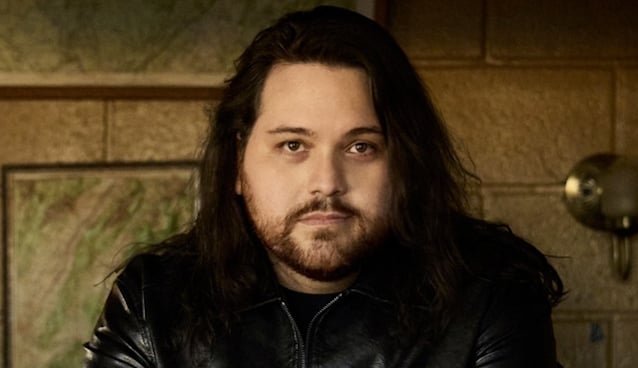
In a candid conversation with Stephanie R. Myers of Songfacts, Wolfgang Van Halen, the prodigious son of the late, legendary VAN HALEN guitarist Eddie Van Halen, has articulated the complex and often challenging journey of establishing his own artistic identity separate from his father’s monumental musical legacy. As the driving force behind his solo project, MAMMOTH (formerly MAMMOTH WVH), which recently released its third studio album, "The End," in October, Wolfgang is keenly aware of the shadow cast by his lineage. He acknowledges that while the connection to his father’s iconic band, VAN HALEN, is an undeniable and often unavoidable aspect of his public perception, it presents a dual-edged sword. The profound impact Eddie Van Halen has had on music and guitar playing is a source of immense pride, yet it also leads some to prejudge Wolfgang’s own work, potentially limiting their willingness to engage with it on its own merits.
"I think it’s always gonna be a thing that gets brought up," Wolfgang explained in the interview, as transcribed by BLABBERMOUTH.NET. "So it’s always new for somebody, even though it’s as old as can be for me. So it’s a tough thing. For one thing, it’s a wonderful positive to see the effect that my father has had on music in general and guitar playing in general, but it’s also a double-edged sword because some people won’t give me the time of day and will just assume this or assume that. So it’s a tough thing, and some days it’s tougher than others, but most of the time it’s just stuff you can’t really reason with. And [that’s] why, I think, on this [third MAMMOTH] record, more than anything, I just began to let go of worrying about that stuff and just do what brings me purpose and what makes me happy and what feels the most fulfilling."
This sentiment of prioritizing personal fulfillment and artistic integrity over external expectations has been a recurring theme in Wolfgang’s public statements. Last October, he made a powerful declaration to Billboard, stating, "I would rather fail on [my] own thing than succeed on [my] dad’s legacy." This assertion underscores his commitment to carving out an independent path, one where his successes and failures are his own. He elaborated on this stance, expressing pride in his professional conduct: "I’m proud of the way that I’ve handled myself in this business. I’m not sitting there playing VAN HALEN songs and trying to shack up in the legacy of my father. I’m trying to set out and do it on my own. Whether I’m successful at that is a subjective opinion, but I’m at least proud that I’m not sitting here going, like, ‘Hey, the only place you can hear a Van Halen play ‘Panama’ is over here.’"
The deep personal connection Wolfgang shares with his father’s music has also led him to a place where listening to VAN HALEN is no longer a casual pastime. In June 2025, he revealed to Drumeo that he has largely stopped listening to the band’s catalog. He explained that his relationship with his father’s music transcends that of a typical fan, being interwoven with personal memories and a profound understanding of its creation. "I just don’t listen to VAN HALEN anymore," he stated. "I understand, like, that’s the connection that everybody has. But, obviously, my connection was a little different. When it comes to listening to it, I have the memories." This decision highlights the emotional weight and personal significance his father’s work carries for him, making detached listening a complex endeavor.
The persistent focus on his lineage by some segments of the fanbase remains a point of contention for Wolfgang. Late last year, he shared with Song Cake his observations about fans who "tend to lose focus" and often compare his playing unfavorably to his father’s or judge his music against specific VAN HALEN tracks. "People tend to lose focus," he said. "They just sit there and go, ‘Oh, he doesn’t play as well as his dad,’ or ‘It’s not as good as this VAN HALEN song.’ It’s all focused on the fact that I might not be tapping well enough, in their opinion, or not playing well enough, rather than, hey, isn’t it cool that I created this whole thing by myself with all these different pieces, all these different parts?"
Wolfgang’s perspective emphasizes his artistic vision, which extends beyond technical prowess to encompass the fundamental craft of songwriting. He draws a parallel to his father’s approach, asserting, "It’s about the song construction at the end of the day, for me, as it was for Dad, even though people seem to focus on the playing. It’s about creating the song. Because if you don’t have that, you just have shredding through scales. And there’s not really much soul on that." This philosophy positions MAMMOTH as a project dedicated to the holistic creation of music, where melody, structure, and lyrical content are as crucial as instrumental execution.
A Legacy of Music and Early Entry into the Spotlight
Wolfgang Van Halen’s musical journey began at a remarkably young age. He joined VAN HALEN as the bassist at just 15 years old, a testament to his precocious talent and his father’s recognition of his abilities. From 2006 until 2015, he shared the stage with his father, a period that spanned significant milestones for the band, including their highly anticipated 2007 reunion tour with original frontman David Lee Roth. During this era, Wolfgang stepped into the shoes of former bassist Michael Anthony, a move that solidified his place within the iconic rock quartet and exposed him to the immense pressures and expectations that come with being part of such a storied act. This tenure provided him with invaluable experience in large-scale touring, studio recording, and the intricacies of navigating the music industry within the shadow of a global phenomenon. The five years preceding Eddie Van Halen’s passing in 2020 were marked by this collaborative musical partnership, creating a unique and deeply personal chapter in both their lives.
The Birth and Evolution of MAMMOTH
Following his tenure with VAN HALEN, Wolfgang embarked on the ambitious endeavor of creating MAMMOTH. The project, initially known as MAMMOTH WVH, represents his singular artistic vision, with Wolfgang handling virtually all instrumental and vocal duties on the early recordings. This solo approach allowed him complete creative control, fostering an environment where he could explore his own musical ideas without the constraints or influences of a traditional band dynamic. The name "MAMMOTH" itself carries a symbolic weight, suggesting something substantial and enduring, a fitting descriptor for an artist aiming to build his own lasting legacy.
The debut album, released in 2021, garnered critical acclaim for its sophisticated songwriting, impressive musicianship, and introspective lyrical themes. It showcased Wolfgang’s ability to blend hard rock sensibilities with melodic hooks and intricate arrangements, hinting at the diverse influences that shaped his musical palette. The subsequent release, "The End," further solidified his artistic direction, delving into themes of finality, acceptance, and the cyclical nature of life and music. The album’s reception has been largely positive, with critics and fans alike acknowledging the growth and maturity in Wolfgang’s songwriting and performance.
Navigating the Specter of VAN HALEN
The persistent comparison to VAN HALEN is a narrative that Wolfgang has been consistently addressing throughout his career. While he acknowledges the immense privilege of being Eddie Van Halen’s son and the opportunities that have arisen from it, he is also fiercely protective of his own artistic journey. The inherent challenge lies in convincing a public accustomed to the specific sound and legacy of VAN HALEN to embrace MAMMOTH as a distinct entity. This requires a constant recalibration of expectations, both from the audience and, at times, from Wolfgang himself.
The decision to refrain from performing VAN HALEN songs during MAMMOTH live sets is a deliberate strategy to reinforce this separation. By focusing solely on his original material, Wolfgang aims to direct attention to his own creative output and the unique sonic landscape he is cultivating. However, there are rare instances where exceptions are made, notably during the emotionally charged Taylor Hawkins tribute concerts in September 2022. Over the course of two nights, Wolfgang paid homage to the late Foo Fighters drummer by performing a selection of VAN HALEN classics, including "On Fire," "Hot For Teacher," and "Panama." These performances, delivered with both technical prowess and palpable emotion, served as a poignant reminder of his deep connection to his father’s music while still occurring within a context of tribute and remembrance, rather than routine setlists.
The Broader Implications for Legacy Artists
Wolfgang Van Halen’s experience offers a compelling case study for the children of iconic musicians navigating their own artistic paths. His struggles highlight the inherent difficulties in escaping the gravitational pull of a parent’s legendary status. For many in the audience, the association is immediate and often inseparable from the artist’s own identity. This can lead to a situation where the artist’s individuality is overlooked in favor of a comparison to the established legacy.
The success of MAMMOTH, therefore, is not merely measured by album sales or chart positions, but by Wolfgang’s ability to cultivate a dedicated fanbase that appreciates his music for its own merits. His commitment to artistic authenticity and his vocal assertion of independence are crucial elements in this endeavor. By consistently articulating his vision and demonstrating his dedication to his craft, Wolfgang is gradually shifting the narrative, encouraging listeners to engage with MAMMOTH as a contemporary force in rock music, rather than solely as a continuation of his father’s.
Furthermore, Wolfgang’s approach provides a valuable lesson for the music industry itself. It underscores the importance of recognizing and supporting emerging artists who are striving to define their own sound, even when they come from prominent musical families. The temptation to pigeonhole artists based on their lineage can stifle innovation and prevent genuine artistic growth. By championing Wolfgang’s independent work, the industry can foster an environment where legacy artists are empowered to forge their own unique destinies.
As MAMMOTH continues to evolve and Wolfgang further refines his artistic voice, the ongoing dialogue surrounding his connection to VAN HALEN will undoubtedly persist. However, his unwavering dedication to his own creative pursuits, coupled with his thoughtful and articulate approach to discussing his journey, positions him as a significant artist in his own right. His story is not just about the shadow of a legend, but about the resilience, talent, and determination required to step out of that shadow and build something entirely his own, a testament to the enduring power of individual artistic expression. The "The End" of his third album may signify a conclusion, but for Wolfgang Van Halen, it clearly marks a new beginning in his ongoing mission to define his own musical legacy.