

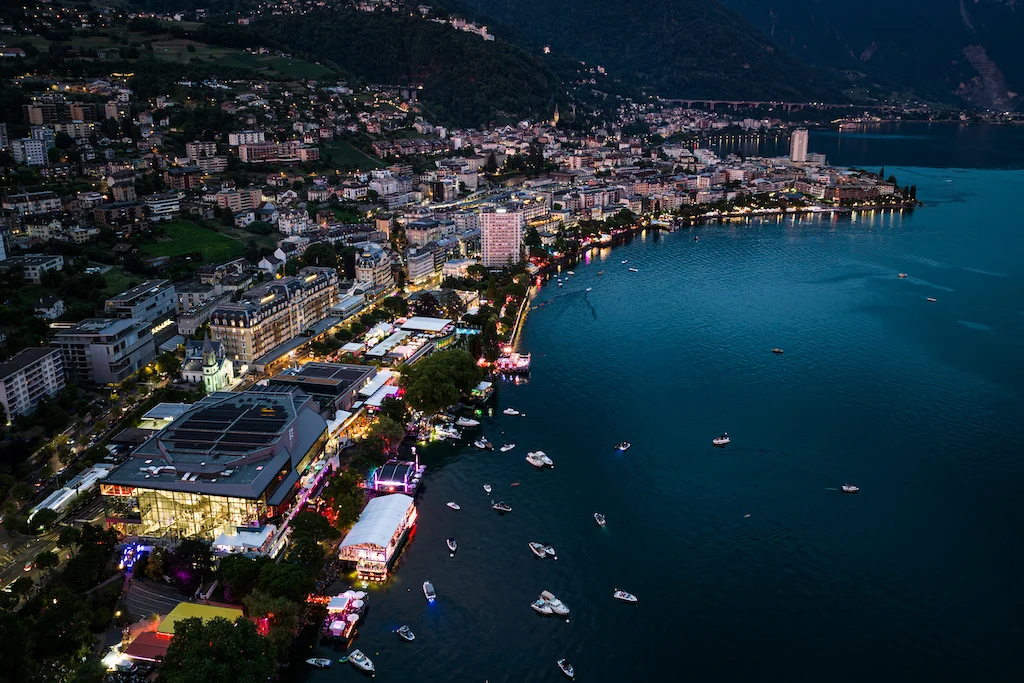
The 60th edition of the Montreux Jazz Festival (MJF), held in the summer of 2026, marked not only a historic milestone for one of the world’s most prestigious musical gatherings but also a landmark anniversary in the realm of professional audio engineering. For 40 consecutive years, Meyer Sound has served as the Global Official Sound Partner of the festival, a relationship that has redefined the standards of live performance reinforcement. Under the commemorative banner of "60/40"—representing 60 years of the festival’s existence and 40 years of technical collaboration with Meyer Sound—the 2026 season transformed the Swiss town of Montreux into a global laboratory for cutting-edge acoustic technology. From July 3 to July 18, the festival welcomed more than 250,000 visitors to the banks of Lake Geneva, hosting over 700 concerts and events that showcased the past, present, and future of music across twelve official stages and numerous hospitality zones.
A Legacy of Innovation at the Renovated 2m2c
The 2026 festival saw the grand return to the newly renovated Montreux Music & Convention Centre (2m2c), which serves as the heart of the event. The facility’s two primary venues, the Auditorium Stravinski and the Montreux Jazz Lab, were equipped with the most sophisticated audio configurations in the festival’s history. The 60th anniversary lineup reflected the festival’s long-standing tradition of stylistic diversity, bridging the gap between established musical icons and the vanguard of contemporary pop, R&B, and electronic music.
Headlining the Auditorium Stravinski were legends such as Sting, Nick Cave & The Bad Seeds, Van Morrison, and the virtuoso bassist Marcus Miller. Simultaneously, the Montreux Jazz Lab hosted a new generation of global superstars, including Tyla, Conan Gray, and PinkPantheress. To meet the diverse acoustic demands of these performers—ranging from the intimate nuances of a jazz quartet to the high-pressure low-end of modern pop—Meyer Sound deployed an unprecedented inventory of equipment. More than 700 loudspeakers were integrated across the festival grounds, managed by the Swiss event technology specialist Skynight, which has been the festival’s primary technical provider for decades.
The Technical Evolution: From Panther to the Debut of Tigra
The hallmark of the 2026 technical deployment was the official Montreux debut of Tigra, Meyer Sound’s newest compact large-format line array. Designed to bridge the gap between medium-sized systems and the high-output requirements of major festival stages, Tigra was integrated into several key locations to provide high-fidelity sound in spaces where traditional large arrays might be too cumbersome.
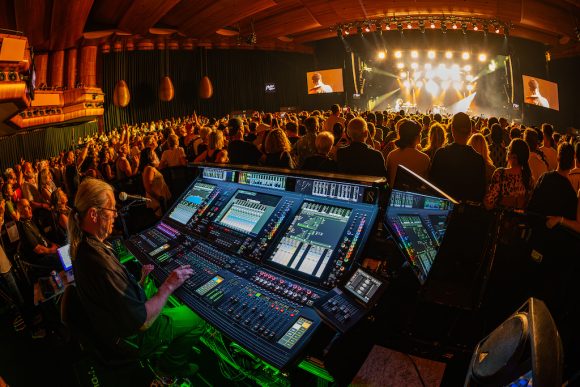
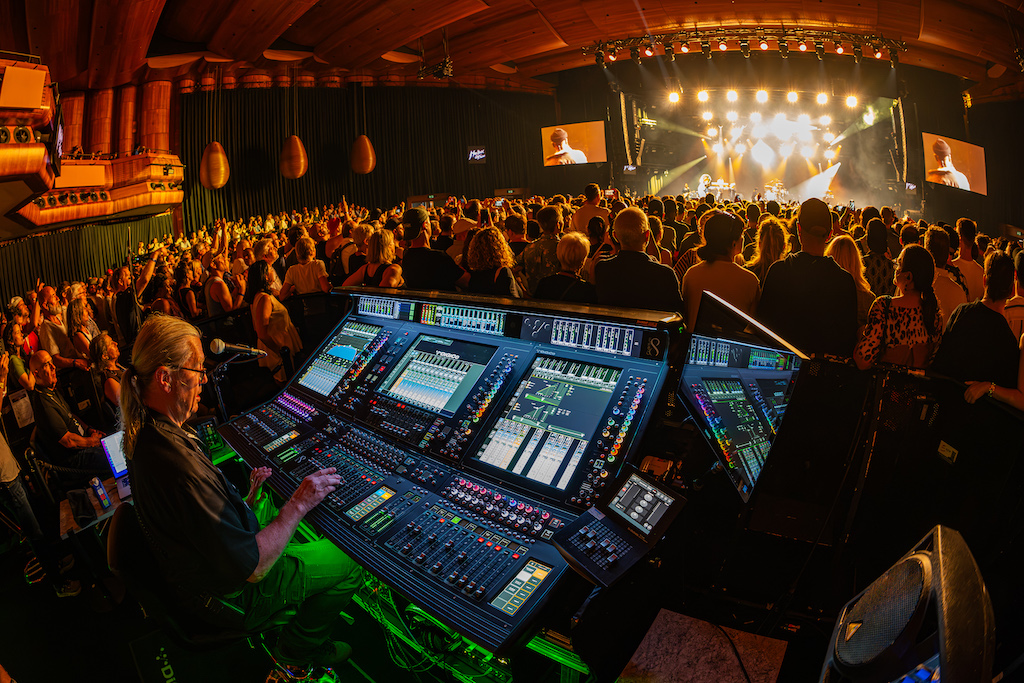
In the Auditorium Stravinski, the primary reinforcement system relied on the Panther line array platform, complemented by 2100-LFC low-frequency control elements. The Panther system, known for its high power-to-weight ratio and linear response, has become the industry standard for large-scale tours since its introduction. However, the 2026 festival pushed the boundaries of standard stage design. The opening night featured a bespoke production by British singer-songwriter Raye, who performed on a custom-built, rotating circular stage positioned in the center of the auditorium.
This "in-the-round" configuration necessitated a radical departure from traditional left-right PA hangs. The audio team developed a complex system design centered around Panther-M (medium-pattern) loudspeakers, supported by the new Tigra units as fill systems. The configuration also utilized Leopard and Lina arrays, alongside Ultra-X80 point-source speakers, to ensure 360-degree coverage with consistent phase response and tonal balance. The logistical feat required 36 hours of continuous shift work to install, and the entire system was struck and reconfigured for the standard end-stage setup the following morning—a testament to the efficiency of modern rigging and software-driven system tuning.
Sonic Consistency and the "Montreux Jazz Lab" Experience
While the Auditorium Stravinski focused on grand spectacles, the Montreux Jazz Lab served as the proving ground for the Tigra system’s capabilities as a primary PA. Martin Reich, the festival’s long-standing Sound Coordinator and Resident Engineer, emphasized that Tigra represents a significant shift in how medium-sized venues are treated. According to Reich, Tigra provides the sonic signature of a large-format system while maintaining a footprint that is manageable for indoor convention center environments.
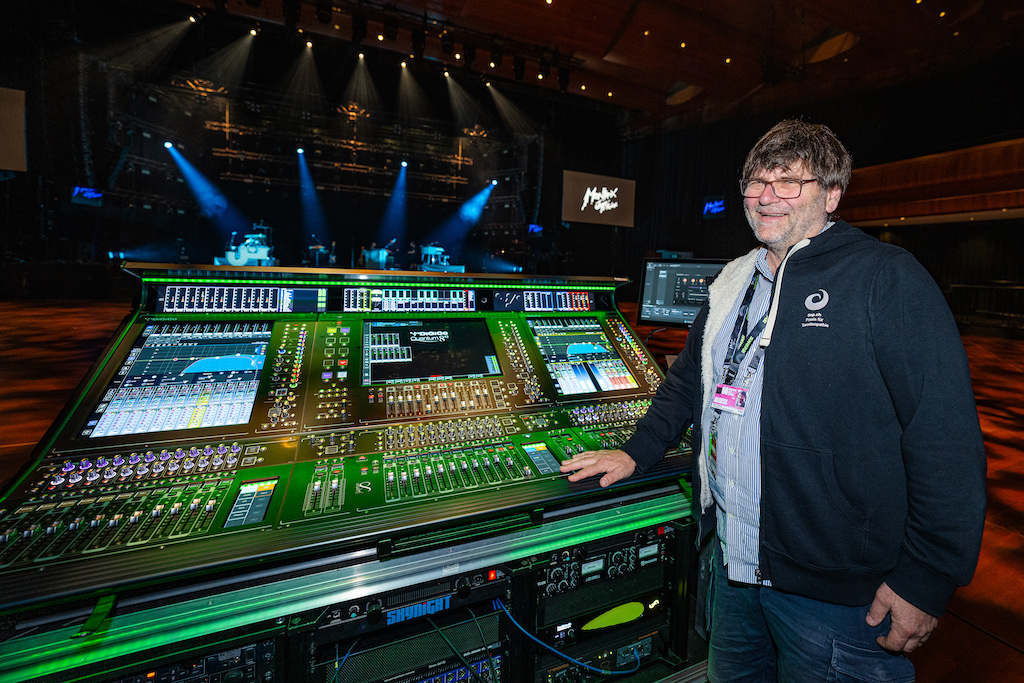
The feedback from visiting engineers was overwhelmingly positive. Femi Bello, a London-based Front-of-House (FOH) engineer, noted that the linearity of the Tigra system allowed for a transparent translation of the mix. This transparency is critical in a festival environment where engineers often have minimal soundcheck time. Frank Demaret, the resident FOH engineer at the Jazz Lab, observed that most guest technicians required only minor adjustments to the system, as the out-of-the-box response of the Meyer Sound arrays met their creative and technical requirements immediately.
Central to this consistency is the use of Meyer Sound’s Nebra software platform. Nebra allows for the unified management, monitoring, and telemetry of the entire ecosystem of loudspeakers and Galileo GALAXY processors. In a festival with 12 stages, the ability to monitor the health and performance of 700 speakers from a central location is not merely a convenience but a requirement for operational stability.
A Four-Decade Partnership Rooted in the Vision of Claude Nobs
The 40-year partnership between Meyer Sound and the Montreux Jazz Festival is a rarity in the entertainment industry, where technical contracts are often re-tendered annually. The longevity of this collaboration can be traced back to the vision of the festival’s late founder, Claude Nobs. Nobs was famously obsessed with audio quality, insisting that the festival should not only be a place to hear music but a place to record it for posterity. This commitment to "The Montreux Sound" led him to seek out John and Helen Meyer in the mid-1980s.
Helen Meyer, Co-founder of Meyer Sound, reflected on the 60/40 milestone by highlighting the shared values that have sustained the partnership. She noted that the festival serves as an annual "living lab" for the company. The challenges presented by the festival—such as the acoustic reflections of the 2m2c or the complex outdoor requirements of the Lake Geneva shoreline—have directly influenced the development of Meyer Sound products over the last four decades.
Mathieu Jaton, the current CEO of the Montreux Jazz Festival, reiterated that the artist experience is inextricably linked to the audience experience, both of which depend on sonic fidelity. Jaton pointed out that the partnership has evolved from simple equipment provision to a deep integrated collaboration where Meyer Sound’s engineering team is involved in the earliest stages of festival planning.
Broader Implications for the Global Live Audio Industry
The success of the 60th Montreux Jazz Festival serves as a case study for the future of the live event industry. As festivals worldwide face increasing pressure to deliver "immersive" and "high-definition" experiences to compete with sophisticated home audio systems and streaming media, the technical standards set at Montreux provide a roadmap for others to follow.
The 2026 edition demonstrated several key trends:
- The Shift Toward Linear Systems: The move away from "colored" sound toward linear reinforcement allows artists to present their music exactly as it was intended in the studio, regardless of the venue size.
- Software-Defined Audio: The reliance on platforms like Nebra indicates that the future of live sound is as much about data and networking as it is about transducers and amplifiers.
- Logistical Agility: The 36-hour turnaround for Raye’s 360-degree production highlights the importance of lightweight, high-output speakers (like Panther and Tigra) in reducing setup times and labor costs.
Beyond the shores of Lake Geneva, the influence of this partnership continues to expand. The Montreux Jazz Festival brand has successfully exported its model to international locations, including Miami, China, and South Africa. In each of these satellite events, the technical blueprint established in Switzerland—centered on Meyer Sound technology—remains the gold standard.
Conclusion: Looking Toward the Centennial
As the 60th edition concluded, the focus of the festival organizers and their technical partners shifted toward the future. The "60/40" celebration was not merely a look back at past achievements but a demonstration of the resilience of live music in a digital age. The collaboration between the Montreux Jazz Festival and Meyer Sound remains a cornerstone of the professional audio world, proving that when artistic vision and engineering excellence align, the result is an enduring legacy of cultural and technical significance.
For the young audio technicians who worked the 2026 season, the festival served as an unparalleled educational environment. Andy Davies, Meyer Sound’s Senior Director of Product Management, noted that the transfer of knowledge occurring on the docks of Montreux is vital for the next generation of engineers. As the festival looks toward its 70th and 80th anniversaries, the foundation laid by four decades of sonic innovation ensures that the "Montreux Sound" will remain clear, powerful, and uncompromised for years to come.
