

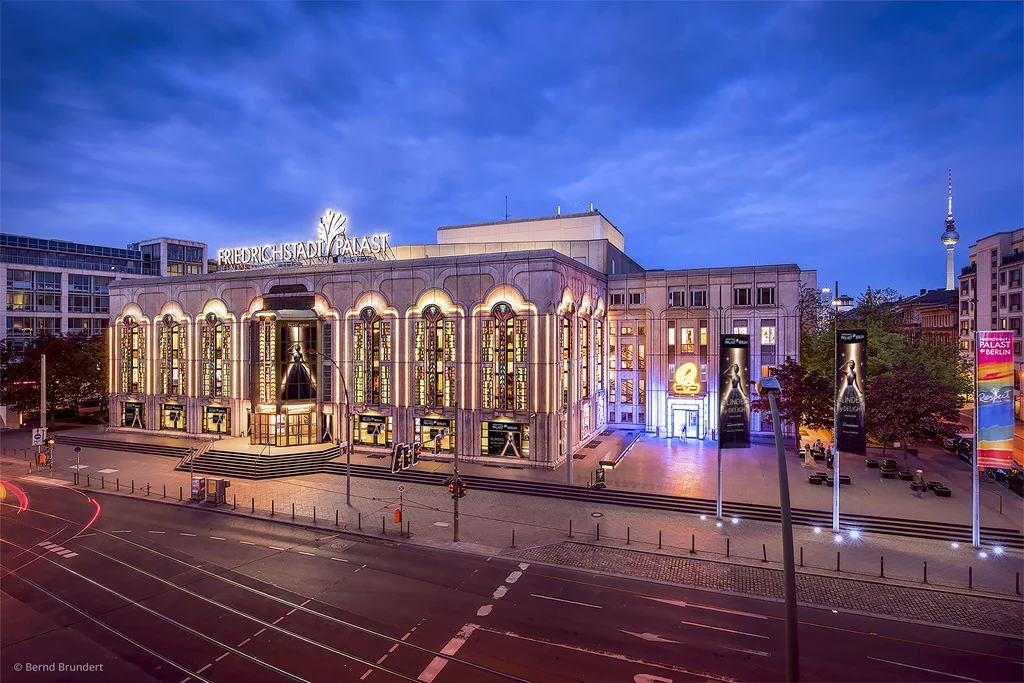
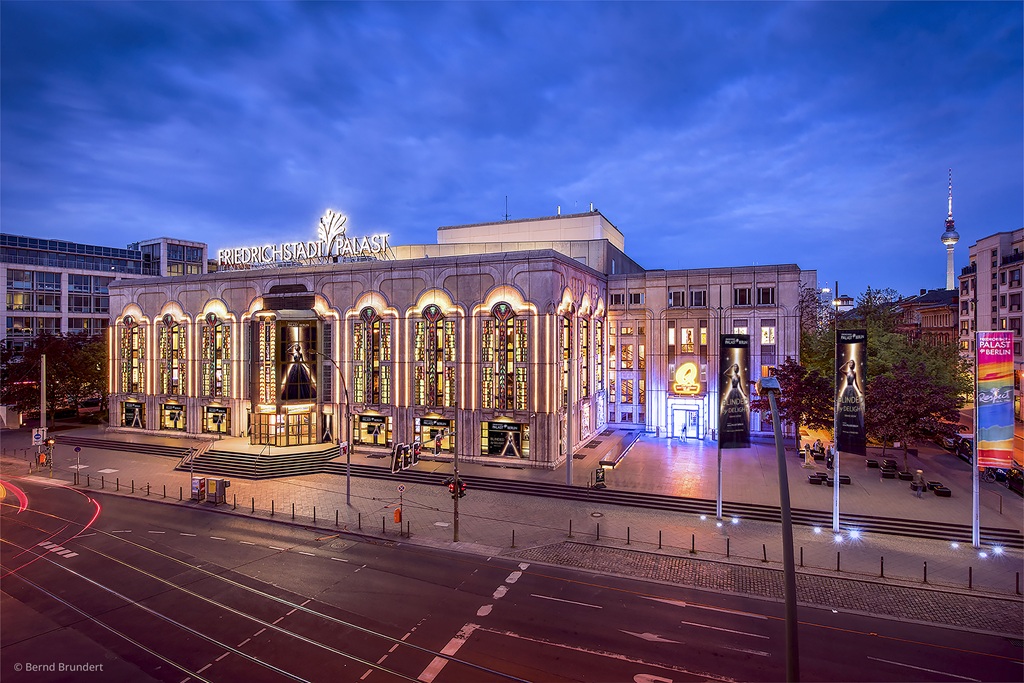
The Friedrichstadt-Palast in Berlin, a landmark of European culture and home to the world’s largest theater stage, has successfully completed a comprehensive modernization of its backstage production infrastructure. This multi-phase technological overhaul integrates a sophisticated ecosystem of video, intercom, control, and I/O solutions provided by Riedel Communications. The project, executed in collaboration with the renowned system integrator Protones, marks a significant transition for the venue, moving toward a future-proof, IP-centric workflow that meets the rigorous demands of high-stakes live entertainment.
As a centerpiece of Berlin’s cultural landscape, the Friedrichstadt-Palast operates on a scale that few theaters globally can match. Built in 1984, the venue hosts "Grand Shows" that are developed in-house and updated every two years. With approximately 300 employees—nearly 100 of whom are technical specialists—and a performance schedule that includes seven to eight shows per week, the theater requires a backbone that is both resilient and flexible. The new installation replaces aging legacy systems with a hybrid layer of MediorNet TDM and IP-video, anchored by Riedel’s Artist intercom ecosystem and the "hi human interface" control system.
A Legacy of Scale and Technical Ambition
To understand the necessity of this upgrade, one must consider the sheer physical and operational magnitude of the Friedrichstadt-Palast. The venue’s main hall accommodates approximately 1,900 spectators. The stage itself is a marvel of engineering, featuring a proscenium width of 23 meters and a total height of 32 meters. The stage floor area is vast, measuring roughly 50 meters from side to side. These dimensions, combined with the building’s 1980s-era construction—characterized by thick concrete walls and heavy steel reinforcement—create a challenging environment for signal distribution and wireless communication.
Historically, the theater’s technical teams had to navigate the limitations of traditional baseband cabling and siloed communication systems. However, as the complexity of the "Grand Shows" increased—often involving dozens of performers, intricate stage machinery, and synchronized live music—the need for a unified, low-latency infrastructure became undeniable. The current production cycle demands that video signals and communication channels be accessible at any point within the massive facility, from the depths of the basement rehearsal rooms to the highest lighting bridges.
The MediorNet Backbone: Low Latency for Critical Timing
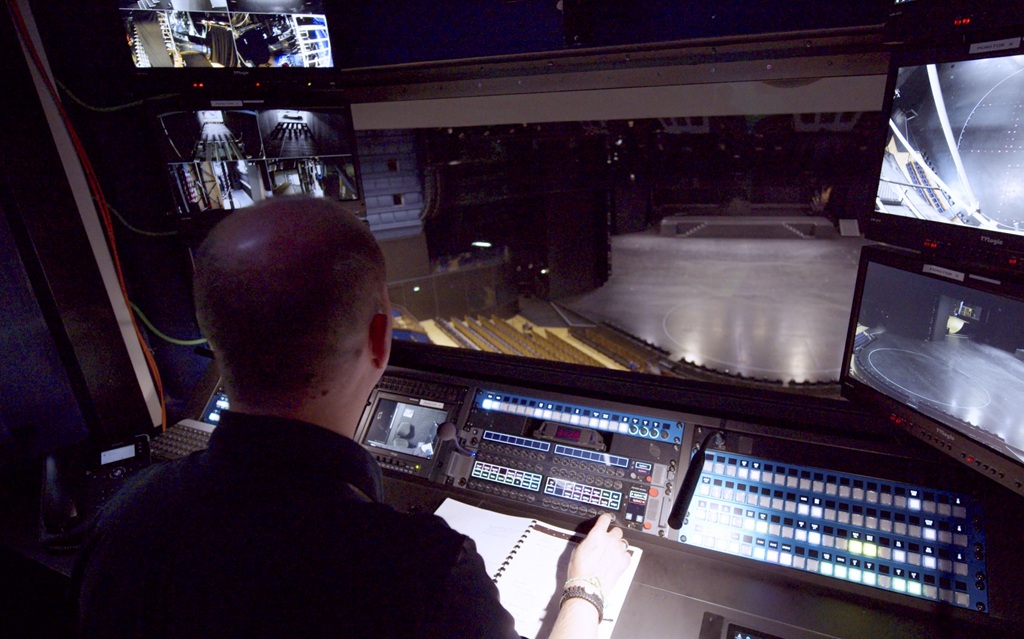
The core of the new video infrastructure is built upon Riedel’s MediorNet platform, which handles signal distribution and multiviewer workflows for stage management, technical crews, and conductors. The deployment includes a MediorNet HorizoN, five MicroN UHD units, a MediorMind cluster, and ten FusioN 6B IP gateways. This setup creates a hybrid environment that bridges the gap between traditional SDI-based equipment and modern ST 2110 IP networks.
One of the most critical applications of this technology involves the theater’s musical direction. In the current production, the live band is split across four different locations, meaning many musicians do not have a direct line of sight to the conductor. To ensure musical cohesion, the MediorNet system distributes the conductor’s video feed to all necessary positions with virtually zero latency. In a live musical environment, even a few frames of delay can lead to rhythmic inconsistencies; the Riedel solution eliminates this risk, providing a real-time visual reference that is essential for the performance’s integrity.
Furthermore, the integration of Riedel SmartPanels and the 1200 Series Control Panel App allows production teams to manage central control functions directly. This includes the ability to trigger PTZ (Pan-Tilt-Zoom) camera presets and customize multiviewer layouts on the fly. Technicians can now curate specific camera angles for different monitors, ensuring that the stage management team has the exact visual data required for every scene change.
Overcoming RF Challenges with Bolero and Artist
Effective communication is the lifeblood of any large-scale theatrical production. At the Friedrichstadt-Palast, the communication layer connects the audio, lighting, video, stage, and management departments. This is facilitated by an Artist-1024 intercom matrix, supported by more than 30 SmartPanels and nearly 80 Bolero wireless beltpacks.
The wireless planning for this project was particularly intensive due to the building’s architecture. The steel and concrete structure of the 1984 building acts as a natural barrier to radio frequencies. To ensure 100% coverage across the Front of House (FOH), the stage, and the extensive backstage areas, the technical team installed approximately 40 Bolero antennas. This dense antenna network allows for seamless roaming, enabling crew members to move throughout the facility without losing signal or experiencing audio drops.

At the FOH position, dedicated SmartPanel stations are provided for lighting, sound, and the "show caller." This centralization of communication ensures that the individual leading the show has instant access to every department, a necessity for coordinating the highly choreographed movements of the Palast’s massive ensemble.
Advanced Stage Management and I/O Flexibility
The modernization also involved the installation of three new stage management consoles. These are strategically located: one in the permanent stage management office on the third floor, one in the stage-side area, and a third mobile console used during the setup and rehearsal phases of a show.
The mobile console is a testament to the system’s flexibility. By combining MediorNet HorizoN with FusioN IP converters, the technical team can deploy a fully functional control station anywhere in the theater. These FusioN devices are fiber-connected and can be outfitted with various I/O cards depending on the specific needs of a production.
To handle the variety of signals required, the theater utilizes three StageLink NSA-002A interfaces for analog inputs and outputs, and a StageLink NSA-010C for network-based GPIO (General Purpose Input/Output) connectivity. The inclusion of NMOS IS-07 support allows for the seamless integration of third-party systems, ensuring that the Riedel ecosystem can communicate with other technical hardware used in the theater. Additionally, these interfaces manage the distribution of timecode to SmartPanels throughout the house, ensuring that all departments are perfectly synchronized with the show’s master clock.
Chronology of the Transformation
The transition to the new Riedel infrastructure was the result of a multi-year planning and implementation process.
- Phase 1: Needs Assessment and Design: Technical directors identified the limitations of the existing analog-digital hybrid systems and sought an IP-centric solution that could scale.
- Phase 2: RF Surveying: Protones conducted extensive site surveys to map the "dead zones" within the Friedrichstadt-Palast’s concrete shell, leading to the 40-antenna Bolero design.
- Phase 3: Core Installation: The Artist-1024 matrix and MediorNet backbone were installed during a dark period between show cycles, allowing for the laying of new fiber optic lines.
- Phase 4: Integration and Training: The technical staff underwent training on the "hi human interface" system, which simplifies the management of complex signal paths through a user-friendly graphical interface.
- Phase 5: Full Operational Status: The system was fully vetted during the rehearsals for the latest "Grand Show," proving its reliability under the pressure of a live production schedule.
Professional Perspectives and Operational Impact
Thomas Milde, the Head of Sound Technology at the Friedrichstadt-Palast, emphasized the operational necessity of the new system. In a venue where the turnaround time between two performances on a single day can be as short as one hour, there is no margin for error. "The backstage infrastructure must function flawlessly," Milde stated. "The new system provides our teams with the flexibility to send camera images and vital production signals exactly where they are needed, while coordinating all departments with precision during the show."
Bernhard Bauer, Sales Manager Venue & Global Sales Maritime at Riedel Communications, highlighted the collaborative nature of the project. He noted that the Friedrichstadt-Palast has set the standard for high-level theater for decades, which in turn demands a world-class infrastructure. "Together with Protones and the local team, we have developed an IP-centered solution that masters the complexity of daily production and gives the house the flexibility needed for future shows," Bauer added.
Broader Implications for the Live Entertainment Industry
The Friedrichstadt-Palast project serves as a significant case study for the wider theater and live events industry. As venues worldwide look to move away from rigid, hardware-heavy setups, the success of this IP-based transition demonstrates that even the most architecturally challenging historic buildings can be modernized.
The shift toward ST 2110 and decentralized signal processing allows theaters to become more agile. Instead of fixed patch bays, technical directors can now route any signal to any destination via software. This not only reduces the physical footprint of the cabling but also decreases the time required for troubleshooting and reconfiguring the house for guest events or special televised broadcasts.
Furthermore, the use of a unified control layer like "hi human interface" points toward a trend of "democratizing" complex broadcast technology. By making high-end IP routing accessible to theater technicians who may not be IT specialists, Riedel has lowered the barrier to entry for advanced digital workflows.
As the Friedrichstadt-Palast continues to push the boundaries of what is possible on a theater stage, its new technological foundation ensures that the "Grand Shows" of the future will be supported by the most advanced communication and signal distribution tools available in the industry today. The project stands as a benchmark for technical excellence in the heart of Berlin.
