

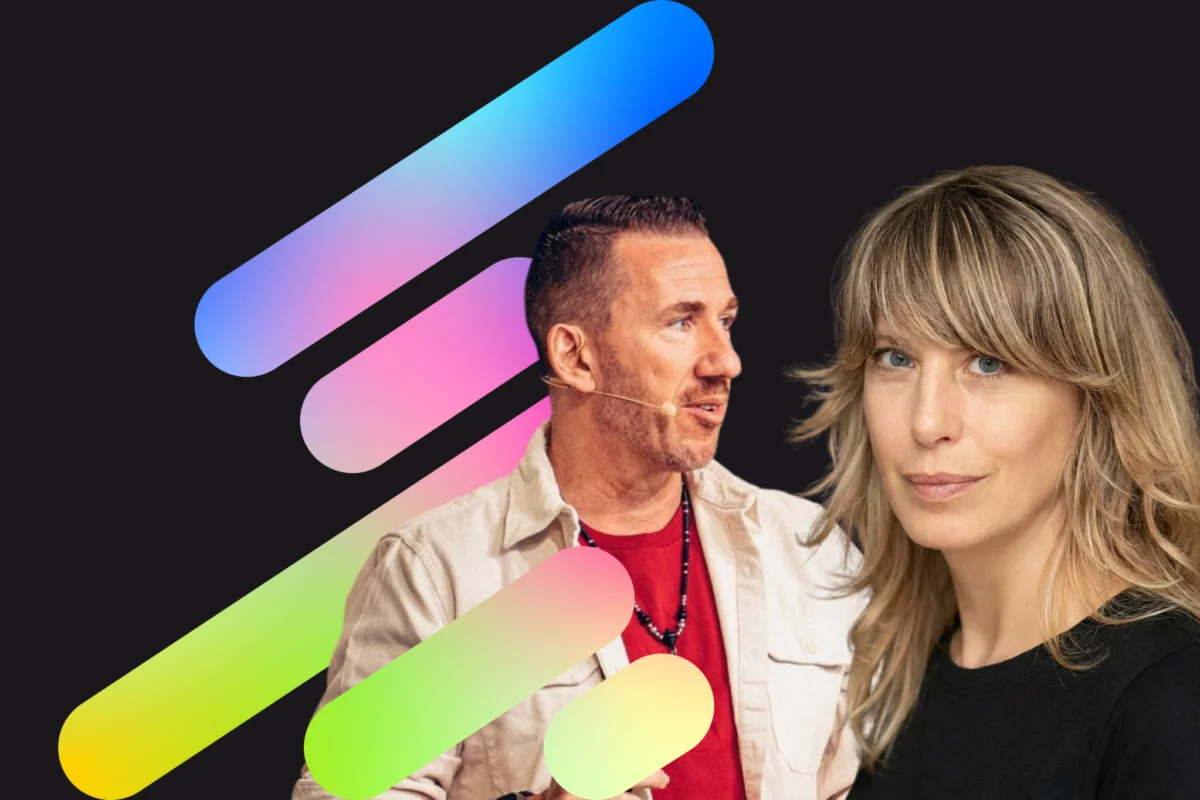
The intersection of artificial intelligence and professional media production will take center stage at the upcoming leat con 26, where industry leaders are set to analyze the transformative power of neural networks on the creative process. As the media landscape undergoes a fundamental shift driven by generative technologies, the convention serves as a critical forum for creators and technology experts to delineate the boundaries between human intuition and machine-assisted efficiency. On October 7, 2026, the "live stage" will host a specialized Creator Panel featuring prominent digital artists Calvin Hollywood and Alexandra Liers, who will collaborate with representatives from the pioneering AI firm Magnific to dissect modern workflows. This session, scheduled from 1:45 PM to 2:15 PM, aims to move beyond theoretical speculation, offering a granular look at how AI-driven tools are currently being integrated into high-end commercial and artistic production environments.
The Evolution of the LEAT Con Platform
LEAT Con has established itself as a premier destination for the Live, Entertainment, and Technology sectors, particularly within the DACH region (Germany, Austria, and Switzerland). Historically focused on event technology, lighting, and sound, the convention has expanded its remit in recent years to include the digital architectures that underpin modern content delivery. The 2026 iteration reflects a broader industry trend where the "live" aspect of entertainment is increasingly intertwined with virtual production and AI-generated assets. By positioning the AI workflow discussion on the main "live stage," organizers are signaling that artificial intelligence is no longer a peripheral experiment but a core component of the production pipeline.
The 2026 program arrives at a pivotal moment. While 2024 and 2025 were characterized by the rapid adoption of text-to-image and text-to-video tools, 2026 is being viewed by industry analysts as the year of "workflow maturation." The focus has shifted from the novelty of generation to the precision of integration. Professionals are no longer asking what AI can create, but rather how AI can be controlled to meet the rigorous standards of corporate branding, cinematic fidelity, and real-time broadcasting.
The Creator Panel: Bridging Art and Algorithm
The upcoming session featuring Calvin Hollywood and Alexandra Liers is designed to address the practicalities of this technological shift. Calvin Hollywood, a long-standing figure in the digital photography and retouching community, has transitioned into a leading voice for AI adoption. His involvement suggests a focus on how traditional craftsmanship—such as composition, lighting theory, and color grading—informs the use of AI tools. Hollywood’s perspective typically emphasizes the "human-in-the-loop" philosophy, arguing that AI serves as a force multiplier for skilled artists rather than a total replacement.
Alexandra Liers brings a strategic dimension to the panel. As a creator and consultant, her work often explores the intersection of digital identity and automated storytelling. Her contribution is expected to highlight the scalability of content; specifically, how AI allows small creative teams to produce high-volume, high-quality output that was previously only possible for major studios.
The inclusion of Magnific, a company that rose to prominence for its sophisticated AI image enhancement and upscaling capabilities, adds a technical weight to the discussion. Magnific’s technology is known for its "hallucination-guided" upscaling, which adds realistic detail to low-resolution images. This partnership illustrates a specific trend in 2026: the move toward "Refinement AI," where the technology is used to polish and perfect human-initiated concepts rather than simply generating random imagery from prompts.
A Chronology of AI Integration in Media (2022–2026)
To understand the context of the leat con 26 discussions, one must look at the rapid progression of the technology over the last four years:
- 2022–2023: The Generative Explosion. The release of Stable Diffusion, Midjourney, and DALL-E 2 introduced the public to latent diffusion models. Content production was primarily experimental, characterized by "prompt engineering" and a lack of temporal consistency in video.
- 2024: Professional Plugin Integration. Major software suites, including Adobe Creative Cloud and Blackmagic Design’s DaVinci Resolve, began embedding AI tools directly into their interfaces. This period saw the rise of "Generative Fill" and AI-based rotoscoping, which drastically reduced manual labor in post-production.
- 2025: The Rise of Custom Models. Studios began "fine-tuning" their own AI models on proprietary data to ensure brand consistency and legal compliance. The focus shifted to "ControlNet" and other technologies that allowed creators to direct AI output with structural precision.
- 2026: Seamless Workflow Orchestration. As highlighted by the leat con 26 program, the current era is defined by holistic workflows. AI is now used at every stage, from scriptwriting and storyboarding to real-time upscaling and localized dubbing, creating a "unified neural pipeline."
Supporting Data: The Economic and Technical Impact
The shift toward AI-enhanced workflows is backed by significant economic data. According to industry reports released in early 2026, the global market for AI in media and entertainment is projected to exceed $35 billion by the end of the fiscal year, representing a compound annual growth rate (CAGR) of nearly 28% since 2021.
Key metrics that inform the leat con 26 discussions include:
- Efficiency Gains: Surveys of creative agencies indicate that AI-assisted storyboarding and pre-visualization have reduced the "concept-to-approval" phase by an average of 60%.
- Post-Production Costs: The use of AI upscaling and automated noise reduction (technologies pioneered by firms like Magnific) has lowered high-end post-production costs by approximately 40%, allowing mid-tier firms to compete in the 4K and 8K markets.
- Sustainability: Digital asset generation is increasingly seen as a sustainable alternative to physical set construction. By utilizing AI-generated environments in virtual production volumes (LED walls), production houses have reported a 30% reduction in the carbon footprint associated with location scouting and travel.
Official Perspectives and Industry Implications
While official statements from the speakers will be finalized during the event, the industry consensus leading into October 2026 focuses on the democratization of high-fidelity content. A spokesperson for the event noted that the goal of the Creator Panel is to demystify the "black box" of AI. The sentiment among the organizers is that the industry has moved past the fear of displacement and into an era of strategic adaptation.
Industry analysts suggest that the leat con 26 panel will likely address the "skills gap" currently facing the media sector. As AI tools become more sophisticated, the demand for traditional manual technical skills is being eclipsed by a demand for "creative direction" and "neural orchestration." Professionals are now required to understand the underlying logic of AI models to troubleshoot "artifacts" and maintain visual continuity across different platforms.
Technical Analysis: The Role of Magnific and High-Resolution Workflows
The presence of Magnific at leat con 26 is particularly noteworthy for technical professionals. In the 2026 production environment, the resolution requirements for immersive displays, large-scale event screens, and high-definition broadcasting have reached a point where traditional rendering is often prohibitively expensive or time-consuming.
Magnific’s approach—using AI to "re-imagine" detail rather than just stretching pixels—represents a shift in how visual fidelity is achieved. This technology allows creators to work in lower resolutions during the iterative creative phase, only "upscaling" to final delivery formats in the last stage. This "asymmetric workflow" saves massive amounts of computational power and time, a topic that Hollywood and Liers are expected to explore in depth during their session.

Broader Impact on the Future of Media Production
The implications of the workflows discussed at leat con 26 extend far beyond individual artistic projects. The broader media landscape is seeing a shift toward "hyper-personalization." With AI workflows, it becomes feasible to produce hundreds of variations of a single piece of content, tailored to different demographics, languages, and platform requirements, without a linear increase in budget.
However, the panel is also expected to touch upon the ethical and legal frameworks that govern these workflows. As of late 2026, the European Union’s AI Act has established clear guidelines regarding the disclosure of AI-generated content. The discussion on the "live stage" will likely address how creators can maintain transparency and copyright integrity while utilizing generative tools.
Furthermore, the sustainability of digital content development remains a critical talking point. While AI reduces the need for physical resources, the energy consumption of large-scale GPU clusters remains a concern. The transition toward more efficient "small language models" (SLMs) and optimized image models is a trend that technology-focused creators are watching closely.
Conclusion: The Road Ahead from leat con 26
As leat con 26 approaches, the focus remains on the practical application of innovation. The session on October 7 will serve as a barometer for the state of the industry. By bringing together the artistic intuition of Calvin Hollywood, the strategic vision of Alexandra Liers, and the technical prowess of Magnific, the event promises to provide a comprehensive roadmap for the future of media.
The transition from manual production to AI-integrated workflows is no longer a future prospect; it is the current reality of the professional landscape. The discussions in Hamburg (or the respective host city) will likely reinforce the idea that the most successful creators of the next decade will be those who can effectively bridge the gap between human creativity and algorithmic power, ensuring that technology remains a servant to the story, rather than the other way around. The 13:45 session on the live stage is poised to be a defining moment for attendees looking to navigate this complex but rewarding new era of content production.
