

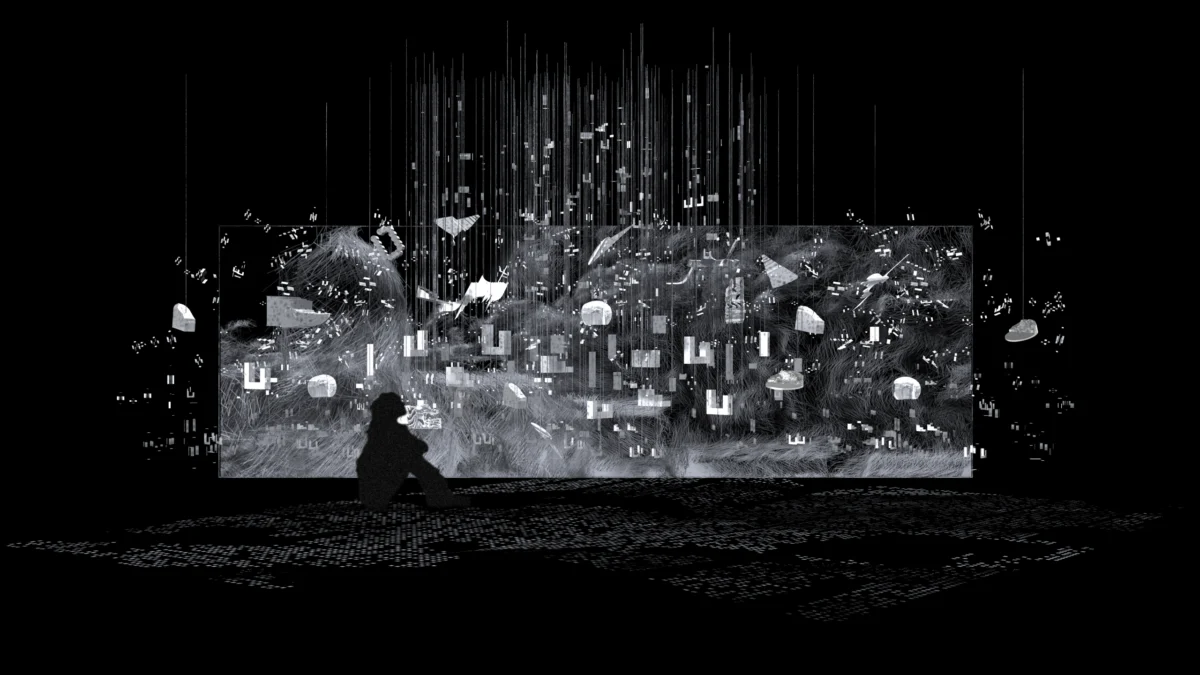
The 2026 edition of Ars Electronica, scheduled to take place from September 9 to 13 in Linz, Austria, marks a pivotal moment in the festival’s nearly half-century history as it expands its footprint across three primary urban hubs. Under the overarching theme "Negotiating Humanity," the festival aims to address the increasingly blurred boundaries between biological existence and digital intervention. This year’s gathering is particularly significant as it coincides with the 30th anniversary of the Ars Electronica Center, an institution that has become a global lighthouse for media art and digital culture since its founding in 1996. By utilizing the city’s infrastructure—from the high-tech environments of the Ars Electronica Center to the industrial atmosphere of the Posthof and the classical setting of the Lentos Kunstmuseum—the festival seeks to create a comprehensive dialogue on how technology reshapes our understanding of self, society, and heritage.
Negotiating Humanity: The Intellectual Framework of 2026
The choice of "Negotiating Humanity" as the 2026 theme reflects a global urgency regarding the role of artificial intelligence, digital surveillance, and the virtualization of culture. As agentic systems—AI entities capable of autonomous decision-making—become integrated into daily life, the festival poses critical questions: What remains uniquely human in an era of algorithmic optimization? How do we negotiate our rights, our history, and our future in a space shared with synthetic intelligences?
The festival organizers have structured the program to move beyond mere technological display, focusing instead on the ethical and social implications of innovation. By decentralizing the festival into three hubs in the city center, Ars Electronica 2026 encourages a "pedestrian" engagement with these complex topics, turning the city of Linz itself into a laboratory for the future. This spatial strategy is designed to increase accessibility for the general public while providing specialized environments for the thousands of international artists, scientists, and researchers who descend upon the city annually.
Deep Space 8K and the Concept of Living Archives
At the heart of the Ars Electronica Center, the Deep Space 8K serves as the technological centerpiece for the "Living Archives" program. Since its inception in January 2009, this immersive environment—featuring 16-by-9-meter wall and floor projections at 8K resolution—has pushed the boundaries of digital visualization. For 2026, the focus shifts to how digital technologies can preserve and revitalize cultural heritage that is either physically inaccessible or under threat of destruction.
A primary highlight of this focus is the collaboration with the Gemaldegalerie of the Academy of Fine Arts Vienna. Visitors will experience a gigapixel rendering of Hieronymus Bosch’s "The Last Judgment" triptych. This ultra-high-resolution digitization allows for a level of scrutiny impossible in a traditional gallery setting, revealing brushwork and symbolic details that have remained hidden for centuries. This project exemplifies the festival’s commitment to "digital humanities," using technology not to replace the original artifact but to deepen the human connection to it.
The "Living Archives" initiative also takes a more somber and urgent turn with the "Unbreakable Ukraine" project. Developed by the production company Sarava in collaboration with the Ars Electronica Futurelab, this 3D application provides immersive tours of five critical Ukrainian cultural sites, including the Saint Sophia Cathedral in Kyiv and the Odesa Opera House. Utilizing photogrammetry and advanced laser scanning, the project serves as both a digital insurance policy against the ravages of war and a powerful medium for international solidarity.
Interactive Storytelling and the Digital Twin of Salzburg
The 2026 festival also showcases a deepened partnership with the Salzburg Festival, one of the world’s most prestigious performing arts events. Artist Merve Sahin presents "Merging Visions," an immersive work that utilizes a "digital twin" of the city of Salzburg. Unlike traditional architectural models, this digital twin is layered with geological, ecological, and cultural data, creating a narrative medium that tells the story of the festival’s relationship with its environment.
This project highlights a broader trend within Ars Electronica: the move toward "agentic systems" in curation. In the "A Glimpse Behind the Scenes" showcase by Ars Electronica Solutions, visitors are guided by AI-driven systems that tailor content based on individual interests. This shift represents a move away from static exhibitions toward dynamic, responsive environments that mirror the complexity of the digital age.
The Prix Ars Electronica 2026: Global Trends and Winners
The Prix Ars Electronica remains the world’s most significant prize for electronic and interactive art. In 2026, the competition saw a staggering 4,329 entries from 106 countries, a testament to the festival’s global reach. The Golden Nicas, the competition’s highest honors, are accompanied by a €10,000 prize in each category, emphasizing the professional standing of media art as a discipline.

In the "New Animation Art" category, Andrew Herzog was awarded the Golden Nica for "Deer Hunter." The work is a critical exploration of the relationship between nature and the digital gaze, using game-engine aesthetics to challenge perceptions of wildlife and simulation. Other notable winners include Esteban Azuela for "Aferrado," which treats the digital pixel as a physical, sculptural material, and the duo 2girls1comp for "Dancing Plague." The latter is a "mod" of the popular video game Grand Theft Auto V, repurposed into a piece of performance art that critiques contemporary social behaviors and digital escapism.
These winning works, along with selections from the European Commission’s STARTS Prize (Science, Technology, and the Arts), are exhibited at the Lentos Kunstmuseum. The inclusion of the STARTS Prize underscores the festival’s role as a bridge between the arts and industrial innovation, highlighting projects that use creative thinking to solve technological or environmental challenges.
Immersive Audio and the Evolution of the Digital Concert
A major shift in the 2026 program is the relocation of the "Große Konzertnacht" (Great Concert Night) to the Posthof on September 11. Traditionally a highlight of the festival, this year’s concert is designed as a total multimedia experience spanning three separate halls.
The Great Hall and Foyer host "ORBIT – A War Series," an immersive 3D-audio oratorio by composer Brigitta Muntendorf. This work utilizes spatial audio technology to envelop the audience in a soundscape that explores the themes of conflict and human resilience. In the Small Hall, Daniel Haas presents "PULS," an audiovisual light installation that synchronizes high-intensity visuals with percussive sound, while the Middle Hall features "Polaris," a collaborative production by pianist Maki Namekawa and visual artist Cori O’Lan.
The emphasis on "Spatial Audio" continues on September 11 and 12 with "Sonic Saturday" at the Anton Bruckner Private University. This specialized program caters to the growing field of electroacoustic music and sonic art. By hosting workshops and performances dedicated to multi-channel sound systems, Ars Electronica reinforces its commitment to the auditory dimension of media art, which is often overshadowed by visual spectacle.
Institutional Milestones and Future Outlook
The 2026 festival serves as a reflective moment for the city of Linz and the Ars Electronica organization. The 30th anniversary of the Ars Electronica Center (AEC) provides an opportunity to evaluate the institution’s impact on regional development and international art discourse. Since 1996, the AEC has evolved from a "Museum of the Future" into a dynamic educational hub and research facility. The longevity of the Deep Space 8K project, now in its 17th year of operation, demonstrates the festival’s ability to maintain cutting-edge infrastructure over the long term.
Furthermore, the integration of the JKU medSPACE at the MED Campus into the festival’s screening program for "New Animation Art" highlights the growing intersection between art and medicine. By using medical visualization tools for artistic expression, the festival demonstrates how the tools of science can be humanized through creative intervention.
As the festival concludes on September 13, the implications of "Negotiating Humanity" will likely resonate in the academic and artistic communities throughout the following year. The 2026 edition reinforces Linz’s status as a UNESCO City of Media Arts and proves that even after nearly five decades, Ars Electronica remains the primary venue for discussing the digital transformation of society. The record-breaking number of submissions for the Prix Ars Electronica and the expansion into new urban hubs suggest that the demand for a critical, art-led investigation into technology is stronger than ever.
In summary, Ars Electronica 2026 is not merely a showcase of new gadgets or visual effects; it is a rigorous, multifaceted negotiation of what it means to be human in a world where the archive is alive, the city is a digital twin, and the very air we breathe is increasingly mediated by data. Through its "Living Archives," immersive audio landscapes, and global artistic competitions, the festival provides a roadmap for navigating the complexities of the 21st century.
