

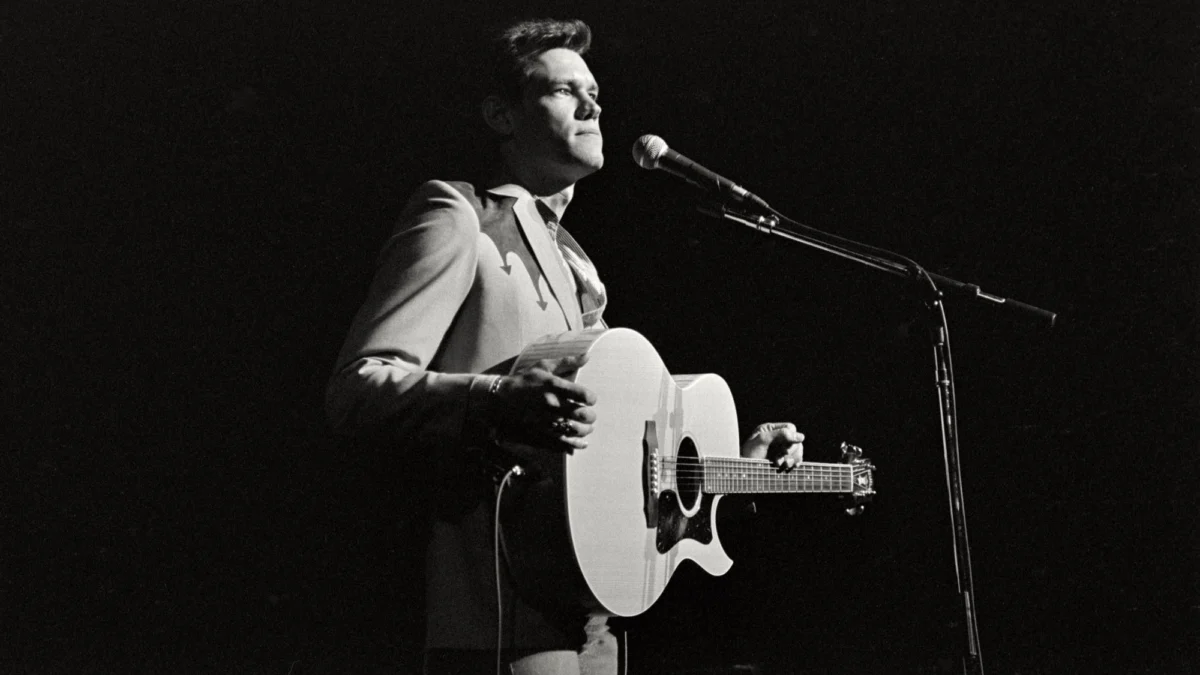
The year 1987 stands as a pivotal moment in the history of American country music, marking the definitive triumph of the "Neotraditionalist" movement. Following the "Urban Cowboy" era of the late 1970s and early 1980s—which saw the genre lean heavily into pop-crossover production—a new wave of artists emerged to reclaim the fiddle-and-steel-guitar sounds of the past. This cultural shift was spearheaded by a handful of legendary performers whose work during this specific calendar year created a lasting blueprint for the industry. Among the plethora of hits released in 1987, three songs in particular—performed by Randy Travis, Ricky Van Shelton, and Reba McEntire—encapsulated the emotional depth, technical craftsmanship, and commercial viability of the era. These tracks did more than just top the Billboard charts; they became cultural touchstones that continue to resonate with audiences nearly four decades later.
The Neotraditionalist Surge of the Late 1980s
To understand the impact of 1987, one must examine the industry landscape that preceded it. By the mid-80s, country music was experiencing a period of identity crisis. However, the arrival of Randy Travis’s debut in 1986 and his subsequent dominance in 1987 signaled a return to the genre’s roots. This movement, characterized by a respect for the "hard country" sound of the 1950s and 60s, sought to balance modern studio quality with traditional honky-tonk sensibilities.
The commercial data from this period reflects a massive resurgence in listener interest. In 1987, country music began to reclaim significant shelf space in retail outlets, and radio stations that had previously shifted toward "Adult Contemporary" formats returned to dedicated country programming. The three songs analyzed below were not merely isolated successes; they were the vanguard of a movement that would eventually pave the way for the massive commercial "boom" of the 1990s.
Randy Travis and the Perfection of the Country Love Song
Released in early 1987 as the second single from his landmark album Always & Forever, "Forever and Ever, Amen" is widely regarded as one of the most influential country songs of all time. Written by the powerhouse songwriting duo of Paul Overstreet and Don Schlitz, the track spent three weeks at No. 1 on the Billboard Hot Country Songs chart—a rare feat in an era when the top spot often rotated weekly.
The song’s construction is a masterclass in Neotraditionalist production. Produced by Kyle Lehning, it features a prominent, rolling guitar lick and Travis’s unmistakable baritone, which bridged the gap between the legendary George Jones and the modern era. The lyrical content, centered on unwavering fidelity, struck a chord with a public seeking sincerity. The famous closing line of the chorus—"I’m gonna love you forever and ever, forever and ever, amen"—became an instant staple of American weddings and remains a high-rotation track on recurrent radio.
The statistical success of "Forever and Ever, Amen" was unprecedented for the time. It became Travis’s first multi-platinum single and was the cornerstone of the Always & Forever album, which held the No. 1 spot on the Top Country Albums chart for a staggering 43 weeks. At the 1987 Country Music Association (CMA) Awards, the song earned Travis the trophy for Single of the Year, while the writers took home Song of the Year honors. The track’s legacy is such that it was certified Gold by the RIAA in 2006 and later Platinum, reflecting its enduring digital-era popularity.
Ricky Van Shelton and the Reinterpretation of a Standard
While Randy Travis was solidifying his superstar status, 1987 also saw the meteoric rise of Ricky Van Shelton. His debut album, Wild-Eyed Dream, was a critical and commercial success, bolstered largely by the strength of "Life Turned Her That Way." Unlike many contemporary hits of the time, this song was a cover of a classic, originally penned by the legendary Harlan Howard—often called the "Dean of Country Songwriters."
The history of "Life Turned Her That Way" provides a window into the evolution of country music storytelling. It was first recorded by Little Jimmy Dickens in 1965 and later became a Top 15 hit for Mel Tillis in 1967. However, Shelton’s 1987 rendition is frequently cited as the definitive version. Shelton’s vocal delivery added a layer of modern empathy to Howard’s lyrics, which describe a woman hardened by a lifetime of mistreatment.
The song’s narrative arc is particularly notable for its third-verse revelation. After describing the woman’s pain, the narrator admits, "And I hate to admit it, but the last footprint’s mine." This admission of culpability added a psychological depth that resonated with listeners. Shelton’s version peaked at No. 1 on the Billboard Hot Country Songs chart in early 1988, having been released late in 1987. The success of this single helped Wild-Eyed Dream become the first debut album by a male country artist to yield three No. 1 hits, firmly establishing Shelton as a pillar of the late-80s traditionalist revival.
Reba McEntire: Solidifying a Dynasty with Inspirational Anthems
By 1987, Reba McEntire was already a force to be reckoned with, having won the CMA Female Vocalist of the Year award for three consecutive years. However, her 1987 album The Last One to Know represented a sophisticated evolution of her sound. The second single from the project, "Love Will Find Its Way To You," written by Dave Loggins and J.D. Martin, showcased McEntire’s ability to blend traditional country roots with an inspirational, contemporary message.
The song followed the album’s title track to the No. 1 position, marking a period of nearly unparalleled chart dominance for McEntire. Interestingly, the song’s journey to the top was not guaranteed. Co-writer J.D. Martin famously expressed skepticism that the track would ever find a home on country radio, believing it might be too pop-leaning or "too soft" for the format. Before McEntire recorded it, the song had served as the title track for a 1986 Lee Greenwood album, where it failed to gain significant traction as a single.
McEntire’s interpretation changed the song’s trajectory. Her performance emphasized the "storyteller" aspect of the verses, leading into a soaring, gospel-influenced chorus. The message—that love is an inevitable force that arrives when least expected—provided a hopeful counterpoint to the more somber "heartbreak" songs typical of the genre. The success of "Love Will Find Its Way To You" reinforced McEntire’s status as the leading female voice in the genre and demonstrated her keen ear for hit songwriting, a skill that would allow her to remain relevant for decades to come.
Chronology of a Landmark Year: 1987 in Country Music
The release schedule of 1987 illustrates how these three artists dominated the cultural conversation throughout the year:
- May 1987: Randy Travis releases Always & Forever. "Forever and Ever, Amen" begins its rapid ascent up the charts, eventually reaching No. 1 and staying there for three weeks in June.
- August 1987: Ricky Van Shelton’s Wild-Eyed Dream gains massive momentum. "Life Turned Her That Way" is serviced to radio as the album’s third single, beginning a steady climb that would culminate in a No. 1 spot.
- September 1987: Reba McEntire releases The Last One to Know. The title track hits No. 1 almost immediately, setting the stage for "Love Will Find Its Way To You" to be released as the follow-up.
- October 1987: The 21st Annual CMA Awards serve as a coronation for the Neotraditionalists. Randy Travis wins Male Vocalist of the Year and Album of the Year, while Reba McEntire wins her fourth consecutive Female Vocalist of the Year title.
Statistical Overview and Industry Implications
The commercial performance of these three tracks and their respective albums provided the Nashville music industry with much-needed stability. In the mid-80s, there were fears that country music was losing its core audience. The data from 1987 proved otherwise:
- Longevity: "Forever and Ever, Amen" remained on the charts for 20 weeks during its initial run, a significant duration for the 1980s.
- Sales Milestones: Randy Travis’s Always & Forever became the first album by a country artist to be certified multi-platinum by the RIAA within its first year of release.
- Radio Saturation: According to airplay data from the era, these three artists accounted for nearly 15% of all spins on major-market country stations during the fourth quarter of 1987.
The broader implication of these hits was the "professionalization" of the Nashville songwriter circuit. The success of Overstreet, Schlitz, Howard, and Loggins during this year led to a surge in publishing investments. Labels began to realize that the "New Traditionalist" sound was not a niche trend but a highly profitable return to form that appealed to both rural and suburban demographics.
Legacy and the Transition to the 1990s
The impact of these three songs extends far beyond their 1987 chart runs. They served as the bridge to the 1990s country explosion, which saw artists like Garth Brooks, Alan Jackson, and George Strait take the Neotraditionalist foundation and elevate it to stadium-level success.
Randy Travis’s "Forever and Ever, Amen" is now preserved in the library of essential American music, often cited by modern stars like Josh Turner and Kane Brown as a primary influence. Ricky Van Shelton’s success with "Life Turned Her That Way" proved that there was still a massive appetite for the "story-song," a realization that influenced the narrative-heavy songwriting of the 90s. Meanwhile, Reba McEntire’s "Love Will Find Its Way To You" established the "inspirational ballad" as a necessary component of any successful country album, a trend that continues today with artists like Carrie Underwood.
In retrospect, 1987 was the year country music found its soul again. By looking back to the traditions of the past while utilizing the production quality of the present, Travis, Shelton, and McEntire created a trio of masterpieces that defined an era. These songs remain "must-know" tracks for any enthusiast of the genre, serving as a reminder of a time when three chords and the truth were enough to capture the heart of a nation.
