

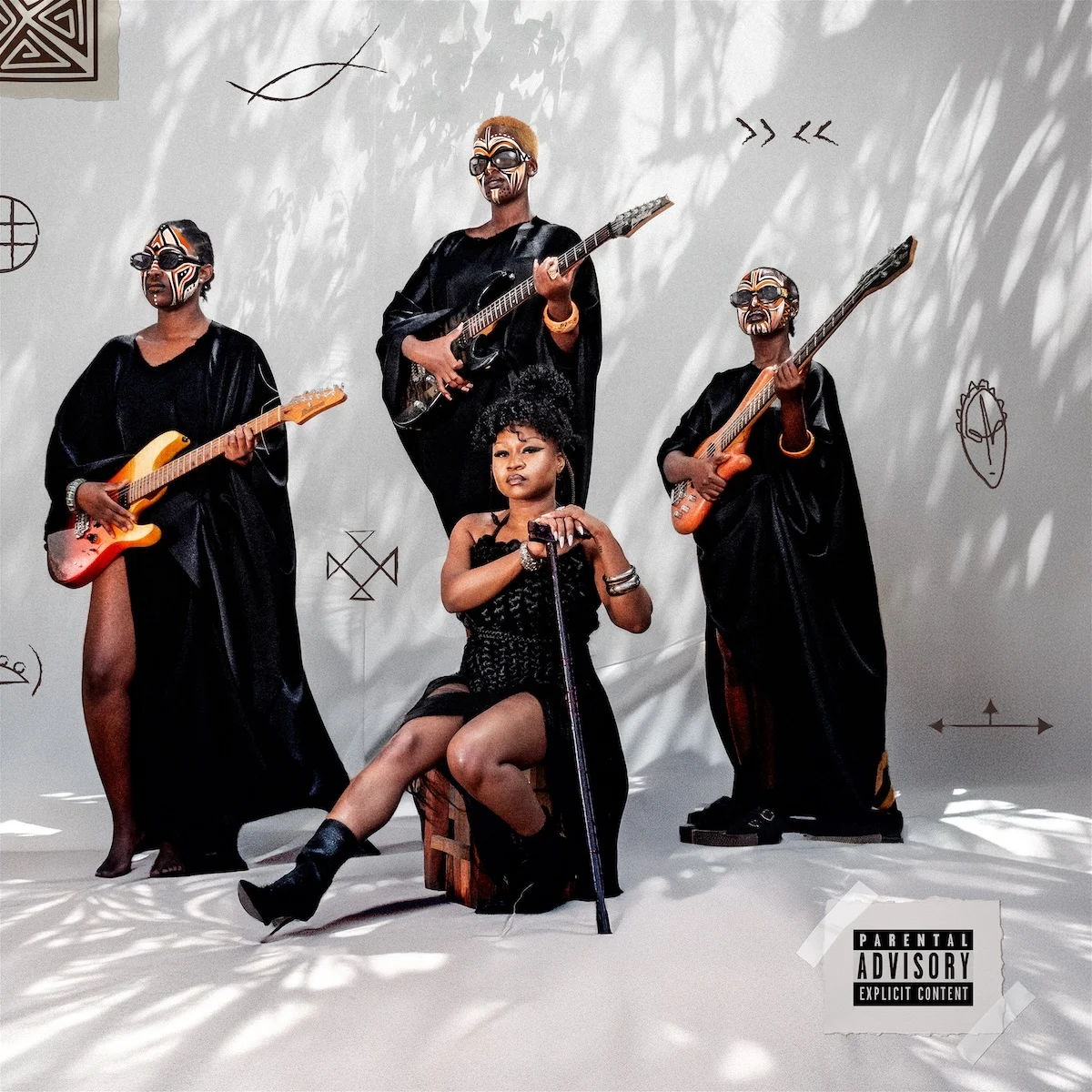
Four years after the critically acclaimed As Above, So Below in 2022, the trailblazing Zambian singer and rapper Sampa The Great has officially unveiled her forthcoming third studio album, Nu Zamrock, slated for release on October 30 via Loma Vista Recordings. This announcement marks a significant return for the artist, who has consistently pushed boundaries in hip-hop and African diaspora music, and signals a profound artistic evolution rooted deeply in her heritage. The album features the previously released track "Can’t Hold Us" from last year, alongside the newly launched single "Simon Says," which arrived accompanied by a prelude visual introduction titled Ukwamba: (To Start).
Sampa The Great’s Evolving Artistic Journey and Connection to Heritage
Sampa The Great, born Sampa Tembo, has forged a distinctive path in the global music landscape since her emergence. Originally based in Australia, her early work, including The Great Mixtape (2015) and Birds and the BEE9 (2017), quickly established her as a formidable lyricist and innovative producer. Her sophomore album, The Return (2019), was a pivotal moment, earning her the prestigious Australian Music Prize and solidifying her reputation for blending poetic lyricism with diverse musical influences, from neo-soul and jazz to traditional African rhythms. The Return notably explored themes of identity, diaspora, and the journey back to her Zambian roots, setting the stage for the deeper exploration seen in As Above, So Below. The latter album, released in 2022, further cemented her international standing, featuring collaborations with prominent African artists and continuing her narrative of cultural pride and self-discovery. Each project has seen Sampa delve deeper into her identity, grappling with the complexities of being an African artist in the global arena, and consistently using her platform to articulate stories of empowerment and cultural affirmation. Nu Zamrock appears to be the culmination of this ongoing artistic and personal odyssey, representing a full-circle moment where her heritage becomes the central pillar of her creative output.
The Genesis of Nu Zamrock: A Personal Discovery and Musical Reclamation
The inspiration behind Nu Zamrock is deeply personal and historically resonant. Sampa The Great revealed that the album was born from the discovery that her blood uncle, George Kunda, affectionately known as Groovy Joe, was a founding member of Zambia’s legendary psychedelic rock band WITCH (We Intend To Cause Havoc). This revelation was not merely a familial connection but a profound artistic awakening, linking her directly to a pivotal, yet often overlooked, chapter in African music history. "Zamrock is part of my family legacy," Sampa articulates, emphasizing the inherent connection. "It’s my voice. Being Zambian, being loud, being defiant — that’s what Zamrock is." This statement underscores the deeply personal and intrinsic nature of her connection to the genre, positioning it not as an external influence but as an inherent part of her artistic DNA. The album, executive produced by Cadenze, promises to be a contemporary reinterpretation of this foundational sound, filtered through Sampa’s unique lens.
Understanding Zamrock: A Historical Deep Dive into Zambian Psychedelia
To fully appreciate the significance of Nu Zamrock, it is crucial to understand the historical and cultural context of Zamrock. Emerging in Zambia during the 1970s, Zamrock was a unique fusion of Western psychedelic rock and funk with traditional Zambian musical elements and lyrical themes. This vibrant genre flourished in the immediate post-independence era, a period marked by optimism, national pride, and a burgeoning sense of cultural identity following Zambia’s liberation from British colonial rule in 1964.
The 1970s in Zambia saw a cultural boom, partly fueled by the nation’s relative economic stability due to its copper wealth. Zambian youth, exposed to Western rock bands like Jimi Hendrix, Led Zeppelin, and James Brown through radio and imported records, began to experiment with electric guitars, drums, and bass, blending these sounds with local rhythms, languages, and storytelling. The result was a raw, often gritty, and profoundly psychedelic sound that spoke to the experiences of a young, independent African nation. Bands like WITCH, Ngozi Family, Musi-O-Tunya, and The Peace emerged as pioneers, crafting an idiosyncratic sound that was both globally informed and distinctly Zambian. Their music often featured fuzzy guitar riffs, heavy basslines, distorted vocals, and extended improvisational jams, reflecting the psychedelic rock trends of the time but imbued with an unmistakably African soul. Lyrically, Zamrock artists frequently sang in local languages such as Nyanja and Bemba, addressing social commentary, love, hardship, and aspirations, providing a vital soundtrack to the nation’s evolving identity.
However, the genre’s heyday was relatively brief. By the late 1970s and early 1980s, Zambia faced severe economic decline due to falling copper prices and political instability. The music industry suffered immensely; record labels folded, venues closed, and the cost of instruments and equipment became prohibitive. The rise of disco and later pop music further diminished Zamrock’s popularity, leading to its gradual fading into obscurity, largely confined to dusty vinyl collections and the memories of a generation. For decades, Zamrock remained a hidden gem, known only to a dedicated few. Its global rediscovery began in the early 21st century, largely spearheaded by independent labels like Now-Again Records, which meticulously reissued classic Zamrock albums, introducing the genre to a new generation of listeners and critics worldwide. This revival has sparked renewed interest in African psychedelic music and brought long-overdue recognition to its original innovators.
WITCH: Pioneers of Zambian Psychedelia and Groovy Joe’s Legacy
At the forefront of the Zamrock movement stood WITCH (an acronym for We Intend To Cause Havoc), widely regarded as the most successful and influential band of the era. Formed in Ndola in the early 1970s, WITCH’s sound was characterized by its raw energy, hypnotic grooves, and the charismatic presence of lead singer Jagari Chanda. Their debut album, Introduction (1972), laid the groundwork for the genre, combining heavy rock influences with local rhythms. Subsequent albums like Lazy Bones!! (1975) and Lukombo Ye Tonga (1976) cemented their status, showcasing their evolving sound and lyrical depth.
George Kunda, or Groovy Joe, Sampa’s uncle, played a foundational role in WITCH’s early formation and sound. While specific details of his contributions might be less widely documented than those of the band’s most prominent members like Chanda, his involvement as a founding member signifies a direct lineage to the genre’s genesis. This familial connection is not just a point of personal pride for Sampa but a powerful validation of her inherent ties to this rich musical heritage. It transforms Zamrock from a historical curiosity into a living, breathing part of her own story, underscoring the deep roots of her artistic expression. The rediscovery of this family link undoubtedly fueled Sampa’s desire to explore Zamrock, not merely as an influence but as a birthright.
Artistic Intent: "Nu Zamrock is Not Nostalgia"
Sampa The Great is adamant that Nu Zamrock is not a mere nostalgic tribute. Her vision for the album transcends simple homage, aiming instead for a forward-looking reinterpretation. "Nu Zamrock is not nostalgia," she asserts. "It is the future remembering where it came from. This album is a reclamation of my lineage and bloodline: it is my homage to the disruptive, rebellious spirit that Zamrock represented at its peak and carried Zambia forward with, reintroducing the genre to the world, in my own way."
This statement is central to understanding the album’s ambition. It positions Nu Zamrock as a dynamic conversation between past and present, tradition and innovation. Sampa is not attempting to recreate the 1970s sound note-for-note but rather to channel the spirit of Zamrock – its defiance, its cultural pride, its experimentalism – into a contemporary context. This approach aligns with broader trends in African music, where artists are increasingly drawing from indigenous sounds and historical genres to forge new identities and create globally resonant music. By reclaiming her lineage, Sampa is not only honoring her family and nation but also contributing to the ongoing narrative of African artistic self-determination. Her "own way" implies a fusion of her established hip-hop prowess, her soulful delivery, and her profound understanding of contemporary global music, filtered through the lens of Zamrock’s raw energy.
"Simon Says": A Critique of the Modern Music Industry
The new single, "Simon Says," offers a potent glimpse into the album’s thematic depth, extending beyond cultural reclamation to a critique of the modern music industry. Sampa explains the track’s core message: "This track is my honest reflection on the pressure of visibility — being watched, judged, and shaped by endless rules. What should a ‘star’ look or act like? The industry seems to value numbers over artistry. Simon Says critiques the industry, where ‘Simon’ is the system telling artists how to be."
This commentary resonates deeply with many contemporary artists who navigate the complex demands of a hyper-visible, data-driven industry. The metaphor of "Simon Says" effectively captures the prescriptive nature of an industry that often prioritizes commercial metrics – streaming numbers, social media engagement, viral moments – over genuine artistic expression and long-term creative development. Artists are frequently pressured to conform to specific images, sounds, or marketing strategies dictated by labels, management, and even algorithmic trends, rather than being allowed to evolve organically. Sampa’s critique highlights the tension between artistic integrity and the commercial imperative, a struggle that is particularly acute for artists from marginalized backgrounds who may face additional expectations or stereotypes. "Simon Says" thus serves as both a personal statement of resistance and a broader commentary on the systemic challenges within the music business, advocating for authenticity and artistic autonomy in an environment that often demands conformity.
The Visual Storytelling: Ukwamba: (To Start)
Complementing the release of "Simon Says," Sampa The Great has shared a prelude visual introduction titled Ukwamba: (To Start). This visual component is significant, as Sampa has consistently used visual art to enrich her narratives and provide deeper context for her music. Ukwamba, meaning "to start" in Bemba, one of Zambia’s main languages, suggests that this visual is not just a music video but an integral part of the album’s conceptual framework. It likely serves as a primer, inviting listeners into the world of Nu Zamrock and visually establishing the themes, aesthetics, and emotional landscape that the album will explore. Such preludes often weave together cultural symbolism, personal imagery, and abstract concepts, preparing the audience for the immersive experience of the full album. This deliberate visual strategy underscores Sampa’s commitment to holistic artistic expression, where music, visuals, and narrative coalesce to deliver a powerful message.
Broader Cultural Impact and Implications
The release of Nu Zamrock holds significant implications for both Sampa The Great’s career and the broader global music landscape. For Sampa, this album represents a definitive statement of her artistic identity, solidifying her position as an artist deeply connected to her heritage while simultaneously pushing contemporary boundaries. It reinforces her role as a cultural bridge, connecting Zambian history with a global audience and showcasing the enduring vitality of African musical traditions.
Beyond Sampa’s personal trajectory, Nu Zamrock is poised to further elevate the global appreciation for Zamrock as a genre. By bringing it into a contemporary context through the lens of a globally recognized artist, Sampa is likely to introduce Zamrock to a younger, wider audience who might not be familiar with its historical significance. This contributes to the ongoing re-evaluation and celebration of African musical contributions to global popular culture, challenging Eurocentric narratives of music history.
Furthermore, the album’s critique of the music industry, as exemplified by "Simon Says," contributes to a vital ongoing dialogue about artist welfare, authenticity, and the pressures of commercialization. In an era where independent artistry and direct artist-fan connections are increasingly valued, Sampa’s stance resonates with a growing movement of musicians seeking to reclaim control over their narratives and creative output. Nu Zamrock is not just an album; it is a cultural declaration, a familial homage, and a timely commentary on the state of art in the modern world. Its release on October 30 via Loma Vista Recordings is eagerly anticipated by fans and critics alike, promising a rich, multifaceted listening experience that bridges generations and continents.
