

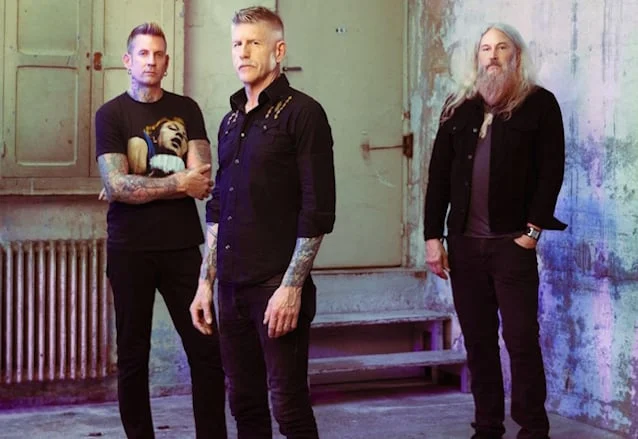
The surviving members of the Atlanta-based heavy metal titans MASTODON have publicly addressed a lawsuit filed by the estate of their former guitarist and vocalist, Brent Hinds, who passed away in August 2025. The estate claims Hinds was never fully bought out of his share of the band and its associated businesses before his death and further alleges that MASTODON has improperly utilized his likeness to promote their latest album, "Marrow Deep." The legal action, lodged in Fulton County Court on September 3, has cast a shadow over the band’s enduring legacy and the memory of their late bandmate.
Core Allegations and Band’s Response
According to documents obtained by The Atlanta Journal-Constitution, the central tenets of the lawsuit revolve around two primary grievances. Firstly, the estate asserts that Brent Hinds retained a vested interest in MASTODON and its related business ventures, a stake for which he was allegedly not adequately compensated or formally separated prior to his untimely demise. Secondly, the estate contends that the band has infringed upon Hinds’s posthumous rights by featuring his recognizable image on promotional materials for "Marrow Deep," an album to which he did not contribute musically.
In a statement released via social media on Friday, September 11, MASTODON acknowledged the public nature of the dispute, expressing sorrow over the "private business dispute with the estate of our dear departed friend Brent Hinds." The band unequivocally denied any malicious intent, stating, "We strongly deny allegations of ill intent on our part and intend to vigorously defend what we believe is a meritless lawsuit." They further indicated a commitment to discretion, adding, "We don’t intend to speak publicly on this going forward, as we feel this wouldn’t honor Brent’s memory or the legacy of his musical gifts." This measured response suggests a desire to contain the public fallout while preparing a robust legal defense.
A Complex Financial Settlement
The lawsuit details a specific financial offer made by MASTODON to Hinds’s estate. Following his passing, the band reportedly sent a check for $80,000, accompanied by a document outlining the terms of a proposed separation and buyout of Hinds’s ownership portion. However, the estate claims that Brent Hinds never formally signed this separation agreement. Consequently, the estate has refrained from cashing the check, opting instead to await a comprehensive accounting. This accounting, they contend, will accurately determine the full extent of what Hinds’s estate is owed for his equity in the various MASTODON entities. The estate’s position implies that the $80,000 offer may not reflect the true value of Hinds’s share, necessitating a more thorough financial review.
The "Marrow Deep" Album Cover Controversy
A significant point of contention is the artwork for MASTODON’s recently released album, "Marrow Deep." The album cover draws inspiration from the Greek Fates, mythological figures who control the destiny of mortals. Specifically, it depicts the Three Fates – Clotho, Lachesis, and Atropos – who spin, measure, and cut the thread of life, respectively. The lawsuit highlights that the faces of Brent Hinds and Michele Jeanne Lawrence, the mother of MASTODON drummer and vocalist Brann Dailor who also passed away in 2025, are subtly integrated into the artwork, positioned beneath the figure of Atropos, the Fate associated with the end of life.
The estate’s legal filing emphasizes that Hinds did not contribute musically to "Marrow Deep." Therefore, its inclusion on the album cover, which serves as a primary tool for advertising, marketing, and distribution across various formats (physical albums, digital downloads, streams, merchandise, and related goods or services), is viewed by the estate as a violation of his posthumous rights. The lawsuit articulates this grievance by stating, "Defendants selected and placed a recognizable image of Brent on the album cover of ‘Marrow Deep’ and disseminated that cover to advertise, market, distribute, and sell physical albums, digital downloads and streams, merchandise, and related goods or services." This suggests the estate perceives the use of Hinds’s image as a commercial exploitation of his legacy without proper authorization or compensation.
Scrutiny of the Documentary "The Mastodon In The Room"
Beyond the album cover, the lawsuit also targets a recently released documentary titled "The Mastodon In The Room." The estate criticizes band members Brann Dailor, Troy Sanders (bassist/vocalist), and Bill Kelliher (guitarist) for allegedly disclosing sensitive personal information about Brent Hinds. Specifically, the lawsuit takes issue with the documentary’s discussion of Hinds’s struggles with substance abuse, suggesting that these issues contributed to his departure from the band.
The documentary, described as an "emotional 35-minute feature," saw Dailor, Sanders, and Kelliher addressing Hinds’s passing directly. They reportedly stated their intention was to offer their perspective to fans amidst the speculation and headlines surrounding his death. While the lawsuit does not explicitly challenge the substance abuse allegations themselves, it strongly condemns the band members for divulging "details about [Hinds’s] private life that they learned in confidence – details he chose to keep private while he was alive." This aspect of the lawsuit underscores the estate’s commitment to protecting Hinds’s privacy and preventing the public dissemination of what they consider to be confidential information.
Chronology of Events and Band Dynamics
The legal action unfolds against a backdrop of significant developments in the band’s history and relationship with Brent Hinds.
- March 2025: MASTODON officially announced that the band and Brent Hinds had "mutually decided to part ways" after what they described as "25 monumental years together." This announcement marked the end of an era for the Grammy-winning quartet, whose lineup had remained consistent since its inception.
- 2000 – August 2025: During this period, Brent Hinds served as a pivotal member of MASTODON, contributing as lead guitarist and vocalist alongside fellow founding members Troy Sanders, Brann Dailor, and Bill Kelliher.
- 2002 – 2021: The band’s consistent lineup recorded eight studio albums, beginning with their debut, "Remission" (2002), and culminating with "Hushed and Grim" (2021). This sustained period of creative output solidified their status as one of modern metal’s most influential acts.
- Post-Announcement Discrepancy: In contrast to the band’s official statement of mutual parting, Brent Hinds later publicly claimed he had been "ejected" from MASTODON. In a social media post, he reportedly characterized his former bandmates as "horrible humans," indicating a significant rift in their relationship.
- August 20, 2025: Tragically, Brent Hinds was involved in a fatal motorcycle accident. Atlanta police reported that he was riding a Harley-Davidson motorcycle late on this date when an SUV, reportedly turning left and failing to yield, collided with him at the intersection of Memorial Drive SE and Boulevard SE. The location was less than two miles from downtown Atlanta.
- August 20, 2025 (Late Evening): Responding officers found Hinds unresponsive at the scene. He was pronounced dead by medical personnel shortly after their arrival around 11:35 p.m.
- August 21, 2025 (Investigation Findings): According to a subsequent crash report, investigators determined that Hinds bore fault for the accident. Evidence, including video footage of the intersection, led investigators to calculate that Hinds was traveling between 63 and 68 mph, significantly exceeding the posted speed limit of approximately 35 mph at the crash site.
Broader Implications and Industry Context
This legal dispute brings to light common complexities that arise within long-standing musical collaborations, particularly concerning financial arrangements and intellectual property rights after a member’s departure or death. The consistent lineup of MASTODON for over two decades is a testament to their shared vision and enduring creative partnership. However, the dissolution of such partnerships, whether voluntary or involuntary, often involves intricate negotiations regarding buyouts, ongoing royalties, and the use of shared assets, including band names, logos, and imagery.
The estate’s focus on the commercial use of Hinds’s likeness, especially on an album he did not contribute to, highlights the evolving landscape of artist rights in the digital age. As music is consumed through streaming services and promoted via social media, the visual elements associated with an artist and their work gain increased significance. The inclusion of Hinds’s image on "Marrow Deep" could be interpreted by the estate as a deliberate attempt to capitalize on his name and recognition, even in his absence.
Furthermore, the lawsuit’s critique of the documentary’s content touches upon the sensitive issue of how band members discuss the personal struggles of former colleagues. While bands may feel a responsibility to offer their narrative to fans, particularly in the wake of a member’s death, there is a fine line between sharing personal accounts and violating privacy. The estate’s position suggests that MASTODON may have crossed this line, prioritizing their storytelling over Hinds’s right to privacy regarding his personal battles.
The outcome of this lawsuit could have several implications. Financially, it could lead to a substantial payout to Hinds’s estate if the court finds his claims of undercompensation valid. Legally, it may set a precedent for how deceased musicians’ likenesses are handled in the context of album art and promotional material, particularly for bands with long-standing members. Socially, it could influence how bands choose to memorialize or discuss former members, potentially encouraging more cautious and privacy-respecting approaches to documentaries and public statements.
MASTODON’s decision to vehemently deny the allegations and prepare for a legal defense indicates their belief in the validity of their actions. However, the estate’s persistence in pursuing this legal avenue suggests a strong conviction in their interpretation of Brent Hinds’s rights and legacy. The coming legal proceedings will undoubtedly be closely watched by fans and industry professionals alike, as they unfold the intricate details of this high-profile dispute within the metal music community. The legacy of Brent Hinds, a guitarist celebrated for his distinctive style and powerful stage presence, remains at the heart of this complex legal and emotional entanglement.
