

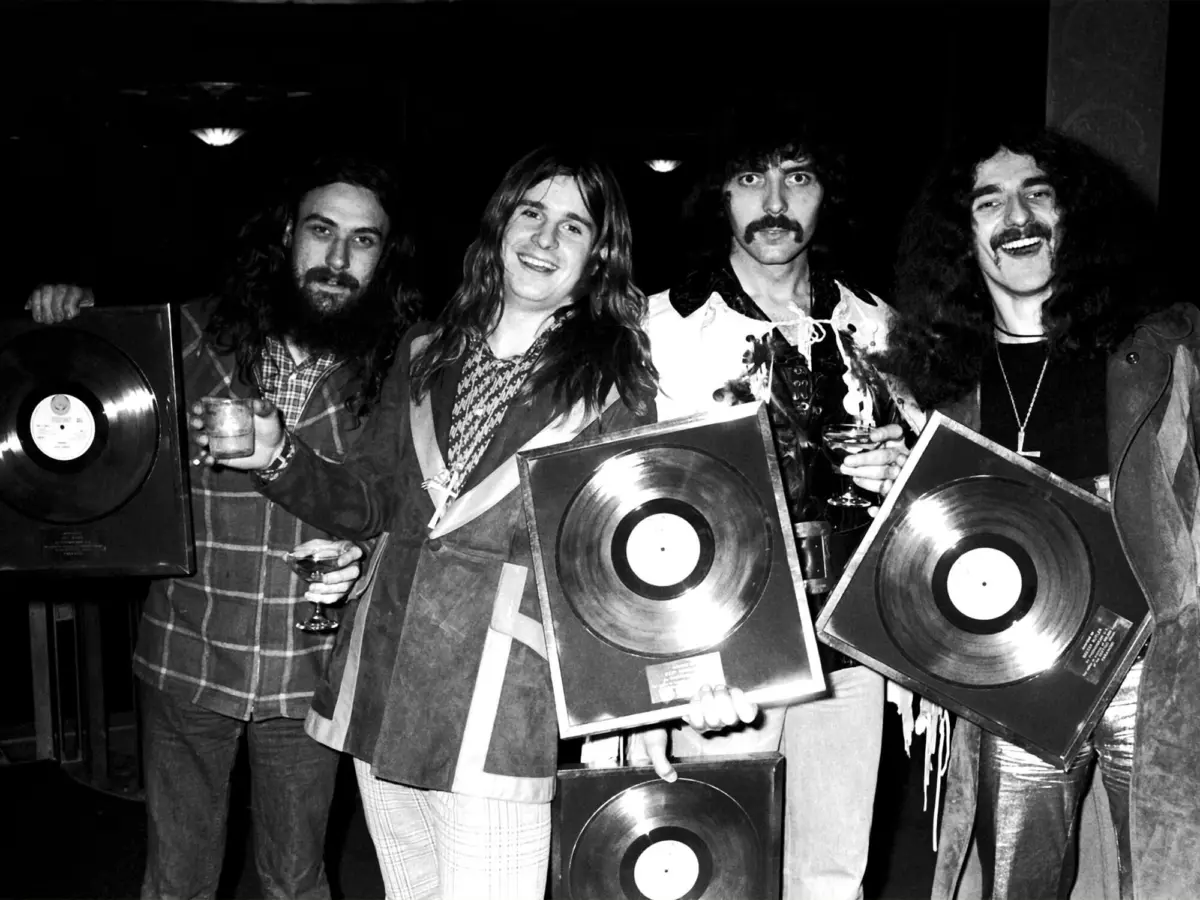
In the annals of rock and roll legend, few tales intertwine the mystical with musical genesis as compellingly as Black Sabbath’s sojourn to Clearwell Castle in 1973. Facing an unprecedented creative drought after a relentless four-album run, the pioneering heavy metal quartet retreated to the ancient Gloucestershire fortress, seeking solace and inspiration for their fifth studio effort, Sabbath Bloody Sabbath. What they found instead was a spectral encounter that, by their own admission, dramatically unblocked guitarist Tony Iommi’s songwriting impasse and ushered in a pivotal new era for the band.
The Weight of Expectation: Black Sabbath’s Creative Crossroads
By 1973, Black Sabbath was at a critical juncture. Having exploded onto the scene with their self-titled debut in 1970, followed swiftly by the genre-defining Paranoid (1970), Master of Reality (1971), and Vol. 4 (1972), the band had established themselves as titans of heavy metal. Their sound—a dark, heavy, blues-inflected rock infused with occult themes—had resonated globally, garnering a massive, loyal following. However, this meteoric rise came at a considerable cost. The relentless cycle of recording, touring, and promoting had left the band members, particularly primary songwriter Tony Iommi, utterly drained.
The pressure to continually innovate and deliver groundbreaking material was immense. After the comparatively experimental Vol. 4, which ventured into more orchestral and acoustic territories, the band felt the strain acutely. Attempts to write new material in Los Angeles had proved fruitless, described by Iommi as "dead." The creative well, which had flowed so freely for four consecutive years, seemed to have dried up. This was not merely a momentary lull but a profound crisis of confidence and inspiration, threatening to derail one of the most influential bands of the era. The search for a new environment, far removed from the distractions and pressures of urban life, became paramount.
Clearwell Castle: A Medieval Muse with a Phantom Resident
The solution, they hoped, lay in the historic depths of Clearwell Castle. Nestled within the enchanting Forest of Dean in Gloucestershire, England, this imposing Gothic Revival castle offered an atmospheric, isolated setting far removed from the rock star excesses of Los Angeles. Built in the 18th century, though incorporating elements from earlier structures dating back to the 13th century, Clearwell Castle boasts a rich history, complete with tales of resident specters and ancient secrets. Its deep cellars, grand halls, and winding corridors exuded an aura perfectly aligned with Black Sabbath’s thematic leanings. The band leased the castle not just for its seclusion but for its inherent mystique, hoping the ancient stones themselves might whisper new melodies.
The castle’s gothic grandeur, featuring vaulted ceilings, suits of armour, and dimly lit passages, provided an ideal backdrop for a band known for its dark aesthetic. It was during their residency here that the now-legendary paranormal encounter transpired.
The Phantom of the Armoury: An Unseen Catalyst
One particular night, the atmosphere within the castle shifted from merely atmospheric to overtly supernatural. Tony Iommi, the band’s principal composer, was conversing with frontman Ozzy Osbourne along one of the castle’s long, stone corridors. As they spoke, a figure materialised, moving towards them with an unnerving swiftness before abruptly ducking into an adjacent armoury room. Startled and intrigued, Iommi and Osbourne immediately rushed into the room, expecting to confront the mysterious individual.
However, upon entering, they found the armoury entirely empty. There was no other exit, no hiding place, and no trace of the figure they had distinctly seen. The room, filled with historical weaponry and suits of armour, offered no logical explanation for the disappearance. The experience left both musicians visibly shaken. When they recounted the bizarre incident to the castle’s owners, the response was surprisingly nonchalant. "Oh yeah, that’s the castle ghost. Don’t worry about him," Iommi recalled the owners stating in an interview with Uncut magazine, confirming that their spectral visitor was a well-known, if elusive, resident. This casual acknowledgment only intensified the eerie reality of their encounter.
Bill Ward’s Prudent Precautions: "You Can’t Stab a Ghost!"
While Iommi and Osbourne processed their strange sighting with a mix of awe and trepidation, drummer Bill Ward took a more pragmatic, albeit ultimately futile, approach. Known for his grounded personality, Ward was evidently unnerved by the castle’s spectral inhabitant. Iommi later recounted discovering Ward in his bedroom, armed with a dagger. Perplexed, Iommi inquired about the weapon, to which he famously retorted, "Bill, you can’t stab a ghost!" This humorous anecdote, while highlighting the band’s varied reactions to the paranormal, underscores the very real impact the castle’s atmosphere and its alleged ghost had on their collective psyche. It transformed the experience from a mere anecdote into a deeply personal, unsettling, and ultimately inspiring event for each member.
The Creative Floodgates Open: The Birth of "Sabbath Bloody Sabbath"
The immediate aftermath of the ghostly encounter was nothing short of miraculous for the band’s creative output. Whether the apparition was a true supernatural phenomenon, a powerful psychological trigger, or a potent blend of both, its effect on Tony Iommi was instantaneous and profound. According to Iommi, almost immediately after the encounter, the iconic, heavy riff for the album’s title track, "Sabbath Bloody Sabbath," burst forth. It was a riff that perfectly encapsulated the band’s signature sound – dark, intricate, and immensely powerful – yet also hinted at a new level of sophistication and complexity.
"The rest came fairly shortly afterwards," Iommi revealed, indicating that the breakthrough on the title track unleashed a torrent of creativity that had been dormant for months. Bassist Geezer Butler, upon hearing the nascent riff, famously likened the experience to "seeing his first child born," a testament to the sheer emotional and artistic relief it brought. This single riff marked the definitive end of the band’s debilitating writer’s block.
The Sabbath Bloody Sabbath album, released in December 1973, proved to be a critical and commercial triumph. It showcased a band revitalised, pushing their musical boundaries beyond the raw power of their earlier work. Tracks like "A National Acrobat," "Fluff," and "Spiral Architect" demonstrated a newfound melodicism, progressive arrangements, and lyrical depth, alongside their quintessential heavy sound. The album reached number four on the UK Albums Chart and number eleven on the US Billboard 200, solidifying their status and proving their ability to evolve. Critics lauded its innovation, with many considering it among the band’s finest works, a perfect bridge between their foundational heavy sound and more progressive rock elements. The spectral muse of Clearwell Castle had, inadvertently or otherwise, played an undeniable role in this creative renaissance.
The Psychological Impact of the Paranormal on Creativity
Beyond the anecdotal charm, the Black Sabbath ghost story offers a fascinating glimpse into the psychology of artistic inspiration. When an artist faces a creative block, the mind can become overly analytical, self-critical, and trapped in familiar patterns. An unexpected, jarring, or even terrifying experience, whether genuinely supernatural or perceived as such, can serve as a profound circuit-breaker. It diverts the conscious mind, forcing a shift in perspective and a release from previous constraints.
The encounter at Clearwell Castle likely provided Iommi with a powerful emotional and sensory input that bypassed his logical filters. The novelty and fear associated with a ghostly presence could have triggered a primal response, opening channels for new ideas that were previously inaccessible. The sheer "otherworldliness" of the event resonated deeply with Black Sabbath’s thematic core, making it a perfectly aligned, if bizarre, source of inspiration. It allowed Iommi to tap into the very essence of the band’s identity, delivering a riff that was both classic Sabbath and forward-thinking.
Tony Iommi’s Enduring Legacy: A New Chapter with "From the Dark"
Decades after the Clearwell Castle haunting, Tony Iommi remains an undisputed titan of heavy music. His pioneering guitar work, characterised by down-tuned riffs, heavy distortion, and innovative use of the tritone, laid the groundwork for countless genres. Despite battling health challenges, his creative spirit endures, evidenced by the forthcoming release of his first solo album in 21 years, From the Dark.
Slated for release on October 23 via BMG, From the Dark marks a significant milestone in Iommi’s illustrious career. It serves as the much-anticipated follow-up to his 2005 album, Fused, showcasing his continued evolution as a musician and composer. The album promises a rich tapestry of sounds, forged through collaborations with a stellar lineup of talent.
Norwegian vocalist Jørn Lande, known for his powerful voice and extensive work in the heavy metal scene, lends his formidable talents to the project. The rhythm section is equally impressive, featuring Merciful Fate bassist Becky Baldwin, a rising star in the metal world, and former Robbie Williams drummer Karl Brazil, whose versatile drumming adds a dynamic edge. Iommi himself takes on co-production duties alongside his longtime collaborator Mike Exeter, ensuring the album bears his distinctive sonic signature while benefiting from Exeter’s experienced touch.
The lead single from the album, "World Alone," offers fans a tantalising preview of what’s to come. It delivers the quintessential high-gain riffs and thunderous rhythm section that are synonymous with the Black Sabbath legend, reaffirming Iommi’s mastery of the heavy guitar. However, the album is also poised to explore more diverse and "sinister territory" in other tracks, hinting at a sonic journey that pushes boundaries while remaining true to his roots.
Further exciting collaborations include Queen guitarist Brian May, who contributes to the track "Death Wake," promising a powerful convergence of two iconic guitar virtuosos. A deluxe edition of From the Dark will offer expanded versions of Iommi’s recent solo releases, "Scent of Dark" and "Deified," providing fans with an even deeper dive into his recent creative output.
A Testament to Continued Innovation
Tony Iommi’s career is a testament to resilience and unwavering artistic vision. From the haunted halls of Clearwell Castle, where a spectral encounter ignited the spark for Sabbath Bloody Sabbath, to the meticulous crafting of From the Dark, Iommi has consistently pushed the boundaries of heavy music. His ability to draw inspiration from diverse sources, whether ancient folklore, personal experiences, or even the unexplained, has defined his unique creative process. The release of From the Dark is not merely another album; it is a declaration that the architect of heavy metal continues to build, innovate, and inspire, ensuring his profound influence resonates for generations to come. The enduring mystery of the Clearwell Castle ghost serves as a potent reminder that sometimes, the most extraordinary inspiration comes from the most unexpected, and perhaps otherworldly, places.
