

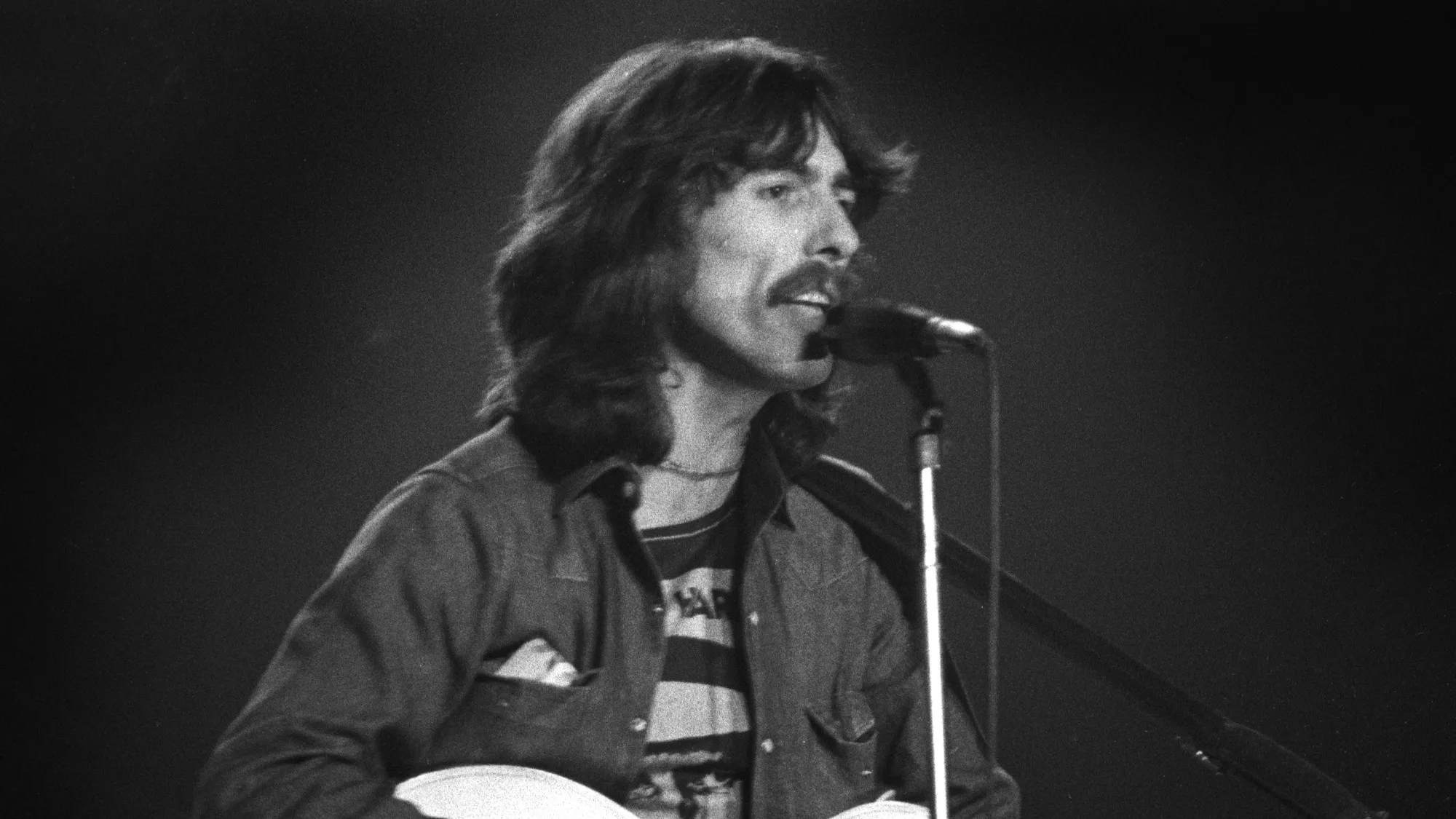
George Harrison, often characterized as the "Quiet Beatle," carved a distinct niche in the landscape of popular music through a guitar style defined by melodic economy, technical precision, and a profound sense of spiritual optimism. While his bandmates John Lennon and Paul McCartney frequently commanded the spotlight as the primary architects of The Beatles’ songwriting machine, Harrison’s evolution from a rockabilly-influenced lead player to a master of the slide guitar and Indian-infused composition provided the essential textures that defined the band’s later years and his own prolific solo career. His contributions were not merely technical additions to a track; they were often the emotional heartbeat of the music, serving as sonic "pick-me-ups" that balanced the experimentalism of the 1960s and 70s with accessible, uplifting melodies. By examining four pivotal guitar efforts—"Here Comes The Sun," "If Not For You," "My Sweet Lord," and "Blow Away"—one can trace the trajectory of a musician who prioritized the "right" note over the "most" notes, ultimately influencing generations of guitarists.
The Genesis of a Signature Sound: Technical Brilliance in Here Comes The Sun
The 1969 release of the album Abbey Road marked a creative zenith for Harrison within The Beatles. Among his contributions, "Here Comes The Sun" stands as arguably the most recognizable acoustic guitar performance in the history of rock music. Written in the garden of his friend Eric Clapton’s house during a period of professional tension within the band, the song served as a literal and metaphorical herald of relief.
From a technical standpoint, Harrison’s guitar work on this track is a masterclass in the use of a capo and varied time signatures. By placing a capo on the seventh fret of his acoustic guitar, Harrison achieved a high-register, chime-like quality that mimics the brightness of early morning light. The intricate fingerpicking pattern in the opening bars utilizes a "moving bass" line against a sustained melody, a technique that requires significant rhythmic discipline. Furthermore, the bridge of the song showcases Harrison’s interest in Indian classical music through its use of shifting time signatures, transitioning seamlessly between 11/8, 4/4, and 7/8.
Data from digital streaming platforms underscores the song’s enduring appeal. As of 2024, "Here Comes The Sun" remains the most-streamed Beatles track on Spotify, surpassing one billion plays. This statistic reflects the universal nature of Harrison’s composition; the guitar work does not merely support the lyrics but acts as the primary vehicle for the song’s message of renewal.
The Solo Transition and the Interpretation of Dylan: If Not For You
Following the dissolution of The Beatles in 1970, Harrison transitioned into a solo career with the release of the triple album All Things Must Pass. A standout track from this period is his cover of Bob Dylan’s "If Not For You." While Dylan’s original version on New Morning was rooted in a more traditional folk-rock aesthetic, Harrison’s interpretation transformed the song into a lush, country-inflected anthem.
The defining characteristic of Harrison’s version is his use of the Dobro and the nascent development of his signature slide guitar tone. During this era, Harrison began to move away from standard lead playing, finding that the slide allowed him to mimic the microtonal nuances of the human voice—a skill he had studied while learning the sitar under Ravi Shankar. The guitar work in "If Not For You" provides a "sunny" atmosphere through its bright, resonant slide parts that fill the sonic space without overcrowding the arrangement.
Chronologically, this period was vital for Harrison. Free from the constraints of the Lennon-McCartney songwriting monopoly, he utilized All Things Must Pass to showcase a backlog of material and a refined instrumental voice. Critics at the time, including those from Rolling Stone, noted that Harrison’s guitar work possessed a "liquid" quality that became a hallmark of early 1970s rock production.
The Spiritual Anthem and the Slide Guitar Revolution: My Sweet Lord
Perhaps no song better encapsulates George Harrison’s identity as both a musician and a spiritual seeker than "My Sweet Lord." Released in late 1970 as the lead single from All Things Must Pass, it became the first solo single by an ex-Beatle to reach number one on the charts globally. Central to the song’s success is the sophisticated slide guitar work that serves as the track’s melodic hook.
Harrison’s approach to the slide on "My Sweet Lord" was revolutionary for its time. Rather than the blues-based, aggressive slide styles popularized by his contemporaries, Harrison focused on precision, intonation, and a "clean" sound. The layering of acoustic rhythm guitars—recorded using Phil Spector’s "Wall of Sound" technique—provided a dense foundation over which Harrison’s slide solos could soar.
However, the song’s history was not without controversy. In 1971, Bright Tunes Music Corporation filed a lawsuit alleging that "My Sweet Lord" infringed on the copyright of the 1963 Chiffons hit "He’s So Fine." The resulting legal battle led to a landmark ruling in 1976, where a judge determined that Harrison had "subconsciously plagiarized" the earlier work. Despite the legal complications, the musical impact of the guitar arrangement remained untarnished. The interplay between the major-key power chords and the soaring slide melodies created an atmosphere of transcendence that resonated with a global audience seeking peace in a post-1960s world.
Late-Period Optimism and Atmospheric Grounding: Blow Away
By the late 1970s, Harrison’s public profile had shifted. He had largely stepped away from the frenetic pace of the music industry to focus on his personal life at his Friar Park estate, his marriage to Olivia Arias, and his passion for Formula One racing and gardening. This sense of domestic contentment is palpable in the 1979 track "Blow Away," from the self-titled album George Harrison.
The guitar work in "Blow Away" is characterized by its subtle, lilting quality. Unlike the grandiosity of his early 70s work, the guitars here are used to create a grounded, breezy atmosphere. Harrison employs a clean electric tone that complements his tenor vocals, providing a rhythmic "bounce" that reinforces the song’s lyrical theme of letting go of negativity.
This track serves as a significant data point in Harrison’s evolution as a producer and arranger. It reached number 16 on the Billboard Hot 100, proving that even after the height of Beatlemania and the initial solo boom, Harrison’s ability to craft uplifting, guitar-driven pop remained intact. The song’s structure demonstrates a maturity in his playing—where the space between the notes is as important as the notes themselves.
Chronology of Influence: A Timeline of Harrison’s Guitar Legacy
To understand the full impact of these performances, it is necessary to view them within the broader chronology of Harrison’s career:
- 1963-1966: Harrison establishes the "Rickenbacker sound," influencing the 12-string folk-rock movement (The Byrds).
- 1968: "While My Guitar Gently Weeps" features a collaboration with Eric Clapton, marking a shift toward a more emotive, blues-influenced style.
- 1969: The recording of Abbey Road showcases Harrison’s mastery of the Moog synthesizer and acoustic fingerpicking ("Here Comes The Sun").
- 1970: All Things Must Pass establishes the slide guitar as his primary instrumental voice.
- 1971: The Concert for Bangladesh demonstrates the power of his guitar work in a live, philanthropic context.
- 1987: Cloud Nine and the hit "Got My Mind Set On You" introduce Harrison’s guitar style to a new generation via MTV.
- 1988-1990: The Traveling Wilburys project sees Harrison’s guitar work blending with legends like Tom Petty, Bob Dylan, and Roy Orbison.
Official Responses and Peer Analysis
The impact of Harrison’s guitar work has been frequently validated by his peers and industry experts. Eric Clapton once remarked that Harrison had an "uncanny ability to play exactly what was needed for the song," noting that his solos were often composed pieces of music in their own right rather than improvisational filler. Similarly, Tom Petty highlighted Harrison’s meticulous nature in the studio, stating that George would spend hours perfecting a single slide part to ensure the vibrato was exactly right.
In the decades following his passing in 2001, musicologists have analyzed Harrison’s style as a bridge between Western pop and Eastern philosophy. His use of the guitar to express joy and "pick-me-up" energy was not a byproduct of simple songwriting but a deliberate attempt to use frequency and melody to elevate the listener’s state of mind.
Broader Impact and Implications for Modern Music
The implications of George Harrison’s guitar efforts extend far beyond the 1970s. His influence is evident in the work of modern indie-rock and "dream-pop" artists who prioritize tone and texture over speed. The "Harrison sound"—characterized by clean slide work, the use of Leslie speakers for a swirling effect, and melodic clarity—has become a standard tool in the producer’s kit.
Furthermore, the four songs discussed represent a blueprint for "optimistic rock." In an industry often dominated by themes of angst or hedonism, Harrison’s guitar-driven celebrations of nature, spirituality, and simple happiness offer a unique counter-narrative. The enduring popularity of these tracks suggests that the "attitude boost" provided by a well-placed guitar trill or a soaring slide solo has a timeless, therapeutic value.
George Harrison may not have sought the title of "guitar hero" in the traditional sense, but his contributions to the instrument were foundational. Through technical innovation and an unwavering commitment to melody, he ensured that his music would continue to serve as a beacon of light for listeners worldwide, proving that sometimes the quietest voice in the room has the most resonant song to sing.
