

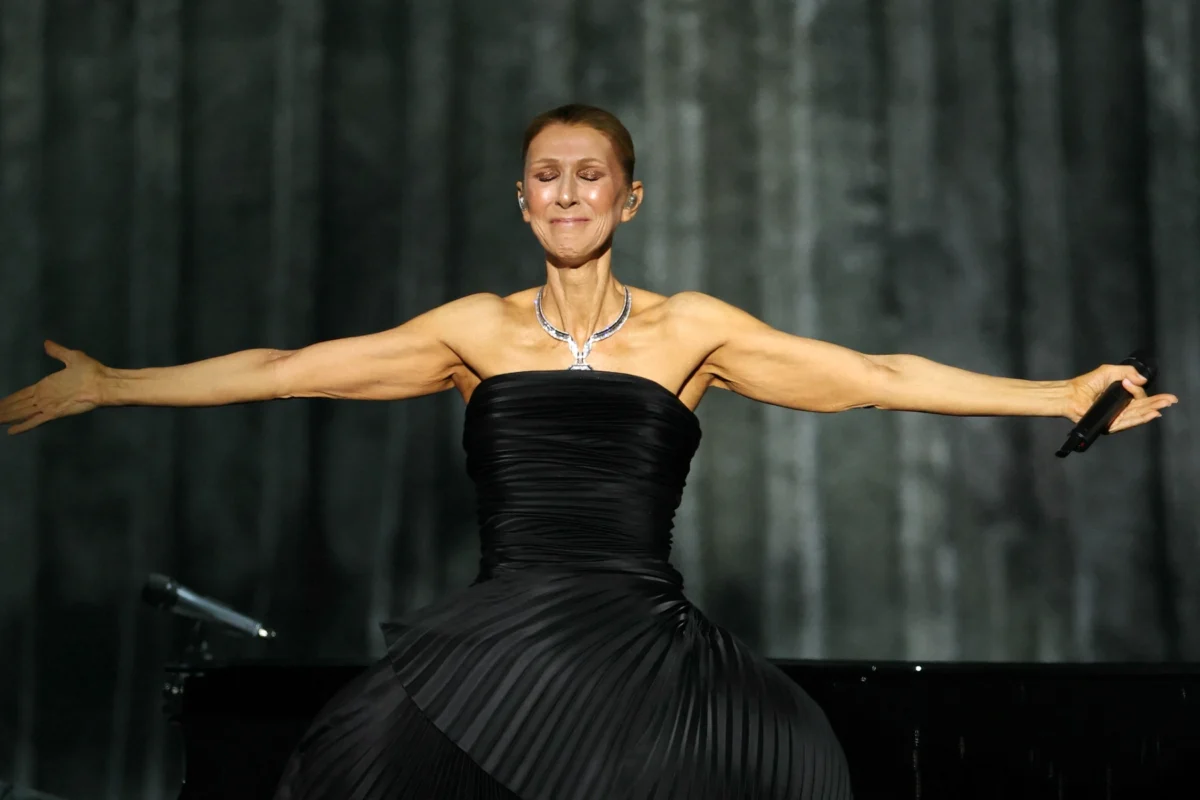
The legendary Canadian vocalist, Céline Dion, made an emotionally charged and vocally masterful return to the stage on Saturday, September 12, 2026, launching her highly anticipated 26-night residency at the Plenitude Arena in Nanterre, west of Paris. Marking her first headlining concert in six years, the comeback performance was a two-and-a-half-hour spectacle featuring 29 songs that traversed her illustrious career, moving seamlessly from intimate French ballads to an awe-inspiring a cappella rendition of her power anthem "All by Myself." The event not only signified Dion’s personal triumph over significant health challenges but also underscored her enduring global appeal and unparalleled connection with her vast fanbase, particularly in France.
A Return Six Years in the Making: The Road to Paris
Céline Dion’s absence from the live music scene since 2020 had been a period of profound challenge and public concern. The hiatus was necessitated by her diagnosis with stiff-person syndrome (SPS), a rare and debilitating neurological disorder characterized by progressive muscle stiffness and painful spasms. Dion had publicly revealed her condition several years prior to her return, detailing the immense impact it had on her ability to perform, particularly affecting her vocal cords and mobility. The condition, which affects roughly one in a million people, often leads to fluctuating rigidity in the torso and limbs and a heightened sensitivity to stimuli such as noise, touch, and emotional distress, which can trigger spasms. For an artist whose career is built on vocal precision and dynamic stage presence, this diagnosis presented an formidable obstacle.
During her time away from the spotlight, Dion remained largely out of the public eye, dedicating herself to treatment and recovery. Her team periodically updated fans on her progress, emphasizing the intensive physical and vocal therapy she underwent. The journey back to the stage was a testament to her extraordinary resilience and unwavering determination to reconnect with her audience. Her decision to launch her grand return in Paris, a city that has always held a special place in her heart and career, was symbolic. France has consistently been one of her most devoted markets, where her French-language albums have achieved unparalleled success. The choice of the Plenitude Arena, a modern and expansive venue capable of accommodating tens of thousands, further emphasized the scale and ambition of this comeback.
Unprecedented Demand: A Testament to Enduring Stardom
The anticipation for Dion’s return was palpable, translating into an astonishing demand for tickets that far exceeded expectations. For the initial 16 dates staged in autumn 2026, every single ticket was purchased within hours of going on sale. The sheer scale of interest was highlighted by the access lottery, which reportedly drew more than nine million people vying for the opportunity to witness the iconic performer live. The opening night alone drew a crowd of 30,000 enthusiastic fans to the Plenitude Arena in Nanterre, a suburb west of Paris. Across the first 16 confirmed dates, over 480,000 tickets were sold, indicating a staggering average attendance of 30,000 per show. This level of demand not only confirms Dion’s enduring star power but also sets a benchmark for artist comebacks in an increasingly competitive entertainment landscape. Industry analysts estimate that, based on an average ticket price of €100-€200, the initial 16 dates alone could generate gross revenues well in excess of €48 million, cementing the residency as a significant economic event for the Parisian cultural sector.
The Grand Opening: A Symphony of Emotion and Song
The curtain rose on the Plenitude Arena stage 47 minutes past the scheduled start time, building an almost unbearable anticipation among the packed crowd. When Dion finally appeared, the emotional floodgates opened. She began her set with "On Ne Change Pas," a beloved French ballad, her voice immediately demonstrating the power and control that had defined her career. Overcome with emotion, she openly wept during the opening number, a raw and poignant moment that instantly forged an unbreakable bond with the audience. The concert, which ultimately concluded at 11:14 p.m. local time, showcased the breadth of her musical repertoire and the meticulous planning that went into her return.
A significant portion of the setlist paid homage to her French roots and celebrated her iconic French-language album, D’eux. Released in 1995 and primarily written by the esteemed Jean-Jacques Goldman, D’eux remains the best-selling French-language album of all time, having sold over 10 million copies worldwide. Songs from this seminal work resonated deeply with the Parisian audience, reaffirming Dion’s profound cultural impact in the francophone world. Alongside these cherished ballads, she delivered her English-language blockbusters, ensuring a comprehensive musical journey for her diverse global fanbase.
The staging of the show was deliberately minimalist, a conscious decision to keep the focus squarely on Dion’s extraordinary voice. There were no elaborate pyrotechnics or distracting visual spectacles; instead, a large, elegant set provided a backdrop that accentuated her presence. This pared-down approach allowed the purity and power of her vocals to shine, a choice likely influenced by her health journey, but also serving to create a deeply intimate atmosphere despite the arena’s vastness.
Highlights of the Night: From Opera to Disco
The setlist was a carefully curated blend of the familiar and the fresh, peppered with moments of unexpected brilliance. Mid-show, the concert took a surprising turn onto the dance floor, a "gamble" that paid off handsomely. Dion showcased a looser, more playful side, performing electrifying renditions of classics like Donna Summer’s "I Feel Love" and Eurythmics’ "Sweet Dreams," alongside a vibrant, reworked version of her own hit "I’m Alive." This disco stretch revealed a dynamic performer eager to explore new facets of her artistry, challenging the perception of her solely as a balladeer.
Other standout moments included her rendition of the opera aria "La Wally" under a cascade of falling artificial snow, a dramatic and visually stunning sequence. A gospel choir joined her for a powerful segment, culminating in the much-anticipated sing-along to "Pour Que Tu M’aimes Encore," another jewel from D’eux. The night also featured the debut of "Dansons," her 2026 comeback single, once again penned by Jean-Jacques Goldman, signaling a new chapter in her recording career. The grand finale arrived with an astonishing a cappella performance of "All by Myself," a moment of raw vocal power and vulnerability that left the audience spellbound, underscoring the triumph of her voice over adversity.
The significance of the event was further highlighted by the array of distinguished guests in attendance, transforming the concert into a cultural happening. Among the notable figures spotted in the crowd were former U.S. First Lady Michelle Obama, media mogul Oprah Winfrey, acclaimed French-Malian singer Aya Nakamura, and celebrated French astronaut Thomas Pesquet. Their presence underscored the global resonance of Dion’s comeback and her iconic status beyond the music industry.
Broader Implications and Future Outlook
Céline Dion’s triumphant return to the stage carries significant implications for both her career and the wider music industry. Her resilience in the face of stiff-person syndrome serves as an inspiring narrative, offering hope and visibility to those living with chronic illnesses. The meticulously planned comeback, prioritizing vocal integrity and emotional connection over extravagant production, may influence how other artists approach large-scale residencies and tours, particularly in an era where authenticity and connection are highly valued by audiences.
For the city of Paris, the residency represents a substantial boost to its cultural tourism sector. With hundreds of thousands of fans descending upon the capital over the course of the 26 dates, the economic ripple effect will be considerable, benefiting hotels, restaurants, and local businesses. The Plenitude Arena, a relatively new addition to Paris’s roster of major venues, solidifies its reputation as a premier destination for world-class entertainment.
Looking ahead, the success of the Paris residency will undoubtedly inform Dion’s future plans. While the physical demands of extensive touring remain a consideration given her health condition, the overwhelming reception suggests a strong desire for her continued presence in live music. This comeback has not only reaffirmed her status as one of music’s most powerful and beloved voices but has also redefined what it means to stage a return, proving that true artistry and an indomitable spirit can overcome even the most daunting challenges. The Paris residency is not just a series of concerts; it is a profound declaration of strength, passion, and the unbreakable bond between an artist and her public.
