

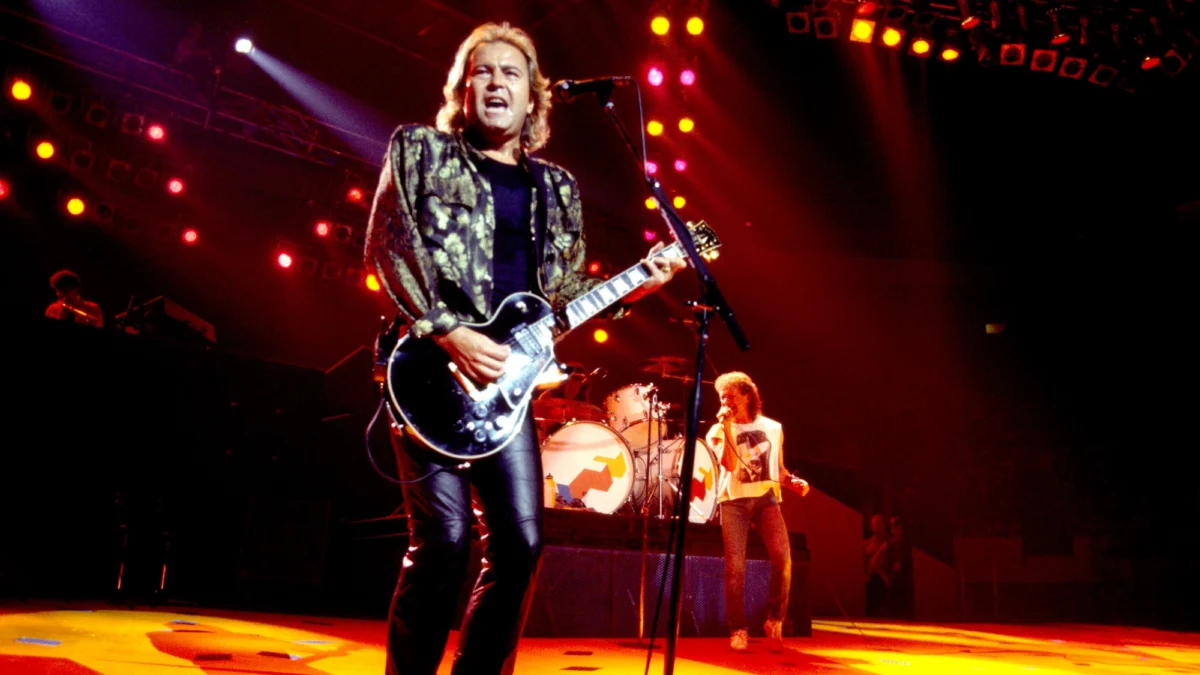
The year 1984 is frequently cited by musicologists and cultural historians as a watershed moment for the global recording industry, marking a period where high-fidelity production, the dominance of MTV, and the peak of the "power ballad" converged to create some of the most enduring hits in the history of popular music. Within this prolific twelve-month span, three specific tracks—Foreigner’s "I Want to Know What Love Is," Night Ranger’s "Sister Christian," and Steve Perry’s "Oh Sherrie"—emerged not only as chart-topping successes but as definitive cultural touchstones for the Generation X demographic. These compositions represent a sophisticated evolution of the "soft rock" genre, blending the raw emotionality of singer-songwriter traditions with the polished, stadium-ready arrangements of the mid-1980s.
The Landscape of 1984: A Contextual Overview
To understand the impact of these three songs, one must examine the state of the music industry in 1984. This was the year of Michael Jackson’s "Thriller" dominance, the debut of Bruce Springsteen’s "Born in the U.S.A.," and the rise of Prince’s "Purple Rain." Radio formats were strictly divided between Top 40, Urban, and Album-Oriented Rock (AOR). However, the "power ballad" served as a bridge between these disparate formats. By incorporating melodic hooks, relatable lyrics about romantic longing or familial protection, and high-quality synthesizer and guitar work, these songs achieved a "crossover" appeal that maximized their commercial reach.
Foreigner and the Gospel-Infused Grandeur of I Want to Know What Love Is
Released in November 1984 as the lead single from the album Agent Provocateur, "I Want to Know What Love Is" stands as Foreigner’s most successful commercial endeavor. While the band had previously established themselves as a premier hard rock outfit with hits like "Cold as Ice" and "Hot Blooded," this track signaled a pivot toward a more atmospheric and spiritually resonant sound.
Written by founding member Mick Jones, the song’s production was a massive undertaking. Jones sought a sound that transcended the standard rock ballad, leading to the recruitment of the New Jersey Mass Choir, the legendary Jennifer Holliday, and Thompson Twins member Tom Bailey on synthesizers. The result was a track that blended rock sensibilities with gospel fervor.
Commercial Performance and Statistical Data
Upon its release, the song ascended to No. 1 on both the Billboard Hot 100 and the UK Singles Chart. It remained at the top of the U.S. charts for two weeks in early 1985, eventually being certified Platinum by the RIAA. According to historical chart data, the song reached No. 1 in several other territories, including Australia, Canada, Norway, and Sweden.
Critical Analysis and Cover Versions
Music critics of the era noted the song’s departure from Foreigner’s guitar-heavy roots. The lyrical themes of seeking redemption and emotional clarity resonated with a broad audience. The song’s longevity is evidenced by its frequent re-interpretation. In 2004, country star Wynonna Judd released a cover that reached the Top 15 on the Billboard Adult Contemporary chart. In 2009, Mariah Carey recorded a version for her album Memoirs of an Imperfect Angel, which achieved significant international success, particularly in Brazil, where it broke airplay records.
Night Ranger’s Sister Christian: The Architecture of the Power Ballad
While Foreigner was achieving global dominance, the San Francisco-based band Night Ranger was solidifying its place in rock history with "Sister Christian." Released in June 1984 as part of their sophomore effort Midnight Madness, the song became the band’s highest-charting single, peaking at No. 5 on the Billboard Hot 100.
The Narrative of Protection
Written and sung by drummer Kelly Keagy, "Sister Christian" was inspired by Keagy’s younger sister, Christy. The lyrics reflect a protective older brother’s observations of his sister navigating the transition into adulthood. Keagy has frequently clarified in interviews that the central lyric "motoring" was a reference to cruising the streets of their hometown, a quintessential American youth experience.
Cinematic Longevity and Cultural Impact
The song’s influence extended far beyond its initial radio run. Its inclusion in the 1997 Paul Thomas Anderson film Boogie Nights is credited with introducing the track to a new generation. The tension-filled scene featuring the song became one of the most talked-about moments in 1990s cinema, cementing "Sister Christian" as a staple of nostalgic pop culture. It has since appeared in various media, including the 2009 Friday the 13th reboot and the video game Grand Theft Auto: Vice City Stories.
Technical Structure
From a musical standpoint, the song is celebrated for its dynamic "loud-quiet-loud" structure. The gentle piano opening transitions into a thunderous drum fill and a heavy guitar riff, a formula that would be replicated by numerous hair metal and rock bands throughout the late 80s.
Steve Perry’s Solo Success with Oh Sherrie
By 1984, Steve Perry was already one of the most recognizable voices in music as the frontman for Journey. However, his debut solo album, Street Talk, proved that his appeal was not tethered solely to his band. The lead single, "Oh Sherrie," became a massive hit, reaching No. 1 on the Billboard Rock Tracks chart and No. 3 on the Hot 100.
The Personal Inspiration
The song was a direct tribute to Perry’s then-girlfriend, Sherrie Swafford. The accompanying music video, which featured Swafford, became an MTV staple. The video was notable for its "meta" narrative, depicting Perry filming a music video and expressing frustration with the artifice of the production, only to find solace in his actual relationship.
Collaborative Composition
While Perry’s vocals were the centerpiece, the song’s success was also due to the collaborative efforts of co-writers Randy Goodrum, Craig Krampf, and Bill Cuomo. The track’s hook—"Oh, Sherrie, our love holds on"—became one of the most recognizable refrains of the decade.
Industry Implications
The success of "Oh Sherrie" had significant implications for the future of Journey. It demonstrated Perry’s viability as a solo artist, which created both opportunities and internal tensions within the band. This period of Perry’s career is often analyzed as the bridge between Journey’s early 80s arena rock dominance and the more pop-oriented sound of their 1986 album Raised on Radio.
Chronology of the 1984 Soft Rock Peak
To contextualize these releases within the year, a brief timeline illustrates the density of hits during this period:
- April 1984: Steve Perry releases "Oh Sherrie," marking a successful transition from band leader to solo superstar.
- June 1984: Night Ranger’s "Sister Christian" enters heavy rotation on FM radio and MTV, eventually climbing into the Top 10.
- November 1984: Foreigner releases "I Want to Know What Love Is," which begins its steady climb to the top of the global charts, peaking in January 1985.
Official Responses and Artist Perspectives
Reflecting on the era, the artists involved have often expressed surprise at the enduring nature of these songs. Mick Jones of Foreigner told American Songwriter that "I Want to Know What Love Is" felt like a "spiritual experience" during its creation, a sentiment echoed by the millions who have used the song for weddings, funerals, and graduations.
Kelly Keagy has noted that the simplicity of "Sister Christian" is what allowed it to endure. In an interview with Songfacts, he stated, "I wanted her to be able to see what I was talking about, that I was protecting her." This universal theme of familial care has allowed the song to remain relevant even as the musical styles around it have shifted.
Steve Perry, in retrospect, has discussed the difficulty of balancing a public persona with a private relationship. Speaking to the Tampa Bay Times, he noted that "Oh Sherrie" was a snapshot of a very specific, intense time in his life, which perhaps explains the raw vocal performance that remains a benchmark for male pop-rock vocalists.
Broader Impact and Implications for the Music Industry
The success of these three songs in 1984 signaled several shifts in the music industry. First, it proved the power of the "video age." Each of these songs had a high-budget or high-concept music video that helped define the artist’s image. Second, it solidified the "power ballad" as a commercial necessity for rock bands. Following 1984, labels increasingly pressured rock acts to include at least one radio-friendly ballad on every album to ensure crossover success.
Furthermore, these tracks have seen a massive resurgence in the digital streaming era. On platforms like Spotify and YouTube, these 1984 hits continue to garner millions of plays monthly. They have become "gold" standards for the karaoke industry and are frequently used in "sync" licensing for television shows like Stranger Things, which rely on 80s nostalgia to drive viewership.
Conclusion
The enduring popularity of "I Want to Know What Love Is," "Sister Christian," and "Oh Sherrie" serves as a testament to the high caliber of songwriting and production present in 1984. These tracks were more than just commercial products; they were emotional landmarks for an entire generation. By blending the grandiosity of stadium rock with the intimacy of soft rock, Foreigner, Night Ranger, and Steve Perry created a musical legacy that continues to resonate forty years later. As digital platforms continue to democratize access to music history, the "Class of 1984" remains at the forefront of the cultural conversation, proving that while musical trends are cyclical, a well-crafted melody is timeless.
