

The music industry has long utilized the compilation album as a strategic bridge between an artist’s distinct creative eras and a comprehensive gateway for new listeners entering a discography. While critics and purists occasionally dismiss "Greatest Hits" packages as commercial maneuvers designed to maximize revenue from existing catalogs, the historical record suggests that specific compilations serve a much higher purpose. These curated collections act as cultural anchors, preserving the evolution of genres and providing a cohesive narrative for artists whose careers spanned transformative periods in social and technological history. From the foundational rock and roll of the 1950s to the high-gloss pop of the 1980s, the definitive compilation remains a vital tool for archival preservation and educational outreach within the musicology landscape.
The Architectural Foundation of The Beatles’ Legacy: 1962–1966 and 1967–1970
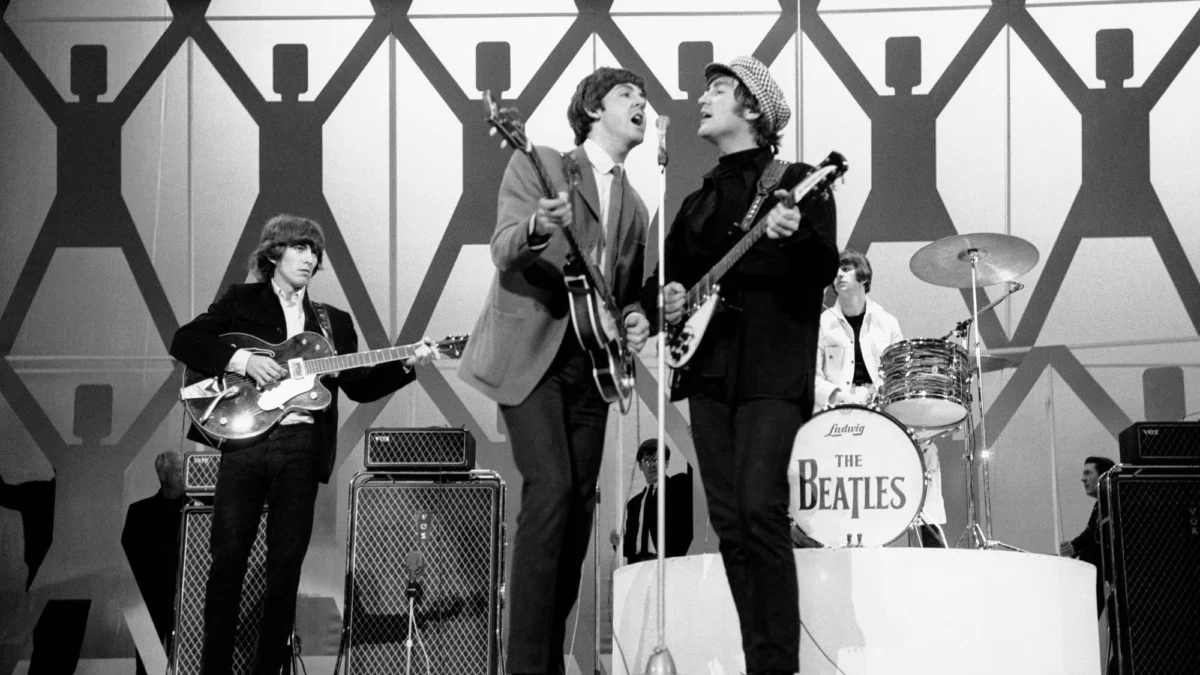
In the spring of 1973, three years after the official dissolution of The Beatles, Apple Records released two double-album sets that would define the band’s legacy for subsequent generations. Known colloquially by their cover colors as the "Red Album" (1962–1966) and the "Blue Album" (1967–1970), these collections were compiled to provide an authorized retrospective in the face of increasing bootleg activity. At the time of their release, the music industry was grappling with the transition from the singles-driven market of the early 1960s to the album-oriented rock era of the 1970s. These compilations successfully bridged that gap, offering a chronological survey of the most rapid artistic evolution in modern music history.
The "Red Album" captures the group’s ascent from the Merseybeat scene to global "Beatlemania." It documents the transition from straightforward rock and roll covers and early Lennon-McCartney originals like "Love Me Do" and "Please Please Me" to the sophisticated studio experimentation found on Rubber Soul and Revolver. Data from the Recording Industry Association of America (RIAA) indicates that the "Red Album" has achieved Diamond status, reflecting over 15 million units moved in the United States alone.
Conversely, the "Blue Album" details the band’s later years, characterized by psychedelic exploration, social commentary, and the eventual fracturing of the group. Starting with the landmark "Strawberry Fields Forever" and concluding with the tracks from Let It Be, this collection serves as a historical document of the counterculture movement of the late 1960s. In November 2023, these albums were re-released with expanded tracklists and new 2023 stereo and Dolby Atmos mixes. The updated editions included the "final" Beatles song, "Now and Then," which utilized AI-assisted restoration technology to isolate John Lennon’s vocals from a 1970s demo. This re-release saw both albums return to the top of the Billboard charts, demonstrating the enduring commercial and cultural relevance of the compilation format.
The Definitive Pop Blueprint: Madonna’s The Immaculate Collection
Released on November 9, 1990, Madonna’s The Immaculate Collection stands as one of the most influential and commercially successful compilation albums in history. At the time of its release, Madonna had spent nearly a decade redefining the role of the female pop star, blending provocative visual imagery with dance-oriented production. The album was not merely a chronological list of hits; it was a carefully curated experience that utilized "Q-Sound," a then-novel audio processing technology intended to create a three-dimensional soundscape for the listener.
The collection includes 15 of Madonna’s biggest hits from 1983 to 1990, along with two new tracks, "Justify My Love" and "Rescue Me." Every track on the album was remixed by Shep Pettibone, ensuring a cohesive sonic texture that updated the earlier 80s production styles for the 1990s club scene. This technical decision was pivotal in maintaining the artist’s relevance during a period when the music industry was shifting toward grunge and hip-hop.
Statistically, The Immaculate Collection is a titan of the industry. It has sold over 30 million copies worldwide, making it the best-selling compilation album by a solo artist. In the United Kingdom, it spent over 330 weeks on the charts, a testament to its status as a "must-own" record for the general public. The album’s impact extends beyond sales; it solidified the "Greatest Hits" format as a tool for rebranding. By concluding the 1980s with this set, Madonna effectively closed the first chapter of her career, clearing the way for the more experimental and controversial Erotica era that followed. Music historians point to this album as the gold standard for pop stardom, where the singles themselves become the defining landmarks of a decade’s cultural zeitgeist.
The Pedagogy of Rock and Roll: Chuck Berry’s The Great Twenty-Eight
While pop and rock compilations often focus on chart dominance, Chuck Berry’s The Great Twenty-Eight, released in 1982 by Chess Records, serves as a primary source text for the history of American music. Unlike many of his contemporaries, Berry’s influence was rooted in his ability to synthesize rhythm and blues, country, and blues into a new, guitar-driven language. The Great Twenty-Eight collects the essential recordings from his peak years at Chess, spanning from 1955 to 1965.
The album includes "Maybellene," "Johnny B. Goode," "Roll Over Beethoven," and "Brown Eyed Handsome Man"—songs that provided the foundational vocabulary for the British Invasion and the subsequent explosion of rock music. John Lennon famously remarked, "If you tried to give rock and roll another name, you might call it ‘Chuck Berry.’" This compilation validates that sentiment by showcasing Berry’s innovative double-stop guitar licks and his sophisticated, narrative-driven lyricism, which focused on teenage life, cars, and the pursuit of the "American Dream."
In terms of critical standing, The Great Twenty-Eight is frequently cited by Rolling Stone and other academic music publications as one of the greatest albums of all time, regardless of its status as a compilation. It is often used in university-level musicology courses to illustrate the transition from the Big Band era to the small-combo rock format. The inclusion of "Johnny B. Goode" on the Voyager Golden Record—a phonograph record launched into space in 1977 to represent human achievement—underscores the universal importance of the material contained within this collection. For Berry, the compilation was not a "stop-gap" between albums but the definitive statement of a career that changed the course of global culture.
Comparative Analysis: The Evolution from Physical Media to Digital Curation
The role of the compilation album has undergone a significant transformation with the advent of digital streaming platforms. In the physical era (vinyl, cassette, and CD), a "Greatest Hits" album was a high-value proposition for consumers, offering 10 to 20 hit songs for the price of a single disc. Today, services like Spotify and Apple Music offer algorithmic "This Is [Artist]" playlists that serve a similar function. However, industry analysts argue that the curated compilation album still holds distinct advantages over the algorithm.
A curated album like The Immaculate Collection or the "Blue Album" offers a fixed narrative and a specific sonic mastering that a playlist lacks. Compilations often feature liner notes, rare photography, and historical context that contribute to the "myth-making" of an artist. Furthermore, from a business perspective, the "Greatest Hits" package remains a powerful tool for record labels to revitalize a back catalog. When an artist passes away or experiences a resurgence due to a viral social media trend or a biographical film, the compilation is typically the first product to see a spike in consumption.
Broader Implications for Music Preservation
The existence of these definitive compilations ensures that the "essential" works of an artist remain accessible and organized for future study. In a digital landscape where thousands of songs are uploaded daily, the curated compilation acts as a filter, highlighting the tracks that possessed the greatest social and commercial impact. These albums also serve as a form of insurance for an artist’s legacy; they condense a sprawling career into a digestible format that can be easily licensed for film, television, and educational purposes.
In conclusion, the significance of The Beatles’ "Red and Blue" albums, Madonna’s The Immaculate Collection, and Chuck Berry’s The Great Twenty-Eight transcends their commercial success. They are architectural pillars of the music industry that provide a structured entry point into the complex histories of their respective creators. By synthesizing years of artistic output into a single, cohesive package, these compilations have moved beyond the status of mere "products" to become essential historical documents that continue to shape the way we understand and appreciate the evolution of modern sound. As the industry continues to move toward a singles-heavy, digital-first model, the legacy of the curated compilation remains a vital reminder of the power of a well-told musical story.
