

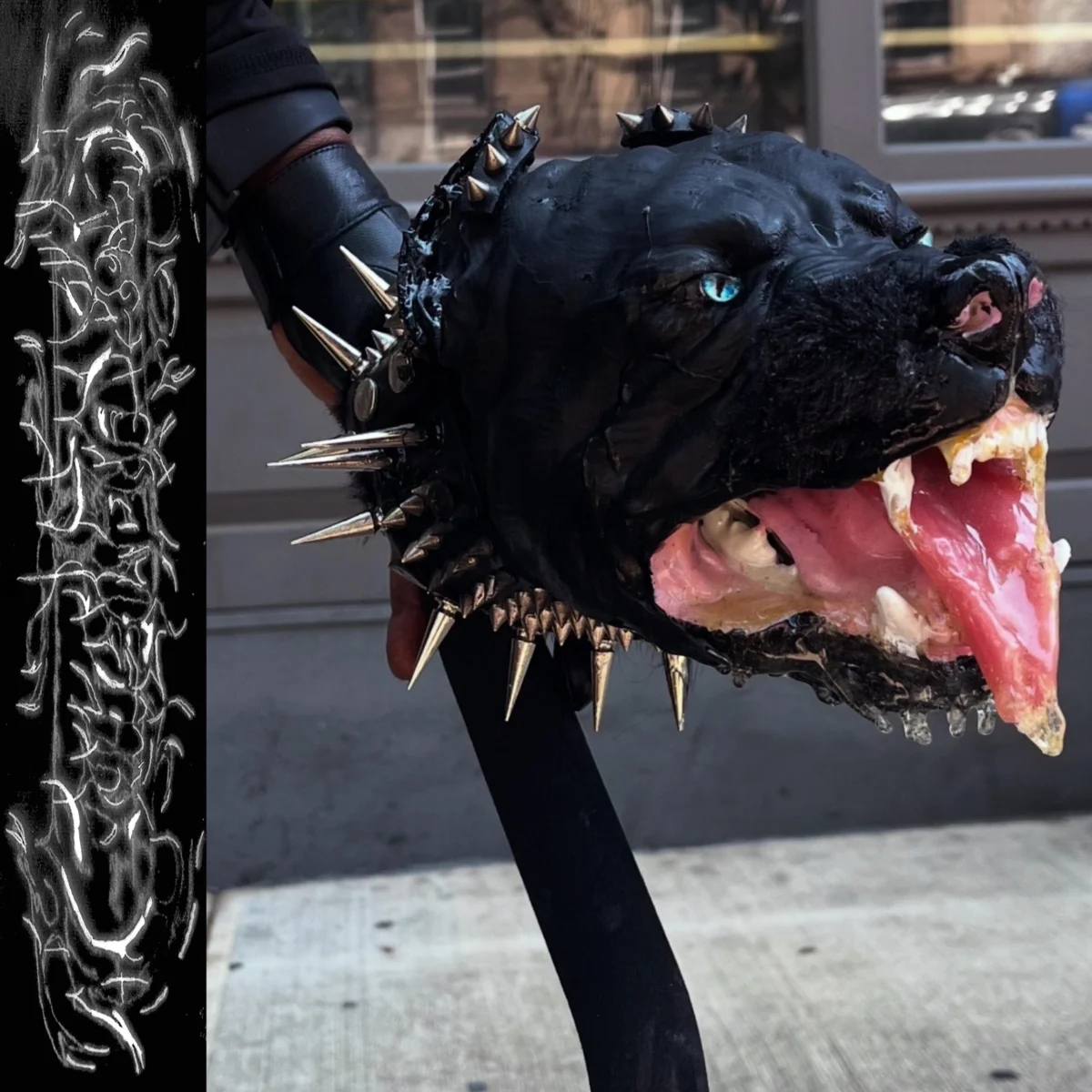
New York City-based musician Grant Chapman, widely recognized as the percussionist for Chris Taylor’s experimental project Body Meat, has further cemented the unique sonic identity of his solo endeavor, Torture Methods, with the release of a new single, "RIPPER, REAPER." This latest offering, which debuted on Friday, September 18, arrives just months after the May release of his self-titled debut album, Torture Methods, a work that immediately garnered attention for its distinctive blend of gothic atmosphere, glitch aesthetics, and a deeply unsettling, yet compelling, auditory narrative. The rapid follow-up demonstrates Chapman’s prolific output and his commitment to exploring the darker, more intricate corners of electronic music.
The Genesis of Torture Methods: From Ensemble to Solo Experimentation
Grant Chapman’s musical journey has been marked by a nuanced interplay between collaborative work and intensely personal artistic exploration. His role as the percussionist for Chris Taylor’s Body Meat provides a crucial context for understanding the evolution of Torture Methods. Body Meat, known for its intricate, often challenging soundscapes that weave together elements of industrial, noise, and experimental electronica, has allowed Chapman to hone his percussive prowess within a framework that values innovation and boundary-pushing. This experience undoubtedly contributed to his sophisticated understanding of rhythm, texture, and the psychological impact of sound, skills that are now fully unleashed in his solo project.
Torture Methods represents Chapman’s foray into a purely sample-based artistic domain, a move that grants him complete creative autonomy over every sonic element. This approach is not merely a technical choice but a foundational philosophy, allowing for the meticulous construction of soundscapes from disparate fragments, often recontextualizing them into something entirely new and unsettling. The project’s name itself, "Torture Methods," suggests an intent to push listeners’ comfort zones, to explore themes of discomfort, decay, and the grotesque through auditory means. It implies a deliberate crafting of sounds designed to provoke, to challenge, and ultimately, to immerse the listener in an experience that transcends conventional musical enjoyment.
The Self-Titled Debut: A Foundation of Gothic Glitch
The self-titled debut album, Torture Methods, released in May, served as the formal introduction to Chapman’s solo vision. Critics and listeners alike quickly characterized it as a "gothic, glitch-ridden nightmare," a descriptor that, while evocative, only scratches the surface of its intricate design. The album’s atmosphere was likened to a "surrealist arthouse film," suggesting a highly visual and narrative quality embedded within its purely auditory form.
Musically, Torture Methods established a compelling tension between decay and meticulous construction. The "gothic" elements were conveyed not through traditional instrumentation, but through expansive, dark ambient textures, low-frequency drones, and a pervasive sense of dread. These were often punctuated by "glitch-ridden" interjections – abrupt cuts, digital artifacts, and fragmented sounds that disrupted the flow, creating a sense of unease and instability. This combination resulted in an immersive, almost claustrophobic experience, where beauty and horror coexisted in a delicate, unsettling balance. The album’s production showcased a profound understanding of sound design, transforming seemingly disparate samples into a cohesive, often overwhelming, sonic tapestry. It laid the groundwork for a project unafraid to delve into the psychological depths of electronic music, preparing audiences for what was to come.
"RIPPER, REAPER": An Evolution in Haunting Soundscapes
The release of "RIPPER, REAPER" on September 18 represents a significant evolution in the Torture Methods sound, building upon the foundations laid by the debut album while introducing new layers of complexity and intensity. The single has been described as both "seductive and haunting," a duality that speaks to Chapman’s mastery of atmosphere.
At its core, "RIPPER, REAPER" is a sonic maelstrom, characterized by "demonic screams and chopped vocal clips" that are not merely present but actively "swirl in a cyclone of jungle." This immediately introduces a key distinguishing feature: the prominent incorporation of jungle music elements. Jungle, originating from the UK rave scene of the early 1990s, is renowned for its rapid tempos, intricate breakbeats, heavy basslines, and often dark, atmospheric samples. In "RIPPER, REAPER," Chapman skillfully integrates these characteristics, using the frantic energy of jungle rhythms to propel the track forward, creating a relentless, almost frenzied momentum. The "cyclone" metaphor aptly describes the density and swirling nature of the layered sounds, where traditional percussive elements are replaced or augmented by manipulated vocal fragments and synthetic textures.
Beyond the jungle influence, the track features "wompage," a term often used to describe deep, resonant bass frequencies that physically vibrate the listener, alongside "echoes of chains." These industrial-tinged sounds contribute significantly to the track’s oppressive and unsettling quality, evoking imagery of confinement, struggle, and mechanical dread. The metallic clanging and dragging sounds of chains, combined with the visceral bass, create a palpable sense of unease.
Perhaps the most striking and unexpected element, however, is the presence of a "flowery melody that nearly feels Mozartian." This juxtaposition is a testament to Chapman’s artistic vision, deliberately placing an element of classical elegance and beauty amidst the chaos and horror. This "Mozartian" motif acts as a stark contrast, a fleeting moment of grace or perhaps a twisted mockery of harmony, amplifying the surrounding dissonance and making the overall experience even more disorienting and impactful. The ability to weave such disparate sonic threads—demonic screams, jungle breaks, industrial clangor, and classical melody—into a cohesive and compelling narrative is a hallmark of Chapman’s sophisticated approach to sound design.
The thematic depth of "RIPPER, REAPER" is further amplified by its accompanying Bandcamp description, which reads: "Over the festering belly buzzed the flies, out of it crawled the worms of decay, in squadrons dark and sluggish stream seething along the ragged flesh." This visceral, almost poetic prose serves as a textual counterpart to the track’s auditory horrors, painting a vivid picture of decomposition and corruption. It grounds the abstract sonic elements in a tangible, albeit gruesome, reality, inviting listeners to contemplate themes of mortality, decay, and the inescapable cycle of life and death. This deliberate use of evocative language underscores the project’s ambition to create a multi-sensory experience that extends beyond mere musical enjoyment, venturing into the realms of conceptual art and existential dread.
The Artistic Vision of Grant Chapman
Grant Chapman’s work with Torture Methods reveals an artist deeply committed to exploring the extremes of sound and emotion. His creative process, though not explicitly detailed, can be inferred as one of meticulous curation and transformative manipulation of samples. This involves not just selecting sounds but extensively processing them—chopping, stretching, pitching, layering, and applying a myriad of effects—to strip them of their original context and imbue them with new, often sinister, meanings. This approach aligns with the broader tradition of plunderphonics and musique concrète, where the source material is merely a starting point for an entirely new creation.
Chapman’s background as a percussionist is evident in the rhythmic complexity and textural richness of Torture Methods. Even when traditional drums are absent, there’s a profound sense of rhythm derived from the interplay of sonic events, the precise timing of glitches, and the propulsive energy of his basslines. His ability to craft compelling narratives purely through sound, without lyrical guidance, positions him as a significant voice in contemporary experimental electronic music. He challenges listeners to engage actively with the soundscape, to decipher its implied narratives, and to confront the discomfort it often evokes.
Genre Blurring and the Modern Electronic Landscape
Torture Methods stands as a prime example of the increasing hybridization and genre-blurring prevalent in modern electronic music. Chapman eschews easy categorization, instead forging a sound that draws from industrial, dark ambient, jungle, glitch, and even classical influences. This refusal to adhere to established genre boundaries is not merely an artistic choice but a reflection of the evolving landscape of electronic music, where artists are increasingly free to explore and combine disparate elements.
The project contributes to a broader conversation about what electronic music can be, pushing it beyond dancefloor functionality or ambient relaxation into a realm of high-concept, visceral experience. The NYC music scene, known for its vibrant experimental communities and its openness to diverse sounds, provides an ideal environment for an artist like Chapman to flourish. It fosters a culture where artists are encouraged to innovate and where audiences are receptive to challenging and unconventional sonic propositions. This fertile ground allows for the development of projects like Torture Methods, which defy commercial pressures in favor of artistic integrity and depth.
The Independent Artist in the Digital Age
The independent release model adopted by Grant Chapman for Torture Methods highlights the transformative power of digital platforms for niche and experimental artists. Platforms like Bandcamp and YouTube are instrumental in allowing artists to bypass traditional gatekeepers, maintain creative control, and connect directly with a global audience receptive to their unique offerings. Bandcamp, in particular, has become a vital ecosystem for independent musicians, providing tools for direct sales, community building, and detailed artist profiles, as evidenced by the explicit mention of the platform for "RIPPER, REAPER."
This direct-to-fan approach empowers artists to cultivate a dedicated following based on artistic merit rather than mainstream appeal. The inclusion of a YouTube embed for "RIPPER, REAPER" further underscores the importance of visual accessibility and ease of sharing in the digital age. While often featuring static imagery for experimental tracks, these visual components still contribute to the overall aesthetic and discoverability of the music. For an artist operating in a highly specific and often challenging genre, these platforms are not just distribution channels but integral parts of their artistic outreach strategy.
Broader Implications and Future Outlook
The trajectory of Grant Chapman’s Torture Methods, from a compelling debut album to a powerful new single, suggests a robust and evolving artistic vision. "RIPPER, REAPER" not only reinforces the project’s identity but also expands its sonic palette, demonstrating Chapman’s willingness to integrate new influences while maintaining a core aesthetic of dark, intricate sound design.
For the broader landscape of experimental electronic music, Torture Methods represents a significant contribution, pushing boundaries and challenging conventional notions of musical beauty and horror. It underscores the enduring power of sound to evoke profound emotional and intellectual responses, even in the absence of traditional melodic or lyrical structures. As Chapman continues to develop this project, it is anticipated that he will further explore the thematic depths hinted at in his releases, potentially delving into live performances that could translate the intricate soundscapes into immersive, multi-sensory experiences. His work stands as a testament to the vitality of independent artistry and the boundless potential of electronic sound manipulation to create truly unique and unforgettable auditory nightmares. The critical reception and growing interest in Torture Methods indicate that Grant Chapman is an artist to watch, whose contributions will likely continue to shape the darker fringes of contemporary electronic music for years to come.
