

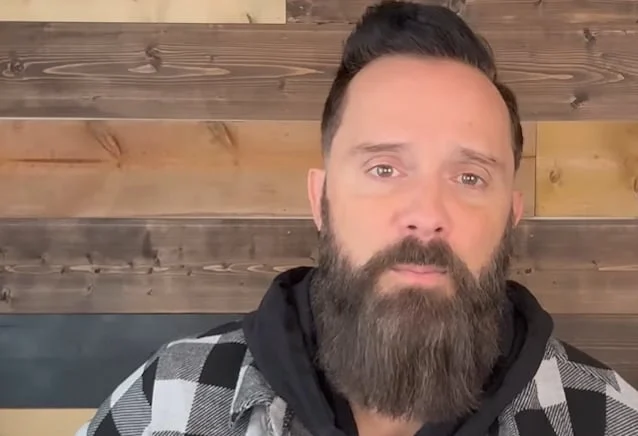
During a candid conversation on "The White House Pod – Dare To Dream," the podcast hosted by film and television actor, director, and producer David A.R. White, John Cooper, the dynamic frontman of the Grammy-nominated Christian rock band SKILLET, delved into the long-standing criticism his group has faced regarding the perceived demonic or sinful nature of their hard rock sound. Cooper shared his perspective on the persistent labeling of his music, drawing parallels to the artistic struggles of other musicians and asserting his commitment to authenticity.
The discussion, transcribed by BLABBERMOUTH.NET, saw Cooper reflecting on the unique position SKILLET occupies within the music landscape. He recalled a documentary featuring Lenny Kravitz, where the artist articulated his experience of being perceived as "too black" by some and "not black enough" by others, struggling to define his niche. Cooper found a resonance with this sentiment, stating, "I always felt that was with SKILLET. It was, like, ‘It’s too heavy, but it’s not heavy enough.’ ‘It’s too spiritual, but it’s not overtly Christian enough.’ ‘It’s too this.’"
This perceived contradiction, Cooper explained, has been a consistent challenge for the band. However, rather than attempting to conform to external expectations, SKILLET has embraced an ethos of unapologetic authenticity. "I think for us, it was just, like, ‘Hey, I’m gonna be real. I’m gonna be myself. I’m gonna be unapologetically authentic,’" Cooper stated. He acknowledged that this approach inevitably alienates some listeners. "I know that some people are not going to like that we sound a certain way, or that I said something a certain way, or that I’ve got tattoos all over me, or whatever it may be. And I don’t really care. I’m not trying to please them. I will never be able to please them."
Cooper further elaborated on the deeply entrenched nature of these criticisms, particularly within certain religious circles. He recounted his upbringing in a church that, while possessing many positive aspects, also exposed him to perspectives that viewed hard rock music as inherently evil. "I just know for a fact I will never be able to convince a Bill Gothardite or somebody from your Mennonite church, I will never be able to convince them that hard rock is not evil," he explained. Cooper specifically referenced followers of Bill Gothard, an American Christian minister and speaker whose teachings have sometimes included pronouncements against contemporary Christian music genres like rock, with Gothard himself having previously stated that listening to Christian rock could be considered "fellowship with demons."
Cooper expressed a pragmatic resignation to this unyielding opposition. "They just believe that the music is inherently full of the power of Satan, and there’s nothing I can do, and so there’s no reason to try," he said. Consequently, his personal philosophy has shifted towards self-acceptance and joy. "So for me, I just went, ‘Hey, I’m not here to do that with them. I’m just gonna be myself and be full of joy.’" He maintained an openness to constructive dialogue, adding, "And if I meet somebody that really does wanna have a good-faith debate about it, I’ll talk with them about it."
A Legacy of Impact and Unprecedented Streaming Success
SKILLET’s enduring influence in the Christian rock genre is underscored by recent milestones. In 2009, their hit single "Monster" achieved a historic feat, becoming the first song by a Christian rock band to surpass one billion streams on Spotify. The track has since accumulated an astonishing global total of over four billion streams, demonstrating its widespread and lasting appeal.
The band’s commercial success is further evidenced by their impressive sales figures. SKILLET has reportedly sold more than 23 million albums worldwide, maintaining a robust monthly listenership of approximately 12 million on Spotify. Their international reach has also expanded significantly, as demonstrated by their European headline tour earlier this year, which attracted the largest international crowds in the band’s history. This tour included record-breaking ticket sales at the iconic Zénith in Paris, signaling a growing global appreciation for their music.
Reinforcing the Message: Music is a Gift, Not Inherently Evil
Cooper’s remarks on the "Dare To Dream" podcast are a continuation of a consistent message he has been articulating. Just last month, he addressed similar criticisms in an interview with Fox News Digital, pushing back against the notion that hard rock music is inherently "demonic."
"I would say, I just think that you’re misunderstanding something very basic, which is that music does not belong to the devil," Cooper asserted in the Fox News interview. "Music belongs to God, and it’s the intentionality. It’s the lyrics. It’s what you do with it. It’s not in a sound. It’s in a heart posture." He directly challenged those who hold a negative view of rock music, stating, "And I would just say to those Christians, ‘You’re not just getting the issue of music wrong, I would say you’re getting the gospel wrong.’"
Cooper firmly rejects the idea that any musical style, by its very nature, possesses inherent evil. "I just don’t think that that’s right," he said. "And I think that God gave us creative expression." He views the ability to create music as a profound gift. "The ability to write a song, he said, is an ‘amazing gift of freedom God has given all of humanity.’"
He elaborated on this theological perspective, stating, "Talk about a God that says, ‘I’m going to give you a very powerful gift, and it’s up to you how you choose to use it.’ Man, that is powerful." Cooper concluded that he cannot subscribe to the belief that a particular sound equates to paganism or inherent sinfulness. "So, I would just say to critics, I would say, ‘Hey, you can have something that sounds incredibly beautiful that is actually offending God in its intentionality, in its lyrics.’"
Looking Ahead: New Music and Continued Touring
SKILLET is poised to release new material, with their independent EP, "After The Storm," scheduled for release on October 9. This project is described as a return to the band’s heavier musical roots and represents one of their most personal creative statements to date. The EP is produced by David Cowell, known for his work with SLEEP THEORY, and SKILLET’s own Korey Cooper.
To support "After The Storm," SKILLET will embark on a nationwide U.S. Live Nation headline tour commencing this October, promising to bring their energetic performances to audiences across the country.
The Broader Implications of Musical Interpretation
John Cooper’s consistent defense of his band’s sound against accusations of being demonic speaks to a broader cultural and theological debate within and outside of Christian circles. The historical tension between rock music and certain religious interpretations dates back to the genre’s inception, with its perceived rebellion, amplified sound, and lyrical themes often clashing with more conservative viewpoints.
Cooper’s argument centers on the idea that the meaning and morality of music are not inherent in its sonic qualities but rather in the intent, message, and context of its creation and reception. This perspective challenges a literalist or purist approach to music, suggesting that the divine can be expressed through diverse artistic mediums, including those with a powerful and driving sound.
The success of SKILLET, particularly with a song like "Monster" achieving such massive global streaming numbers, suggests a significant audience that resonates with their message and musical style, regardless of the criticisms leveled against them. This widespread appeal indicates a potential shift in how Christian music is perceived and accepted, with a growing embrace of more contemporary and genre-bending sounds.
Cooper’s willingness to engage in dialogue, while also maintaining a firm stance on his artistic integrity, provides a model for navigating these complex issues. His emphasis on "intentionality" and "heart posture" offers a framework for evaluating music that moves beyond superficial judgments based on genre or volume. As SKILLET continues to evolve and reach new audiences, their journey will likely remain a focal point in discussions about faith, art, and the boundaries of acceptable expression. The band’s sustained success and their proactive engagement with critics underscore their commitment to both their artistic vision and their spiritual convictions, solidifying their place as a significant force in contemporary music.
