

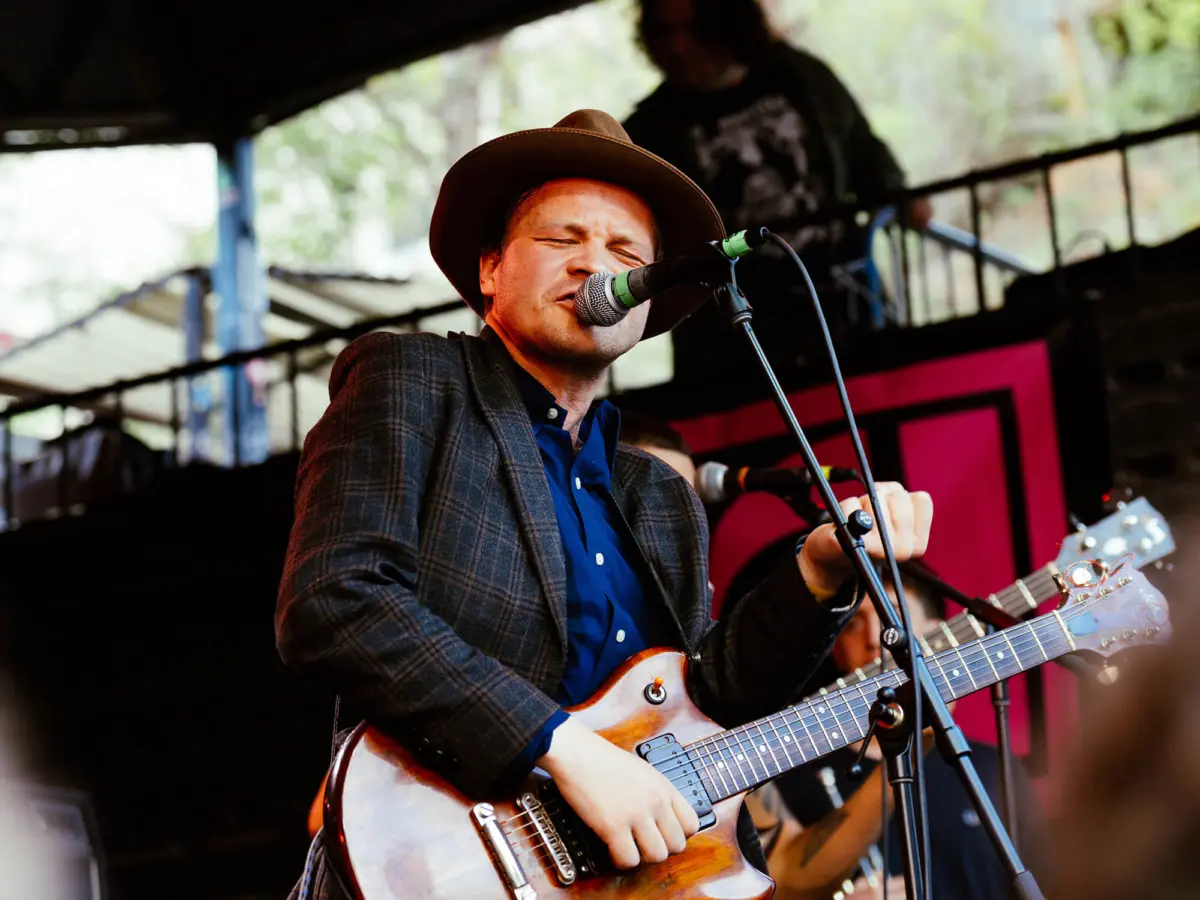
The abrupt cancellation of three upcoming US tour dates by Geordie Greep, the former frontman of the acclaimed London experimental rock band Black Midi, has sent ripples through the music community. The decision comes in the wake of a public allegation of sexual misconduct made against Greep during a recent performance in Vancouver, British Columbia, an accusation he vehemently denied on stage. The initial report from NME on Sunday indicated a broader cancellation of five shows across Boise, Salt Lake City, Boulder, Denver, and Omaha. However, as of the time of this report, only the Boise (October 9), Salt Lake City (October 10), and Boulder (October 12) dates were confirmed as cancelled, with tickets for subsequent shows in Denver (October 13), Omaha (October 14), and Des Moines, Iowa (October 15), still appearing available on Greep’s official website, creating a degree of confusion regarding the full scope of the tour disruption.
The Vancouver Incident: An Unfolding Narrative
The catalyst for these cancellations and the public statement from Greep was an incident that occurred on October 8th at The Pearl in Vancouver. Prior to Greep’s scheduled performance, an attendee reportedly distributed flyers that contained stark accusations, reading “Geordie Greep A Rapist” and “You know what you did this morning Oct 8th.” These flyers, which offered no further details regarding the alleged incident, nevertheless set a tense atmosphere for the evening’s event.
Upon taking the stage alone, Greep chose to address the allegations directly, foregoing an immediate musical introduction. He candidly recounted the events of the preceding night and the morning of the show. According to his statement, he had been out with members of his touring party, frequenting various bars before ending up at a late-night house party. It was there, he explained, that he “misread a situation” and “got the wrong end of the stick with someone that was there.” Greep stressed that he had apologized immediately for his actions at the time and characterized the entire episode as a “complete misunderstanding on my part.” He unequivocally stated to the audience, “I would never rape a woman. I’m not a rapist.”
Greep further elaborated on the difficult position he found himself in, expressing reluctance to pressure his bandmates into performing under such contentious circumstances. He offered the audience the option to request refunds or leave the venue if they felt uncomfortable. “I just wanted to be transparent with you about what happened,” he conveyed, visibly distressed. “I’m very, very, very sorry; I made someone uncomfortable without meaning to. It’s not a good thing, it’s not good.” Despite the gravity of the situation, he proceeded to perform a shortened solo set. In a gesture aimed at restitution and support for victims of violence, Greep announced that all proceeds from that Vancouver performance would be donated to an anti-violence organization operating within British Columbia. This on-stage address was captured and subsequently shared on social media, providing a direct account of his immediate response to the allegations.
Geordie Greep’s Artistic Journey and Black Midi’s Legacy
Geordie Greep’s current solo career follows a significant chapter as the driving force behind Black Midi, a band that carved out a unique niche in the contemporary music landscape. Formed in London, Black Midi quickly garnered critical acclaim for its distinctive blend of experimental rock, math rock, and noise rock, characterized by intricate instrumental passages, unconventional song structures, and Greep’s idiosyncratic vocal delivery. Their albums, including Schlagenheim (2019) and Cavalcade (2021), were widely lauded for their innovative sound and uncompromising artistic vision, earning them a dedicated global fanbase and nominations for prestigious awards like the Mercury Prize. Their influence extended beyond the experimental scene, inspiring a new wave of musicians pushing the boundaries of rock music.
The band’s journey, however, reached an inflection point in 2024 when Black Midi announced an indefinite hiatus. This “indefinite split,” as confirmed by the band’s bassist and frontman, marked the conclusion of a highly productive and creatively fertile period, allowing individual members to pursue other projects. For Greep, this transition led to the launch of his solo career and the release of his debut album, The New Sound, later that same year. The album represented a departure from some of Black Midi’s more abrasive tendencies, showcasing Greep’s evolving musical interests and songwriting prowess, yet retaining his signature experimental edge. The North American tour, from which dates are now being cancelled, was in support of this new solo endeavor, aiming to introduce his individual artistic direction to a wider audience.
Adding a poignant layer to the band’s recent history, Black Midi also faced a profound tragedy earlier this year with the passing of former guitarist Matt Kwasniewski-Kelvin at the age of 26. His death, attributed to a “long battle with his mental health,” deeply affected the band and its followers, underscoring the personal challenges artists can face even amidst professional success. This recent loss provides a somber backdrop to the current developments surrounding Greep, reminding the public of the complex human element behind the artistic personas.
Broader Implications and Industry Scrutiny
The cancellation of tour dates and the public nature of the sexual misconduct allegation against Geordie Greep underscore a broader trend within the entertainment industry, particularly in the wake of the #MeToo movement. Artists and public figures are increasingly held accountable for their actions, with allegations, even those unproven in a court of law, often leading to immediate and significant professional repercussions. The music industry, like film and television, has been forced to re-evaluate its internal culture and implement stricter standards of conduct.
For Greep, the immediate impact is clear: disrupted tour logistics, potential financial losses from cancelled performances, and damage to his burgeoning solo career and personal brand. The swift public reaction, amplified by social media platforms, demonstrates how quickly an artist’s reputation can be affected. While Greep’s on-stage statement was an attempt at transparency and apology for causing discomfort, the nature of the specific allegation — even if denied as a “misunderstanding” — places him under intense scrutiny. The distinction between a "misunderstanding" and an act of misconduct, particularly concerning consent, is a deeply debated and complex area within contemporary societal discourse.
Promoters, venues, and management teams are increasingly proactive in responding to such allegations, often prioritizing public safety and reputational risk over contractual obligations. While no official statements from Greep’s management or tour promoters have been released regarding the cancellations, such decisions are typically made with careful consideration of potential protests, audience safety concerns, and the overall atmosphere surrounding future events. The music community itself often divides in such situations, with some fans offering unwavering support, others demanding accountability, and a significant portion awaiting further information. This dynamic highlights the challenge for artists and their teams in navigating allegations in a climate where public opinion can rapidly coalesce and influence career trajectories.
The decision to donate proceeds from the Vancouver show to an anti-violence organization, while a conciliatory gesture, also reflects a growing expectation for artists to acknowledge and address the wider societal context of sexual misconduct. It is a tacit acknowledgment of the seriousness of such allegations and the need for support systems for survivors.
Looking Ahead: Uncertainty and Accountability
The situation surrounding Geordie Greep remains fluid. The discrepancy in the number of cancelled shows suggests ongoing internal discussions and potentially a staggered approach to managing the tour. Greep has not issued a formal written statement beyond his on-stage address, leaving many questions unanswered for fans and the industry alike. Whether the remaining tour dates will proceed as planned, or if further cancellations will be announced, is a critical point of uncertainty.
The incident serves as a stark reminder of the responsibilities that come with public platforms and the evolving standards of conduct expected from those in the public eye. In an era of heightened awareness around issues of consent and sexual harassment, artists are not only judged by their creative output but also by their personal conduct and their responses to serious allegations. The long-term implications for Geordie Greep’s career will undoubtedly hinge on how this situation evolves, whether further details emerge, and how he continues to address the allegations both publicly and privately.
For individuals seeking support or information on sexual harassment, assault, and rape, vital resources are available. In the UK, the Rape Crisis charity provides assistance, while in the US, RAINN (Rape, Abuse & Incest National Network) offers comprehensive support and services.
