

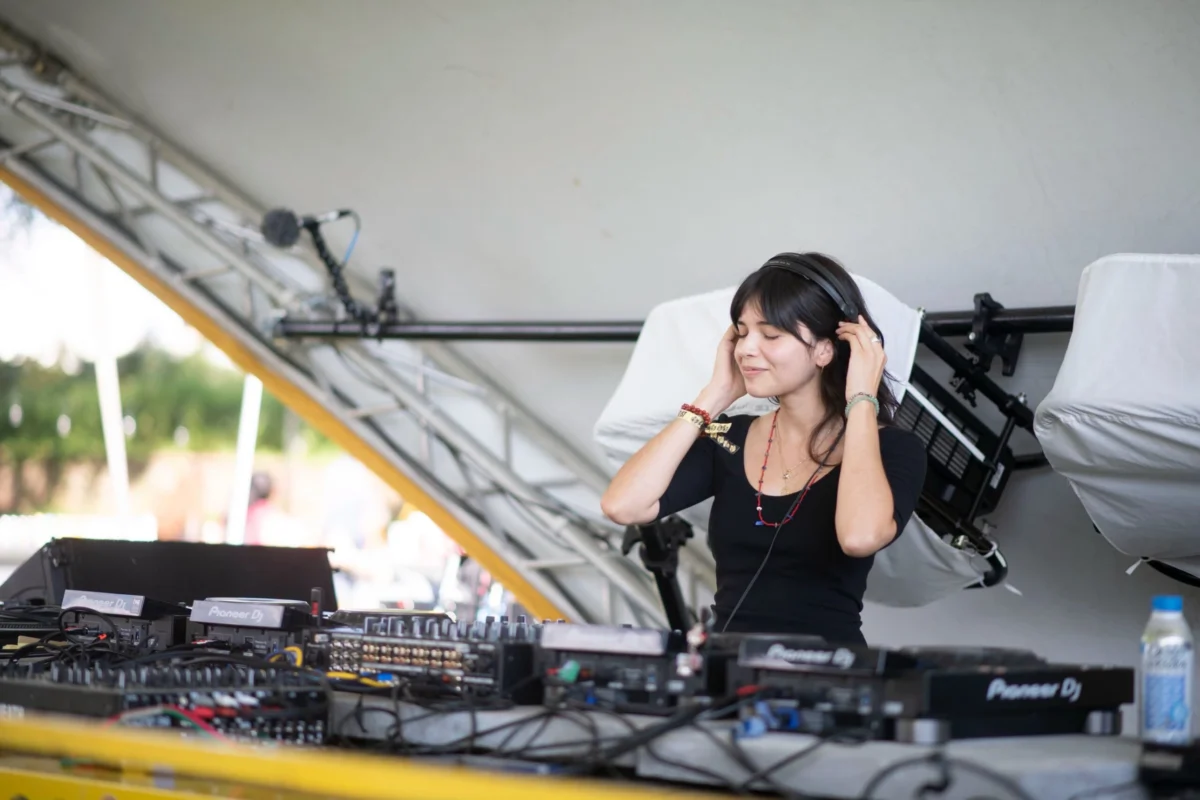
Every September, in the leafy Philadelphia hinterlands, a 1770s historic site morphs into a surreal dance gathering, a vibrant testament to the unexpected harmony that can emerge when history meets contemporary culture. This unique annual event, orchestrated by the renowned "Making Time" collective, transforms Fort Mifflin, a National Historic Landmark steeped in American Revolutionary War history, into a dynamic, multi-sensory festival space. Picnic blankets brush against Fort Mifflin’s robust brick walls as commercial airplanes descend overhead towards Philadelphia International Airport, creating a distinct auditory and visual juxtaposition. Bombproof shelters, once designed to withstand cannon fire, are ingeniously repurposed into natural wine caves, offering attendees a sophisticated respite amidst the pulsating rhythms. Ravers swarm muddy parade grounds, initially intended for rigorous military drills, now serving as expansive dance floors under an open sky. Grassy patches overlooking the Delaware River are meticulously decorated with hanging strobes and a tent that resembles a polyester Pringle, while lasers by Klip Collective flicker hypnotically on the algae in the Liquid Moat, weaving intricate patterns that dance across the ancient water. In service of the goofy motto Peace Love Unity Respect Transcendence (PLURT), Making Time attracts an expanding, refreshingly curious audience, drawing thousands to experience a cultural phenomenon unlike any other.
The Genesis of Making Time: From Underground Nights to Historic Raves
The "Making Time" phenomenon began not as a sprawling festival, but as an influential series of club nights in Philadelphia, founded and curated by DJ Dave P. in the early 2000s. What started as a platform for showcasing cutting-edge electronic music, particularly techno, house, and experimental genres, quickly cultivated a dedicated following. Dave P.’s vision extended beyond simply playing music; he sought to create immersive experiences, fostering a sense of community and shared discovery. These early events were characterized by their intimate atmospheres, meticulously curated soundscapes, and a commitment to pushing the boundaries of traditional clubbing.
Over nearly two decades, Making Time evolved, driven by a desire to expand its artistic scope and reach a broader audience. As its reputation grew, so did the ambition of its organizers. The transition from indoor club nights to larger, more experimental outdoor venues marked a significant turning point. The search for a location that could accommodate an expanding crowd while offering a unique, atmospheric backdrop led them to Fort Mifflin. The inaugural Fort Mifflin event, held years ago, was a daring experiment that quickly proved to be a resounding success, solidifying the fort’s unlikely role as the annual September home for Making Time. This evolution underscores a broader trend in the electronic music scene, where festivals increasingly seek out unconventional, historically rich, or naturally stunning locations to differentiate themselves and enhance the attendee experience, moving beyond conventional fairgrounds or urban parks.
Fort Mifflin: A Historical Canvas Reimagined
Fort Mifflin holds a profound place in American history, often referred to as "the fort that saved America." Constructed in the 1770s, its strategic location on Mud Island in the Delaware River was crucial for defending Philadelphia during the American Revolutionary War. The fort endured a relentless siege by British forces in the autumn of 1777, with its small garrison heroically holding out for six weeks against overwhelming odds, allowing General George Washington’s Continental Army to safely retreat to Valley Forge for the winter. This pivotal defense is celebrated annually, and the fort remains an active historic site, open to the public for tours and educational programs.
Comprising a complex of fortifications, including earthen ramparts, stone walls, bombproof casemates, and a significant parade ground, Fort Mifflin presents a formidable and evocative setting. It is designated a National Historic Landmark, a testament to its national significance. The juxtaposition of such a hallowed historical site with a modern electronic music festival is precisely what gives Making Time its distinctive character. It challenges perceptions of how historical spaces can be utilized, transforming a monument of past conflict into a vibrant arena for contemporary celebration and artistic expression. Fort Mifflin’s management, in partnering with Making Time, has found a unique way to generate revenue, raise awareness for the site among a new demographic, and demonstrate the versatility of historical preservation. Officials at the fort often highlight that the partnership introduces thousands of individuals, who might otherwise never visit, to the fort’s rich history, potentially fostering new patrons and supporters for its ongoing preservation efforts.
The Unfolding Transformation: A Sensory Journey Through Time and Sound
The metamorphosis of Fort Mifflin into the Making Time festival grounds is a marvel of logistical planning and creative design. Upon entering, attendees are immediately enveloped in an atmosphere that blends ancient architecture with futuristic aesthetics. The central parade ground, once echoing with military commands, now vibrates with the deep bass lines of techno and house music, emanating from multiple stages strategically placed to maximize sound dispersion while minimizing historical impact. High-fidelity sound systems are meticulously calibrated to deliver crisp audio, ensuring that every beat resonates across the expansive outdoor space.
Visual elements are equally crucial to the experience. Klip Collective, renowned for their immersive light installations, are perennial collaborators, transforming the fort’s ancient structures into canvases for dynamic projection mapping and laser displays. Their signature work on the Liquid Moat, where lasers cut through the night air to reflect off the water’s surface and the natural algae, creates an otherworldly glow that seems to animate the fort’s very essence. Elsewhere, hundreds of hanging strobes and intelligent lighting fixtures illuminate the battlements and casemates, creating a mesmerizing interplay of light and shadow. One particularly distinctive tent, described playfully as resembling a "polyester Pringle," serves as an intimate stage for experimental acts or a chill-out zone, offering a striking contrast to the fort’s stoic stone.
The repurposing of the fort’s bombproof shelters into "natural wine caves" exemplifies the event’s innovative spirit. These vaulted brick structures, designed for protection, now house pop-up bars offering curated selections of natural wines, craft beers, and artisanal cocktails, providing a sophisticated beverage experience that transcends typical festival offerings. Food vendors, often local Philadelphia establishments, set up stalls across the grounds, providing a diverse array of culinary options, from gourmet street food to classic festival fare, catering to various tastes and dietary needs. The presence of these amenities, thoughtfully integrated into the historical landscape, enhances the overall comfort and enjoyment for attendees.
Adding to the surreal ambiance is the constant overhead presence of descending airplanes, a direct consequence of the fort’s proximity to Philadelphia International Airport. This seemingly intrusive element has become an iconic, almost integral, part of the Making Time experience. Each plane’s low rumble and fleeting silhouette against the evening sky punctuate the musical sets, serving as a visceral reminder of the modern world just beyond the fort’s ancient walls, creating a unique temporal and spatial disorientation that many attendees find captivating.
The Audience and the Ethos: PLURT and Community Building
The "refreshingly curious audience" attracted to Making Time is a testament to its unique appeal and the inclusive ethos encapsulated by its motto: Peace Love Unity Respect Transcendence (PLURT). This expanded version of the classic rave acronym PLUR reflects the event’s commitment to creating a positive, respectful, and transformative environment. Attendees span a wide demographic, from long-time electronic music enthusiasts who followed Making Time from its club origins to younger generations discovering the scene for the first time. There’s a noticeable blend of seasoned ravers, art aficionados, history buffs, and curious newcomers, all drawn by the promise of an experience that transcends the ordinary.
This diverse crowd contributes significantly to the festival’s welcoming atmosphere. Anecdotal evidence and social media feedback consistently highlight the sense of camaraderie and shared joy among attendees. The PLURT philosophy is actively promoted and observed, fostering an environment where individuals feel safe to express themselves, connect with others, and immerse themselves fully in the music and art. This focus on community building differentiates Making Time from many larger, more commercial festivals, cultivating a loyal following that returns year after year.
Economic and Cultural Impact
Making Time at Fort Mifflin has grown into a significant cultural event for the Philadelphia region, with tangible economic and social impacts. While specific financial data is not publicly disclosed, conservative estimates suggest that an event drawing several thousand attendees contributes substantially to the local economy. This includes direct revenue for Fort Mifflin, which supports its operational and preservation costs, as well as indirect benefits to local businesses such as hotels, restaurants, transportation services, and various suppliers. The festival also provides employment opportunities for staff, security, technical crews, and local vendors.
Culturally, Making Time serves as a powerful example of how historical sites can be revitalized and made relevant to contemporary audiences without compromising their integrity. It challenges the perception of museums and historic landmarks as static, past-focused entities, demonstrating their potential as dynamic venues for modern artistic and cultural expression. This innovative approach to cultural programming can inspire other historic sites facing funding challenges or seeking to broaden their appeal. The event also firmly plants Philadelphia on the global map of unique electronic music destinations, attracting attendees from across the country and even internationally, further enhancing the city’s reputation as a vibrant cultural hub.
Perspectives from Key Stakeholders
Organizers’ Vision: Dave P. and the Making Time team consistently articulate their goal of creating an unparalleled experience. They often speak about the challenges and rewards of transforming Fort Mifflin, emphasizing the delicate balance between respecting the site’s history and injecting it with new life. Their commitment to curating exceptional music, innovative visuals, and a positive atmosphere is paramount to their mission, aiming for each event to be a memorable journey for every participant.
Fort Mifflin Management: Officials at Fort Mifflin view the partnership as a crucial component of their outreach and sustainability strategy. While acknowledging the logistical complexities of hosting such a large-scale event at a historic site, they emphasize the significant financial support and heightened public awareness it brings. The event introduces thousands of new visitors to the fort, many of whom return for historical tours or become advocates for its preservation. The collaboration is seen as a forward-thinking model for historic site management, demonstrating how ancient spaces can remain relevant and dynamic in the modern era.
Local Authorities and Community: The planning and execution of Making Time involve close collaboration with local authorities, including city officials, police, and emergency services. Traffic management, noise control, and public safety are paramount concerns, and comprehensive plans are put in place to ensure a smooth and secure event. While some local residents might initially express concerns about noise or traffic, the overall sentiment tends to be positive, especially given the event’s economic benefits and its reputation for a well-behaved and respectful crowd. The event’s consistent success and positive public safety record have fostered a strong working relationship between organizers and municipal services.
Broader Implications and Future Outlook
Making Time at Fort Mifflin stands as a compelling case study in cultural innovation and adaptive reuse. It demonstrates that historic preservation does not necessitate stasis; rather, it can embrace dynamic engagement and contemporary interpretation. This model offers valuable lessons for other historic sites globally, particularly those seeking to broaden their audience and secure sustainable funding in an increasingly competitive cultural landscape.
The festival also contributes to the ongoing evolution of the global electronic music scene. By prioritizing unique locations, immersive experiences, and a strong community ethos over purely commercial interests, Making Time carves out a distinct niche. It offers an alternative to the often-homogenized festival circuit, providing a more intimate, culturally rich, and thought-provoking experience.
Looking ahead, the continued success of Making Time at Fort Mifflin suggests a sustained demand for experiences that merge disparate elements – history and modernity, solitude and community, preservation and innovation. As the event continues to attract an expanding and diverse audience, it reinforces the idea that the past is not merely something to be observed but something that can be actively reinterpreted and celebrated in the present, offering new dimensions to our understanding of both history and culture. The annual transformation of Fort Mifflin into a bastion of PLURT is more than just a party; it is a powerful demonstration of transcendence, fulfilling its motto in the most unexpected and inspiring ways.
