

France has become an unexpected epicentre for a distinctive evolution within the punk rock genre, manifesting as a unique interpretation of oi, the chant-along street-punk style historically associated with British working-class culture. This burgeoning French movement, often referred to as "cold oi," has cultivated a sound characterized by its echo-drenched textures, incorporating elements from goth and post-punk to forge a sonic identity that is simultaneously dank, mysterious, and undeniably compelling. Bands such as Syndrome 81, Prisonnier Du Temps, Oi Boys, and Rancoeur are at the forefront of this stylistic innovation, with their influence gradually extending beyond French borders, evidenced by contemporary acts like Quebec’s Béton Armé and Edmonton’s Home Front drawing from similar creative wellsprings.
Historical Underpinnings and the Birth of a Subgenre
To fully comprehend the genesis of French "cold oi," it is essential to contextualize both the original British oi movement and the trajectory of French punk. The British oi scene, which emerged in the late 1970s and early 1980s, was a raw, unpolished response to perceived excesses of earlier punk waves. It championed working-class identity, direct lyrics, and a sing-along, anthemic quality, often characterized by its simplicity and aggressive energy. Bands like Sham 69, Cockney Rejects, and The 4-Skins defined this era, creating a soundtrack for a specific socio-economic demographic.
Concurrently, France was developing its own vibrant punk scene. While perhaps less globally recognized than its British or American counterparts, French punk cultivated a unique identity. A pivotal, albeit often overlooked, moment in this history, and one that The Guardian identified in a trend piece published in July 2025, was the pioneering French punk band Métal Urbain’s decision in the late 1970s to utilize a drum machine instead of a human drummer. This seemingly technical choice, born perhaps of necessity or experimental intent, introduced a stark, mechanical, and somewhat detached rhythmic quality that stands in stark contrast to the organic, often chaotic drumming typical of early punk. The Guardian‘s analysis posits this innovation as a foundational element for the "cold" aesthetic, infusing a sense of industrial precision and emotional distance into the raw punk framework. This early embrace of artificial rhythm inadvertently laid a conceptual groundwork for a sound that would, decades later, resonate with the atmospheric chill of "cold oi."
Defining the "Cold Oi" Sound: A Fusion of Atmospherics and Aggression
The sonic architecture of French "cold oi" is a sophisticated synthesis that moves beyond mere imitation. While retaining the driving rhythms and communal spirit inherent to oi, these bands inject a distinct melancholic and often austere atmosphere. Key characteristics include:
- Echo and Reverb: A pervasive use of echo and reverb saturates the soundscape, creating a sense of vastness, isolation, or urban desolation. This is not merely a production choice but a fundamental aspect of the genre’s emotional palette, lending an almost spectral quality to the music.
- Post-Punk Basslines: Drawing heavily from post-punk, basslines are often melodic yet foreboding, providing a deep, resonant foundation that can be both propulsive and contemplative. They often eschew the straightforward root-note approach of traditional punk in favour of more intricate, sometimes almost gothic, patterns.
- Gothic and Darkwave Influences: The "cold" aspect often manifests in minor key progressions, dissonant guitar textures, and an overall mood that evokes introspection, urban decay, and existential angst rather than overt, unbridled rage. This imbues the music with a depth that distinguishes it from the more immediate, confrontational nature of classic oi.
- Vocal Delivery: While still often featuring chant-along choruses, the vocal delivery can vary from aggressive shouts to more detached, almost monotone declarations, sometimes layered with effects that enhance the cavernous atmosphere.
- Rhythmic Precision: The legacy of Métal Urbain’s drum machine experimentation might be indirectly observed in the precise, often driving, but sometimes stark rhythms that underpin many "cold oi" tracks. Even with live drummers, there’s an emphasis on tightness and a less chaotic approach than some earlier punk forms.
This amalgamation results in a sound that is both physically impactful and intellectually stimulating, offering a contemplative aggression that speaks to contemporary urban anxieties while honouring punk’s rebellious spirit.
Pivotal Bands Shaping the Movement
Several acts have been instrumental in defining and propagating the "cold oi" phenomenon:
-
Syndrome 81, Prisonnier Du Temps, Oi Boys, and Rancoeur: These bands represent the core of the contemporary "cold oi" scene, each contributing to the genre’s distinct sonic signature. They consistently blend the raw energy of street punk with atmospheric textures, establishing a consistent aesthetic that has become synonymous with the movement. Their collective output provides a comprehensive overview of the genre’s versatility, from relentless aggression to more introspective, mood-driven compositions.
-
Rixe: Often cited as underground legends, Rixe has played a crucial role in solidifying the "cold oi" sound. Their intense, stripped-down approach, combined with an undeniable sense of dread, has garnered them significant cult following. Their 2024 EP, Tir Groupé (meaning "Concentrated Fire"), further cemented their status, showcasing their ability to deliver powerful, atmospheric punk that resonates deeply within the scene. Rixe’s influence is particularly potent due to their uncompromising sound and their consistent output which has been embraced by both traditional punk aficionados and those seeking a more nuanced, darker interpretation of the genre.
-
Squelette: Meaning "Skeleton" in French, Squelette is another Parisian outfit deeply embedded in this stylistic vein, with at least one member reportedly also contributing to Rixe. Having been active for a decade, Squelette demonstrates a sustained commitment to evolving this unique sound. Their 2023 album, Fin de Partie (meaning "Endgame"), was critically acclaimed for its masterful blend of aggressive punk and evocative atmospherics.
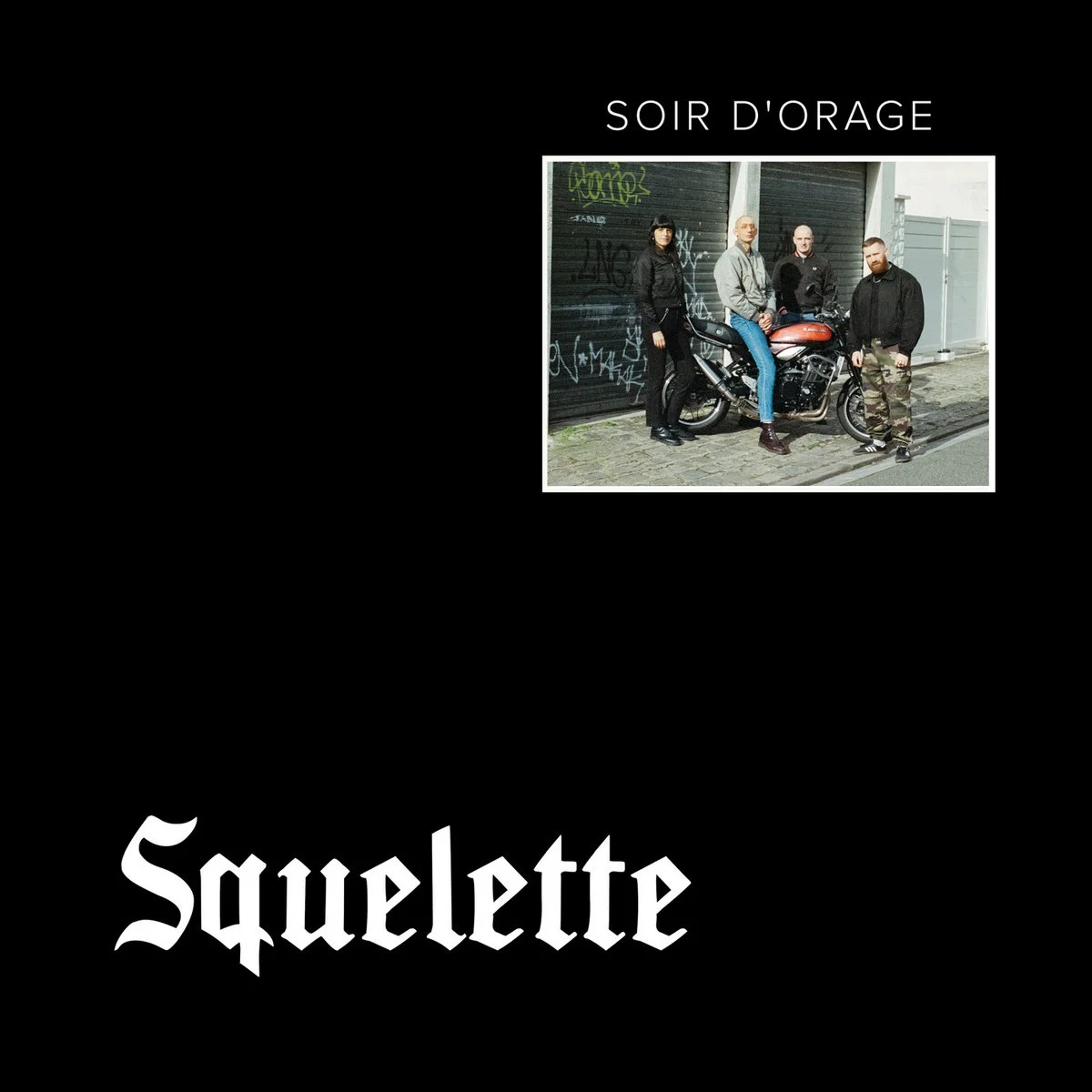
Most recently, Squelette has released the new EP, Soir d’Orage (meaning "Stormy Evening"). This release further exemplifies the genre’s potential for innovation. The EP delivers "punchy but atmospheric fight music," characterized by its driving energy tempered by an overarching sense of gloom. Notably, Soir d’Orage incorporates "occasional bursts of new wave melody," suggesting a willingness to integrate broader influences while maintaining its core identity. The EP’s final track presents a particularly intriguing development: a "haunted instrumental" piece that ventures far beyond the conventional boundaries of oi. This track, devoid of vocals and relying solely on its unsettling soundscape, serves as a testament to the band’s experimental inclinations and the genre’s capacity for surprising sonic explorations. It underscores how "cold oi" can transcend traditional punk structures, embracing elements of instrumental post-punk or even minimalist darkwave to create a truly unique listening experience.
International Recognition and Broader Implications
The growing influence of French "cold oi" is not confined to its country of origin. The Guardian‘s 2025 trend piece, which coined the term "cold oi" and meticulously traced its lineage, served as a significant moment of international recognition, validating the scene’s innovative spirit and historical depth. This journalistic spotlight has undoubtedly contributed to its wider dissemination.
The ripple effect is evident in North America, where bands like Quebec’s Béton Armé (meaning "Reinforced Concrete") and Edmonton’s Home Front are drawing from similar influences. This cross-pollination highlights the global interconnectedness of contemporary underground music scenes, facilitated by digital platforms and independent touring circuits. It demonstrates how a localized stylistic innovation can transcend geographical boundaries, resonating with musicians and audiences who appreciate its unique blend of aggression and atmosphere.
The rise of "cold oi" carries several broader implications for the punk and underground music landscape:
- Redefining Genre Boundaries: It challenges rigid definitions of "oi" and "punk," proving that these genres are not static but capable of continuous evolution through synthesis with other musical forms. It offers a more sophisticated, often darker, alternative to traditional punk’s sometimes overtly simplistic or overtly political messaging.
- Authenticity and Innovation: In an era often characterized by nostalgia and retro trends, "cold oi" represents a genuine and organic innovation. It maintains the raw energy and authenticity of punk while pushing sonic and aesthetic boundaries, appealing to listeners seeking depth and originality.
- France as a Cultural Incubator: This movement positions France as a significant cultural incubator in the global underground music scene, demonstrating its capacity to not only absorb but also profoundly reinterpret and innovate within established musical traditions. It showcases a particular French sensibility that often values artistic introspection and a certain melancholy.
- Broader Appeal: The atmospheric and post-punk elements of "cold oi" may broaden its appeal beyond traditional punk audiences, attracting listeners who appreciate goth, darkwave, and experimental rock, thereby bridging subcultural divides. Its moody, evocative quality can serve as a compelling soundtrack for urban introspection or for those seeking music with a darker, more cinematic quality.
In conclusion, French "cold oi" represents a compelling chapter in the ongoing narrative of punk rock. By skillfully weaving together the raw power of oi with the expansive, often melancholic textures of goth and post-punk, these bands have created a sound that is both historically informed and refreshingly contemporary. As acts like Squelette continue to evolve, pushing the boundaries with releases like Soir d’Orage, the movement promises further innovation, solidifying France’s position at the vanguard of a new, atmospheric strain of street punk that is captivating audiences worldwide.
