

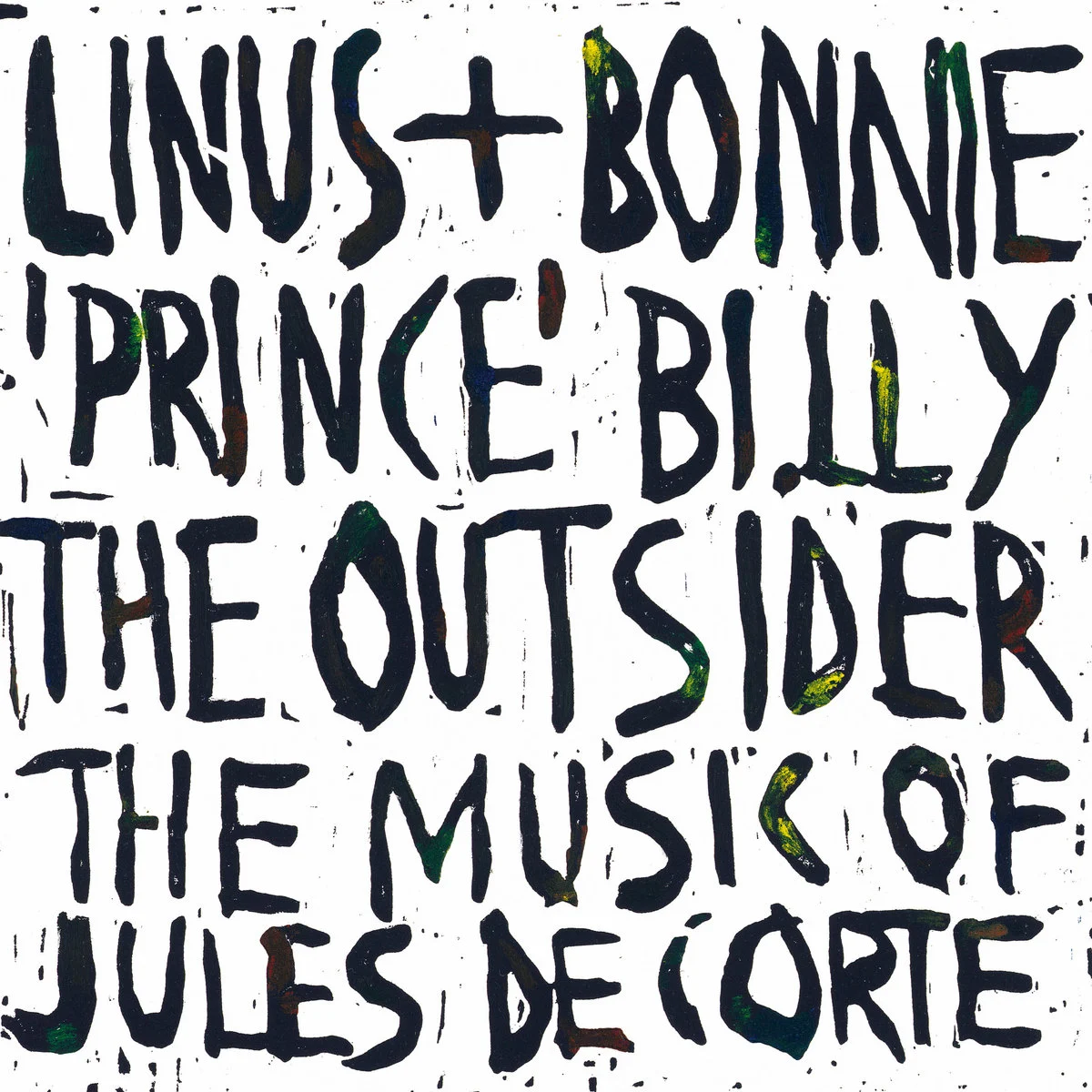
In a move that further underscores his reputation for adventurous collaborations and deep musical exploration, American singer-songwriter Will Oldham, known widely as Bonnie "Prince" Billy, has announced the upcoming release of The Outsider: The Music Of Jules de Corte. This collaborative album, featuring the improvisational Belgian quartet Linus, is a profound tribute to the largely unsung legacy of Jules de Corte, a blind Dutch singer-songwriter whose influential career spanned several decades and earned him significant European acclaim in the mid-20th century. Scheduled for release on October 30, the project sees de Corte’s original Dutch compositions reinterpreted and translated into English, offering a new audience access to his poignant lyrical and musical world.
A Deep Dive into Jules de Corte’s Enduring Legacy
Jules de Corte (born 1924, died 1996) was a figure of considerable importance in Dutch cultural landscape, though his name remains less familiar in Anglophone territories. Blind from birth, de Corte cultivated a unique artistic voice that combined elements of chanson, cabaret, and folk music, infused with a sharp wit, social commentary, and deeply personal introspection. His disability, rather than hindering his artistic output, became an integral part of his perspective, lending a particular depth and sensitivity to his observations on life, society, and spirituality.
De Corte’s career flourished particularly in the 1950s and 1960s. He was a prolific composer, pianist, and lyricist, renowned for his ability to craft narratives that were at once simple and profound. His songs often explored themes of injustice, the absurdity of existence, the beauty of everyday moments, and the human condition, all delivered with a distinctive vocal style that was both gentle and compelling. He became a staple on Dutch radio and television, and his live performances were highly regarded for their intimacy and emotional resonance.
During the 1960s, a period of significant cultural ferment across Europe, de Corte garnered several prestigious accolades that cemented his status within the continent’s artistic circles. While specific "European prizes" are broad, he was a recipient of the Edison Award, the Netherlands’ highest musical honor, multiple times, signifying critical recognition for his albums and individual songs. His work resonated with audiences across the Netherlands and Belgium, and his influence extended to other European countries where similar forms of thoughtful, lyrical songwriting were appreciated. His lyrical prowess was often compared to that of French chansonniers like Jacques Brel or Georges Brassens, known for their poetic depth and social critique. By the time of his passing at the age of 71 in 1996, de Corte had left behind an extensive catalog of over 3,000 songs and poems, a testament to his prolificacy and unwavering commitment to his craft. The re-discovery and re-contextualization of his work by artists like Oldham and Linus highlights the timeless quality and universal appeal of de Corte’s artistic vision, ensuring his legacy continues to reach new generations and geographical boundaries.
Linus: The Improvisational Belgian Element
Joining Bonnie "Prince" Billy in this ambitious undertaking is Linus, an improvisational quartet hailing from Belgium. While perhaps not a household name globally, Linus has established itself within experimental and jazz circles for its fluid, spontaneous approach to music-making. The quartet typically comprises a core of versatile musicians, often incorporating diverse instrumentation and electronic textures to create soundscapes that are both intricate and atmospheric. Their improvisational ethos suggests a deep engagement with the material, allowing for an organic evolution of de Corte’s compositions rather than a mere replication. This artistic approach is particularly well-suited to the interpretive nature of a tribute album, promising fresh perspectives on established melodies and narratives.
Linus’s involvement is crucial to the album’s unique sonic identity. Their background in improvisation means that while they are reinterpreting existing songs, their performance is likely imbued with a sense of immediate creativity and responsiveness. This contrasts with a more conventional cover album, where arrangements might be meticulously pre-planned. The synergy between Oldham’s distinctive vocal delivery and Linus’s dynamic instrumentation is expected to be a defining characteristic of The Outsider, blending folk sensibilities with subtle jazz flourishes and experimental textures.
Will Oldham’s Continual Pursuit of Artistic "Sidequests"
Will Oldham, operating under the moniker Bonnie "Prince" Billy for much of his career, has long been celebrated as one of contemporary music’s most enigmatic and prolific figures. His artistic journey, which began in the early 1990s with projects like Palace Brothers and Palace Music, has been characterized by a restless creative spirit and an unwavering commitment to authentic expression. Oldham’s discography is a sprawling tapestry of introspective folk, raw alt-country, and experimental indie rock, marked by his distinctive, often haunting tenor and poetic, sometimes abstruse, lyrics.
A hallmark of Oldham’s career has been his penchant for collaborations and what might be described as artistic "sidequests"—projects that diverge from his solo output but enrich his overall creative narrative. These endeavors often involve interpreting the work of other artists or engaging in unique partnerships that push the boundaries of his established sound. Examples include his critically acclaimed covers album Ask Forgiveness (2007), which featured interpretations of songs by artists ranging from R. Kelly to Björk, and his numerous collaborations with musicians like Matt Sweeney (Superwolf), Cairo Gang, and Dawn McCarthy (The Anomoanon). This pattern demonstrates a deep-seated curiosity and a desire to engage with music beyond his own compositions, often shining a light on lesser-known gems or offering radical reinterpretations of classics.
The announcement of The Outsider follows closely on the heels of other recent releases from Oldham. Earlier this year, he unveiled the contemplative Bonnie "Prince" Billy album We Are Together Again, which continued his exploration of introspective themes and sparse, evocative arrangements. This was followed last month by Ghosts Of American Psychonauts, a live album that captured the raw energy and intimacy of his stage performances. These recent activities highlight Oldham’s sustained creative momentum and his commitment to releasing new material consistently, whether it be original compositions, live recordings, or collaborative tribute projects like The Outsider. His decision to dedicate an entire album to Jules de Corte, a figure relatively unknown outside his native region, aligns perfectly with Oldham’s artistic persona as a curator and re-contextualizer of compelling musical narratives.
The Genesis and Artistic Intent of The Outsider
The collaboration between Bonnie "Prince" Billy and Linus to interpret the music of Jules de Corte is a fascinating intersection of disparate musical traditions and geographical origins. While the specific details of how the project originated have not been extensively publicized, it can be logically inferred that a shared appreciation for de Corte’s profound songwriting served as the catalyst. It is plausible that Linus, being a Belgian quartet, was already familiar with de Corte’s work, given his significant regional impact. Their experimental and improvisational background would have naturally lent itself to a desire to re-imagine these classic compositions.
The decision to translate de Corte’s original Dutch lyrics into English is a critical artistic choice, signaling an intent to broaden the accessibility and appreciation of his work to a global, English-speaking audience. Translation, particularly of poetic and nuanced lyrics, is a delicate art, fraught with challenges in preserving the original meaning, rhythm, and emotional impact. While the specific translator for The Outsider has not been widely disclosed, the involvement of Oldham suggests a meticulous approach to ensuring the English renditions maintain the integrity and spirit of de Corte’s original poetic vision. This act of translation serves not merely as a linguistic conversion but as a cultural bridge, inviting listeners who might otherwise never encounter de Corte’s artistry to engage with his lyrical themes and musicality.
Early Glimpses: Three Tracks Unveiled
To offer an initial taste of the album’s unique sound, Bonnie "Prince" Billy and Linus have released three tracks: "And God Saw," "Mariska," and "Little Jesus, Mighty God." These early previews provide valuable insight into how de Corte’s compositions have been re-envisioned through the lens of this transatlantic collaboration.
"And God Saw" immediately establishes a contemplative atmosphere, with Oldham’s distinctive vocal delivery weaving through Linus’s subtly textured instrumentation. The track demonstrates a seamless integration of Oldham’s signature melancholic folk style with an undercurrent of sophisticated, almost restrained jazz elements. The arrangement is sparse yet rich, allowing the lyrical narrative to take center stage while the musical accompaniment provides a gentle, atmospheric backdrop.
"Mariska" offers a slightly different facet of the album’s sound, potentially exploring themes of personal connection or introspection, typical of de Corte’s human-centric lyrics. Here, Linus’s improvisational flourishes might become more pronounced, adding layers of unexpected melodic or harmonic complexity without detracting from the song’s core emotional resonance. The interplay between Oldham’s voice and the quartet’s instruments suggests a dynamic yet harmonious partnership, where each element contributes to a cohesive artistic statement.
Finally, "Little Jesus, Mighty God" hints at de Corte’s engagement with spiritual or existential themes. The title itself suggests a juxtaposition of vulnerability and power, a common motif in de Corte’s work that often questions or reflects on belief. The musical treatment of this track is likely to carry a gravitas befitting its title, potentially featuring more dramatic arrangements or particularly poignant vocal delivery from Oldham.
Collectively, these three tracks showcase a nuanced approach to the source material. They are not merely covers but rather re-imaginings that honor the original spirit of Jules de Corte while infusing them with the distinct artistic identities of Bonnie "Prince" Billy and Linus. The presence of "occasional jazz flourishes," as noted in early observations, indicates Linus’s subtle yet impactful contribution, elevating the folk foundations with sophisticated musical textures.
The Full Tracklist of The Outsider
The complete tracklist for The Outsider: The Music Of Jules de Corte promises a diverse selection from de Corte’s extensive catalog, thoughtfully curated and reinterpreted:
- "And God Saw"
- "Little Anita"
- "Mariska"
- "The Stranger"
- "Little Jesus, Mighty God"
- "When I Was Nude"
- "And God Saw (instrumental)"
- "The Outsider"
The inclusion of an instrumental version of "And God Saw" is particularly noteworthy, suggesting an emphasis on the musicality and arrangements themselves, allowing listeners to appreciate Linus’s contributions and the intricate soundscapes independently of the vocals. The album title track, "The Outsider," which closes the collection, is poised to be a thematic cornerstone, perhaps encapsulating de Corte’s own perspective as an artist and individual, or reflecting Oldham’s connection to his less-mainstream influences.
Broader Impact and Implications
The release of The Outsider carries several significant implications for the contemporary music landscape. Firstly, it serves as a crucial act of cultural preservation and dissemination. By translating and reinterpreting Jules de Corte’s work, Bonnie "Prince" Billy and Linus are effectively rescuing a significant European artist from relative obscurity in the English-speaking world. This initiative not only pays homage to de Corte’s genius but also ensures that his lyrical insights and musical legacy find a new generation of listeners, bridging linguistic and temporal divides.
Secondly, the album reinforces Will Oldham’s status as a formidable interpreter and collaborator. His willingness to consistently venture into diverse projects, whether it’s country duets, punk covers, or tributes to obscure European songwriters, positions him as an artist driven by genuine musical curiosity rather than commercial expediency. This approach encourages other artists to look beyond immediate trends and explore the rich tapestry of global musical history.
Thirdly, the collaboration between a celebrated American folk artist and an improvisational Belgian quartet exemplifies the increasing interconnectedness of the global music scene. Such cross-cultural projects foster dialogue and mutual understanding, demonstrating how music can transcend national boundaries and stylistic categorizations. The blend of folk, jazz, and introspective songwriting found in The Outsider represents a compelling fusion that defies easy categorization, appealing to listeners with eclectic tastes.
Finally, the album prompts a broader reflection on the nature of tribute and artistic reinterpretation. It asks what it means to honor a past artist while injecting their work with contemporary vitality and a new voice. By translating the lyrics, Oldham and Linus are not just covering songs; they are engaging in an act of artistic empathy and cultural re-contextualization, aiming to capture the essence of de Corte’s message for a new era. This album is more than just a collection of songs; it is a testament to the enduring power of music to connect, inspire, and transcend.
The Outsider: The Music Of Jules de Corte is set for release on October 30, promising a rich and contemplative musical journey that pays due reverence to a masterful songwriter while showcasing the continued evolution of Bonnie "Prince" Billy’s expansive artistic vision.
