

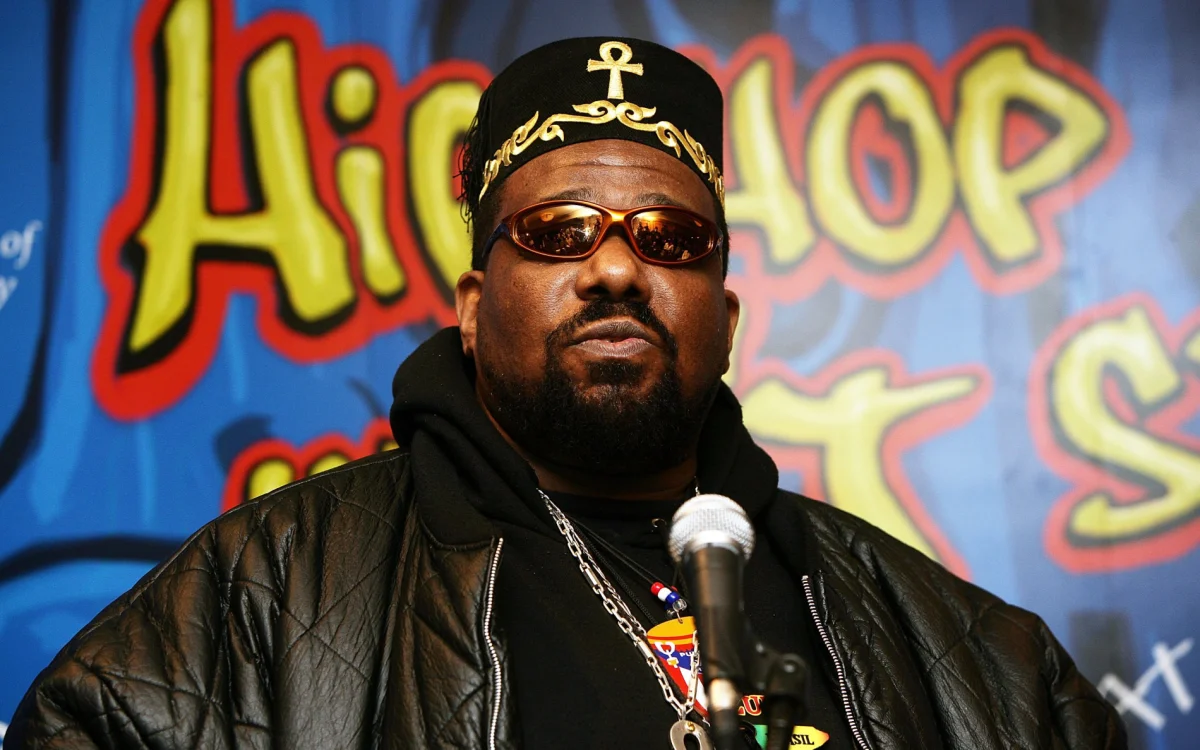
Afrika Bambaataa, the pioneering DJ, rapper, and producer widely revered as one of the founding fathers of hip-hop, has died at the age of 68. His passing on Thursday, April 9, in Pennsylvania, marks the end of an era for a genre he profoundly shaped. Bambaataa, born Lance Taylor, succumbed to prostate cancer, a cause of death confirmed by his attorney to the Associated Press.
His death reverberates through the global music and cultural landscape, prompting a wave of tributes and reflections on his indelible impact. Kurtis Blow, executive director of the Hip Hop Alliance, acknowledged the profound loss, stating, "Today, we acknowledge the transition of a foundational architect of Hip Hop culture, Afrika Bambaataa. [He] helped shape the early identity of Hip Hop as a global movement rooted in peace, unity, love, and having fun." Blow’s statement, however, also pointed to the nuanced and often difficult discussions surrounding Bambaataa’s legacy: "His vision transformed the Bronx into the birthplace of a culture that now reaches every corner of the world… At the same time, we recognize that his legacy is complex and has been the subject of serious conversations within our community."
From Street Gang to Cultural Revolution
Afrika Bambaataa’s journey began in the South Bronx, New York, a borough that would become the crucible of hip-hop. Emerging from the ranks of the Black Spades street gang, Bambaataa, then known by other monikers, witnessed firsthand the social and economic challenges plaguing his community. Rather than succumbing to the cycle of violence and despair, he channelled his energy and vision into a different path, one that would ultimately foster a powerful new cultural expression.
In the 1970s, Bambaataa transitioned from his gang affiliations to become a prominent local DJ, his innovative soundscapes and energetic performances captivating audiences. He recognized the potential of music and community to offer an alternative to the prevailing street culture. This realization led to the establishment of the Universal Zulu Nation, an art collective and social movement that sought to promote peace, unity, and positive social change through the burgeoning elements of hip-hop.
The Universal Zulu Nation became instrumental in codifying and promoting what are now known as the four foundational elements of hip-hop culture: DJing (the art of manipulating turntables to create music), graffiti (visual art adorning urban landscapes), breakdancing (athletic and expressive street dance), and MCing (rapping or vocal performance over beats). Bambaataa, as a central figure and visionary leader, played a pivotal role in uniting these disparate artistic expressions under the umbrella of a cohesive and empowering cultural movement. He envisioned hip-hop not just as music, but as a philosophy and a way of life that transcended racial, ethnic, and social divides.
The Sonic Blueprint: "Planet Rock" and Beyond
As a recording artist, Afrika Bambaataa’s most enduring contribution is undoubtedly the groundbreaking 1982 track "Planet Rock," a collaboration with his group, the Soulsonic Force. This seminal work, with its futuristic, synthesized soundscape and its innovative use of samples, particularly from German electronic pioneers Kraftwerk, became an instant classic. "Planet Rock" not only achieved significant commercial success, cracking the top 50 of the Billboard Hot 100, but it also served as a sonic blueprint for an entire generation of artists. Its influence can be traced through the development of electro-rap, dance-pop, and a vast array of electronic music genres that would emerge in the decades that followed. The track’s innovative approach to sampling and its forward-thinking production techniques fundamentally altered the trajectory of popular music.
Bambaataa’s artistic output extended beyond "Planet Rock," encompassing a discography that explored diverse sonic textures and thematic concerns. His work consistently demonstrated a commitment to pushing the boundaries of what hip-hop could be, incorporating elements from funk, soul, reggae, and electronic music to create a unique and eclectic sound. He was not merely a performer but a curator and innovator, a DJ who understood the power of the mix and the potential of sonic collage.
A Founding Father of Hip-Hop
Alongside contemporaries like DJ Kool Herc and Grandmaster Flash, Afrika Bambaataa is widely recognized as a founding father of hip-hop. These three figures, through their distinct contributions and shared dedication, laid the bedrock upon which the genre would ascend to become arguably the most culturally influential movement of the past 50 years. DJ Kool Herc is credited with pioneering the breakbeat technique, extending instrumental breaks in popular songs for dancers. Grandmaster Flash refined DJing techniques, including scratching and mixing. Afrika Bambaataa, with his broader vision of community building and cultural dissemination, completed this foundational trio, each bringing a unique and essential element to the birth of hip-hop. Their collective efforts transformed nascent urban subcultures into a global phenomenon that continues to evolve and resonate worldwide.
A Shadow of Allegations
Despite his immense contributions to music and culture, Afrika Bambaataa’s later years were overshadowed by serious and disturbing allegations of sexual abuse. These accusations cast a long shadow over his legacy, prompting difficult conversations and forcing many to grapple with the complexities of admiring an artist while confronting credible claims of harm.
The first public accusation emerged in 2016, when a man named Ronald Savage alleged that Bambaataa had sexually abused him in the 1980s when Savage was a minor. Bambaataa vehemently denied these accusations at the time. However, the situation took another turn in 2024 when Savage, in an interview with AllHipHop, appeared to walk back some of his claims, stating, "Bambaataa is not a pedophile and, in my eyes, he was doing something that was consensual with someone that he thought was of age." This retraction, while offering a different perspective, did not erase the initial allegations or the subsequent claims made by other individuals.
Following Savage’s initial accusations, several other men came forward with their own allegations of sexual abuse by Bambaataa, asserting that they too were victimized as teenagers. These accounts, shared with varying degrees of detail and media attention, painted a picture of a pattern of alleged misconduct that spanned several years and involved multiple accusers.
The most prominent of these subsequent legal challenges was a lawsuit filed in 2021 by an anonymous man. This accuser alleged that Bambaataa had sexually abused and trafficked him for a period of four years, beginning in 1991. At the time the alleged abuse began, the accuser was reportedly 12 years old, while Bambaataa was in his 30s. Bambaataa did not formally respond to this lawsuit, and as a result, he lost the civil case by default in 2025. The court awarded the alleged victim a default judgment, acknowledging the gravity of the claims presented by the plaintiff.
Navigating a Complex Legacy
The convergence of Bambaataa’s monumental artistic achievements with the serious allegations of abuse presents a profound challenge for his admirers and for the broader hip-hop community. His role in shaping a global cultural force is undeniable. He provided a platform for marginalized youth, fostered a sense of community, and created music that transcended borders. The Universal Zulu Nation, under his leadership, offered a positive alternative to gang violence and provided a framework for artistic and social empowerment.
However, the accusations of sexual abuse cannot be ignored. They raise critical questions about accountability, the separation of art from the artist, and the experiences of victims. The impact of these allegations on the perception of Bambaataa’s legacy is significant and will likely continue to be debated.
Kurtis Blow’s carefully worded statement from the Hip Hop Alliance reflects this duality. It acknowledges Bambaataa’s "foundational" role and his vision for "peace, unity, love, and having fun," while simultaneously recognizing the "complex" nature of his legacy and the ongoing "serious conversations within our community." This sentiment encapsulates the prevailing mood: a recognition of profound artistic contribution tempered by the somber reality of alleged transgressions.
The Enduring Influence and Unanswered Questions
Afrika Bambaataa’s death leaves a void in the hip-hop landscape, but his influence on music, dance, art, and fashion is permanent. His pioneering spirit and his ability to synthesize diverse musical influences created a sound that continues to inspire. The cultural movement he helped to birth has become a dominant force in global entertainment and a powerful voice for social commentary and artistic expression.
As the hip-hop community mourns the loss of a pivotal figure, it also confronts the intricate tapestry of his life and career. The story of Afrika Bambaataa is a testament to the power of creativity and community, but it is also a stark reminder of the complexities and challenges that can arise when examining the legacies of influential figures. His passing prompts a renewed introspection on how society remembers and reconcits with the multifaceted contributions and alleged wrongdoings of its cultural icons. The full reckoning of his legacy, encompassing both his groundbreaking innovations and the shadows cast by the allegations, will undoubtedly continue for years to come.
