

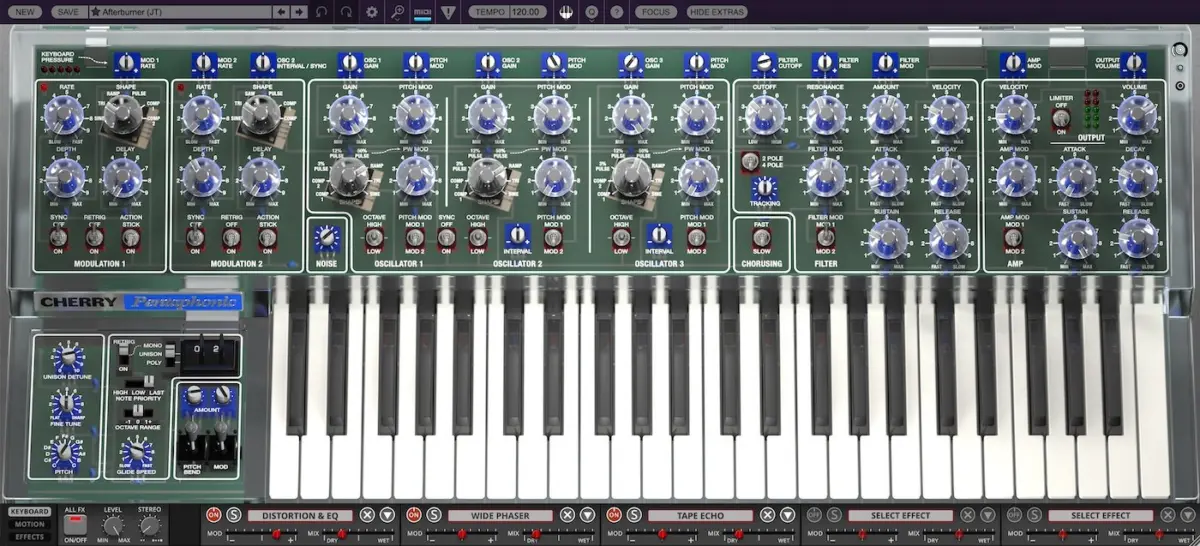
Cherry Audio, a leading developer of high-quality virtual instruments, has officially announced the launch of Pentaphonic, a meticulous software recreation of the elusive Gleeman Pentaphonic synthesizer. Available for both macOS and Windows platforms, this virtual instrument brings one of the most obscure and visually striking synthesizers of the early 1980s into the modern digital audio workstation (DAW) environment. Originally released in 1982 by Gleeman Instruments, the hardware version of the Pentaphonic was a hybrid synthesizer that combined digital control with analog signal processing, known for its distinctive sound and its even more distinctive clear plexiglass chassis. By reviving this rare piece of music history, Cherry Audio continues its mission of making legendary and hard-to-find hardware accessible to a global audience of producers, composers, and sound designers.
The Historical Context of the Gleeman Pentaphonic
To understand the significance of Cherry Audio’s Pentaphonic, one must look back at the landscape of the synthesizer industry in the early 1980s. The era was defined by a rapid transition from purely analog synthesis to the digital revolution, spearheaded by the release of the Yamaha DX7 in 1983. In the midst of this transition, independent innovators like Al and Bob Gleeman sought to create instruments that offered the stability of digital control with the warmth of analog filters.
The original Gleeman Pentaphonic was produced in extremely limited quantities—estimates suggest that only 30 to 50 units were ever manufactured. This scarcity has made the original hardware a "holy grail" for collectors. It featured five-voice polyphony, a significant achievement for a boutique manufacturer at the time, and utilized three digitally controlled oscillators (DCOs) per voice. This configuration provided a level of tuning stability that was often lacking in the voltage-controlled oscillators (VCOs) of the era, while the inclusion of a 24dB/octave low-pass filter ensured the instrument retained a rich, "fat" analog character.
Despite its technical merits and a futuristic design that included a transparent "Clear" model, the Gleeman Pentaphonic struggled to find a foothold in a market increasingly dominated by corporate giants like Roland, Korg, and Sequential Circuits. The high manufacturing costs and limited distribution eventually led to the instrument’s disappearance from the market, leaving behind a legacy of cult-like status among synthesizer enthusiasts.
Technical Specifications and Modern Enhancements
Cherry Audio’s Pentaphonic is not merely a static sample library but a full-fledged virtual synthesis engine that models the original hardware’s behavior while significantly expanding its capabilities. The developers have preserved the core architecture of the original unit—three oscillators per voice and a resonant four-pole filter—but have utilized modern processing power to remove the limitations of the 1980s hardware.
Expanded Polyphony and Voice Management
While the original Gleeman was limited to five voices—hence the name "Pentaphonic"—the Cherry Audio version offers expanded polyphony, allowing users to play complex chords and long-decaying pads without voice stealing. This adjustment transforms the instrument from a specialized lead and bass machine into a versatile polyphonic powerhouse suitable for modern cinematic scoring and electronic music production.
Enhanced Oscillator Control
The original DCOs were celebrated for their stability, but Cherry Audio has added modern features such as oscillator sync and pulse-width modulation (PWM) across all waveforms. These additions allow for the creation of aggressive, harmonically rich "tearing" leads and evolving textures that were impossible to achieve on the original 1982 hardware. The inclusion of a dedicated sub-oscillator further strengthens the instrument’s capabilities in the lower frequency ranges.
Advanced Modulation and MPE Support
In a move to cater to contemporary performers, Cherry Audio has integrated MIDI Polyphonic Expression (MPE) support. This allows for per-note modulation of parameters like pitch bend and filter cutoff, providing a level of expressivity that brings the Pentaphonic into the 21st century. Additionally, the modulation matrix has been expanded, offering more LFO (Low Frequency Oscillator) shapes and more flexible routing options than the original unit’s hard-wired modulation paths.
Integrated Sequencer and Effects Suite
One of the standout features of the original Gleeman was its built-in sequencer, which was considered advanced for its time. Cherry Audio has reimagined this component as a modern, easy-to-use sequencer that can be synced to the host DAW’s tempo. This allows users to create intricate melodic patterns and rhythmic pulses that pay homage to the "Berlin School" of electronic music while benefiting from the precision of modern software.
To round out the sound, the Pentaphonic includes a comprehensive effects section. While the original hardware relied on external processing for depth and space, the virtual version features high-quality studio effects including:
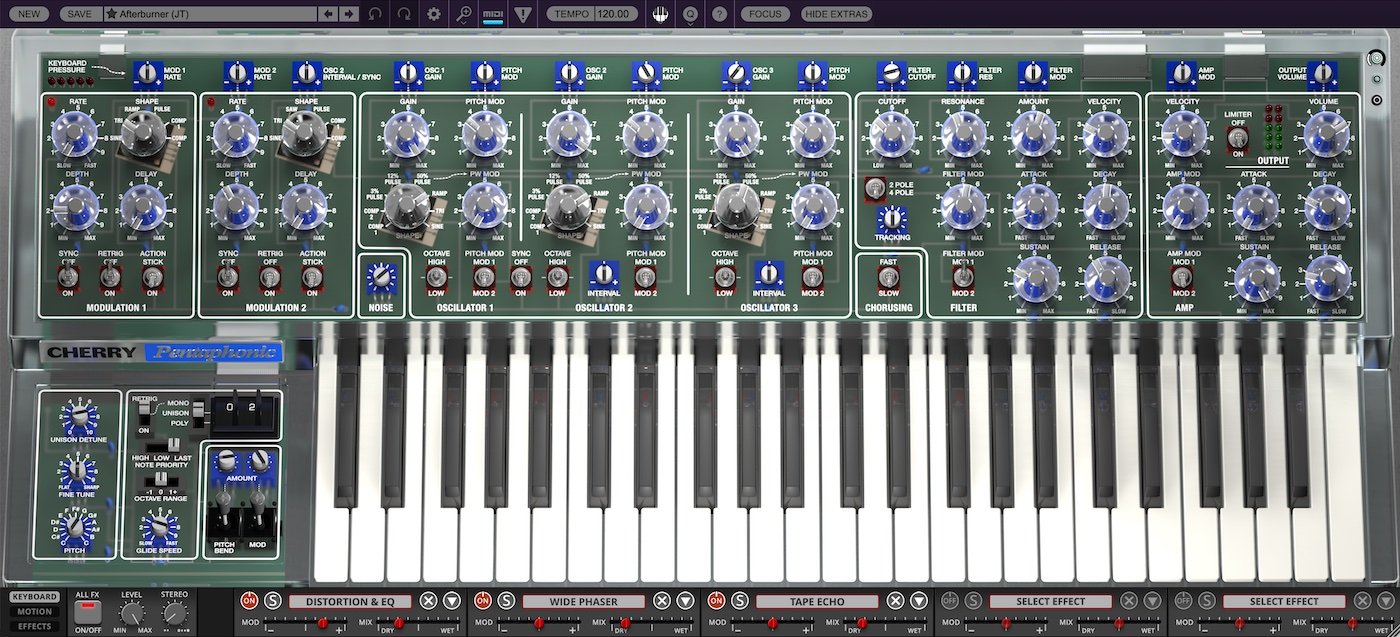
- Chorus: To add thickness and stereo width, reminiscent of classic 80s ensembles.
- Delay: Featuring sync-to-host capabilities for rhythmic echoes.
- Reverb: A lush algorithmic reverb designed to place the synthesizer in a variety of acoustic spaces.
- Distortion: For adding grit and harmonic saturation to the analog-modeled oscillators.
A Chronology of Software Synthesis Evolution
The release of the Pentaphonic marks a specific point in the timeline of software synthesis. In the early 2000s, virtual instruments were often criticized for lacking the "soul" of hardware. However, over the last decade, advancements in component-level modeling have allowed developers like Cherry Audio to replicate the nonlinearities and subtle imperfections of analog circuits.
The development timeline of Cherry Audio itself reflects this trend. Having previously tackled massive legends like the GX-80 (based on the Yamaha GX-1 and CS-80) and the PS-20 (based on the Korg MS-20), the move toward the Gleeman Pentaphonic represents a shift toward "boutique preservation." By focusing on a rare instrument that most musicians will never see in person, the company is performing a form of digital archaeology, ensuring that the unique sonic footprint of the Gleeman brothers’ work is not lost to time.
Industry Implications and Market Analysis
The release of the Pentaphonic at a $59 price point is a strategic move in a competitive market. Traditionally, high-end emulations of rare synthesizers were priced in the $150 to $300 range. By offering a professional-grade tool at a fraction of that cost, Cherry Audio is disrupting the traditional pricing model of the VST (Virtual Studio Technology) industry.
Industry analysts suggest that this "democratization of synthesis" is driving a resurgence in hardware-inspired music production. Producers who cannot afford the five-figure sums required to purchase a vintage Gleeman on the second-hand market can now access the same sonic palette for the price of a standard plugin. Furthermore, the low CPU overhead associated with Cherry Audio’s coding practices makes the Pentaphonic accessible to users who may not have the latest high-performance computer hardware.
Reaction from the Synthesizer Community
While official statements from the original Gleeman family have not been released, the response from the synthesizer community has been overwhelmingly positive. Enthusiasts on platforms like Gearspace and Reddit have noted that the "Clear" skin of the plugin is a faithful aesthetic tribute to the most famous version of the hardware.
Sound designers have praised the "Condition" knob—a signature Cherry Audio feature—which allows users to simulate the aging process of the internal components. By turning this dial, users can introduce subtle pitch drifts and filter inconsistencies, effectively choosing between a "factory fresh" 1982 sound or a "vintage and weathered" 2024 character. This level of detail has become a hallmark of the company’s design philosophy, earning them a reputation for authenticity.
The Broader Impact on Music Production
The reintroduction of the Pentaphonic sound into the modern production workflow is expected to influence several genres. In the realm of Synthwave and Retrowave, the Pentaphonic provides an authentic alternative to the ubiquitous Juno and Prophet sounds that have dominated the genre for years. In cinematic scoring, the instrument’s three-oscillator-per-voice architecture allows for the creation of massive, wall-of-sound textures that can anchor a modern soundtrack.
Furthermore, the educational value of such a release cannot be understated. For a new generation of musicians, the Pentaphonic serves as a window into the history of synthesis design. It showcases a specific moment in time when the industry was experimenting with new ways to interface digital stability with analog warmth, a precursor to the hybrid systems used in many modern hardware synthesizers today.
Pricing and Availability
Cherry Audio Pentaphonic is available now through the Cherry Audio website and authorized retailers. The software is priced at $59, a figure that includes both the standalone version and plugin formats (VST, VST3, AU, and AAX). It is compatible with macOS 10.13 or above and Windows 7 or above, requiring a 64-bit operating system. A free seven-day trial is also available for users who wish to test the instrument’s capabilities before committing to a purchase.
As the music technology industry continues to look toward the future, the release of the Pentaphonic serves as a reminder that the past still holds untapped potential. By breathing new life into a nearly forgotten masterpiece, Cherry Audio has provided modern creators with a unique tool that bridges the gap between 1980s innovation and modern digital convenience.
