

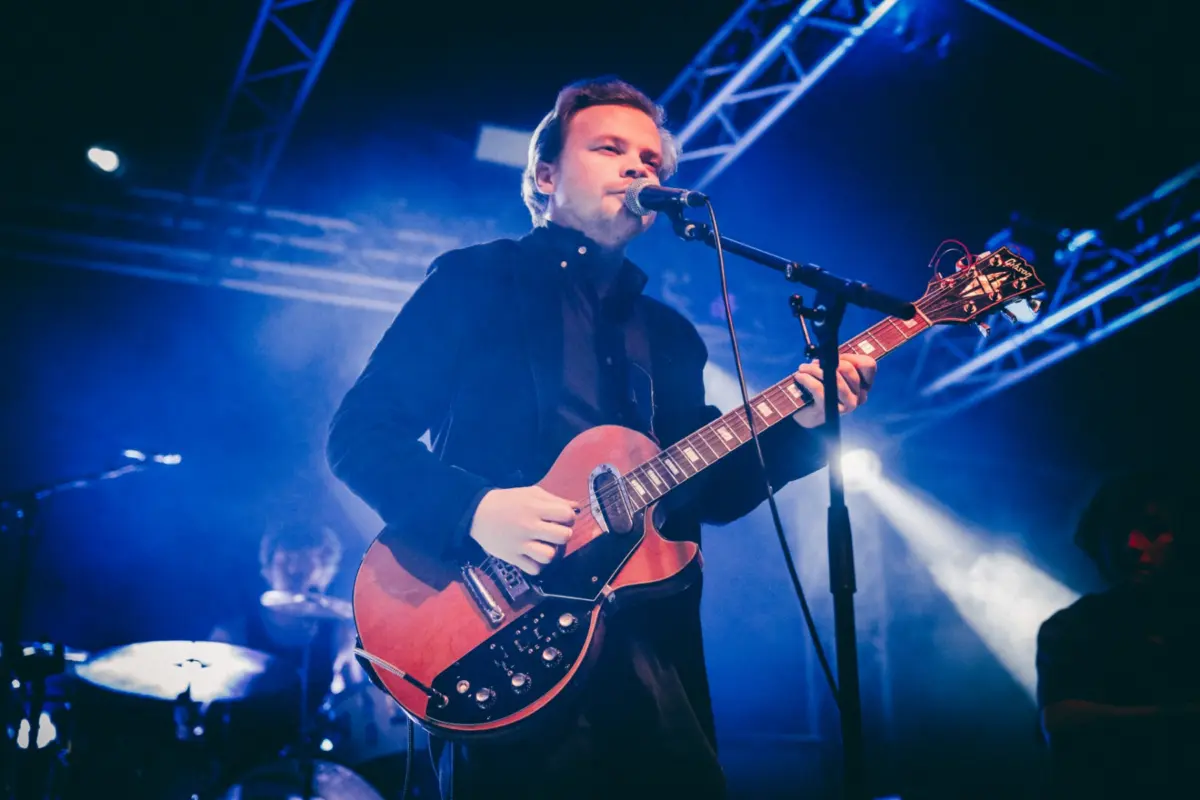
Former Black Midi frontman Geordie Greep publicly denied allegations of sexual misconduct during his scheduled performance in Vancouver, British Columbia, on Thursday, October 8. The artist’s impromptu statement from the stage at The Pearl venue followed the distribution of flyers outside the concert hall that accused him of rape. The incident has led to the immediate cancellation of several upcoming dates on his North American tour, casting a shadow over his solo career trajectory and igniting a broader discussion about accountability within the music industry.
The evening began with an unusual atmosphere outside The Pearl, as concertgoers arriving for Greep’s performance were met with flyers bearing stark accusations. These printed materials, distributed by an unnamed individual, unequivocally stated, “Geordie Greep A Rapist. You know what you did this morning Oct 8th. He thinks he can do what he wants. Let Him Know What Vancouver Thinks of Rapists.” The direct and provocative nature of these flyers quickly spread through the audience and online, creating a tense backdrop for the night’s event.
Despite the escalating situation, Greep took the stage approximately an hour later than scheduled. Notably, he performed without his usual backing band, opting for a solo presentation. It was during this performance that he chose to address the allegations head-on, delivering an emotional statement to the assembled audience. He recounted his version of events from the preceding night, acknowledging an interaction that led to the accusations. “Essentially what happened last night, me and some of the band we went out to some bars, we went around, we met people, and it ended up in a situation where really late at a house party, I got the wrong end of the stick with someone who was there, and I made a move, and it didn’t come off,” Greep explained, his voice reportedly tinged with remorse.
He continued, offering a swift apology for his actions and vehemently denying the graver accusation. “I really quickly, of course, apologized, and it was a complete misunderstanding on my part. I felt extremely bad, I feel extremely sorry, and extremely upset about the whole situation. I would never rape a woman. I’m not a rapist. It’s not how that went down.” The artist’s candid admission of a "misunderstanding" and his unequivocal denial of rape sought to clarify his perspective on the incident that had become public just hours before.
In a further gesture of accountability and sensitivity, Greep announced that all proceeds from the Vancouver concert would be donated to an anti-violence organization in British Columbia. He also acknowledged the potential discomfort among attendees, stating, “We were unsure what the response would be to all this, and I can only tell you that it’s okay if people want refunds, if they want to leave, it’s fine.” He concluded his statement by reiterating his regret: “I just wanted to be transparent with you about what happened. I’m very, very, very sorry. I made someone uncomfortable without meaning to. It’s not a good thing, it’s not good.”
A Chronology of Events and Immediate Fallout

The events of October 8 mark a critical juncture in Geordie Greep’s burgeoning solo career. Prior to this incident, Greep had been steadily building momentum following his departure from Black Midi, a band celebrated for its experimental sound and critical acclaim. His North American tour, intended to promote his solo work, was a significant step in establishing his independent artistic identity.
The alleged incident occurred in the early hours of Thursday, October 8, at a private house party in Vancouver. According to Greep’s on-stage account, a misinterpretation of social cues led him to "make a move" on an individual, which was not reciprocated or welcomed. His immediate apology, he stated, was an attempt to rectify the perceived misunderstanding. However, the subsequent distribution of flyers outside The Pearl venue transformed a private interaction into a public accusation, escalating the situation dramatically. The flyers, explicitly accusing him of rape, were circulated just hours before his scheduled performance, directly impacting the concert environment and setting the stage for his public response.
The decision for Greep to perform solo without his band underscores the immediate pressure and gravity of the situation. It suggests an effort to shield his bandmates from the controversy and allow him to address the matter personally and directly. His offer of refunds and the pledge to donate concert proceeds reflect an attempt to mitigate the damage and demonstrate a degree of responsibility, irrespective of the specifics of the alleged encounter.
In the immediate aftermath of the Vancouver concert, the repercussions were swift. Greep’s team announced the cancellation of several upcoming dates on his North American tour. These included shows in Boise, Idaho (scheduled for Friday, October 9); Salt Lake City, Utah (Saturday, October 10); and subsequent concerts in Boulder and Denver, Colorado. As of press time, the final two dates of the North American leg, in Des Moines, Iowa, and Omaha, Nebraska, had not been officially canceled. This selective cancellation strategy could indicate a cautious approach, allowing time for further assessment of the situation and its potential impact on audience reception and logistical feasibility. Greep is also slated to commence a European tour on November 1, starting in the Netherlands, with further dates planned across France, Spain, and Portugal. The fate of these international engagements remains uncertain in light of the unfolding controversy.
Broader Context: The Music Industry and Accountability
The allegations against Geordie Greep and his public response resonate within a music industry increasingly under scrutiny regarding issues of sexual misconduct and artist accountability. The #MeToo movement, which gained significant traction in the mid-2010s, exposed widespread patterns of abuse and harassment across various sectors, including entertainment. This cultural shift has fostered an environment where accusations, whether formal or informal, are taken with greater seriousness, and public figures are often expected to address them transparently.
In recent years, numerous musicians, producers, and industry executives have faced allegations, leading to significant career repercussions, including canceled tours, lost endorsements, and damaged reputations. The public’s expectation for artists to uphold ethical standards has intensified, and the line between an artist’s personal life and public persona has become increasingly blurred. This incident highlights the ongoing tension between due process, public opinion, and the immediate impact of social media and grassroots activism. The distribution of flyers, a traditional method of protest, combined with rapid online dissemination, exemplifies how allegations can quickly gain traction and force a public response from artists.

For emerging artists like Greep, who are building their careers and public image, such allegations can be particularly devastating. While Greep has vehemently denied the accusation of rape, his admission of making someone uncomfortable, even unintentionally, touches upon the critical importance of consent—a cornerstone of the contemporary discourse surrounding sexual ethics. The concept of "getting the wrong end of the stick" underscores the complexities of social interactions and the necessity for clear, enthusiastic, and ongoing consent.
Reactions and Implications
Reactions to Greep’s statement and the allegations have been varied and intense across social media platforms and fan communities. Many fans expressed shock and disappointment, while others voiced support for Greep, praising his transparency and willingness to address the situation directly. Conversely, a significant number of individuals expressed solidarity with the accuser, emphasizing the seriousness of the allegations and the importance of believing victims. The polarized reactions underscore the difficulty of navigating such situations in the public eye, where immediate judgments are often made without full knowledge of all facts.
The Pearl venue, while not issuing an official statement, implicitly facilitated Greep’s decision to perform and address the audience. Their handling of the situation—allowing the concert to proceed while managing the protest outside—highlights the challenging position venues find themselves in when such controversies erupt. Tour promoters, facing potential financial losses and reputational risks, would have made the decision to cancel subsequent tour dates based on a combination of factors, including logistics, ticket sales, potential for further protests, and the overall climate of public opinion. The pledge to donate proceeds to an anti-violence organization in British Columbia, while a positive step, also indicates a recognition of the broader societal implications of the incident. While the specific organization has not been named, such a gesture often aims to demonstrate solidarity with victims of sexual violence and contribute to preventative efforts, even as the artist defends against specific allegations.
For Black Midi, Greep’s former band, the incident presents an indirect challenge. While Greep is now a solo artist, his public actions can inevitably reflect on his past associations, particularly with a band that maintains a strong and loyal following. As of this report, Black Midi has not released any public statement regarding the allegations against their former frontman.
Looking ahead, the long-term implications for Geordie Greep’s career are substantial. Beyond the immediate tour cancellations, his reputation, fan trust, and future opportunities for collaboration or endorsements could be significantly affected. The music industry, increasingly sensitive to public image and ethical conduct, may adopt a cautious approach in engaging with artists embroiled in such controversies. The incident serves as a stark reminder to all public figures of the intense scrutiny they face and the profound impact of their actions, both on and off stage, in an era demanding greater accountability and respect for consent. The upcoming European tour dates will likely be closely watched, as public and industry reactions continue to evolve.
