

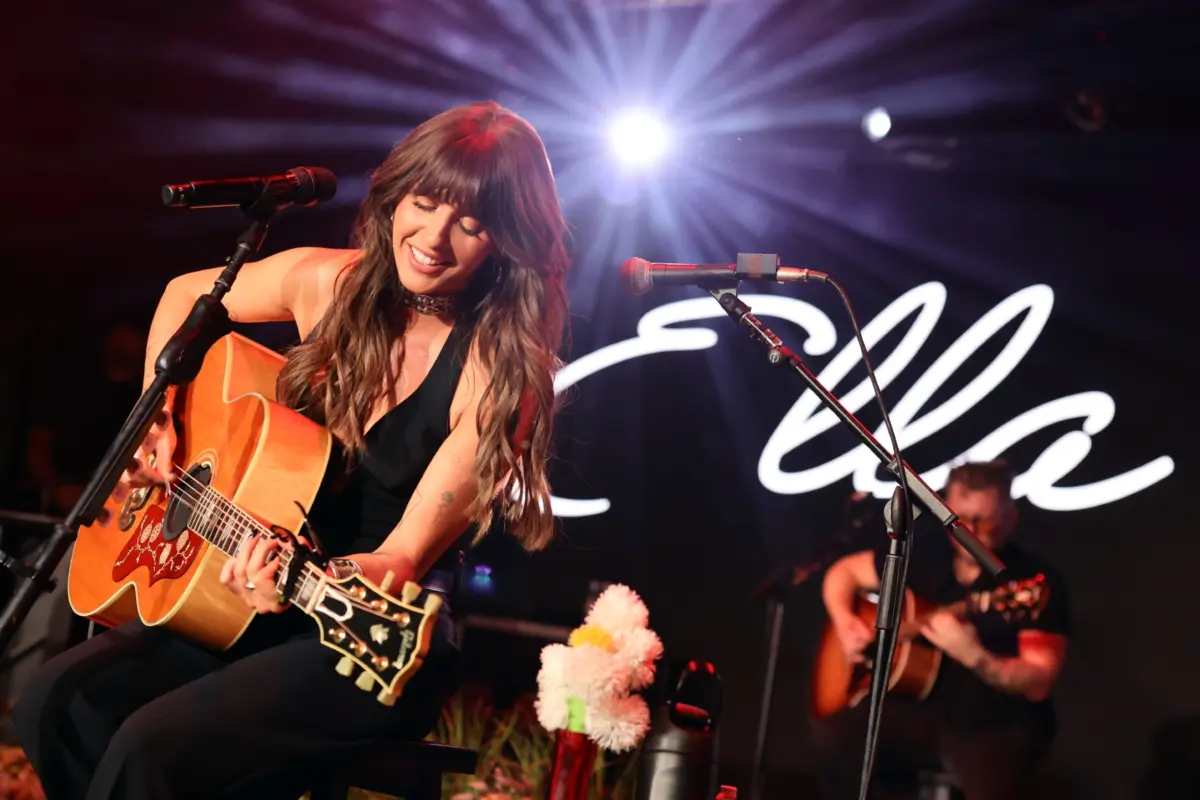
Country music star Ella Langley made a powerful return to the stage in Lubbock, Texas, on Saturday, October 10, following the abrupt cancellation of her concert in Tulsa, Oklahoma, the previous night. The cancellation stemmed from a serious security threat that necessitated a sweeping law enforcement investigation, casting a temporary shadow over her highly anticipated Dandelion Tour. Addressing a visibly relieved and supportive audience at the United Supermarkets Arena, Langley articulated her unwavering commitment to fan safety, a principle she declared paramount above all other considerations, including the performance itself. Her candid remarks, underscored by a profound personal reflection on faith and resilience, resonated deeply, transforming a moment of apprehension into a testament to artistic integrity and human connection.
The Tulsa Incident: A Detailed Chronology of a Security Scare
The events leading to the Tulsa cancellation unfolded rapidly on Friday, October 9. Hours before Ella Langley was scheduled to perform at the BOK Center, local authorities received a chilling security threat. The call, later detailed by Captain Richard Meulenberg of the Tulsa Police Department, contained specific and alarming claims of potential "shots fired and bombs" targeting the event. Such a direct and severe threat immediately triggered an extensive response from multiple law enforcement agencies, including the Tulsa Police Department and potentially federal partners, adhering to established protocols for public safety at large gatherings.
Upon receiving the threat, a coordinated effort was launched to assess its credibility and ensure the safety of the venue and its surroundings. This involved a comprehensive sweep of the BOK Center, its interior spaces, and the immediate perimeter. Specialized units, including bomb disposal teams and K9 units trained in explosives detection, were likely deployed. Despite the intensity of the search, law enforcement officials ultimately determined that the threat was "not credible." This assessment typically means that no physical evidence corroborating the caller’s claims was found, nor were any suspicious individuals or devices identified.
However, the declaration of a "non-credible threat" did not immediately alleviate the immediate practical and ethical dilemmas faced by event organizers and the artist’s team. The sheer disruption caused by such a serious alarm, coupled with the inherent uncertainty, made proceeding with the concert an untenable risk. The statement released by Langley’s team and the venue underscored this difficult decision: "Due to a serious security threat involving the safety of my fans, venue personnel, and the artist, Ella Langley’s scheduled performance tonight at BOK Center in Tulsa has been canceled. The safety and well-being of everyone involved is our absolute priority, and, after careful consideration, we have determined that the show cannot proceed." This move, while disappointing for thousands of fans, reflected a commitment to the highest safety standards, prioritizing human life over entertainment schedules. The incident served as a stark reminder of the fragile balance between public enjoyment and the ever-present need for vigilance in a world grappling with evolving security challenges.
Ella Langley’s Resolute Return: Prioritizing Life Over Performance
The subsequent night, in Lubbock, Texas, Ella Langley took to the stage not just as a performer, but as a leader addressing a shared experience of fear and uncertainty. Her initial words, "I know yesterday was scary. It was scary for all of us," immediately connected with her audience, acknowledging the collective anxiety that had permeated the previous day. This direct and empathetic approach set the tone for a heartfelt explanation of her decision to cancel the Tulsa show, despite law enforcement deeming the threat non-credible.
In a fan-filmed video clip from the Lubbock concert, Langley elaborated on her rationale, stating, "When it comes to keeping you safe, and making sure that this show is a safe place for us to come and enjoy our music, it will happen. But the second it feels like it’s not, I’m not doing it. I’m not doing it because a concert’s not worth a human life. It’s not." This powerful declaration crystallized her ethical stance, placing the intrinsic value of human life unequivocally above the commercial and artistic imperatives of a live performance. Her statement, "I would’ve made yesterday’s decision 10 billion times over. I would have," reinforced the conviction behind her actions, leaving no doubt about her priorities.
Langley’s transparency resonated deeply with her fanbase, many of whom expressed understanding and support for her difficult choice. Her words moved beyond a mere explanation; they served as a reaffirmation of the bond between artist and audience, built on trust and mutual respect. This moment in Lubbock transcended a typical concert interlude, becoming a crucial dialogue about responsibility, safety, and the often-unseen pressures faced by public figures in an increasingly complex world.
The Broader Context of Concert Security in the Modern Era
The incident involving Ella Langley is not an isolated event but rather a symptom of a broader, evolving landscape of security challenges facing the live entertainment industry. In recent decades, public gatherings, including concerts, festivals, and sporting events, have become increasingly vulnerable to various forms of threats, ranging from malicious hoaxes to actual acts of violence. High-profile incidents globally have forced venues, promoters, and artists to re-evaluate and significantly enhance their security protocols.
Modern concert security extends far beyond simple pat-downs and bag checks. It now involves a multi-layered approach that includes:
- Intelligence Gathering: Proactive monitoring of social media, online forums, and intelligence sharing among law enforcement agencies to identify potential threats before they materialize.
- Advanced Surveillance: High-definition CCTV systems, facial recognition technology, and drone surveillance to monitor crowds and identify suspicious activity.
- Physical Barriers and Access Control: Reinforced entry points, metal detectors, and robust perimeter security to prevent unauthorized access.
- Trained Personnel: A significant increase in the number of security staff, often augmented by off-duty law enforcement, trained in crowd management, emergency response, and threat assessment.
- Emergency Preparedness: Detailed evacuation plans, medical response teams, and communication systems to manage crises effectively.
- Cybersecurity: Protecting digital infrastructure against attacks that could disrupt event operations or compromise personal data.
The "overabundance of caution" principle, cited by Captain Meulenberg, is a direct consequence of this heightened threat environment. Even when a threat is deemed "non-credible" after an initial investigation, the sheer act of receiving a specific and severe threat can create an atmosphere of anxiety and uncertainty that is incompatible with safely hosting a large public event. The logistical complexities of re-screening thousands of attendees, verifying every corner of a large venue, and communicating effectively under duress often lead to cancellations as the most prudent course of action. The decision to cancel, therefore, is not a failure of security, but often a robust application of preventative measures, demonstrating a commitment to prioritizing human safety above all other considerations.

Economic and Logistical Ramifications of Concert Cancellations
The cancellation of a major concert, even due to a non-credible threat, carries significant economic and logistical ramifications for a wide array of stakeholders. For the artist, Ella Langley, and her Dandelion Tour, a cancellation means lost revenue from ticket sales, merchandise, and potential future engagements. Tour operators face the complex task of re-routing transportation, rescheduling venues, and managing the logistics of dozens of crew members and musicians. These costs can include penalties for venue contracts, unexpected accommodation expenses, and the potential impact on subsequent tour dates.
Venues like the BOK Center also incur substantial losses, including lost revenue from concessions, parking, and potential future bookings if the incident damages their reputation. Local economies, particularly in cities that rely on event tourism, can feel the pinch as restaurants, hotels, and local businesses lose out on the influx of concertgoers. For fans, while ticket refunds are usually offered, the disappointment of a missed event, coupled with non-refundable travel and accommodation expenses, can be considerable. The ripple effect extends to vendors, security firms, marketing teams, and countless individuals whose livelihoods are tied to the live entertainment ecosystem.
Beyond the immediate financial costs, there are intangible damages, such as reputational harm for all parties involved, and the emotional toll on artists and fans alike. The constant threat of disruption and the need for heightened security measures also drive up operational costs across the industry, potentially impacting ticket prices and the overall accessibility of live music.
Faith, Resilience, and the Artist’s Calling
Following her powerful explanation of the Tulsa cancellation, Ella Langley transitioned into a deeply personal reflection on her values and the source of her strength. Before launching into her song "Loving Life Again," she shared insights that went beyond typical concert banter, offering a glimpse into her personal philosophy. "While I’m grateful to get to do what I do, it’s not the most important thing in this life. The most important thing in this life is the people around you that love you, and that are there for you no matter what. The most important thing in this life is making sure you wake up every day and feel like, you know what, I’m good today. I’m so grateful to have woken up today."
This articulation of gratitude and emphasis on human connection underscored her earlier statements about valuing life above performance. She then delved into the spiritual dimension of her resilience, declaring, "The most important thing in this life, number one, is your relationship with Jesus Christ." This statement, delivered to a large public audience, highlighted the profound role her faith played in her decision-making and her ability to navigate the challenging circumstances.
Langley revealed that her faith was the decisive factor in her choice to proceed with the Lubbock show. "If it wasn’t for Him, I would’ve canceled this show tonight," she admitted. "I would have. But I felt this calling and this tug at my chest that says, ‘It’s OK. We are safe and we can do this show.’ I decided to [perform tonight] because of Him right there." This candid admission offered a powerful narrative of drawing strength from personal conviction, illustrating how artists often tap into deeper reservoirs of belief to sustain their demanding careers and face adversity.
Her resolve was further expressed in her commitment to overcoming fear. "Every time I see ‘do not fear’ in the Bible, I underline it. Every single time. I’m not going to live in fear. We are going to put on music and get to do this for the rest of our lives, and I know that. I know that because this is my calling. This is the thing that I was called to do and I’m gonna continue doing it. Nobody is gonna talk me out of it or scare me out of it. No, you will not." This defiant stance against fear, rooted in her understanding of her artistic purpose, resonated with many, transforming a moment of vulnerability into a declaration of unwavering dedication to her craft and her audience. Her "Choosin’ Texas" hitmaker, which holds a remarkable record for most weeks at No. 1 on the Billboard Hot 100, is a testament to this calling.
Looking Ahead: Maintaining Vigilance on the Dandelion Tour and Beyond
The incident in Tulsa and Ella Langley’s subsequent address in Lubbock serve as a poignant reminder of the ongoing challenges and responsibilities inherent in the live entertainment industry. While the immediate threat was neutralized, the underlying vulnerability of public gatherings remains a persistent concern for artists, promoters, venues, and law enforcement agencies globally.
For the remainder of the Dandelion Tour, and indeed for all future live performances, the emphasis on robust security protocols will undoubtedly intensify. This includes continuous collaboration between artist security teams, venue management, and local police departments to conduct thorough risk assessments, implement proactive surveillance, and ensure rapid response capabilities. The experience will likely inform future tour planning, potentially leading to even more stringent pre-show security sweeps and clearer communication strategies in the event of disruptions.
The incident also highlights the profound psychological impact such threats have on artists. Beyond the physical safety concerns, the emotional toll of knowing one’s work could be a target, or that one’s fans could be endangered, is immense. Langley’s candidness about her fear and her reliance on faith provides a valuable insight into the human element behind the performances, underscoring the resilience required to maintain an artistic calling in the face of adversity.
Ultimately, Ella Langley’s response to the security threat has reinforced her standing not just as a talented musician, but as an artist deeply committed to the well-being of her community. Her powerful message about prioritizing human life, rooted in personal conviction and faith, has resonated far beyond the confines of the concert arena, sparking important conversations about safety, responsibility, and the enduring power of music to unite and inspire, even in uncertain times. The Dandelion Tour, in support of her album of the same name, continues as a testament to this resilience.
