

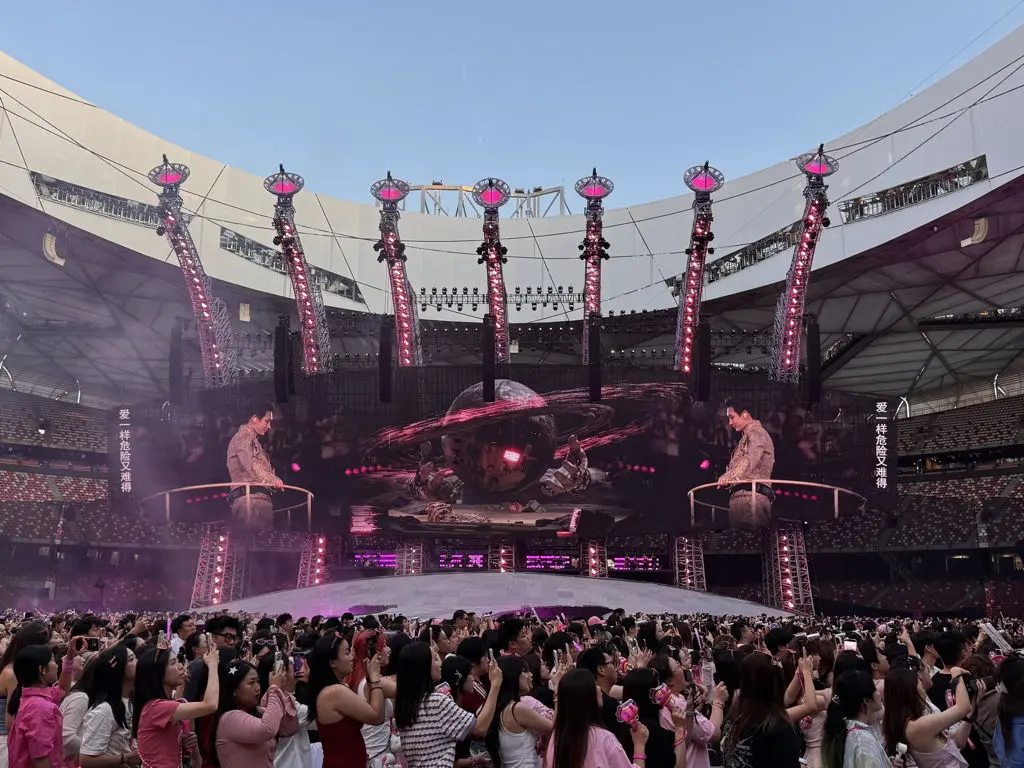
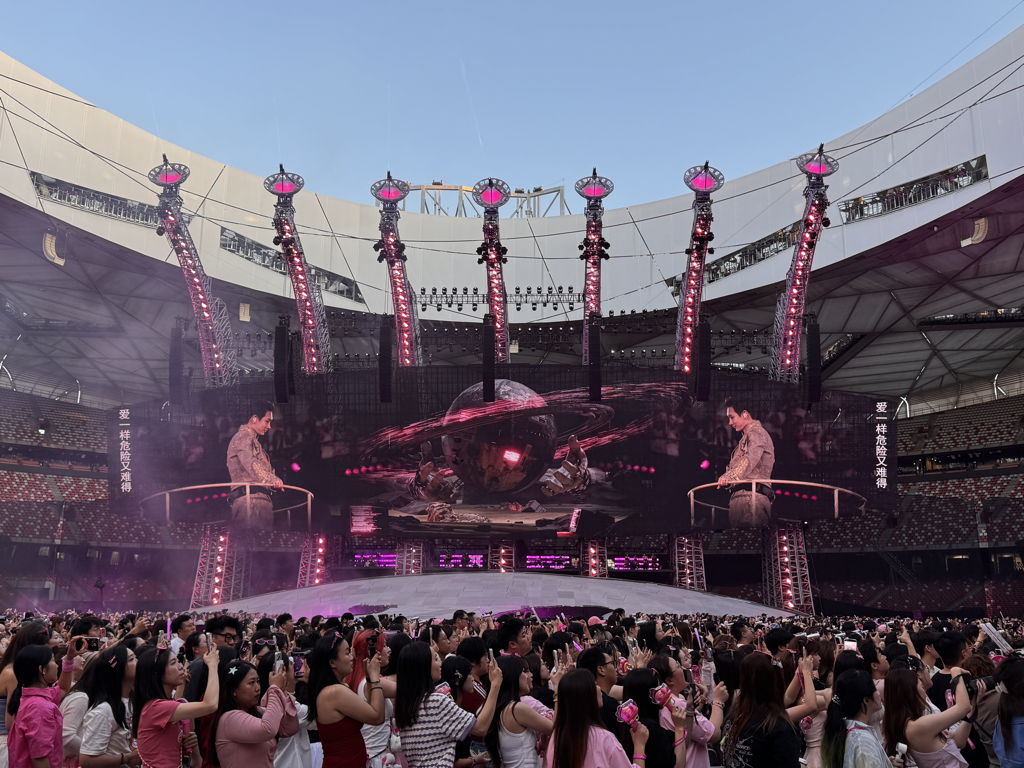
The landscape of live entertainment technology reached a historic milestone in August 2026 as the Beijing National Stadium, colloquially known as the "Bird’s Nest," hosted the largest-ever deployment of the d&b Soundscape system. This massive technical undertaking was the centerpiece of the Age of Romance World Tour by Chinese superstar Silence Wang, marking a transformative moment for immersive audio in stadium-sized venues. Over a residency spanning ten consecutive sold-out performances, the production delivered high-fidelity, object-based audio to more than 600,000 concertgoers, proving that the intimacy of immersive sound can be successfully scaled to the world’s most demanding architectural environments.
The project was the result of a multi-organizational collaboration involving d&b audiotechnik’s Greater China division, the company’s global Engineering and Application Support (EAS) teams, and OST Productions. At the creative helm was Jin Shaogang, one of China’s most distinguished sound designers, whose previous credits include the 2008 Beijing Olympics opening ceremony. Together, this team addressed the inherent acoustic challenges of the Bird’s Nest—a venue notorious for its complex reflections and cavernous volume—to create a listening environment where every seat offered a premium sonic experience.
A New Era for Chinese Mandopop Production
Silence Wang, a prolific singer-songwriter and producer with twelve studio albums since his 2010 debut, has long been a dominant force in the Mandopop scene. However, the Age of Romance tour represented a significant elevation in his production value. By securing a ten-night residency at the National Stadium, Wang became the first singer-songwriter to utilize a full-scale immersive audio system for a run of this magnitude.
The decision to move away from traditional stereo reinforcement was driven by a desire to break the "sonic wall" often associated with stadium concerts. In typical large-scale setups, audience members outside the central "sweet spot" often suffer from poor localization and phase issues. The implementation of d&b Soundscape was specifically designed to eliminate these barriers, ensuring that the audio matched the visual grandeur of the performance regardless of where a fan was seated within the 80,000-capacity venue.
Architectural and Technical Synchronicity
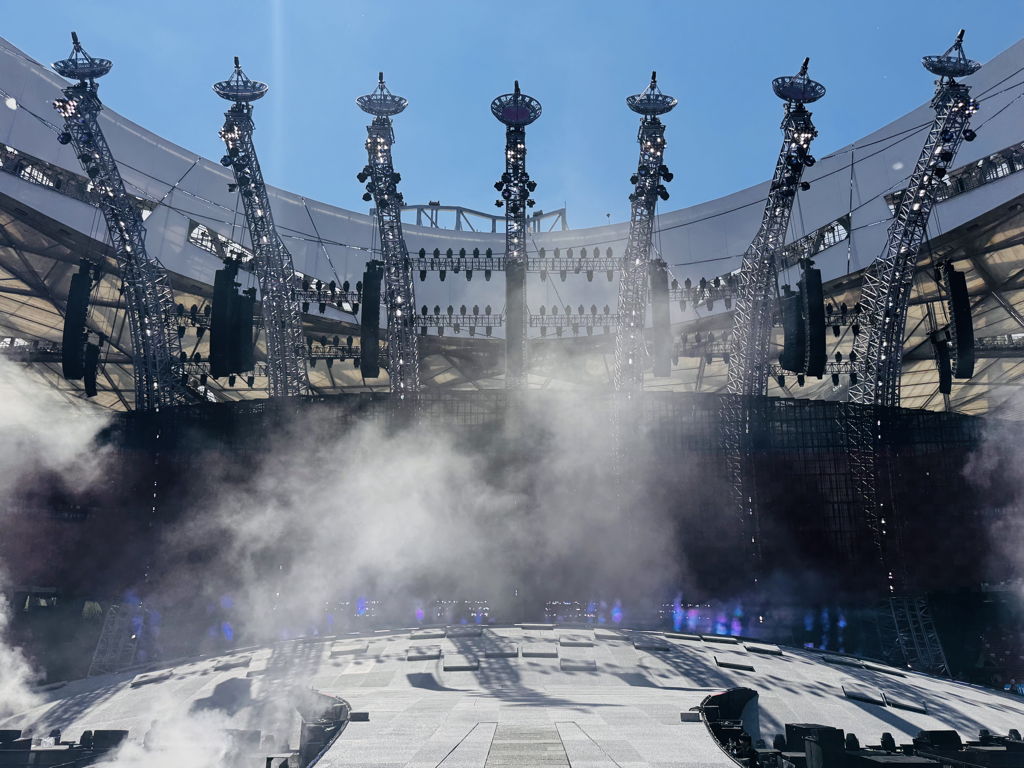
The technical architecture of the system was built around the d&b SL-Series, a line of loudspeakers renowned for their full-range directivity control. For the Bird’s Nest installation, the sheer volume of equipment was unprecedented. The primary 360-degree Soundscape experience was driven by 22 clusters of GSL8 loudspeakers suspended along the stadium’s ceiling canopy. This ring was further supported by 22 groups of V10P point-source loudspeakers arranged in two fill rings to provide coverage for the lower and middle tiers.
The frontal system, which anchored the performance, consisted of seven KSL8 and KSL12 clusters, bolstered by two flown SL-SUB arrays. To ensure total coverage across the sprawling spectator areas, more than 150 additional KSL8 units were deployed as outfills, sidefills, and delay towers. Every loudspeaker in the system was optimized using d&b’s ArrayProcessing software, which allows engineers to fine-tune the frequency response and level distribution across the entire audience area, compensating for air absorption and the stadium’s unique geometry.
Jin Shaogang highlighted the importance of the SL-Series’ cardioid nature in this configuration. "The broadband directivity of the SL-Series is a game-changer for Soundscape," Shaogang noted. "Because these speakers emit remarkably little energy to the rear, we can mount 360-degree arrays and delay speakers on the same trusses without worrying about low-frequency build-up bleeding into the stage or the backstage areas. This precision allows us to maintain a clean stage environment and prevents the ‘muddy’ bass reflections that usually plague stadium shows."

The DS100 Engine and Object-Based Mixing
At the heart of the operation was the d&b DS100 Soundscape Processing Engine. Unlike traditional mixing, which sends signals to fixed left and right channels, the DS100 treats every sound—Wang’s vocals, individual instruments, and backing tracks—as an "audio object." These objects can be positioned and moved in real-time within a three-dimensional space.
Sam Wang, Head of Mobile Sales and Senior System Engineer at d&b audiotechnik Greater China, explained that the DS100 was critical for maintaining consistency. "In a stadium, you have massive distances to cover. If you don’t control the latency and phase of every object, the spatial image falls apart for anyone not sitting in the middle," Wang said. "By using the DS100’s delay mode and carefully grouping the loudspeakers, we were able to minimize phase interference. This resulted in stable, transparent panning and localization across nearly 70% of the venue, a massive improvement over the 30% typically achieved with stereo systems."
This expansion of the "sweet spot" meant that fans sitting in the upper reaches of the Bird’s Nest heard the same spatial depth and instrument separation as those in the front rows. The system allowed for dynamic audio effects, such as sounds rotating around the stadium or instruments being placed in specific physical locations that matched the artist’s position on stage.
Streamlining Complexity with Create.Control
Managing a system of this complexity required sophisticated software. The production utilized d&b Create.Control, a tool designed to simplify the workflow of immersive audio. For the Silence Wang tour, the programming requirements were staggering: over 400 snapshots and 300 automated animations were developed within a single month.
Lucchi Federico Tobia, who led Soundscape Enablement for d&b Greater China, emphasized the efficiency provided by the software. "In a touring environment, time is your most precious resource. Create.Control allowed us to program the show offline, simulating the movements and spatial transitions before we even arrived at the stadium," Tobia explained. "The software’s ability to scale projects meant that the work we did in the studio could be adapted to the specific dimensions of the Bird’s Nest. This flexibility is what makes Soundscape viable for world tours where every venue has a different layout."
Chronology of a Landmark Residency
The journey to the August 2026 concerts began nearly a year in advance with intensive acoustic modeling. Engineers used d&b’s ArrayCalc software to simulate the stadium’s response to the proposed 360-degree ring.
- Phase One (Late 2025): Initial concept and feasibility studies conducted by OST Productions and Jin Shaogang.
- Phase Two (Spring 2026): Sound design finalization and software programming using Create.Control.
- Phase Three (July 2026): Off-site rehearsals and system stress testing.
- Phase Four (August 2026): On-site installation at the Bird’s Nest, involving a team of over 50 audio technicians working in shifts to rig the hundreds of speakers.
- The Event (August 10–20, 2026): Ten consecutive nights of performance, each lasting approximately three hours, with the system operating at peak performance without technical failure.
The residency concluded as a triumph of both artistic vision and engineering prowess. Beyond the sheer volume of equipment, the event demonstrated that high-resolution, immersive audio is no longer restricted to intimate theaters or specialized installations.
Industry Implications and the Future of Live Sound
The success of the Silence Wang residency at the Beijing National Stadium is expected to have a ripple effect across the global touring industry. Historically, stadium audio has been a compromise between volume and clarity. The d&b Soundscape deployment proves that it is possible to achieve both, while also adding a creative dimension that was previously impossible in such large spaces.
From an economic perspective, the ability to expand the "sweet spot" to 70% of the stadium potentially increases the value of tickets in areas that were previously considered "acoustically inferior." For artists, it provides a larger canvas for storytelling, allowing the sound to move in sync with visual elements like lighting and LED content.
Furthermore, the environmental impact of such a system is noteworthy. By using highly directional speakers like the GSL and KSL series, the production was able to focus energy on the audience and away from the stadium’s exterior, reducing noise pollution in the surrounding Beijing metropolitan area—a frequent concern for multi-night residencies in urban centers.
As d&b audiotechnik continues to refine the Soundscape ecosystem, the "Age of Romance" tour will likely be cited as the definitive proof of concept for immersive stadium sound. It has set a new standard for what audiences can expect from a live concert, moving the industry one step closer to a future where the "best seat in the house" is every seat in the house.
