

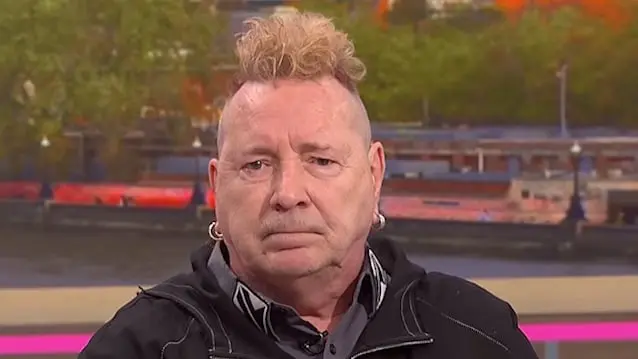
The enduring legacy and fractured relationships of the iconic punk band the Sex Pistols continue to be a source of public fascination, with frontman John Lydon recently reigniting his vocal criticism of his former bandmates’ decision to perform without him. In a candid appearance on the British breakfast television program Good Morning Britain on October 15th, Lydon did not mince words when discussing the Sex Pistols’ reunion tours featuring Frank Carter on vocals. His remarks, transcribed by BLABBERMOUTH.NET, painted a picture of deep-seated resentment and a profound sense of betrayal.
"Cheek of them," Lydon declared, his voice laced with a familiar defiance. "Going out without me, singing the songs I wrote, the words I wrote, the presentation I created." The sentiment was a direct response to an interviewer’s suggestion that he should have participated in the reunion. Lydon vehemently rejected the idea, labeling his former bandmates as "deceitful, lying hyenas" and stating his firm resolve to "never want another thing to do with them." He continued to dismiss the performances as mere "karaoke," an imitation that he finds "really kind of insulting" given the existence of other bands that already draw inspiration from the Sex Pistols’ groundbreaking sound.
The genesis of this latest controversy lies in the Sex Pistols’ decision to embark on a series of performances following a successful debut of three fundraising nights at London’s Bush Hall in August 2024. The lineup for these shows, and subsequent tours, comprises guitarist Steve Jones, drummer Paul Cook, and bassist Glen Matlock. Notably, Matlock, a founding member, was originally ousted from the band and replaced by Sid Vicious. The reformed Sex Pistols, under the billing "Sex Pistols featuring Frank Carter," have since undertaken extensive tours across the UK, Europe, North America, Australia, and New Zealand. This iteration explicitly excludes Lydon, who fronted the band under his iconic Johnny Rotten moniker.
A History of Estrangement and Artistic Disagreement
Lydon’s current animosity is not a sudden outburst but rather a continuation of a protracted and public feud with his former bandmates, a rift that has been exacerbated by legal and creative disputes. A significant point of contention arose two years prior to Lydon’s Good Morning Britain interview, stemming from the Sex Pistols’ involvement in the Hulu miniseries "Pistol." The series, based on Steve Jones’s 2016 memoir "Lonely Boy," dramatized the band’s meteoric rise and tumultuous existence. Lydon, however, strenuously opposed the use of Sex Pistols’ music in the project, launching an unsuccessful legal battle to block its release. This legal confrontation served to deepen the chasm between Lydon and the rest of the band, leaving him "estranged" from them.
In a February 2025 interview with The I Paper, Lydon elaborated on his feelings about the Sex Pistols touring without his involvement. He confessed that the initial news "pissed me off" and "annoyed me." His primary concern was that the band’s legacy would be diluted or destroyed by such performances. "They’re absolutely going to kill all that was good with the Pistols by eliminating the point and the purpose of it all," he articulated. He emphasized the personal significance of his lyrical contributions, stating, "I didn’t write those words lightly." Lydon perceives the current touring unit as attempting to "trivialize the whole show to get away with karaoke," predicting that the long-term value would ultimately distinguish him from his former bandmates.
The "Karaoke" Accusation and Lydon’s Principled Stance
Lydon’s critique extends beyond mere professional jealousy; it is rooted in what he describes as a steadfast refusal to compromise his artistic integrity. He asserted in the same The I Paper interview that he has "never sold my soul to make a dollar." This assertion he attributes to his Catholic upbringing and a resulting aversion to guilt. Drawing a parallel to Nancy Reagan’s famous anti-drug slogan, Lydon stated, "I’ve always found it easy to just say ‘no’." For him, any proposition that challenges his "heart and your soul and your mind and your sense of purity of what is right and wrong in the world" necessitates a firm rejection. He acknowledges that this principled stance often leads to him being labeled "difficult to work with" within the corporate-driven music industry, a title he wears with considerable pride.
Further reinforcing his stance, Lydon discussed the perceived absence of the Sex Pistols’ true spirit in the current performances during a separate interview with Classic Album Review. When asked if the band’s essence was missing, he responded with a rhetorical flourish: "I wrote the fucking songs, didn’t I? I gave them the image. I was the frontman. I am the voice, what made the whole world sing." He reiterated his "karaoke" assessment, noting that the band had previously toured with Billy Idol. Lydon expressed a hypothetical desire to be impressed by original songwriting from his former bandmates, adding pointedly, "They’ve had long enough to get that together now, haven’t they? But no." He concluded this sentiment with a sardonic observation: "They profess their hatred for me, but they can’t live without me. I am the punishment that goes on giving."
Contrasting Perspectives from Steve Jones
In stark contrast to Lydon’s vehement condemnations, Sex Pistols guitarist Steve Jones offered a more pragmatic and conciliatory perspective in an interview with Westword earlier in the month. Jones spoke highly of Frank Carter, describing him as "a real pro" with a voice he admires. Crucially, Jones emphasized that Carter is not attempting to emulate Lydon. "He’s got a good rock and roll sense about him and is a lot younger, so he has bundles of energy," Jones explained, contrasting this with the physical realities of the older band members. He acknowledged the age difference, noting, "Not like the rest, the three of us, struggling to get by, doing an hour show. Well, we’re not really struggling, but you know what I mean? There’s a big difference between 42 and 71."
Addressing Lydon’s persistent criticism, Jones adopted a tone of resigned familiarity. "Well, what did you expect John to say? You know, John’s John. He’s always going to say stuff like that," he commented. Jones suggested that Lydon is unlikely to express genuine happiness for his former bandmates, even if he might feel it privately. He pointed out that Lydon himself is actively engaged in his own musical projects, currently touring with Public Image Ltd. (PiL).
Despite the harshness of Lydon’s public pronouncements, Jones maintained that he harbors no personal animosity. "I never get offended by anything John says," he stated. Jones reaffirmed a lasting affection for Lydon, stemming from their shared history and achievements. "I still have a love for him from what we achieved back in the day. And I wish him only the best. I really do, and I’m not just saying that. I really do."
Broader Context and Implications of the Sex Pistols’ Fractured Legacy
The ongoing dispute between John Lydon and the other members of the Sex Pistols is more than just a personal spat; it reflects a broader phenomenon within the music industry: the complex and often fraught nature of reunion tours and the enduring power of iconic bands. The Sex Pistols, despite their relatively short active lifespan in their original incarnation, carved an indelible mark on popular culture, spearheading the punk rock movement with their raw energy, anti-establishment ethos, and confrontational lyrics. Their impact is undeniable, influencing countless musicians and shaping the trajectory of alternative music.
The current touring situation raises questions about artistic authenticity, legacy management, and the commercialization of punk rock’s rebellious spirit. Lydon’s insistence on his sole authorship of the band’s core creative output – the songs, the lyrics, and the visual presentation – highlights the deeply personal connection he feels to the Sex Pistols’ work. His rejection of the reunion as "karaoke" suggests a belief that without his singular voice and vision, the performances are hollow imitations, devoid of the original revolutionary intent.
Conversely, the perspective offered by Jones suggests a pragmatic approach to continuing the band’s musical legacy, acknowledging the physical limitations of age and seeking to engage a new generation of fans with energetic performances. The involvement of Frank Carter, a respected figure in contemporary rock music, indicates an effort to imbue the performances with a fresh vitality, albeit without directly replicating the past.
The legal battles and public disagreements surrounding the Sex Pistols’ music and image, particularly in relation to the "Pistol" miniseries, underscore the difficulties inherent in managing the legacy of such a culturally significant and volatile entity. Lydon’s consistent efforts to control the narrative and prevent what he perceives as exploitation of his work demonstrate a fierce protectiveness over his artistic contributions.
Ultimately, the ongoing friction between Lydon and his former bandmates serves as a potent reminder that while musical collaborations can forge powerful bonds, the dissolution of those relationships can lead to enduring artistic and personal schisms. The Sex Pistols’ story, even decades after their initial implosion, continues to be a compelling case study in the complexities of band dynamics, artistic ownership, and the enduring, often contentious, power of legacy. As Lydon continues to champion his uncompromised artistic integrity and his former bandmates find new avenues to celebrate their shared musical history, the debate over the true spirit of the Sex Pistols remains a potent and unresolved narrative.
