

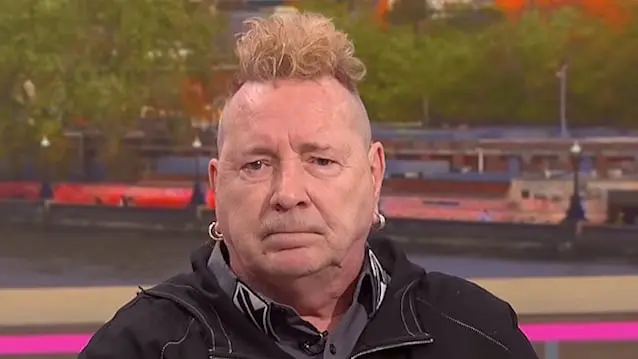
The enduring legacy of the Sex Pistols, a band synonymous with punk rock rebellion, continues to be a source of contention, particularly for its iconic frontman, John Lydon. In a recent appearance on the British breakfast television program Good Morning Britain on October 15, Lydon did not mince words when discussing his former bandmates’ decision to embark on a reunion tour without him, featuring Frank Carter on vocals. His scathing assessment labeled the endeavor as nothing more than "karaoke," a sentiment he has reiterated across multiple interviews, highlighting a deep-seated animosity and a profound sense of betrayal.
Lydon’s ire stems from the fact that guitarist Steve Jones, drummer Paul Cook, and bassist Glen Matlock (who had previously been replaced by Sid Vicious in the original lineup) have been performing Sex Pistols material with Frank Carter, formerly of Gallows and The Rattlesnakes. These performances began with three fundraising dates at London’s Bush Hall in August 2024, followed by a UK tour in September 2024. The reconstituted Sex Pistols, now billing themselves as "Sex Pistols featuring Frank Carter," have since expanded their reach with further shows across Europe, North America, Australia, and New Zealand over the past two years.
"Cheek of them," Lydon declared during his Good Morning Britain interview, his voice dripping with disdain. "Going out without me, singing the songs I wrote, the words I wrote, the presentation I created." When an interviewer suggested he should have joined them, Lydon’s response was sharp and definitive. "Uh, well, no, ma’am. I’ve worked enough with them in the first place. They’re deceitful, lying hyenas, and I never want another thing to do with them. So can we drop the karaoke band? Because that’s what they are to me – they’re imitating me, and that’s really kind of insulting, because there’s great bands out there that imitate us already."
A History of Estrangement and Legal Battles
This latest salvo from Lydon is not an isolated incident but rather a continuation of a long-standing rift between the Sex Pistols’ former vocalist and the instrumentalists. The most significant public rupture occurred when Lydon attempted to block the use of Sex Pistols songs in the 2022 Hulu miniseries Pistol. The series, based on Steve Jones’s 2016 memoir "Lonely Boy," dramatized the band’s meteoric rise and tumultuous fall. Lydon’s opposition, rooted in his belief that the series misrepresented the band’s history and his own role, led to a protracted legal battle. Ultimately, the courts ruled against Lydon, allowing the use of the songs, a decision that further solidified his estrangement from Jones and Cook.
In a February 2025 interview with The I Paper, Lydon elaborated on his feelings regarding the reunion. "When I first heard that the Sex Pistols were touring without me, it pissed me off. It annoyed me," he admitted. "I just thought, ‘They’re absolutely going to kill all that was good with the Pistols by eliminating the point and the purpose of it all’. I didn’t write those words lightly. They’re trying to trivialize the whole show to get away with karaoke but in the long term I think you’ll see who has the value and who doesn’t."
Lydon positioned himself as an artist unwilling to compromise his integrity for commercial gain. "I’ve never sold my soul to make a dollar," he stated. "It’s the Catholic in me – that guilt I don’t want to trip. Like Nancy Reagan, I’ve always found it easy to just say ‘no’. If something challenges your heart and your soul and your mind and your sense of purity of what is right and wrong in the world, then just say no." He acknowledged that this principled stance has earned him a reputation in the music industry. "Which, according to the corporate thinking which riddles the music business earns me the title of ‘difficult to work with’ – a title of which I’m very proud."
The "Karaoke Band" Accusation
The "karaoke" label is central to Lydon’s critique. In a separate interview with Classic Album Review, he directly addressed the spirit of the Sex Pistols’ performances without him. "I wrote the fucking songs, didn’t I? I gave them the image. I was the frontman. I am the voice, what made the whole world sing," he asserted. "And now you’re going out, as they did the year before with Billy Idol. It’s just karaoke, really."
He expressed a desire for his former bandmates to prove him wrong, but with a sense of resignation. "I would love to be embarrassed by high-quality songwriting from them," he added. "They’ve had long enough to get that together now, haven’t they? But no. They profess their hatred for me, but they can’t live without me. I am the punishment that goes on giving." His laughter underscored the bitter irony he perceived in the situation.
Counterpoints from Steve Jones
Steve Jones, speaking to Westword earlier this month, offered a perspective that, while acknowledging Lydon’s characteristic pronouncements, framed the reunion in a more pragmatic light. Regarding Frank Carter, Jones praised him as "a real pro" and a vocalist whose style differs from Lydon’s. "He’s not trying to be John Lydon, Johnny Rotten," Jones explained. "He’s got a good rock and roll sense about him and is a lot younger, so he has bundles of energy. Not like the rest, the three of us, struggling to get by, doing an hour show. Well, we’re not really struggling, but you know what I mean? There’s a big difference between 42 and 71." This comparison highlights the practical considerations of touring with musicians of different ages and energy levels.
When directly asked about Lydon’s criticisms, Jones exhibited a measured response. "Well, what did you expect John to say? You know, John’s John. He’s always going to say stuff like that. He’s never gonna be happy for you. Even if he is secretly. I mean, he’s out there working his tail off with PIL right now." This suggests a long-standing understanding of Lydon’s personality and his consistent opposition to such ventures.
Despite the harsh words exchanged, Jones insisted that he holds no personal animosity towards his former bandmate. "I never get offended by anything John says," he stated. "I still have a love for him from what we achieved back in the day. And I wish him only the best. I really do, and I’m not just saying that. I really do." This sentiment suggests a desire for a more amicable relationship, even if Lydon’s public pronouncements make it difficult.
The Broader Implications for Punk Rock’s Pantheon
The ongoing dispute between John Lydon and the instrumental members of the Sex Pistols raises broader questions about legacy, artistic ownership, and the commodification of punk rock. The Sex Pistols, despite their short but explosive career, are foundational figures in the punk movement. Their music, imbued with Lydon’s vitriolic lyrics and confrontational persona, captured a spirit of anger and disillusionment that resonated globally.
Lydon’s argument centers on the inseparability of his lyrical and vocal contributions from the band’s identity. For him, the Sex Pistols were not merely a musical unit but a vehicle for his artistic expression and social commentary. His current stance suggests that any performance of these songs without his direct involvement dilutes their authenticity and purpose, reducing them to mere historical artifacts performed by imitators.
Conversely, Jones and Cook, as the primary musical architects of many of the band’s iconic tracks, likely feel a right to continue performing their compositions, especially given the commercial success and continued interest in the Sex Pistols’ legacy. The addition of a younger vocalist like Frank Carter could be seen as an attempt to inject new energy into the live performance and appeal to a broader audience, while also acknowledging the physical limitations of aging musicians.
The "karaoke" accusation, while dismissive, also hints at Lydon’s perception of a lack of genuine artistic innovation from his former bandmates. His challenge for them to produce "high-quality songwriting" suggests a belief that their current endeavors are purely retrospective and lack the vital spark that characterized the original band.
The legal battles and public disagreements underscore the complex and often fraught nature of band dynamics, especially for groups that achieved such a significant cultural impact. The Sex Pistols’ story, from their explosive debut to their acrimonious dissolution and subsequent, intermittent reunions, is a testament to the enduring power of their music and the volatile personalities that created it. As Lydon continues to voice his objections, and Jones and Cook press on with their performances, the debate over the true spirit of the Sex Pistols is likely to continue, leaving fans to ponder the authenticity and legacy of a band that, even in its fractured state, continues to provoke strong reactions. The economic realities of the music industry, coupled with the personal histories of the individuals involved, ensure that this punk rock saga is far from over.
