

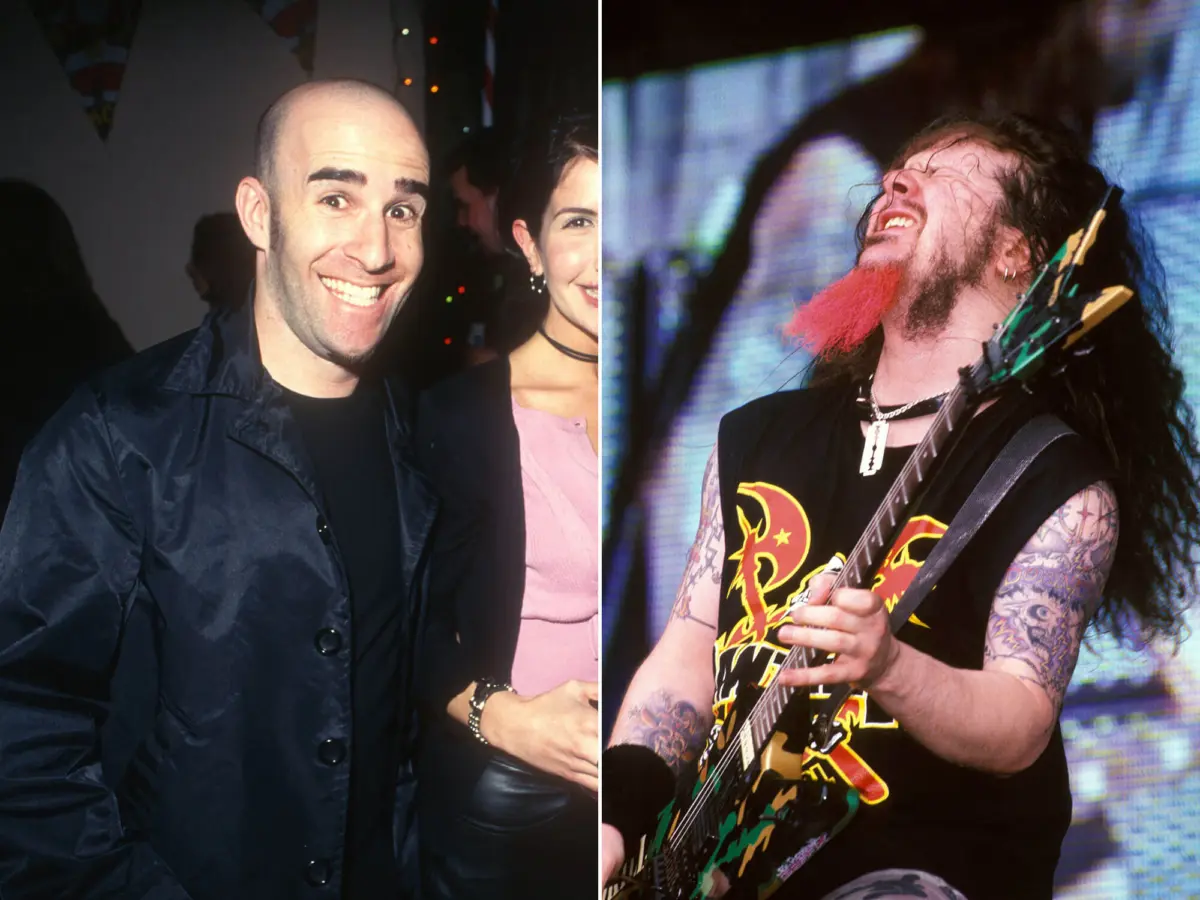
Anthrax guitarist Scott Ian has offered a candid recollection of his formative years in the hard-partying world of heavy metal touring, specifically attributing his education in imbibing to none other than Pantera’s legendary guitarist, Dimebag Darrell. Ian’s recent interview with Metal Hammer shed light on the raucous 1997-98 tour shared by the two iconic bands, an experience he vividly describes as "fucking chaos" and a pivotal moment in his personal and professional journey through rock and roll culture.
A Crucible of Chaos: The Pantera/Anthrax Tour of 1997-98
The late 1990s represented a dynamic period for both Pantera and Anthrax. Pantera, riding high on the success of albums like "Vulgar Display of Power" (1992), "Far Beyond Driven" (1994), and "The Great Southern Trendkill" (1996), had cemented their status as one of the most powerful and influential metal bands globally. Their tours were renowned for their intense performances and equally legendary backstage revelry. Anthrax, a pioneering force in thrash metal and a member of the "Big Four," was navigating its own evolution, having released "Stomp 442" in 1995 and preparing for "Vol. 8: The Threat Is Real," which would see release in 1998. The confluence of these two titans on the road created an environment ripe for memorable, if not entirely sober, experiences.
Ian, now 62, pinpointed this specific touring period as the crucible where his understanding of the rock and roll lifestyle, particularly its liquid component, was fundamentally reshaped. His most enduring memory from this era encapsulates the unbridled spirit of Dimebag Darrell. Following a night of particularly heavy drinking, Ian found himself indisposed, having just thrown up. Upon opening the bathroom door, he was met by Dimebag, who, without missing a beat, offered him another shot. Ian’s protest, acknowledging his recent illness, was met with Dimebag’s characteristic dismissiveness and a piece of logic that has since become legendary: "What are you talking about Baldini? Now you just have more room." This exchange perfectly illustrates the ethos of perseverance and boundless indulgence that defined Dimebag and, by extension, much of the metal touring circuit of that era.
The camaraderie and chaotic energy extended beyond individual incidents. Ian recounted instances of joining Dimebag and his brother, drummer Vinnie Paul, on their tour bus in the early hours of the morning. What might have seemed like a good idea at 3 AM often stretched into 7 AM, with the party showing no signs of abating. A particularly vivid detail involved the Abbott brothers spending hours watching the same live Kiss videos on a loop, a testament to their shared passion for music and their capacity for sustained revelry. This snapshot provides a glimpse into the unfiltered, non-stop nature of life on the road for these bands, where the lines between performance, celebration, and pure endurance blurred.
Dimebag Darrell: The Maestro of Mayhem and Music
Dimebag Darrell’s reputation as a formidable drinker was as well-established as his prowess as a guitarist. It was an integral part of his larger-than-life persona, intertwining with his musical identity to create an icon whose influence transcended mere fretboard wizardry. His signature drink, the "Black Tooth Grin," became a symbol of this very ethos. Named after a lyric from Megadeth’s song "Sweating Bullets," the concoction typically comprised a shot of Crown Royal whisky, a splash of Coca-Cola, and a minimal amount of ice, often consumed rapidly. This drink became a ritual for Dimebag, frequently shared with friends, fans, and fellow musicians, further solidifying his image as the ultimate party-starter. The "Black Tooth Grin" was more than just a beverage; it was an invitation into Dimebag’s world, a taste of the aggressive, celebratory spirit that defined Pantera.
Anecdotes surrounding Dimebag’s drinking habits are plentiful, often highlighting his ability to maintain a superhuman level of performance despite his legendary consumption. Machine Head’s Robb Flynn recounted a night when a heavily inebriated Dimebag smashed one of his guitars into the floor backstage. Yet, moments later, he walked onto the stage and delivered a flawless, blistering performance, demonstrating an extraordinary dichotomy between his off-stage antics and his unwavering musical precision. This incident, while extreme, underscores the almost mythical quality of Dimebag’s control and talent, suggesting that for him, the chaos was not a hindrance but perhaps even a catalyst for his artistic expression.
Musically, Dimebag Darrell was a revolutionary. His playing style was a unique blend of Southern groove, thrash metal aggression, and melodic sensibility. He pioneered techniques like dive-bomb squeals, harmonically rich pinch harmonics, and a distinctive rhythmic attack that redefined heavy metal guitar playing. Pantera’s albums are replete with examples of his innovative riffing and searing solos, which combined technical mastery with an innate sense of feel and raw power. His influence can be heard in countless guitarists who emerged in the wake of Pantera’s success, making him one of the most revered and emulated figures in modern metal. His persona, characterized by his infectious laugh, his "Dime" facial hair, and his ever-present drink, was inseparable from his music, creating a holistic artistic identity that resonated deeply with fans worldwide.
A Brotherhood Forged in Sound: Dimebag’s Contributions to Anthrax
Beyond the shared tours and tales of excess, the friendship between Pantera and Anthrax, and specifically between Dimebag and Scott Ian, manifested in significant musical collaborations. Dimebag Darrell, a highly sought-after guest musician, lent his distinctive guitar talents to six Anthrax songs across three of their albums, enriching their sound with his unique flair.
The first collaboration came on Anthrax’s 1995 album, Stomp 442. This album marked a period of transition for Anthrax, with John Bush on vocals and a slightly more groove-oriented sound. Dimebag contributed guest solos to the tracks "Fueled" and "King Size." His contributions provided an extra layer of aggression and melodic intricacy, complementing Anthrax’s evolving soundscape.
His involvement continued on 1998’s Vol. 8: The Threat Is Real, an album that further explored various musical directions for Anthrax. Here, Dimebag’s solos graced "Inside Out" and "Born Again Idiot." These tracks benefited from his characteristic squeals and powerful phrasing, adding a dynamic edge that was instantly recognizable as his signature.
Finally, Dimebag contributed to Anthrax’s 2003 album, We’ve Come For You All, providing solos for "Strap It On" and "Cadillac Rock Box." By this point, the musical synergy between Dimebag and Anthrax was well-established, and his guest spots were anticipated by fans. These later contributions showcased his continued innovation and adaptability, proving his ability to enhance another band’s material while maintaining his distinct voice.
These collaborations were more than just guest appearances; they were a testament to the deep respect and camaraderie shared between the musicians. In an era where inter-band collaborations were becoming more common, Dimebag’s contributions to Anthrax stood out due to the genuine friendship and mutual admiration that underpinned them. They served as a bridge between two distinct but equally potent forces in heavy metal, creating unique sonic experiences for fans of both bands and cementing a legacy of mutual support within the metal community.
A Tragic End and an Enduring Legacy
The vibrant life and career of Dimebag Darrell were tragically cut short on December 8, 2004. While performing with Damageplan, the band he formed with his brother Vinnie Paul after Pantera’s split, at the Alrosa Villa nightclub in Columbus, Ohio, Dimebag was shot and killed on stage by a deranged fan. He was just 38 years old. The senseless act sent shockwaves throughout the music world, plunging the heavy metal community into profound grief and disbelief. His death was a monumental loss, not only for his family and friends but for countless musicians and fans who revered him as an innovator and an inimitable personality.
Damageplan had released their debut album, "New Found Power," in February 2004, showcasing a slightly different musical direction that still bore the unmistakable hallmarks of the Abbott brothers’ aggressive sound. The band was actively touring in support of the album when the tragedy occurred. Vinnie Paul, deeply affected by his brother’s death, would go on to form Hellyeah, continuing his musical journey until his own passing in 2018.
Dimebag Darrell’s legacy, however, remains indelible. He is consistently cited as one of the greatest guitarists in heavy metal history, lauded for his originality, technical skill, and profound influence on the genre. Beyond his musical contributions, his larger-than-life persona, his unwavering loyalty to his friends, and his infectious enthusiasm for life and music have cemented his place as a true legend. His impact continues to resonate through the countless guitarists who emulate his style, the enduring popularity of Pantera’s music, and the many stories, like Scott Ian’s, that paint a vivid picture of a man who lived life to the fullest, both on and off the stage.
Anthrax in the Present Day: Forging Ahead
Meanwhile, Anthrax continues its journey as one of heavy metal’s enduring forces. The band recently released their new album, "Cursum Perficio," through Nuclear Blast, a testament to their unwavering commitment to creating new music and maintaining their status as a "Big Four" thrash metal band. The album’s creation involved recording sessions at Studio 606, the renowned California studio owned by Foo Fighters frontman Dave Grohl. Grohl, known for his deep appreciation for various musical genres, including heavy metal, and his previous collaborations with metal artists (such as his Probot project), provides an interesting connection, further highlighting the interconnectedness of the rock and metal world.
In the lead-up to the album’s release, Anthrax has maintained a visible presence, having recently completed a run of support shows for Iron Maiden, another legendary act. These performances underscore Anthrax’s continued appeal and their ability to command large audiences, sharing stages with some of the biggest names in rock. While the band currently has no further tour dates officially announced, their active status and the release of new material confirm their ongoing vitality and dedication to their craft. Scott Ian, as a founding member and driving creative force, remains a central figure in the band, continuing to influence generations of musicians with his rhythmic prowess and distinctive stage presence.
The Enduring Narrative of Rock and Roll Camaraderie
Scott Ian’s recollection of his time touring with Dimebag Darrell serves as a poignant reminder of the unique bonds forged in the crucible of rock and roll. It’s a narrative that intertwines the hedonistic excesses of the road with the profound camaraderie and mutual respect that define the music community. Dimebag Darrell, through his larger-than-life personality and his unparalleled musical talent, not only left an indelible mark on heavy metal but also influenced the lives of those who shared the stage and the tour bus with him. His legacy is not just in the riffs he wrote or the solos he played, but in the stories told by those who knew him, stories that continue to paint a vivid picture of a man who truly embodied the spirit of rock and roll. The experiences shared by Ian and Darrell exemplify a significant chapter in metal history, illustrating how friendship, mentorship, and a shared passion for both music and mayhem can shape careers and create legends that endure far beyond the final note.
