

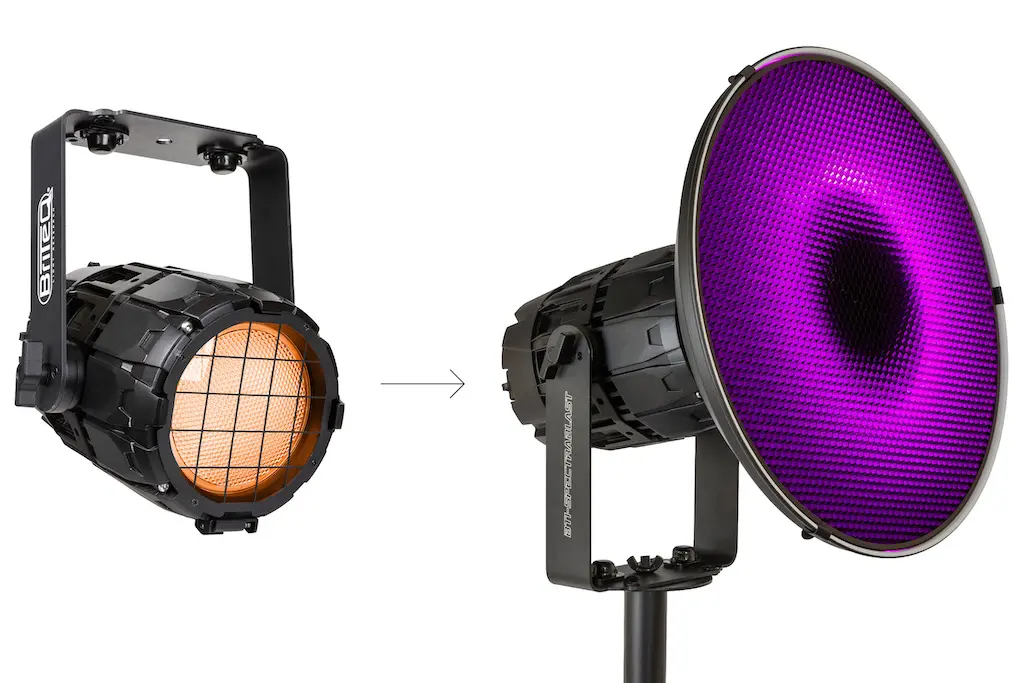
The professional lighting industry has witnessed a significant technological shift with the introduction of the Briteq BTI-Spectrablast, a high-performance LED blinder designed to bridge the gap between traditional halogen aesthetics and modern digital versatility. Distributed in Germany by MR Products Ton- und Lichttechnik GmbH, the BTI-Spectrablast represents a strategic evolution in stage lighting, offering a multi-functional solution that caters to the rigorous demands of concert touring, open-air festivals, and high-end broadcast productions. By integrating a sophisticated 380W RGBALC LED engine with a robust IP65-rated chassis, Briteq has positioned this fixture as a centerpiece for designers seeking both power and precision in an outdoor-ready format.
Technical Innovation: The RGBALC Engine and Color Fidelity
At the heart of the BTI-Spectrablast is a 380-watt LED light source utilizing an RGBALC (Red, Green, Blue, Amber, Lime, and Cyan) color-mixing system. Unlike standard RGBW configurations, the inclusion of Lime and Cyan chips allows the fixture to fill critical gaps in the visible spectrum, resulting in a significantly higher Color Rendering Index (CRI) and more natural skin tones. This spectral breadth is particularly vital for television broadcasts and high-definition filming, where traditional LED "color spikes" can lead to unnatural visual artifacts.
The fixture’s variable color temperature range, spanning from 1,500 K to 8,500 K, provides designers with an expansive palette. At the lower end of this range, the BTI-Spectrablast excels at replicating the "Amberdrift" or "Dim-to-Warm" effect characteristic of traditional incandescent lamps. As the fixture dims, the color temperature shifts toward a deep, warm amber, mimicking the cooling filament of a classic halogen blinder. This feature is essential for maintaining the nostalgic visual warmth often required in rock-and-roll lighting designs, while simultaneously offering the instantaneous response and strobe capabilities of modern LED technology.
Versatility Through the Bowens Mount Ecosystem
One of the most distinctive features of the BTI-Spectrablast is its compatibility with an optional Bowens-mount adapter. Historically associated with studio photography and cinematography, the Bowens mount allows for the quick attachment of a wide variety of light-shaping tools, including softboxes, snoots, beauty dishes, and specialized reflectors.
By bringing this standard to a high-output stage blinder, Briteq has transformed the BTI-Spectrablast from a simple audience blinder into a versatile key light or decorative element. In a theatrical or corporate setting, the ability to soften the 380W output with a softbox allows for high-quality illumination of presenters or performers without the harsh shadows typically associated with high-intensity LED arrays. This adaptability ensures that the fixture remains a valuable asset in a rental inventory, capable of serving multiple roles across different production types.
Engineering for the Elements: IP65 Protection and Build Quality
Recognizing the increasing trend toward outdoor events and the unpredictable nature of festival environments, Briteq has engineered the BTI-Spectrablast with an IP65 rating. The "6" indicates total protection against dust ingress, while the "5" signifies protection against low-pressure water jets from any direction. This level of weatherproofing is achieved through a rugged aluminum die-cast housing that acts as a heat sink, ensuring efficient thermal management without the need for vulnerable external fans that could be compromised by rain or debris.
The use of high-grade aluminum not only provides durability against the physical rigors of the road but also contributes to the fixture’s longevity by preventing corrosion. For production companies, the IP65 rating translates to lower maintenance costs and greater operational flexibility, as the units do not require additional rain covers or protective "domes" when used on outdoor stages.
Modular Rigging and Creative Configuration
The BTI-Spectrablast is designed with modularity as a core principle. Through the use of optional "Splice" and "Clamp" connectors, individual units can be mechanically linked to create complex lighting structures. This system allows technicians to build linear arrays, geometric squares, or even circular configurations without the need for custom-fabricated frames.
This modular approach facilitates "pixel mapping" on a grand scale. When multiple BTI-Spectrablast units are combined, they can be controlled individually via DMX or Art-Net, allowing lighting programmers to treat the entire array as a low-resolution video screen. This capability is particularly effective for creating dynamic "eye-candy" effects during concerts, where the blinders can pulse in patterns that synchronize with the music, providing a visceral, immersive experience for the audience.
Chronology of Development and Market Context
The launch of the BTI-Spectrablast on October 22, 2026, marks a pivotal moment in Briteq’s product roadmap. The development of the fixture began several years prior, following a series of consultations with European lighting designers who expressed a need for a "hybrid" blinder that could replace the aging inventory of 2-lite and 8-lite DWE (Duo Window Exposed) halogen fixtures.
In 2024, the initial prototypes focused on the RGBALC color engine, perfecting the Lime and Cyan balance to ensure a high-quality white light. By 2025, the focus shifted to the physical chassis and the integration of the Bowens mount, a response to the growing convergence between the live event and film industries. The final year of development was dedicated to rigorous environmental testing, ensuring that the IP65 rating remained consistent across thousands of hours of operation in extreme temperatures.
The distribution partnership with MR Products Ton- und Lichttechnik GmbH is a critical component of the BTI-Spectrablast’s entry into the German market. As a specialist in professional audio and lighting, MR Products provides the necessary logistical infrastructure and technical support to service large-scale rental houses and installation firms across the DACH region (Germany, Austria, and Switzerland).
Supporting Data and Energy Efficiency
The transition from halogen to LED is driven largely by energy efficiency and sustainability mandates. A traditional 2-lite blinder typically consumes 1,300 watts (2 x 650W DWE lamps), while a 4-lite array consumes 2,600 watts. In contrast, a single BTI-Spectrablast delivers comparable visual impact with a maximum power consumption of only 380 watts.

- Energy Savings: The BTI-Spectrablast offers an approximate 70% reduction in power consumption compared to traditional halogen blinders of similar output.
- Thermal Output: By converting more energy into light rather than heat, the LED engine significantly reduces the ambient temperature on stage, improving performer comfort and reducing the load on air conditioning systems in indoor venues.
- Operational Lifespan: While a DWE halogen lamp has a rated life of approximately 100 to 200 hours, the BTI-Spectrablast’s LED engine is rated for over 50,000 hours. This eliminates the need for frequent lamp replacements and reduces the volume of hazardous waste.
- Weight Considerations: The aluminum die-cast housing provides a high strength-to-weight ratio, allowing for larger arrays to be flown on standard trussing without exceeding weight limits.
Professional Perspectives and Industry Reaction
Initial feedback from the lighting design community has been overwhelmingly positive, particularly regarding the BTI-Spectrablast’s "Amberdrift" performance. Leading German lighting designers have noted that while previous LED blinders often felt "sterile," the RGBALC engine provides a richness of color that feels organic.
A spokesperson for MR Products Ton- und Lichttechnik GmbH highlighted the strategic importance of the fixture: "With the BTI-Spectrablast, we are offering our customers a tool that does not force them to choose between power and finesse. The ability to use Bowens-mount accessories on an IP65 stage blinder opens up creative avenues that were previously only possible in a controlled studio environment. It is a true multi-tool for the modern lighting professional."
Inferred reactions from rental house managers suggest that the modularity of the fixture is a key selling point. The ability to quickly reconfigure the units from a standard audience blinder into a decorative "light wall" or a high-powered strobe allows for higher utilization rates of the equipment, leading to a faster return on investment.
Broader Impact and Future Implications
The introduction of the Briteq BTI-Spectrablast is indicative of a broader trend toward "intelligent" architectural and stage lighting. As energy regulations in the European Union become increasingly stringent regarding the use of high-wattage incandescent lamps, the demand for high-quality LED alternatives will only grow.
The BTI-Spectrablast sets a new benchmark for what is expected from a professional blinder. It is no longer sufficient for a fixture to simply "flash" at the audience; it must now contribute to the overall color narrative of the show, provide high-quality illumination for digital cameras, and withstand the rigors of global touring.
Furthermore, the integration of the Bowens mount signals a shift toward cross-disciplinary hardware standards. This convergence allows lighting departments to share accessories with video and photography teams, streamlining production workflows and fostering a more collaborative creative environment. As the industry moves toward the 2030s, fixtures like the BTI-Spectrablast will likely be viewed as the catalysts that finalized the transition to a fully digital, sustainable, and versatile lighting landscape.
In conclusion, the Briteq BTI-Spectrablast is more than just a replacement for the traditional blinder; it is a sophisticated lighting instrument that offers a unique blend of power, color science, and mechanical flexibility. Through its innovative design and the robust distribution network provided by MR Products, it is poised to become a staple on stages across Europe and beyond, defining the visual language of professional productions for years to come.
