

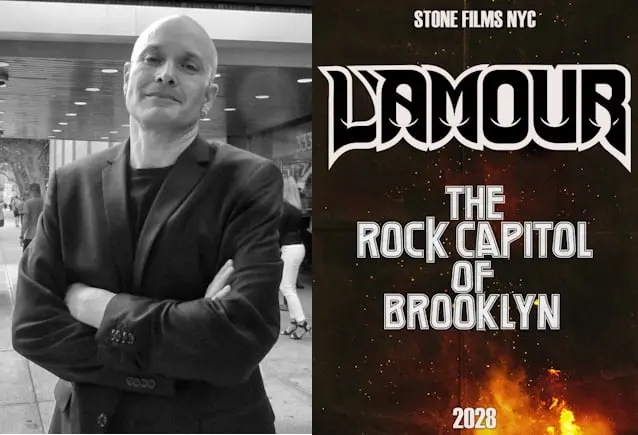
Filmmaker Drew Stone is currently immersed in the production of "L’Amour: The Rock Capitol Of Brooklyn," a feature-length documentary dedicated to unearthing and celebrating the monumental rise, profound impact, and indelible legacy of one of Brooklyn’s most hallowed musical grounds. This ambitious project aims to meticulously chronicle the history of L’Amour, a venue that transcended its physical boundaries to become a cultural epicenter for generations of rock, metal, and hardcore enthusiasts.
Drew Stone, a figure deeply entrenched in the fabric of New York’s vibrant music scene, brings a personal and authoritative perspective to the documentary. His connection to L’Amour is not merely that of an observer but of a participant who lived, breathed, and contributed to its storied past. "L’Amour was more than a venue," Stone articulated, emphasizing its multifaceted role. "It was a proving ground, a clubhouse, and a cultural landmark that gave bands a home and fans a sanctuary. I lived it. I played that stage, I filmed shows there, and I certainly hung out and had quite a few adventures there. This film is about preserving that history and celebrating the community that made it legendary." This deeply personal investment promises an authentic and resonant portrayal of the venue’s significance.
Stone’s reputation as a documentarian is well-established, particularly for his critically acclaimed work, "Who The Fuck Is That Guy? The Fabulous Journey Of Michael Alago." This film delved into the life of Michael Alago, a pivotal music executive instrumental in signing seminal acts like METALLICA, showcasing Stone’s ability to capture the essence of influential figures within the music industry. Furthermore, his "The New York Hardcore Chronicles Film" provided an in-depth exploration of the pioneers of New York’s hardcore movement, solidifying his credentials as a historian and storyteller of underground music scenes. As the host of "The New York Hardcore Chronicles LIVE!", Stone continues his dedication to spotlighting hard rock artists and preserving the rich tapestry of the city’s subcultures.
The production of "L’Amour: The Rock Capitol Of Brooklyn" is helmed by producer Milt Schatzer under the banner of Legacy Americana Productions. The documentary promises to be a comprehensive archival endeavor, featuring a wealth of rare historical footage, previously unseen photographs, and intimate interviews with a diverse array of individuals who were instrumental in L’Amour’s storied run. Among the luminaries slated to share their experiences are J.J. French of TWISTED SISTER, Danny Lilker, a veteran of ANTHRAX and NUCLEAR ASSAULT, renowned rock radio personality Eddie Trunk, Mike Tramp of WHITE LION, D.D. Verni from OVERKILL, Dave "Snake" Sabo of SKID ROW, and George Parente, former co-owner of L’Amour, alongside numerous other musicians, promoters, staff members, and dedicated fans.
Producer Milt Schatzer expressed his enthusiasm for the project, stating, "I’m excited that our vision is coming to light and L’Amour’s story, in all its debaucherous glory, shall be told!" This sentiment underscores the filmmakers’ commitment to capturing the unvarnished truth and vibrant spirit that defined L’Amour.
To support the realization of this significant historical document, a GoFundMe campaign has been launched, offering a platform for fans and patrons to contribute to the project’s completion. Updates on the film’s progress are being shared regularly, with an anticipated release date set for 2028. This extended timeline allows for meticulous research, extensive interviewing, and thorough post-production, ensuring the final product meets the high standards expected of such a project.
In conjunction with the documentary’s development, a special "L’Amour Family Reunion" is scheduled for Saturday, April 25, at Saint Vitus Bar, located at 428 Troutman Street in Brooklyn, New York. This event is designed to be a celebration of the legendary venue’s legacy and will be filmed for inclusion in the documentary, offering a live, community-driven component to the historical narrative. Further details regarding this reunion are expected to be announced soon, promising an opportunity for those who were part of the L’Amour experience to reconnect and share their memories.
The extensive team behind "L’Amour: The Rock Capitol Of Brooklyn" reflects the project’s scope and ambition. Drew Stone serves as Director, with Milt Schatzer as Producer. The Co-Producer roles are filled by Ricky Rispoli and Alex Kayne, while the Associate Producer positions are held by "Metal" Maria Ferrero, Michael Alago, and Larry Kelley. The Executive Producer credits go to Pete Rizzi, Sargent Rock, and Arny Stone. The production is further supported by Production Coordinator Lori Dawn, Production Supervisors Neal "Zum" Ostberg and Michael Alex, and Historical Consultant Chuck Kaye. This collaborative effort brings together a wealth of experience and dedication to the project.
The Enduring Significance of L’Amour
"L’Amour: The Rock Capitol Of Brooklyn" is poised to meticulously document how L’Amour distinguished itself as a steadfast bastion of rock music at a time when musical trends were in constant flux. Situated at the nexus of the hard rock and heavy metal explosion that defined the 1980s and early 1990s, the club evolved into an essential rite of passage for burgeoning bands and a crucial stop for national touring acts. This pivotal role cemented its reputation as one of the most important rock venues in the United States, a status that the documentary aims to solidify in the annals of music history.
The film will delve into the unique alchemy that made L’Amour a convergence point for metal, hardcore, and hard rock, illustrating how Brooklyn, through this venue, carved out its own distinct identity within the global rock scene. In an era where independent music venues are increasingly recognized as vital cultural landmarks deserving of preservation, this documentary serves as a crucial endeavor to ensure L’Amour’s rightful place in rock history is acknowledged and celebrated.
For Drew Stone, the narrative of L’Amour is deeply personal, resonating with his own formative experiences in the music scene. Long before establishing himself as a respected filmmaker, Stone was an active participant in the very subcultures that L’Amour nurtured. He graced the L’Amour stage as a performer with his own bands, captured performances through his lens, and spent countless hours immersed in the vibrant community that coalesced within the club’s walls. This firsthand experience imbues his directorial approach with an unparalleled authenticity and emotional depth.
Drew Stone: A Chronicler of Subculture
Drew Stone’s multifaceted career spans directing, producing, editing, and musicianship. His creative output includes a diverse range of projects, from music videos and commercials to impactful documentary films and television programming. He is the founder of Stone Films NYC, a New York City-based film production company dedicated to capturing the spirit of various artistic movements. Stone was an integral part of the early development of the American hardcore punk scene, co-founding and fronting influential hardcore bands such as THE MIGHTY C.O.’S of Boston, Massachusetts, and THE HIGH & THE MIGHTY of New York. He currently continues his musical endeavors as the frontman for New York City’s INCENDIARY DEVICE, demonstrating a sustained commitment to the genre he seeks to document.
The Historical Context of L’Amour
Established in the early 1980s, L’Amour emerged as a beacon for the burgeoning hard rock and heavy metal scenes that were gaining significant traction across the United States. Brooklyn, often perceived as the shadow of Manhattan’s more established cultural institutions, provided fertile ground for a venue that catered specifically to the raw energy and devoted fanbase of these genres. At a time when mainstream radio and television were often slow to embrace or even acknowledge the growing popularity of heavy music, L’Amour offered a dedicated sanctuary.
The venue’s strategic location and its commitment to booking a diverse range of acts, from local up-and-comers to established national touring bands, created a consistent draw. This policy allowed L’Amour to become a vital incubator for talent. Bands that would go on to achieve global fame often cut their teeth on the L’Amour stage, honing their craft and building their fan bases in the intimate, electrifying atmosphere of the club. This provided a crucial stepping stone in their careers, contributing to the venue’s reputation as a launchpad for rock stardom.
The 1980s and early 1990s witnessed a dramatic surge in the popularity of heavy metal and its subgenres, including thrash metal and speed metal. L’Amour was at the forefront of this wave, consistently hosting bands that defined the sound and ethos of the era. Its programming reflected the evolving landscape of rock music, embracing the aggressive sounds of hardcore punk and the melodic sensibilities of hard rock, creating a melting pot of sonic exploration. This inclusive approach fostered a loyal and diverse audience, united by their passion for loud, guitar-driven music.
The economic and cultural shifts of the late 20th century posed significant challenges to independent music venues across the country. Rising rents, changing entertainment consumption habits, and the increasing dominance of corporate-backed venues often led to the closure of beloved local establishments. L’Amour, however, managed to endure for a significant period, a testament to its strong community ties and its unwavering commitment to its core audience. The documentary will undoubtedly explore the factors that contributed to its longevity, as well as the eventual circumstances that led to its closure, offering a poignant reflection on the ephemeral nature of even the most iconic cultural institutions.
Broader Implications for Music Preservation
The focus on L’Amour in this documentary extends beyond a mere historical retrospective. It speaks to a broader contemporary conversation about the importance of preserving the physical spaces and cultural narratives that have shaped modern music. As independent venues continue to face economic pressures, films like "L’Amour: The Rock Capitol Of Brooklyn" play a critical role in documenting their significance and advocating for their recognition as vital components of a city’s cultural heritage.
The success of L’Amour highlights the symbiotic relationship between venues, artists, and audiences. It underscores how these spaces act as vital hubs for community building, fostering a sense of belonging and shared identity among fans and musicians alike. The legacy of L’Amour, therefore, is not just about the music that was played within its walls, but about the human connections that were forged and the cultural movements that were ignited.
The documentary’s exploration of L’Amour’s impact on Brooklyn’s identity further emphasizes the role of music venues in shaping a city’s cultural landscape. By providing a platform for diverse musical expressions, L’Amour contributed to the vibrant and eclectic character of Brooklyn, making it a destination for music lovers and artists from around the world.
The filmmakers’ commitment to gathering rare archival material and conducting extensive interviews ensures that the documentary will offer a comprehensive and authentic portrayal of L’Amour’s rich history. This dedication to meticulous research and storytelling is crucial for capturing the essence of a venue that meant so much to so many. The anticipation for "L’Amour: The Rock Capitol Of Brooklyn" is palpable within the music community, a testament to the enduring affection and respect held for this legendary establishment.
The GoFundMe campaign and the upcoming reunion event are not just fundraising mechanisms or promotional activities; they are extensions of the documentary’s core mission: to engage the community and ensure that the story of L’Amour is told with the passion and detail it deserves. This collaborative approach, involving the very people who made L’Amour legendary, promises a documentary that is both historically accurate and emotionally resonant, a fitting tribute to a true rock and roll institution.
