

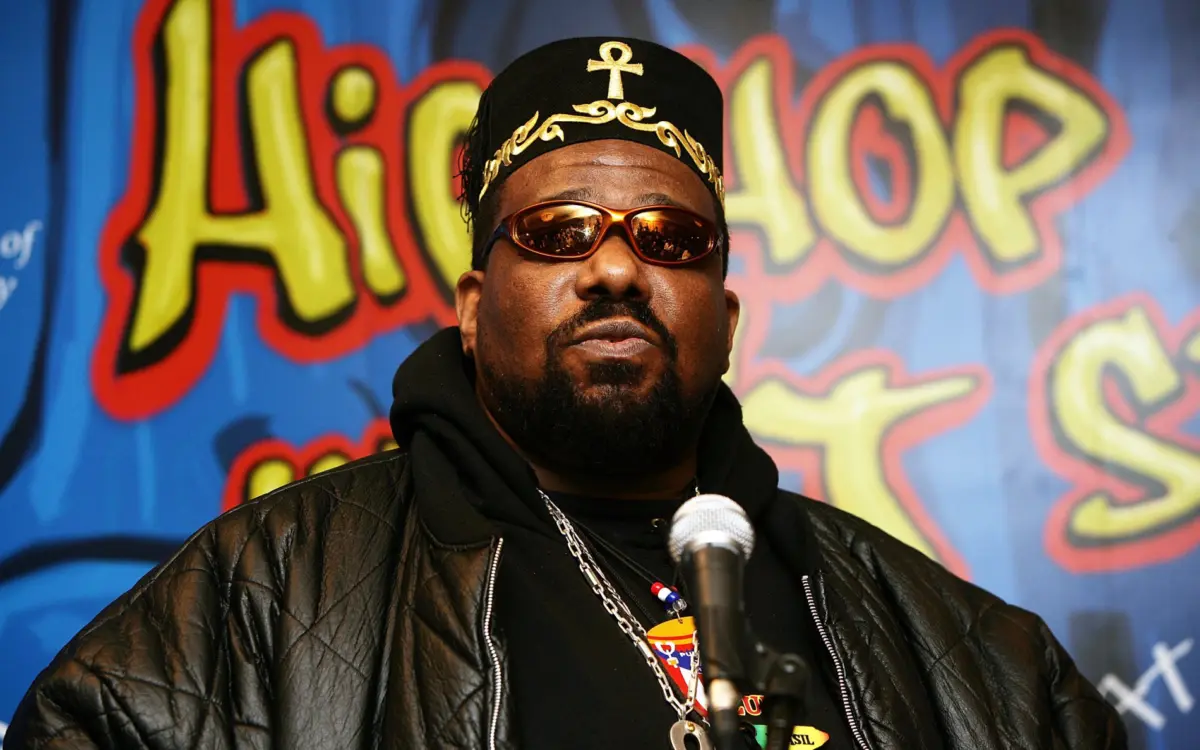
Afrika Bambaataa, born Lance Taylor, a towering figure in the genesis of hip-hop and a visionary artist whose influence reverberated globally, has passed away at the age of 68. The artist died on Thursday, April 9, in Pennsylvania, with his lawyer confirming to the Associated Press that the cause of death was prostate cancer. Bambaataa’s passing marks the end of an era for a culture he not only helped define but actively shaped from its nascent stages in the urban landscape of the Bronx.
A Foundation Built on Peace, Unity, Love, and Having Fun
The impact of Afrika Bambaataa on the cultural landscape cannot be overstated. He is widely recognized, alongside contemporaries like DJ Kool Herc and Grandmaster Flash, as one of the founding fathers of hip-hop. Bambaataa’s contributions extended beyond his prowess as a DJ and producer; he was instrumental in codifying the four foundational elements of hip-hop culture: DJing, graffiti art, breakdancing, and MCing. His enduring mantra, encapsulated in the principles of "peace, unity, love, and having fun," served as a guiding philosophy for a burgeoning movement that offered a positive outlet and a sense of community for marginalized youth.
Kurtis Blow, an artist who emerged from the same era and now serves as executive director of the Hip Hop Alliance, reflected on Bambaataa’s passing. "Today, we acknowledge the transition of a foundational architect of Hip Hop culture, Afrika Bambaataa," Blow stated in a prepared remark. "He helped shape the early identity of Hip Hop as a global movement rooted in peace, unity, love, and having fun. His vision transformed the Bronx into the birthplace of a culture that now reaches every corner of the world."
Blow’s statement also acknowledged the inherent complexities of Bambaataa’s legacy. "At the same time, we recognize that his legacy is complex and has been the subject of serious conversations within our community," he added, alluding to the serious allegations of sexual abuse that have cast a shadow over his later years.
From Street Gang to Cultural Innovator: The Rise of Afrika Bambaataa
Born Lance Taylor in the South Bronx, New York, Bambaataa’s early life was intertwined with the social and economic realities of a borough grappling with urban decay and social unrest. He initially rose to prominence as a member of the Black Spades, a powerful street gang. However, Bambaataa sought to channel the energy and organization of these groups towards a more constructive and creative endeavor.
In the 1970s, Bambaataa founded the Universal Zulu Nation, an art collective and community organization that became a cornerstone of hip-hop’s development. The Zulu Nation provided a platform for artists, dancers, and DJs, fostering a sense of pride and self-expression. Bambaataa’s innovative approach to DJing, characterized by his eclectic musical selections and his ability to seamlessly blend diverse genres, laid the groundwork for the sonic tapestry of hip-hop. He was among the first to incorporate electronic sounds and breakbeats, pushing the boundaries of what was then considered popular music.
"Planet Rock": A Futuristic Anthem
Afrika Bambaataa’s most iconic contribution to music remains the 1982 electro-funk anthem "Planet Rock," a collaboration with the Soulsonic Force. The track, characterized by its futuristic soundscape and its pioneering use of samples from German electronic music pioneers Kraftwerk, was a commercial and critical success. It reached the top 50 of the Billboard Hot 100 chart, a significant achievement for an independent hip-hop release at the time.
"Planet Rock" became an instant classic, influencing a generation of musicians and producers. Its innovative sound inspired a wave of electro-rap and dance-pop records, solidifying hip-hop’s growing influence on the global music industry. The track’s enduring appeal is a testament to Bambaataa’s foresight and his ability to create music that transcended temporal and genre boundaries. The song’s impact can still be heard in contemporary electronic dance music and hip-hop, underscoring its lasting significance.
A Complex Legacy: Addressing the Shadows
Despite his monumental contributions to hip-hop culture, Afrika Bambaataa’s later years were overshadowed by disturbing allegations of sexual abuse. These accusations brought a complex and somber dimension to his otherwise celebrated legacy, prompting difficult conversations within the community he helped create.
The first prominent accusation emerged in 2016 when a man named Ronald Savage publicly accused Bambaataa of sexually abusing him in the 1980s during his teenage years. Bambaataa consistently denied these allegations. However, the initial accusation opened the door for other individuals to come forward with similar claims.
In 2024, in a development that further complicated the narrative, Ronald Savage appeared to walk back some of his earlier claims. In an interview with AllHipHop, Savage stated, "Bambaataa is not a pedophile and, in my eyes, he was doing something that was consensual with someone that he thought was of age." This statement, while offering a different perspective from Savage, did not erase the experiences of other alleged victims.
Following Savage’s initial accusations, several other men came forward, alleging that Bambaataa had sexually abused them during their adolescence. These allegations painted a starkly different picture of the hip-hop pioneer, suggesting a pattern of predatory behavior.
The most significant legal challenge came in 2021 when an anonymous man filed a lawsuit against Bambaataa. The lawsuit alleged that Bambaataa had sexually abused and trafficked him for a period of four years, beginning in 1991. At the time of the alleged abuse, the plaintiff was 12 years old, while Bambaataa was in his 30s.
Bambaataa did not formally respond to this lawsuit. As a result, he lost the civil case in 2025 after failing to appear in court. A default judgment was awarded to the alleged victim, acknowledging the legal ramifications of the accusations.
The Broader Impact and Implications
Afrika Bambaataa’s passing, occurring amidst these unresolved allegations, compels a deeper examination of his multifaceted legacy. His contributions to hip-hop are undeniable, having laid the groundwork for a global phenomenon that has shaped music, fashion, art, and social discourse for decades. The economic impact of hip-hop alone is staggering, with the genre consistently ranking among the most commercially successful in the music industry. Studies have shown hip-hop artists generating billions in revenue annually through record sales, touring, merchandise, and endorsements. Bambaataa’s role in its genesis is thus intrinsically linked to this massive economic and cultural force.
However, the allegations of abuse cannot be ignored. They highlight the crucial importance of accountability and the need for the cultural landscape to grapple with the problematic actions of its idols. The conversations sparked by these accusations within the hip-hop community underscore a growing awareness of victim advocacy and a demand for safe spaces and environments. This ongoing dialogue is vital for the continued evolution of the culture, ensuring that its core values of respect and community are upheld.
The passing of Afrika Bambaataa serves as a poignant reminder of the complexities inherent in celebrating cultural icons. His legacy will undoubtedly continue to be debated, dissected, and understood through the lens of both his groundbreaking achievements and the serious accusations that marked his later life. As the hip-hop community mourns the loss of a pioneer, it also faces the responsibility of acknowledging the full scope of his history and ensuring that the lessons learned contribute to a more just and equitable future for all. The music, the culture, and the ongoing discourse are his enduring, albeit complicated, inheritance.
