

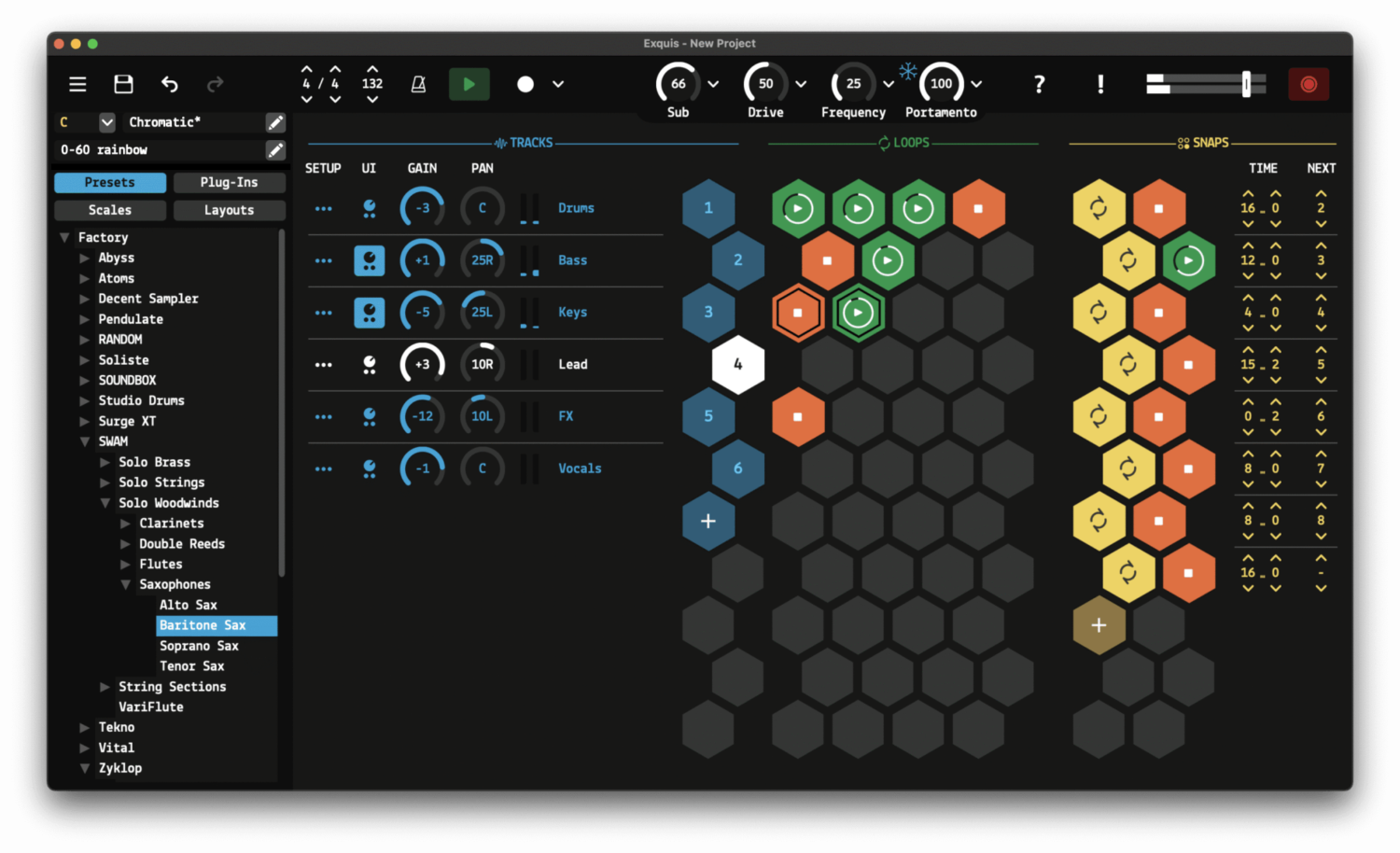
The evolution of digital music performance has reached a new milestone with the introduction of the Exquis+, a refined and updated version of the acclaimed expressive MIDI controller from Intuitive Instruments. Designed to bridge the gap between traditional instrumental tactility and modern digital synthesis, the Exquis+ represents a significant hardware iteration that focuses on physical stability, playing precision, and the deep integration of MIDI Polyphonic Expression (MPE). While the device retains the core electronic architecture of its predecessor, the mechanical enhancements signal a commitment to professional-grade build quality and long-term durability in the competitive landscape of boutique music hardware.
The Evolution of Expressive Hardware: From Exquis to Exquis+
The release of the Exquis+ follows a period of intensive feedback from the global community of electronic musicians and synthesis enthusiasts. The original Exquis was lauded for its innovative approach to isomorphic layouts, yet professional users identified areas where the physical interface could be further optimized for high-intensity performance. The "Plus" designation reflects a comprehensive overhaul of the instrument’s exterior and tactile interface.
The most notable change in the Exquis+ is the revised enclosure. Constructed to provide a more rigid and weighted foundation, the new chassis minimizes unwanted vibrations and ensures the controller remains stationary during vigorous performances. Accompanying this structural update is a redesigned silicone key mat. This mat has been engineered with a specific durometer—a measure of material hardness—to provide a more consistent resistance across the entire surface. This improvement directly addresses the precision required for MPE performance, where subtle variations in pressure and movement translate into dramatic shifts in sound.
Despite these physical changes, Intuitive Instruments has maintained internal continuity. The Exquis+ utilizes the same high-performance circuit board as the original model. This decision ensures that the new hardware is fully compatible with the existing software ecosystem, including the dedicated Exquis application, DAW (Digital Audio Workstation) extensions, and various mapping scripts. By maintaining this internal standard, the company protects the investment of early adopters while offering a more refined entry point for new users.
Technical Specifications and the MPE Standard
At the heart of the Exquis+ is its support for MIDI Polyphonic Expression (MPE). Traditional MIDI controllers are often limited by "channel-wide" messages; for example, if a performer applies pitch bend, it affects every note currently being held. MPE revolutionizes this by assigning each individual note its own MIDI channel, allowing for discrete control over three dimensions of expression per finger:
- Pitch Bend (X-axis): Horizontal movement across the key allows for fluid glides and microtonal adjustments.
- Timbre/CC74 (Y-axis): Vertical movement on the key typically controls filter cutoff, resonance, or other harmonic parameters.
- Pressure/Aftertouch (Z-axis): The depth of the press controls volume, modulation depth, or effects swells.
The Exquis+ keys are also velocity-sensitive, capturing the initial impact (note-on) and the release speed (note-off). For musicians working with legacy hardware or software that does not support the full MPE specification, the device includes a Polyphonic Aftertouch mode. This ensures that the controller remains a versatile tool across different studio environments, from vintage hardware setups to the latest software synthesizers like Xfer Records Serum, Arturia Pigments, and Ableton’s Drift.
Isomorphic Layouts: Redefining Music Theory on the Grid
One of the most distinctive features of the Exquis+ is its hexagonal isomorphic layout. Unlike a standard piano keyboard, where the physical distance between intervals changes depending on the starting note, an isomorphic layout maintains consistent geometric shapes for chords and scales regardless of the key.
In the default Exquis configuration, semitones are arranged horizontally, while thirds are arranged vertically. This means that a major triad always forms the same shape on the grid, whether the performer is playing in C Major, F# Major, or E Minor. This system significantly flattens the learning curve for complex music theory and allows performers to transpose music instantly by simply shifting their hand position without relearning fingerings.
Furthermore, the Exquis+ is not locked into a single layout. Through its companion software, users can switch between several historical and experimental configurations:
- Harmonic Table: Optimized for tonal harmony and chordal relationships.
- Jankó: A layout designed to equalize the reach across all keys.
- Accordion: Familiar to traditional bellows-instrument players.
This flexibility makes the Exquis+ a powerful educational tool and a versatile composition aid for those looking to break out of the "white and black key" paradigm of Western music theory.
A Chronology of Innovation at Intuitive Instruments
To understand the significance of the Exquis+, one must look at the history of its parent company, Intuitive Instruments (formerly known as Dualo). Founded in France, the company first gained international attention with the "Dualo du-touch," an all-in-one instrument and looper that utilized a unique hexagonal keyboard.
The journey toward the Exquis series began with a successful crowdfunding campaign that demonstrated a strong market appetite for affordable, compact, and expressive MIDI controllers. The original Exquis was positioned as a portable powerhouse, but as the user base grew to include professional touring musicians and studio producers, the demand for a "heavy-duty" version became clear.
The development timeline of the Exquis+ highlights the company’s "modular" philosophy:
- 2022: Launch of the original Exquis, focusing on accessibility and software integration.
- 2023: Expansion of the software ecosystem, including dedicated scripts for Bitwig Studio and Ableton Live.
- Late 2024: Introduction of Exquis+, focusing on mechanical refinement and tactile feedback.
This trajectory shows a company that listens to its user base, choosing to iterate on physical ergonomics rather than forcing users to upgrade their internal electronics unnecessarily.
Supporting Data and Market Context
The market for MPE controllers has seen substantial growth over the last five years. Following the pioneering work of companies like ROLI and Keith McMillen Instruments, mainstream manufacturers have begun adopting MPE standards. For instance, Ableton’s Push 3 and the Osmose by Expressive E have brought MPE into the spotlight.
The Exquis+ occupies a unique price-to-performance bracket. At a starting price of €359 (including VAT), it sits between entry-level controllers and high-end boutique instruments.
- Pricing Comparison: While the ROLI Seaboard Block (now discontinued but influential) occupied a similar space, the Exquis+ offers a different tactile experience—swapping "keywaves" for distinct, hexagonal mechanical keys.
- Portability: Weighing significantly less than a full-sized MPE synth, the Exquis+ is designed for mobile setups, measuring approximately the size of a small tablet.
Industry data suggests that the "Maker" movement is also a key demographic for Intuitive Instruments. By providing 3D-printable design files and customizable side trims, the company caters to a segment of the market that values personalization and repairability—a rare stance in an era of "planned obsolescence."
Official Statements and Industry Impact
While formal press conferences are rare for boutique manufacturers, representatives from Intuitive Instruments have emphasized that the Exquis+ is a response to the "maturation" of the MPE market. In communications regarding the launch, the design team noted that "stability is the foundation of expression." They argued that a musician cannot be truly expressive if they are worried about the physical movement of the device or the inconsistent return of a key.
Industry analysts suggest that the Exquis+ could serve as a "gateway" instrument. Because it simplifies music theory through its isomorphic grid, it appeals to hobbyists, while its deep MIDI implementation satisfies the requirements of professional sound designers. The inclusion of replacement parts and customizable options also aligns with growing European regulations regarding the "Right to Repair," positioning Intuitive Instruments as a forward-thinking manufacturer in terms of sustainability.
Broader Implications for Music Production
The introduction of the Exquis+ arrives at a time when the MIDI 2.0 standard is beginning to take hold. MIDI 2.0 promises even higher resolution for velocity and CC data, and controllers like the Exquis+ are perfectly positioned to take advantage of these advancements.
Furthermore, the rise of spatial audio and immersive sound design requires tools that can manipulate sound in three-dimensional space. The three axes of control provided by the Exquis+ allow composers to "place" sounds in a 360-degree field using their fingers, making the process of mixing for Dolby Atmos or VR more intuitive than using a mouse and keyboard.
In conclusion, the Intuitive Instruments Exquis+ is more than a simple hardware refresh; it is a refined tool designed for the next generation of digital performers. By focusing on the tactile relationship between the musician and the machine, and by maintaining a flexible, open-source-friendly approach to hardware, Intuitive Instruments has solidified its place as a key player in the evolution of expressive electronic music. The Exquis+ is currently available via the manufacturer’s website, representing a new chapter in the democratization of high-level musical expression.
