

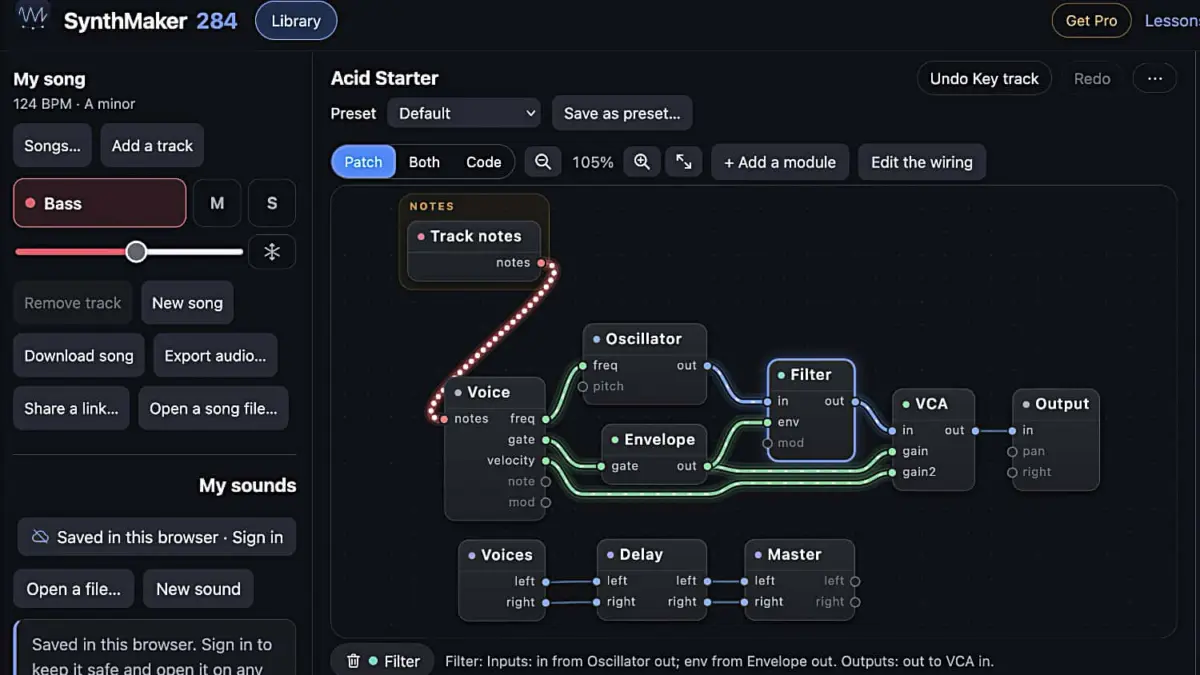
The landscape of digital audio workstation (DAW) technology and modular synthesis has witnessed a significant evolution with the release of the new SynthMaker, a comprehensive platform developed by original creator Jorge Costa. This modern iteration represents a fundamental shift from its predecessor, moving beyond simple visual programming to integrate high-fidelity electronic circuit simulation, digital signal processing (DSP) development, and professional music production tools. By bridging the gap between hardware engineering and software design, the new SynthMaker offers a unified environment where users can build, simulate, and deploy complex musical instruments within a web browser or as a native macOS application.
The platform is built upon a dual-engine architecture that allows for seamless transitions between visual patching and low-level coding. This "glass-box" approach ensures that while beginners can assemble instruments using pre-built modules, advanced developers can delve into the underlying math and physics of sound. The most striking advancement in this version is the inclusion of a component-level circuit simulator, which has been rigorously tested against ngspice, the industry-standard open-source circuit simulator. This allows engineers and hobbyists to design virtual hardware that behaves with the non-linear characteristics of physical components, providing a level of sonic authenticity that traditional digital approximations often struggle to replicate.
Historical Context and the Evolution of SynthMaker
To understand the significance of this release, one must look back at the original SynthMaker, which gained prominence in the early 2000s under Costa’s direction. At that time, it was a Windows-centric tool that empowered a generation of bedroom developers to create VST plugins without needing to master C++. It eventually evolved into FlowStone, a broader engineering tool, but the musical soul of the original software remained a point of nostalgia and utility for the synth-building community.
The decision to rewrite the application from scratch was driven by the changing technological landscape. The shift toward cross-platform compatibility and the burgeoning power of web-based audio engines—specifically the Web Audio API and WebAssembly (WASM)—provided an opportunity to decouple the software from its legacy Windows roots. By targeting the web and macOS, Costa has positioned SynthMaker to meet the needs of a modern, mobile-first and platform-agnostic creative class. This move reflects a broader industry trend where high-performance audio processing is no longer confined to heavy desktop installations, but can be accessed via a URL, democratizing the tools of sound design.
Technical Architecture: Visual Patching Meets Component Simulation
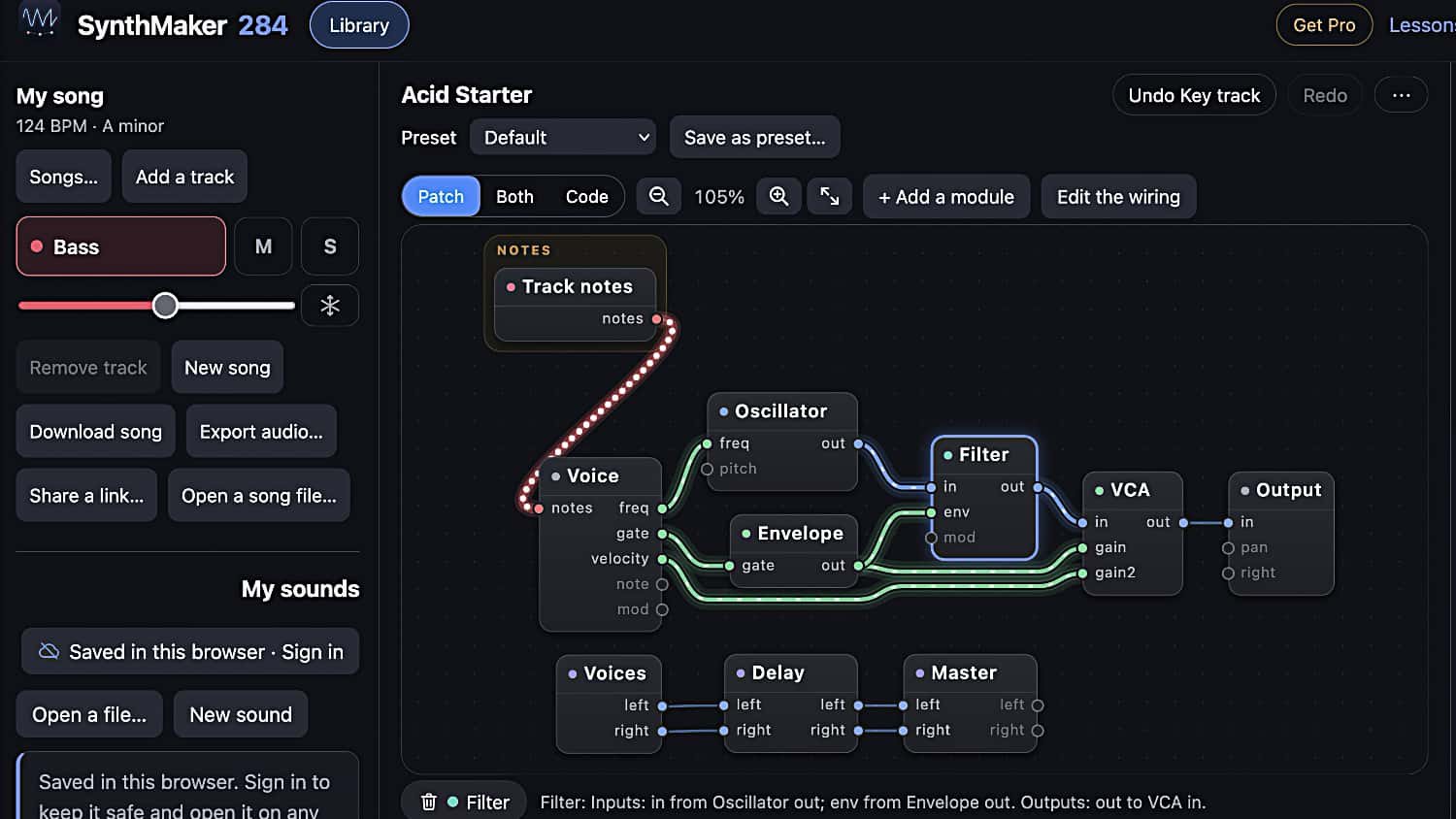
The new SynthMaker operates on a tiered development model. At the highest level is the visual patching interface, familiar to users of platforms like VCV Rack or Reaktor. Here, users connect oscillators, filters, and sequencers using virtual cables. However, SynthMaker distinguishes itself by allowing these modules to be "opened" to reveal their internal circuitry.
The circuit simulation engine is the core innovation of this release. Unlike "black-box" modeling, where a developer attempts to mimic the output of a piece of hardware using digital filters, SynthMaker utilizes nodal analysis to simulate the behavior of individual resistors, capacitors, transistors, and operational amplifiers (op-amps). When a user modifies a value in a schematic—such as changing the resistance in a feedback loop—the software recalculates the entire circuit’s behavior in real time. This allows for the creation of "true" virtual analog synthesis, where the grit, saturation, and thermal-like drifts of real electronic components are mathematically represented.
Furthermore, the synchronization between code and visual representation ensures a fluid workflow. If a developer alters a line of DSP code to change a filter’s cutoff slope, the visual interface updates to reflect that change. Conversely, adjustments made to the visual UI are reflected back into the underlying code structure, providing an educational feedback loop that demystifies the relationship between software logic and hardware behavior.
Educational Initiatives and the "Physics of Synthesis"
Recognizing that the barrier to entry for circuit design is high, Jorge Costa has integrated a robust educational component into the platform. SynthMaker is not merely a production tool; it is designed as a pedagogical environment for the next generation of audio engineers. The platform includes a comprehensive, free circuit course that guides users through the fundamental building blocks of electronic music.
The curriculum covers several critical areas of synthesis:
- Diode Clippers: Understanding how diodes can be used to square off waveforms and add harmonic distortion.
- Wavefolders: Exploring complex timbre generation through the folding of signals back upon themselves.
- Op-Amps and VCAs: Learning the mechanics of signal amplification and voltage-controlled gain, which are the heart of dynamic control in synthesis.
- Transistor Ladder Filters: A deep dive into the classic Moog-style filter design, allowing users to see and hear how transistor matching and resonance feedback create iconic sonic textures.
In addition to these interactive lessons, the software provides a repository of research papers. These documents bridge the gap between academic theory and practical application, offering insights into advanced audio processing techniques and the mathematical foundations of DSP. By providing these resources for free, SynthMaker addresses a significant gap in the market for accessible, high-level engineering education.
Market Position and Industry Implications
The re-entry of SynthMaker into the market places it in direct competition with established giants such as Cycling ’74’s Max/MSP and Native Instruments’ Reaktor. However, SynthMaker’s focus on component-level simulation gives it a unique niche. While Max/MSP excels at high-level algorithmic composition and Reaktor offers a vast library of user-created instruments, SynthMaker focuses on the "micro" level of instrument design.
Industry analysts suggest that this granular approach will appeal particularly to the DIY synthesizer community and hardware manufacturers. For a company designing a new boutique analog filter, SynthMaker serves as a rapid prototyping tool where they can test circuit variations before committing to a physical PCB (Printed Circuit Board) layout.
The pricing strategy also reflects a shift toward consumer-friendly models. By offering a free version that includes MIDI support, guitar input, and introductory lessons, Costa is lowering the entry barrier for students. The "Pro" version, available for a one-time purchase, avoids the "subscription fatigue" that has become a point of contention in the creative software industry. This model ensures that once a developer creates a tool, they own the means of its production without ongoing overhead.
User Experience and Accessibility
From a user experience (UX) perspective, the web-based version of SynthMaker is a technical achievement. Achieving low-latency audio performance within a browser requires sophisticated memory management and the use of multi-threading to ensure that the audio engine remains uninterrupted by the UI thread. The macOS application offers a more integrated experience for power users, allowing for better file management and integration with external hardware.
The interface is designed to be clean and functional, prioritizing the schematic and the code editor. Users can build custom control panels for their creations, designing visuals that match the aesthetic of their instruments. This capability is essential for developers who wish to share or eventually commercialize their modules within the SynthMaker ecosystem.
Future Outlook and Community Impact
The launch of the new SynthMaker is likely to spark a resurgence in the community-driven development of audio plugins. Because the platform allows for easy sharing of modules and songs, it fosters a collaborative environment where users can learn from one another’s designs. The inclusion of "live" research papers and interactive examples means that the platform will likely become a standard tool in university-level music technology programs.
As the platform matures, the potential for expansion is vast. The architecture is theoretically capable of supporting more advanced simulations, such as vacuum tube modeling or complex mechanical simulations of instruments like the Rhodes piano. Moreover, as web technologies continue to advance, the gap between the browser-based experience and the native desktop experience will continue to close, potentially making SynthMaker a primary environment for professional-grade instrument development.
In conclusion, Jorge Costa’s new SynthMaker is more than a simple update; it is a sophisticated reimagining of what audio development software can be. By combining the precision of electronic engineering with the flexibility of modern software coding, it provides a unique and powerful toolkit for the modern sound designer. Whether used for academic study, professional instrument prototyping, or hobbyist exploration, SynthMaker stands as a testament to the enduring appeal of modularity and the power of transparent, "under-the-hood" design. The platform is now available for public use, signaling a new chapter in the democratization of high-end audio engineering.
