

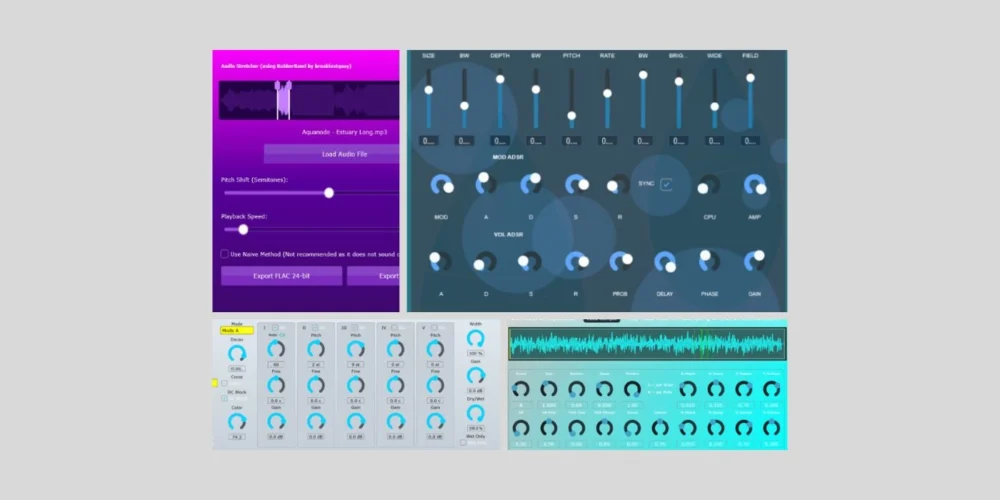
The digital audio production landscape received a significant boost with the recent announcement from independent developer Aqua Node, who has officially released a collection of 20 versatile plugins, offered entirely free and open-source for Windows users. This substantial contribution to the music technology ecosystem marks a notable moment for producers, sound designers, and aspiring developers alike, providing high-quality tools alongside the invaluable opportunity for community expansion and innovation. The plugins are immediately available for download in VST3 format directly from Aqua Node’s official Gumroad page, with each download package notably including the complete JUCE framework source code, inviting the global development community to further enhance, modify, or compile the suite for other operating systems such as macOS and Linux.
The Developer Behind the Code: Aqua Node’s Vision and Influence
Aqua Node, a moniker synonymous with innovative sound design and atmospheric musical compositions, is an artist deeply rooted in the genres of Dub Techno and Intelligent DnB. Their distinctive artistic identity is characterized by a unique fusion of aquatic soundscapes, which are reportedly woven into the very fabric of this new plugin collection. This personal touch provides a compelling narrative behind the technical release, suggesting that the tools are not merely utilitarian but imbued with a specific creative philosophy. The developer’s background as both a sound designer and musician lends credibility to the practical utility and sonic quality of the plugins, as they are presumably crafted from the perspective of someone actively engaged in music creation. This holistic approach ensures that the tools are not only technically sound but also musically inspiring, aligning with the needs of contemporary producers exploring ambient, rhythmic, and experimental sound palettes.
Technical Deep Dive: VST3 and the JUCE Framework
The decision to release the plugins in VST3 format is a critical technical detail that underscores Aqua Node’s commitment to modern audio standards. VST3, or Virtual Studio Technology 3, is the latest iteration of Steinberg’s widely adopted plugin interface, offering several significant advantages over its predecessors. These include improved performance through idle processing, better routing capabilities for side-chaining and multi-channel audio, dynamic I/O support, and precise parameter automation. By embracing VST3, Aqua Node ensures compatibility with the vast majority of modern Digital Audio Workstations (DAWs) and provides users with a stable and efficient platform for their creative endeavors. This choice reflects an understanding of current industry best practices and a forward-thinking approach to plugin development.
Perhaps even more impactful than the VST3 format is the inclusion of the complete source code, developed using the JUCE framework. JUCE (Jules’ Utility Class Extensions) is an open-source cross-platform C++ application framework, widely regarded as the industry standard for developing audio applications and plugins. Its robust architecture allows developers to write code once and deploy it across multiple operating systems, including Windows, macOS, Linux, iOS, and Android, significantly streamlining the development process. For the end-user, the inclusion of JUCE source code is a goldmine. It not only allows for transparency and auditing of the plugin’s functionality but, more importantly, empowers a community of developers to port the plugins to other operating systems or even expand upon the existing functionalities. This fosters a collaborative environment, potentially transforming Aqua Node’s initial release into a living, evolving suite maintained and improved by a global network of contributors. The original article subtly hints at this by mentioning a "JUCE for beginners course," highlighting the educational value and practical application this release offers to those learning plugin development.
The Open-Source Revolution in Audio Production
Aqua Node’s release is a potent example of the growing open-source movement within the audio production sector. Open-source software, characterized by its publicly accessible source code, fosters an environment of transparency, collaboration, and rapid innovation. For users, it means access to free, high-quality tools that are often community-supported and continually updated. For developers, it provides a platform for learning, contributing, and gaining recognition within the community.
The benefits of open-source in audio are manifold. Firstly, it democratizes access to professional-grade tools, lowering the financial barrier for aspiring musicians and producers. Secondly, it promotes greater security and reliability, as the code is subject to scrutiny by a wider community, leading to quicker bug fixes and improvements. Thirdly, it fosters a vibrant ecosystem of innovation, where developers can build upon existing projects, creating entirely new tools or enhancing current ones. Examples of successful open-source audio projects, such as Audacity, Ardour, and various Linux audio utilities, demonstrate the viability and impact of this model. Aqua Node’s contribution, particularly given its size and scope (20 plugins), is poised to become a significant new player in this burgeoning landscape, potentially inspiring more independent developers to adopt a similar approach. This move aligns with a broader industry trend towards community-driven development, moving away from purely proprietary models, especially for utility and experimental tools.
A Diverse Toolkit: Exploring the Aqua Node Plugin Suite
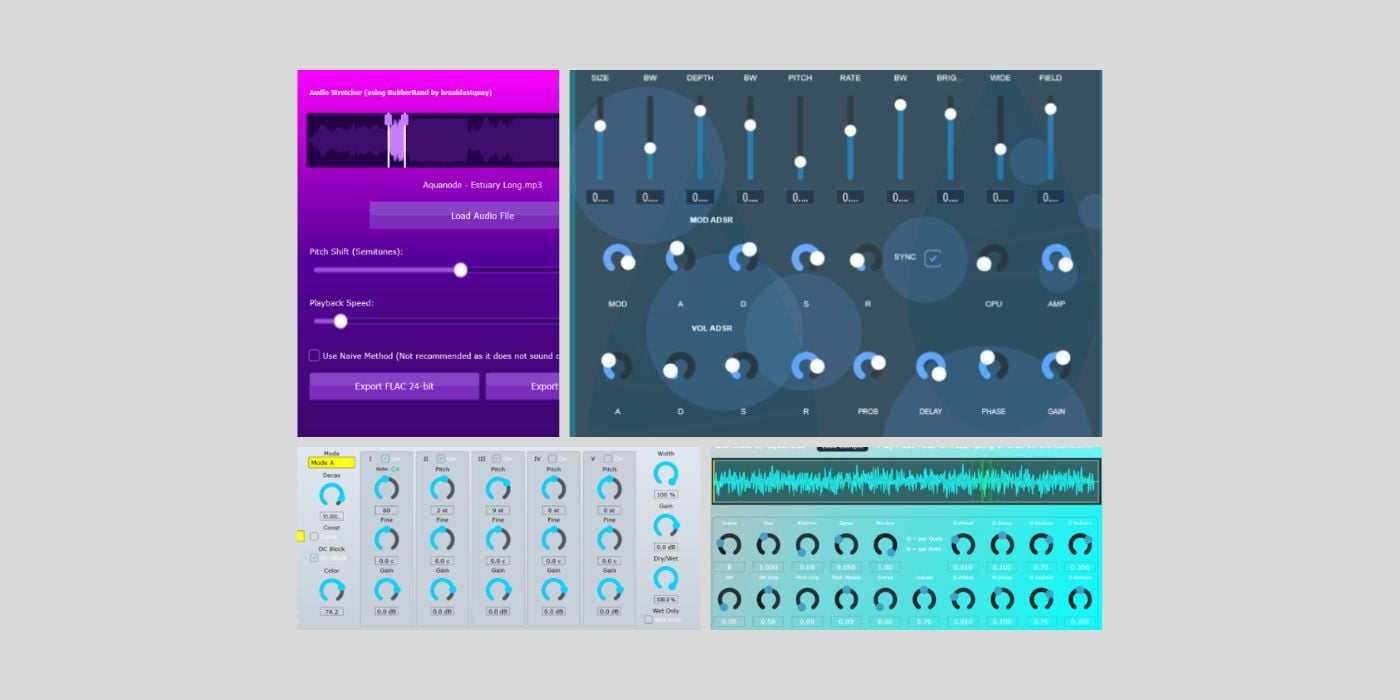
The Aqua Node Plugin Suite is far from a niche collection, offering a wide array of sound design tools that cater to diverse production needs. While a comprehensive list of all 20 plugins was not explicitly detailed in the original brief, the scope mentioned — ranging from a "workstation environment for testing" to dedicated "spring reverb" and "FM synthesis" tools — suggests a versatile offering. A workstation environment plugin could serve as a sandpit for experimenting with sound design concepts or for quickly prototyping ideas without needing to route through a full DAW setup. A spring reverb plugin, often sought after for its distinct metallic and spacious character, would be invaluable for adding vintage texture and depth to sounds. FM synthesis, a powerful and complex synthesis method capable of generating a vast spectrum of timbres from metallic bells to aggressive basses, would offer immense creative potential.
Among the collection, "AliasSynth" was highlighted as particularly intriguing. AliasSynth likely refers to a synthesizer that leverages aliasing techniques for sound generation, potentially creating unique, lo-fi, or intentionally distorted textures that are highly desirable in certain electronic music genres. Such a plugin could provide producers with an accessible way to explore sonic territories often associated with vintage digital hardware or experimental sound design. The breadth of tools indicates that Aqua Node has designed this suite to be a foundational resource, capable of addressing various stages of music production, from initial sound generation and manipulation to spatial processing and mixing. This diversity is crucial for any plugin suite aiming for widespread adoption, as it caters to different creative workflows and technical requirements.
The AI Nexus: A Developer’s Candid Disclosure
A particularly noteworthy aspect of this release is Aqua Node’s transparent disclosure regarding the use of Artificial Intelligence (AI) assistants in the development process. In a comment initially shared on the Rekkerd platform, the developer explicitly stated that while AI assistants were instrumental in coding the plugins, their role was strictly confined to code generation. Crucially, Aqua Node clarified that AI was not employed for generating creative ideas, conducting testing protocols, or carrying out design tasks. Furthermore, the developer unequivocally asserted that none of the plugins or tools within the suite are designed to generate AI music.
This statement is highly significant in the current technological climate, where the role of AI in creative industries is a subject of intense debate and scrutiny. Aqua Node’s proactive stance addresses prevalent concerns about algorithmic creativity, intellectual property, and the potential displacement of human artistry. By clearly delineating the boundaries of AI’s involvement – as a coding aid rather than a creative engine – Aqua Node positions the suite as a product of human ingenuity enhanced by modern tools, rather than a purely AI-driven creation. This distinction is vital for many artists and producers who value human expression and authorship. It also frames AI as a powerful productivity tool for developers, accelerating the often-tedious aspects of coding, thereby freeing up human developers to focus on conceptual design, sonic innovation, and user experience. This disclosure sets a precedent for transparency in a rapidly evolving tech landscape, fostering trust within the user community.
Implications for the Music Production Community
The release of the Aqua Node Plugin Suite carries several profound implications for the broader music production community.
Accessibility and Democratization: By offering 20 high-quality VST3 plugins for free, Aqua Node significantly lowers the barrier to entry for aspiring musicians and bedroom producers. Financial constraints often limit access to professional-grade tools, but free resources like these empower individuals to explore complex sound design and production techniques without substantial investment. This democratization of tools can foster a more diverse and innovative musical landscape.
Educational Opportunities: The inclusion of the JUCE source code transforms this release into an invaluable educational resource. For students and enthusiasts learning audio plugin development, particularly those familiar with the JUCE framework, it offers a tangible, real-world project to dissect, learn from, and potentially contribute to. This hands-on experience complements theoretical learning, providing practical insights into professional plugin architecture and coding practices. The mention of a "JUCE for beginners course" further underscores this educational synergy, offering a practical application for newly acquired skills.
The Call for Cross-Platform Ports: The open-source nature and JUCE foundation immediately sparked calls from the community for macOS and Linux versions. This illustrates the strong desire for cross-platform compatibility within the audio world. Should community developers take up the mantle to compile these versions, it would not only expand the reach of Aqua Node’s work but also serve as a testament to the power of open-source collaboration. This community-driven expansion could lead to a truly platform-agnostic suite, benefiting a wider segment of the global producer population.
Validation of Independent Development: Aqua Node’s success in developing and releasing such a substantial suite as an independent entity further validates the growing strength and capability of solo and small-team developers in the audio software market. It demonstrates that with the right tools (like JUCE) and a clear vision, independent creators can compete with larger, established companies, often bringing fresh perspectives and innovative solutions to the table.
The Future Landscape of Audio Software
Aqua Node’s release serves as a compelling indicator of several emerging trends shaping the future of audio software development. The hybrid development model, where human creativity is augmented by AI-driven coding assistance, is likely to become increasingly prevalent. This approach promises faster development cycles and more efficient bug resolution, allowing human developers to focus on the higher-level design and creative aspects of software.
Furthermore, the emphasis on open-source and community-driven innovation is set to gain more traction. As developers seek more collaborative and transparent models, open-source frameworks and projects will likely attract greater contributions, leading to a richer and more diverse ecosystem of audio tools. This shift could redefine how software is maintained, updated, and evolved, with collective intelligence playing a more significant role than proprietary secrecy.
Finally, the ongoing demand for cross-platform compatibility highlights the need for flexible and adaptable development frameworks. JUCE, as demonstrated by Aqua Node, will continue to be a cornerstone for developers aiming to serve a multi-OS user base. The future of audio software will likely be characterized by tools that are not only powerful and intuitive but also accessible across various platforms, fostering a more inclusive and interconnected global production environment.
In conclusion, Aqua Node’s release of 20 free, open-source VST3 plugins for Windows is more than just a software launch; it is a statement. It champions the principles of accessibility, community collaboration, and transparent development in the age of AI. By providing a robust set of tools alongside the complete source code, Aqua Node has not only enriched the current audio production toolkit but has also laid down a significant marker for the future direction of independent and open-source audio software development, inviting a global community to participate in its ongoing evolution.
