

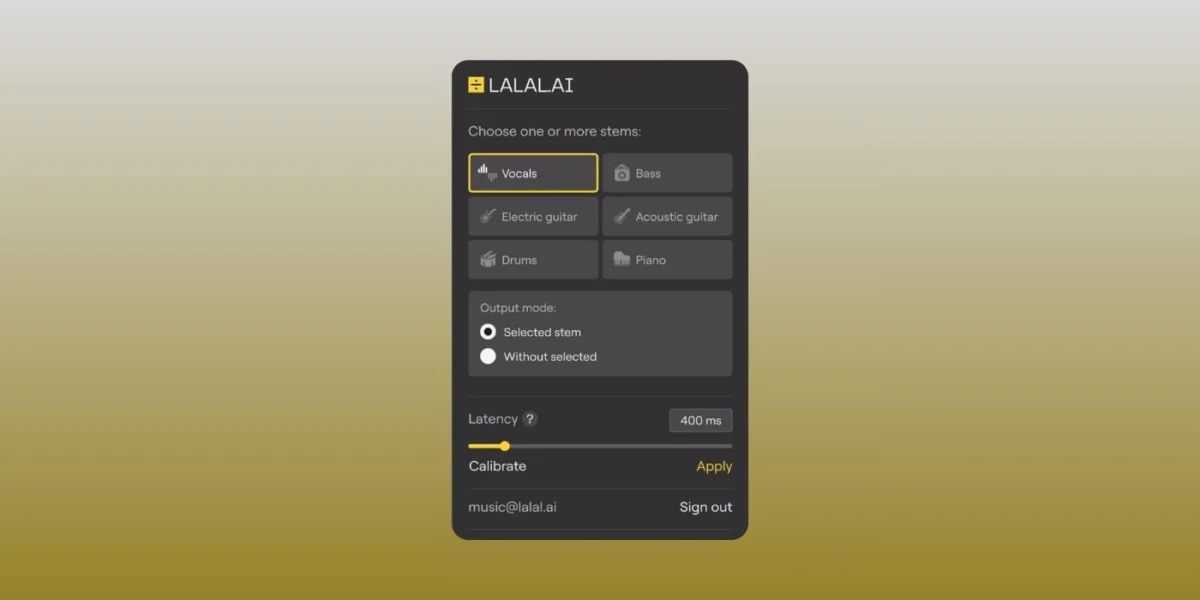
LALAL.AI, a prominent innovator in artificial intelligence-powered audio solutions, has launched a significantly updated version of its AI stem separation plugin for Digital Audio Workstations (DAWs), introducing robust local six-stem processing capabilities directly within a user’s creative session. This strategic enhancement marks a pivotal shift in the accessibility and security of advanced audio manipulation, allowing producers, musicians, and sound engineers to perform complex stem extractions without the need for cloud-based data transfers. The core innovation lies in the plugin’s ability to execute high-fidelity audio separation entirely on the user’s machine, thereby circumventing the conventional "upload-wait-download-import" cycle that has long characterized cloud-dependent AI audio services.
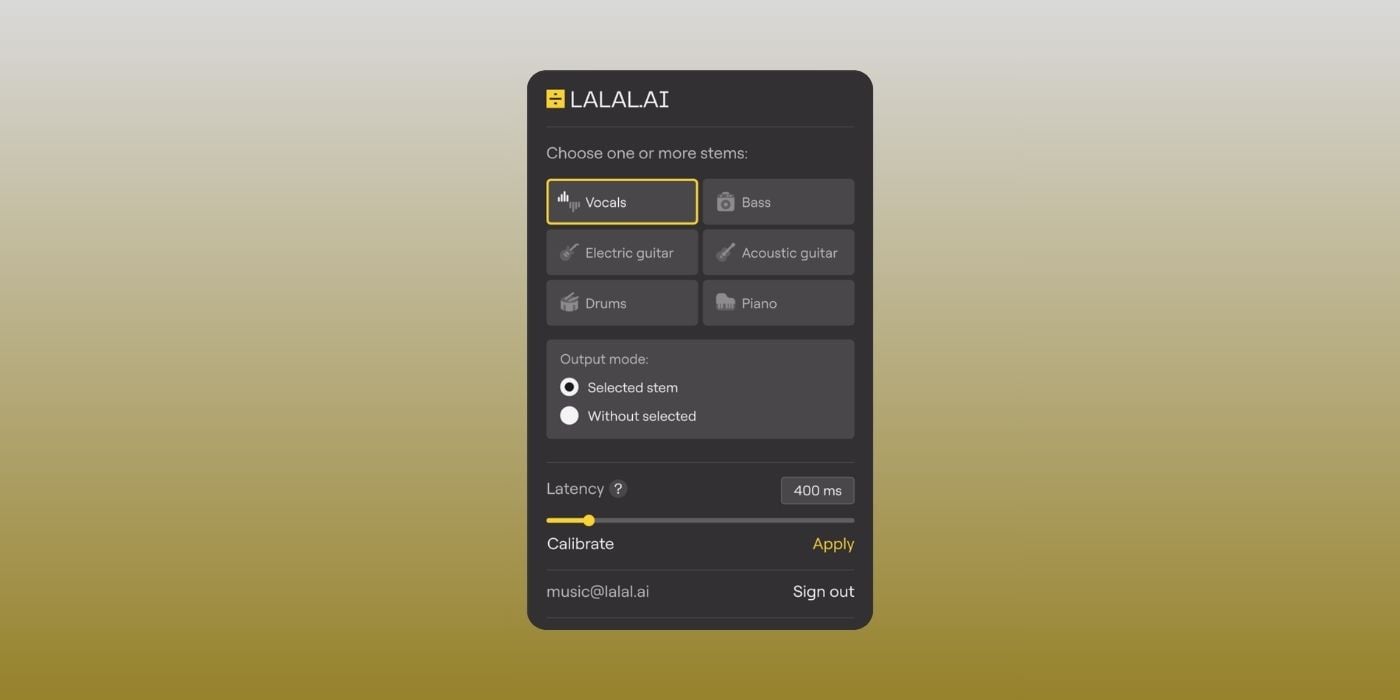
The primary objective of this new iteration is to seamlessly integrate sophisticated AI functionalities into the existing workflow of audio professionals. Users can now load an audio track within their preferred DAW, instantiate the LALAL.AI plugin, select the desired stem for extraction or removal, and witness the immediate generation of separated audio components. This on-device processing paradigm not only streamlines the production pipeline but also addresses critical concerns pertaining to data privacy and intellectual property security, particularly when dealing with sensitive, unreleased, or client-confidential material.
Immediate Impact of Local Processing on Audio Production
The introduction of local processing within the DAW environment represents a significant leap forward for creative professionals. Historically, AI-driven stem separation, while powerful, often necessitated a cumbersome workflow involving uploading audio files to remote servers, enduring processing times, and subsequently downloading and importing the separated tracks back into the project. This process, while effective for occasional tasks, proved to be a bottleneck for iterative creative work, real-time adjustments, or high-volume production schedules. LALAL.AI’s new plugin eliminates these friction points entirely.
By embedding the processing engine directly into the DAW, LALAL.AI empowers users with unprecedented control and speed. The ability to isolate vocals, drums, bass, acoustic guitar, piano, or electric guitar within seconds, all without disrupting the creative flow, translates into tangible improvements in productivity. For a remix artist, this means instantly grabbing an acapella or instrumental bed. For a musician practicing a new song, it allows for the isolation of specific instruments to study parts. For a producer, it offers a swift method for cleaning up mixes, creating space for new elements, or generating quick arrangement ideas. The convenience of having this powerful tool as an integral part of the DAW, rather than a separate external step, fundamentally reshapes how audio professionals approach tasks that once required significant time investment or specialized expertise.
The Evolution of AI in Audio Production
The integration of AI into audio production is not a new phenomenon, but its capabilities have advanced exponentially in recent years. Early attempts at "stem separation" often relied on rudimentary spectral editing, phase cancellation techniques, or complex EQ filtering, yielding inconsistent and often artifact-ridden results. These methods were labor-intensive and rarely produced clean, usable stems, especially from mixed stereo tracks.
The advent of machine learning and deep learning models has revolutionized this field. AI algorithms, trained on vast datasets of isolated and mixed audio, have learned to identify and differentiate the unique sonic characteristics of various instruments and vocals. This allows them to "unmix" a stereo file into its constituent components with remarkable accuracy. LALAL.AI, having established itself as a leader in this domain through its web-based platform, has been at the forefront of this technological wave. Its progression from cloud-based services to a robust local plugin signifies a maturation of AI audio technology, moving from experimental utility to an indispensable professional tool.
The "problem" that AI stem separation solves extends beyond mere convenience. It democratizes access to elements that were once only available through multi-track recordings or expensive studio sessions. For DJs, it opens up new avenues for live mashups and improvisational performances. For sound designers, it provides a means to extract specific sonic textures from complex soundscapes. For educators, it offers an invaluable resource for teaching music theory and instrumental analysis. The ability to quickly and cleanly isolate parts of an existing track unlocks a universe of creative possibilities that were previously impractical or impossible.
Unpacking LALAL.AI’s Core Technology: The Lyra Model
At the heart of LALAL.AI’s updated plugin is its proprietary "Lyra" model. Unlike its flagship "Andromeda" cloud model, which prioritizes maximum separation quality through extensive computational power in the cloud, Lyra has been specifically engineered and optimized for efficient local deployment. This means it is designed to run effectively on consumer-grade and professional computer hardware, striking an optimal balance between performance, speed, and quality.
A key technical differentiator of the Lyra model is its support for GPU (Graphics Processing Unit) and NPU (Neural Processing Unit) acceleration. Modern computer processors, particularly those designed for gaming, graphic design, or AI workloads, often include dedicated hardware cores optimized for parallel processing tasks. GPUs excel at handling the massive number of computations required by deep learning models, drastically speeding up processing times compared to traditional CPU-only operations. NPUs, a more recent development found in some newer CPUs and dedicated AI accelerators, are even more specialized for neural network operations, offering further efficiency gains. For users with compatible systems, this acceleration translates into near-instantaneous stem separation, reducing processing times from minutes to mere seconds, depending on the track length and system specifications.
The plugin’s capability to separate six distinct stems – vocals, instrumentals, drums, bass, acoustic guitar, piano, and electric guitar – covers a comprehensive range of common musical elements. This multi-faceted separation is critical for various production tasks:
- Vocals/Instrumentals: Fundamental for creating acapellas, karaoke tracks, or instrumental versions for remixes.
- Drums: Essential for replacing drum tracks, reinforcing rhythm, or sampling individual drum hits.
- Bass: Crucial for re-grooving a track, isolating basslines for transcription, or creating custom bass patches.
- Acoustic Guitar/Piano/Electric Guitar: Allows for focused remixing, re-harmonization, or practicing specific instrumental parts.
Compared to older, non-AI methods, the Lyra model’s approach offers superior isolation, fewer artifacts, and a much cleaner separation, even from complex and densely mixed audio. While stem separation is "never magic" and results will always depend on the quality and complexity of the source material, the AI-driven Lyra model significantly elevates the achievable quality, making previously unusable separations viable for professional applications.
Enhancing Creative Freedom and Efficiency
The operational shift to local processing profoundly impacts creative workflows across the music industry. For remix artists and producers, the plugin eliminates the inherent friction of exporting, uploading, processing, and re-importing. An idea for a vocal chop or an instrumental loop can be realized almost instantly, fostering a more fluid and experimental creative process. This immediacy encourages more iterations and reduces the likelihood of creative ideas being lost due to cumbersome technical barriers.
Musicians and educators benefit immensely from the ability to isolate specific instrument parts. A guitarist can practice alongside an isolated bass track, a vocalist can perform with an instrumental version, or a student can analyze the intricacies of a piano accompaniment. This turns virtually any song into a customizable learning tool, accelerating skill development and musical understanding.
DJs and live performers gain the power to create custom edits, mashups, and acapellas on the fly, without needing an internet connection. This real-time capability expands the scope of live performance and improvisation, offering new avenues for audience engagement.
Even for sound designers and audio engineers in post-production, the plugin offers quick solutions for cleaning up audio, isolating dialogue from noisy backgrounds (by separating other elements), or extracting specific sound effects from a mixed track. The removal of artificial limits on track count or file length for Pro subscribers further reinforces this efficiency, allowing for the processing of full-length songs or extensive sessions without concerns over cloud credits or usage quotas.
Prioritizing Privacy and Data Security
In an era where data privacy is paramount, especially for creative professionals dealing with intellectual property, the local processing feature of LALAL.AI’s plugin is a significant advantage. The music industry, in particular, operates on a foundation of trust and confidentiality, with unreleased tracks, demos, and client-specific material requiring stringent security protocols. Cloud-based processing, while convenient for some applications, inherently involves transferring potentially sensitive audio files to external servers, raising concerns about data breaches, unauthorized access, or accidental leakage.
LALAL.AI’s commitment to local processing directly addresses these concerns. By ensuring that audio files never leave the user’s computer, the plugin offers a secure environment for working with proprietary content. This feature is not merely a convenience; it is a critical security measure that aligns with industry best practices for handling sensitive creative assets. The plugin operates locally after a one-time activation, with only occasional subscription checks communicated over the network, ensuring that the actual audio content remains entirely within the user’s control. This level of privacy is a compelling selling point for professional studios, artists, and labels who cannot afford to compromise the confidentiality of their work.
LALAL.AI’s Broader Ecosystem and Strategic Vision
The release of this advanced DAW plugin is not an isolated event but rather a strategic extension of LALAL.AI’s broader ecosystem of AI audio tools. The company is well-established for its web-based platform, which offers a wider array of functionalities including vocal and instrumental splitting, voice cleaning, echo and reverb removal, voice changing, voice cloning, and lead/back vocal separation. The VST plugin, while focused specifically on stem separation, brings a core competency of the platform directly into the professional audio production environment.
This move also aligns with a recent development where LALAL.AI added local processing capabilities to its standalone desktop application. Users of the desktop app can now choose between the faster, privacy-focused local processing using the Lyra model and the higher-quality, cloud-based Andromeda model. This dual-model strategy demonstrates LALAL.AI’s understanding that different users have different priorities: some value speed and privacy above all else, while others may prioritize the absolute highest separation quality for critical tasks, even if it means using cloud resources. By offering both options, LALAL.AI caters to a diverse user base, solidifying its position as a versatile and user-centric AI audio solution provider. This strategic flexibility positions LALAL.AI to meet the evolving demands of the audio production landscape, where on-device AI is increasingly becoming a desired feature.
Market Dynamics and Competitive Landscape
The market for AI audio tools is rapidly expanding, with numerous companies vying for prominence. This competitive landscape includes both established software developers integrating AI features and specialized AI-first companies. LALAL.AI differentiates itself significantly through its strong emphasis on local processing. While many competitors offer cloud-based stem separation, the number of solutions providing robust, high-quality, on-device processing within a DAW is considerably smaller. This distinction is crucial for attracting professionals who prioritize workflow efficiency, offline capabilities, and data security.
The trend towards on-device AI is gaining momentum across various industries, driven by advancements in hardware, improvements in AI model efficiency, and increasing concerns about data sovereignty. LALAL.AI’s plugin is well-positioned to capitalize on this trend within the audio sector. By offering a solution that minimizes reliance on internet connectivity and external servers, the company addresses a key market demand, particularly for users in remote locations, those with unreliable internet access, or those working under strict data security mandates. This strategic move could establish LALAL.AI as a preferred provider for professionals seeking both cutting-edge AI capabilities and uncompromising operational independence.
Accessibility, Pricing, and Compatibility
The LALAL.AI VST plugin is exclusively available to Pro subscribers, indicating a clear targeting of professional and semi-professional users. The pricing structure is tiered: the Pro Monthly plan costs €17.99 per month, while the Pro Yearly plan is priced at €162 per year, which breaks down to an effective rate of €13.5 per month when billed annually. This subscription model aligns with many professional software offerings in the audio industry, providing ongoing access to updates and support.
The absence of a free demo or trial version, as noted on the product page, might present a barrier for some potential users who prefer to test software thoroughly before committing to a subscription. However, given LALAL.AI’s established reputation for quality via its web platform, and the specific focus on professional workflows where efficiency and security are paid priorities, the company may be banking on its brand recognition and the value proposition of local processing to drive adoption.
In terms of technical compatibility, the plugin is broadly accessible, supporting the VST3 format for Windows, macOS, and Linux operating systems. This cross-platform support ensures a wide reach across the diverse hardware ecosystems used by audio professionals. Additionally, the company has indicated that AU (Audio Unit) support is currently in beta, which will further expand compatibility for users primarily on macOS, particularly those utilizing Apple’s Logic Pro. LALAL.AI has confirmed that the plugin functions with any VST3-compatible DAW and has undergone rigorous testing with popular platforms such as Ableton Live, Reaper, and VST3-enabled versions of Audacity. This extensive compatibility ensures that a vast majority of audio producers can integrate the LALAL.AI plugin into their existing production environments without significant workflow disruption.
Future Outlook and Industry Implications
The release of LALAL.AI’s local processing plugin signifies a crucial evolutionary step for AI in audio production. It marks a clear trend towards more integrated, efficient, and secure AI tools becoming standard components of professional DAWs. This development is likely to have long-term implications for how audio professionals approach various tasks, from initial creative ideation to final mixing and mastering.
The continuous advancement of AI models, coupled with increasing hardware capabilities (especially in GPU and NPU technology), suggests that on-device AI processing will only become more powerful and ubiquitous. This could lead to further AI-driven features being embedded directly into DAWs, potentially including real-time mastering assistance, intelligent mixing suggestions, or even generative music capabilities that operate without cloud dependency.
For the music industry, this means an acceleration of creative workflows, a lowering of technical barriers for complex audio manipulation, and enhanced data security for intellectual property. As AI tools become more refined and integrated, they will continue to empower artists, producers, and engineers to push the boundaries of creativity and efficiency, fundamentally reshaping the landscape of modern audio production.
Concluding Remarks
LALAL.AI’s latest DAW plugin, with its groundbreaking local six-stem processing powered by the Lyra AI model, represents a significant advancement in audio technology. By bringing advanced AI capabilities directly into the user’s production environment, the company has addressed critical industry demands for speed, privacy, and seamless workflow integration. This development not only enhances the daily tasks of audio professionals but also underscores the growing importance of on-device AI in the future of creative industries.
