

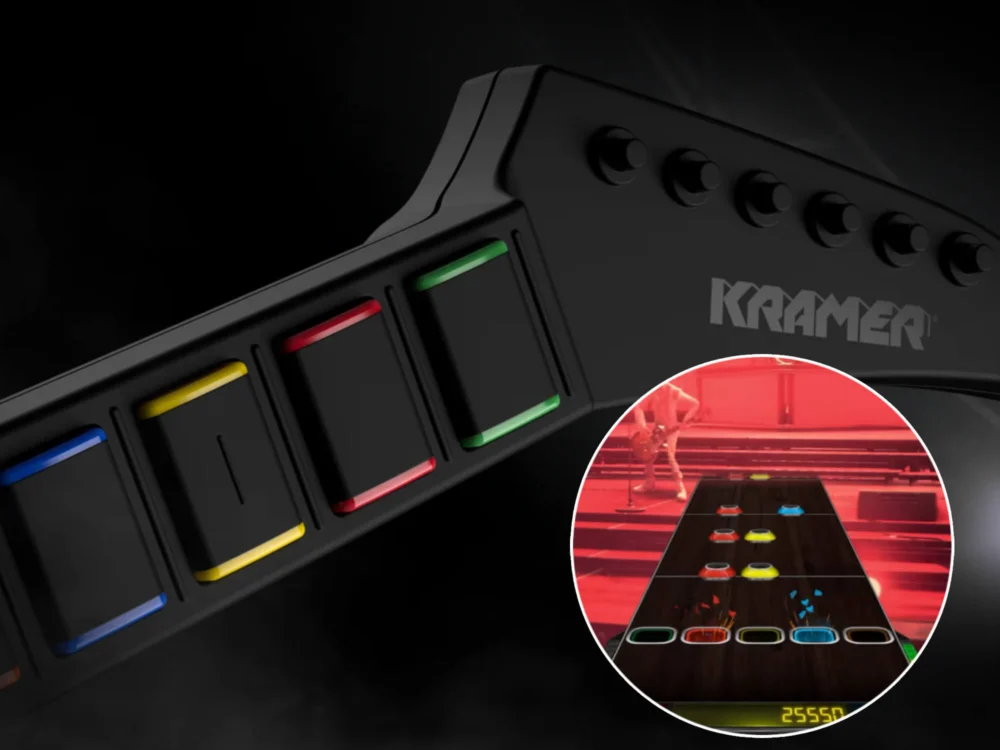
The architects behind the groundbreaking Guitar Hero franchise, RedOctane, are making a highly anticipated comeback with Stage Tour, a new rhythm-action game poised to reignite the passion for plastic instrument gaming. This ambitious title aims to blend the cherished nostalgia of the genre’s golden age with innovative modern gaming features, promising an evolving platform built by the original developers who first brought five-fret note highways to life. For legions of fans who meticulously memorized riffs, air-guitared in their bedrooms, and pursued perfect streaks on their beloved plastic axes, Stage Tour offers a direct teleportation back to those glory days, reimagined for a contemporary audience.
The Genesis of a Phenomenon: RedOctane’s Legacy in Rhythm Gaming
RedOctane’s return is particularly significant given their pivotal role in defining the rhythm game genre. Founded in 1999, RedOctane initially focused on arcade dance pads and accessories before making an indelible mark on home console gaming. In 2005, they partnered with developer Harmonix to release Guitar Hero, a game that transformed the music and gaming landscape. Its innovative gameplay, which required players to press colored fret buttons in sync with notes scrolling on screen while strumming a plastic guitar controller, captivated millions. Guitar Hero wasn’t just a game; it was a cultural phenomenon, inspiring countless living room jam sessions, rock star fantasies, and even driving sales of real guitars. The game’s success paved the way for numerous sequels, spin-offs, and a direct competitor in Rock Band, expanding the plastic instrument experience to include drums, bass, and vocals, effectively creating virtual bands.
However, the genre’s meteoric rise was followed by an equally dramatic decline. Market saturation, rising music licensing costs, and a lack of significant innovation eventually led to waning interest and the discontinuation of many series. RedOctane itself, acquired by Activision in 2006, saw its brand eventually fade as Guitar Hero development shifted and the franchise went dormant for years. The announcement of Stage Tour marks not just a new game, but the re-emergence of a foundational studio aiming to reclaim its mantle and redefine the genre for a new generation. This historical context underscores the high expectations and profound sense of anticipation surrounding RedOctane’s latest endeavor.
Stage Tour: Bridging Nostalgia with Modern Innovation
At its core, Stage Tour is designed as a "love letter to rhythm gaming," a sentiment articulated by RedOctane boss Simon Ebejer. He emphasizes the dual objective: to create an experience that feels "familiar and authentic" to veterans while simultaneously introducing elements that are "fresh" and elevate the genre. This balance is crucial for appealing to both the nostalgic core audience and potential new players unfamiliar with the heyday of plastic instruments.
The game promises to capture "all the chaos, joy, and pure fun" that defined its predecessors. Players can expect the familiar five-fret note highway gameplay for guitars and bass, alongside comprehensive support for a full-band setup, including drums and vocals. Beyond the traditional plastic instruments, Stage Tour is embracing modern accessibility by supporting a wide array of input methods: keyboard, mouse, and standard controllers. This flexibility is a strategic move, acknowledging that not all players will have access to or wish to invest in dedicated peripherals, thus lowering the barrier to entry and broadening the potential player base.
For those who crave the authentic plastic instrument experience, RedOctane is delivering. The game will launch alongside a brand-new Kramer-inspired guitar controller, a drum kit, and wired or wireless microphones. This nod to real-world instrument brands extends to in-game content, with Gibson-branded guitars featured prominently, a clear homage to the original Guitar Hero series which famously featured Gibson models. This commitment to both hardware and in-game brand authenticity reinforces RedOctane’s dedication to recreating the magic of the genre’s peak.
Ebejer’s vision for Stage Tour extends beyond simply replicating past successes. He states, "With new instruments and deep charting systems, we’re raising the bar on what we believe a rhythm game can be, while also catering to those wishing to simply enjoy a casual experience and have a good time." This indicates a sophisticated approach to game design, suggesting dynamic charting that adapts not just to difficulty settings but also to the specific controller being used, offering a tailored and optimized experience across different input methods. Such a system could significantly enhance replayability and player engagement, as the same song might feel distinctly different depending on whether it’s played on a guitar controller or a keyboard.
The Live-Service Model: A Paradigm Shift for Rhythm Games
Perhaps the most significant departure from previous rhythm game models is Stage Tour‘s design as a live, evolving platform. Unlike older titles that relied on fixed tracklists and episodic DLC releases, RedOctane envisions a dynamic ecosystem. This live-service approach entails regular in-game events, seasonal content drops, and continuous updates. The studio’s mantra — "Real moments. Real themes. Real updates." — underscores a commitment to fostering an active, engaged community and a continuously fresh gameplay experience.
This model allows RedOctane to "evolve the game alongside the fans who support it. Improve it. Expand it. Keep it alive." The implications of this are far-reaching. For players, it means a steady stream of new content, challenges, and reasons to return to the game, potentially avoiding the content stagnation that plagued earlier rhythm games. For RedOctane, it offers a sustainable business model, moving away from discrete, high-cost product launches towards a continuous revenue stream through battle passes, cosmetic items, and regular song pack additions. This approach is prevalent in many modern online games and could provide the financial stability needed to support ongoing music licensing, which has historically been a major challenge for the genre.
However, the live-service model also presents potential pitfalls. Players may express concerns about monetization strategies, the balance between free and paid content, and the potential for "grind" mechanics. RedOctane will need to carefully manage player expectations and deliver a compelling value proposition to ensure long-term engagement and avoid the perception of predatory practices. The success of this model will largely hinge on the quality and frequency of content updates, the fairness of its monetization, and the studio’s responsiveness to community feedback.
The Crucial Soundtrack: "Absolute Banging Tunes"
No rhythm game can succeed without a compelling soundtrack, and RedOctane is keenly aware of this fundamental truth. The studio teases that players can "expect some absolute banging tunes," a promise that will undoubtedly be scrutinized by fans. The selection of music is paramount, as it directly influences player enjoyment, replayability, and the overall longevity of the game. A diverse and high-quality tracklist is not just a feature; it is the heartbeat of the rhythm game experience.
Historically, music licensing has been one of the most complex and expensive aspects of rhythm game development. Securing rights for popular songs across various artists, labels, and publishers for continuous use in a game, especially for a live-service model, is a monumental undertaking. The costs associated with these licenses were a significant factor in the decline of the genre in the late 2000s, making it difficult for developers to justify the investment against declining sales.
RedOctane’s commitment to a live-service model might offer a more flexible approach to licensing, potentially allowing for shorter-term licenses for seasonal content or event-specific tracks, alongside a core library of evergreen hits. This could enable a broader range of music genres and artists to be featured, catering to diverse musical tastes. The promise of "deep charting systems" also implies that songs will be meticulously crafted to offer engaging and challenging gameplay across all instruments and difficulty levels, ensuring that the "banging tunes" translate into equally "banging" gameplay.
Development Timeline and Market Positioning
The journey for Stage Tour is already mapped out, with a closed alpha testing phase scheduled for late spring or early summer 2026. This critical stage will allow RedOctane to gather initial player feedback, stress-test its online infrastructure, and refine core gameplay mechanics before a wider release. Following the alpha, the game is planned for a fall 2026 release on PC and consoles. This timeline suggests a meticulous development process, allowing ample time for polish and optimization, a necessity for a game aiming to redefine a beloved genre.
In the contemporary rhythm game landscape, Stage Tour enters a market that is both fragmented and ripe for innovation. While dedicated plastic instrument games like Rock Band 4 continue to receive updates, and community-driven platforms like Clone Hero thrive, the genre hasn’t seen a major, mainstream revitalization in years. Newer entries like Fortnite Festival offer a more casual, integrated rhythm experience within a larger platform, while VR rhythm games like Beat Saber have carved out their own niche.
Stage Tour positions itself uniquely by leveraging RedOctane’s pedigree and focusing on a full-band, plastic instrument experience combined with a modern live-service approach. Its success will depend on its ability to attract both the dormant fan base craving a return to their glory days and new players drawn in by its accessibility and evolving content. The support for various input methods means it won’t solely rely on the potentially costly and logistically challenging production of plastic peripherals, broadening its appeal.
The Future of Peripherals and Accessibility
The decision to offer a new Kramer-inspired guitar controller, along with drums and mics, demonstrates RedOctane’s belief in the continued appeal of dedicated plastic instruments. However, the game’s concurrent support for keyboard, mouse, and standard controllers is a pragmatic and forward-thinking move. The manufacturing, distribution, and cost of plastic peripherals have historically been significant hurdles for the genre. By providing multiple entry points, Stage Tour mitigates these challenges, ensuring that the core rhythm gaming experience is accessible to a wider audience, regardless of their willingness or ability to invest in specialized hardware.
This dual approach could also have environmental implications. Reducing reliance on single-purpose plastic peripherals, which often have a limited lifespan and contribute to electronic waste, by offering robust software-only or standard controller options, aligns with growing environmental consciousness in the gaming industry. It offers players choice, catering to both the purists and those seeking a more streamlined, less hardware-intensive experience.
Conclusion: A New Chapter for Rhythm Gaming
RedOctane’s Stage Tour represents more than just a new game; it signifies a potential renaissance for the plastic instrument rhythm genre. By combining the nostalgic appeal of its Guitar Hero heritage with a modern live-service model, flexible input options, and a clear vision for continuous evolution, RedOctane is poised to write a new chapter in music gaming history. The studio’s commitment to "raising the bar" while simultaneously ensuring a "casual experience" suggests a meticulously crafted game designed to resonate with a broad spectrum of players. As the closed alpha approaches in 2026, the rhythm gaming community watches with bated breath, eager to see if Stage Tour can indeed teleport them back to their glory days, and perhaps, lead them into an even brighter future for the genre.
