

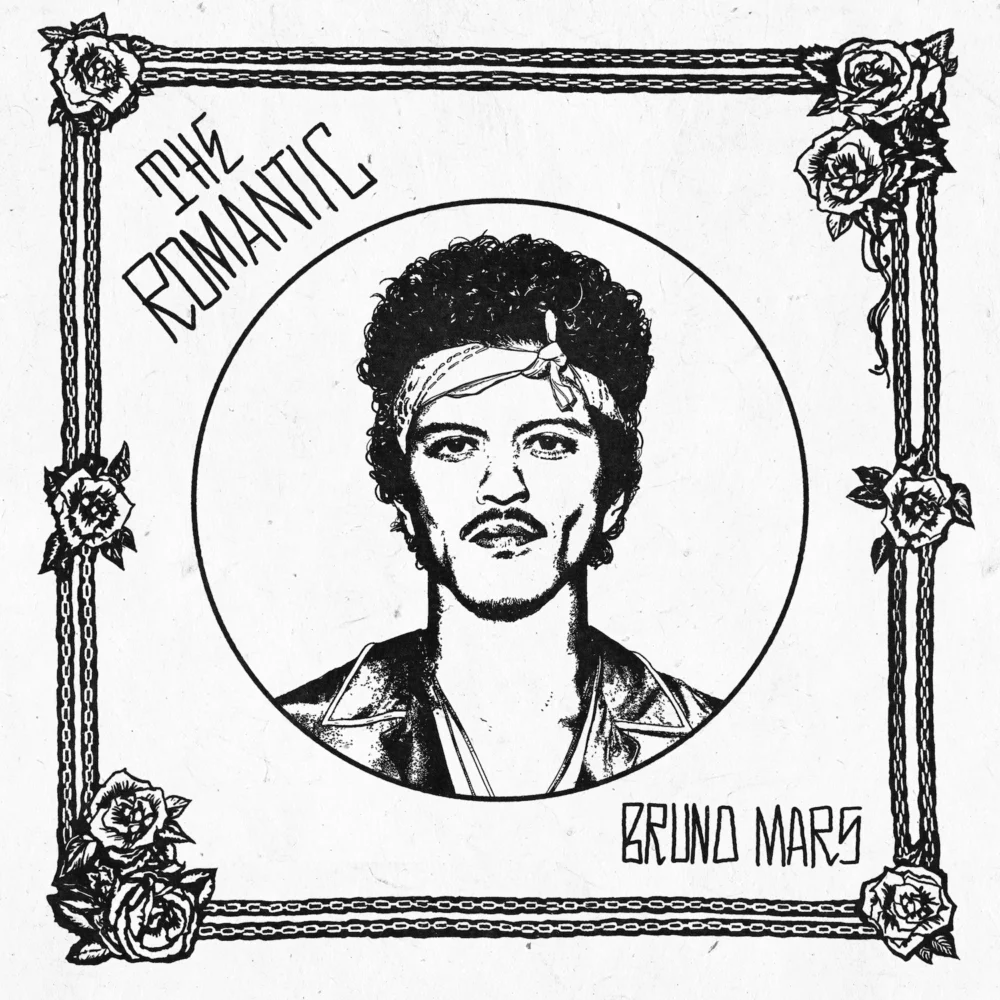
Bruno Mars’ absence from the Super Bowl LVIII Halftime Show earlier this month, while perhaps not unexpected given his prior two headline appearances in 2014 and 2016, presented an intriguing coincidence that only became apparent in retrospect. While the global superstar was not among the performers, a segment of Bad Bunny’s theatrical presentation included Lady Gaga delivering a salsa-infused rendition of "Die With A Smile" at a staged Puerto Rican wedding. The irony was palpable: the song’s co-vocalist, Bruno Mars, is not only half-Puerto Rican by descent but has also cemented his reputation as arguably the most celebrated "wedding singer" in contemporary pop music. Though a cameo from Mars might have disrupted Bad Bunny’s carefully constructed narrative, its thematic resonance would have been undeniable, underscoring a core aspect of Mars’ enduring appeal as he breaks a near-decade-long solo album hiatus with his latest offering, The Romantic.
The Enduring Appeal of Bruno Mars: A Master Craftsman’s Legacy
Born Peter Gene Hernandez in Honolulu, Hawaii, Bruno Mars’ musical journey began far from the global stage, honing his craft by performing impressions of legends like Elvis Presley and Michael Jackson for tourist crowds. This early experience instilled a foundational sensibility in his artistry: a profound understanding of performance, showmanship, and the universal desire for celebratory, infectious music. He adopted the stage name "Bruno Mars" to avoid being pigeonholed solely as a Latin artist, a decision that initially obscured his Puerto Rican and Filipino heritage but allowed him to navigate a broader musical landscape.
Mars’ distinctive sound is not defined by a single genre but rather an elastic pastiche of styles meticulously crafted for maximum celebratory impact. His discography is a masterclass in genre synthesis, drawing heavily from the golden eras of Motown’s high-steppers, the pleading harmonies of Philly soul fantasias, the slick grooves of smoothed-out funk, the starry-eyed optimism of disco, and the precision-tooled energy of new wave. This eclectic blend is purpose-built to "get the party started" without veering into territory that might alienate a multi-generational audience. It is music designed to resonate at life’s most joyous occasions, making him, in essence, the greatest wedding singer in modern pop history.
The commercial impact of Mars’ "wedding-friendly" repertoire is significant. Tracks like "Uptown Funk!" (with Mark Ronson), "Marry You," and "Just the Way You Are" are ubiquitous staples at weddings and celebratory events worldwide. "Uptown Funk!", released in 2014, spent 14 consecutive weeks at No. 1 on the Billboard Hot 100, becoming one of the best-selling singles of all time and a cultural touchstone. This pervasive presence has not only fueled his own success but has also provided a continuous stream of material for live wedding bands globally, keeping countless semi-professional horn players, guitarists, and vocalists in consistent employment. His ability to produce original material that so perfectly emulates and expands upon beloved classic sounds positions him as a unique "one-man tribute act" who thrives on innovation within tradition.
Mars has consistently presented himself not as a tortured artist wrestling with existential themes, but as a skilled craftsman, an elite nightclub entertainer who has scaled his polished act to stadium-headlining proportions. This distinction is crucial to understanding his career trajectory and musical output. While many contemporary pop stars strive for overt artistic statements and constant reinvention, Mars has largely focused on perfecting a proven formula, valuing meticulous production and timeless appeal over avant-garde experimentation.
A Decade in the Shadows: The Road to The Romantic
The release of The Romantic marks a significant moment in Mars’ career, ending a nearly decade-long drought of solo studio albums. His previous solo full-length, 24K Magic, arrived in 2016 to critical acclaim and commercial triumph, earning Album of the Year at the 60th Annual Grammy Awards. Prior to that, Unorthodox Jukebox (2012) and his debut Doo-Wops & Hooligans (2010) established him as a consistent hitmaker. In an era where many top-tier pop artists release new material every two to three years, Mars’ extended absence from his solo discography is notable and somewhat unusual for an artist of his stature.
During this hiatus, Mars was far from inactive. He embarked on extensive global tours supporting 24K Magic, which solidified his reputation as a formidable live performer. Crucially, he dedicated significant time to side projects, most notably Silk Sonic, his acclaimed R&B duo with Anderson .Paak. Their 2021 album, An Evening with Silk Sonic, was a meticulously crafted homage to 70s soul, earning them four Grammy Awards, including Record of the Year for "Leave the Door Open." This project allowed Mars to explore a specific sonic aesthetic with a collaborative partner, demonstrating his versatility while not releasing music under his singular brand. Additionally, Mars established lucrative and long-running residencies in Las Vegas, a traditional move for established entertainers that further underscores his "craftsman" identity. These residencies, offering consistent, high-energy performances in an intimate yet grand setting, allowed him to maintain a visible presence and continue refining his stage persona without the pressures of a full album cycle.
The decision to wait nearly ten years for a solo album, while atypical, can be viewed through several lenses. It allowed him to avoid oversaturation, build anticipation, and perhaps most importantly, dedicate himself fully to the precise, detailed production that characterizes his work. In a rapidly evolving music industry driven by streaming and short-form content, such a deliberate pace stands in contrast to the continuous release schedules adopted by many of his contemporaries. It suggests a confidence in his established appeal and a commitment to quality over quantity, further solidifying his image as an artist who releases music when it’s perfectly polished, rather than simply to meet market demand.
The Romantic: A New Hue on a Familiar Canvas
With The Romantic, Bruno Mars delivers an album that largely adheres to his tried-and-true formula, yet introduces subtle, intriguing variations, most notably a more explicit embrace of his Latin heritage. The album’s opening track, "Risk It All," immediately signals a departure, kicking off with the evocative sounds of bolero guitar, sweeping strings, and the vibrant trills of mariachi horns. When Mars begins to sing, he sheds the playful, funky-flirt affectations often associated with his past work, opting instead for a sincere, earnest Latin balladeer mode. The accompanying music video further reinforces this new direction, heavily incorporating Mexican cultural imagery, suggesting an intentional artistic statement.
This initial foray into Latin musical forms is particularly significant given Mars’ historical stance on his identity. Early in his career, he consciously moved away from his birth name, Peter Gene Hernandez, to "Bruno Mars," partly to avoid being typecast in the music industry. This choice, while commercially strategic, has also led to past criticisms regarding cultural appropriation, particularly concerning his adoption of historically Black sounds and fashions. However, the complexities of identity for a Jewish, Puerto Rican, and Filipino musician defy simple categorization, highlighting the challenge of navigating cultural expectations in a globalized pop landscape. The deliberate choice to open The Romantic with such a pronounced Latin influence suggests a newfound comfort or willingness to explore this facet of his heritage directly.
However, as the album progresses, "Risk It All" reveals itself to be less of a complete stylistic pivot and more of a thematic overture – a carefully placed "fake-out," akin to the lead single "I Just Might," a perfectly solid, paint-by-numbers Bruno Mars lite-funk singalong. While traces of Latin pop are interwoven throughout The Romantic, they remain generally subtle rather than dominant. "Cha Cha Cha" features Mars delivering Juvenile-esque lyrics over a percolating clave rhythm, a nuanced integration rather than a full immersion. "God Was Showing Off" begins with a Spanish count-off, and its ’70s soul aesthetic leans as much on the vibrant sounds of Salsoul as it does on the smooth orchestrations of Philadelphia International. Perhaps the most overt homage outside of the opener is "Something Serious," which unashamedly borrows its infectious groove from "Oye Como Va," drawing inspiration from both Tito Puente’s original and Santana’s iconic rock fusion rendition.
Despite these elements, The Romantic is not Bruno Mars’ definitive Latin pop album. It represents a subtle evolution, an expanded palette, rather than a radical reinvention. His career has been marked by refinement, not revolution. As such, the album offers listeners a familiar experience with enhanced features, akin to a phone receiving an overnight software update where app icons are slightly redesigned—perhaps "more Latin-shaped"—but the core device remains the same. This approach underscores Mars’ identity as an artist who excels within his established framework, offering consistent quality rather than chasing fleeting trends.
Lyrically, The Romantic signals a distinct shift. While 24K Magic thrived on playful, charismatic flirtation and the swagger of a "Leisure Suit Larry" persona, The Romantic delves into themes of monogamous love and earnest devotion. Mars returns to the "wedding-song business," delivering ballads that reassure and uplift. This thematic pivot from playful seduction to heartfelt commitment marks a mature progression, though it occasionally exposes the limits of his surface-skimming vocal approach.
Mars recorded The Romantic with his long-standing team of collaborators, including The Smeezingtons (Philip Lawrence and Ari Levine) and D’Mile, ensuring a continuity in the album’s meticulously engineered sound. The production throughout the album showcases Mars’ renowned "Max Martin levels of mathematical precision." Every element is immaculately placed: the crisp precision of each breakbeat, the perfectly timed horn-stabs, the exquisite tone of every guitar solo. His vocal performance remains exceptional, characterized by incredible range and technical prowess. Yet, even his most passionate ad-lib runs often feel like simulacra—perfectly executed representations of emotion rather than raw, unfiltered expressions. This characteristic, a hallmark of his "craftsman" approach, allows him to skim across the surface of emotion like a well-aimed stone, delivering universally appealing sentiments without delving into the potentially alienating depths of personal vulnerability.
The Road Not Taken? "APT." and the Boundaries of Mars’ Artistry
The argument that Bruno Mars "could do more" finds potent evidence in his recent collaboration, "APT.," recorded with Rosé of the K-pop phenomenon Blackpink in 2024. This track is a joyously fired-up piece of cheerleader-chant power-pop, a vibrant, high-energy departure that quickly became a global hit, showcasing a dynamic and unexpected facet of Mars’ capabilities. Its infectious energy and fresh sound made it one of the most exhilarating releases in his recent catalog, demonstrating his capacity to innovate and adapt to contemporary pop sensibilities when he chooses.
The stark absence of this adventurous spirit on The Romantic prompts a crucial discussion about artistic choices. While "APT." suggested a potential pathway for Mars to explore new sonic territories and engage with the cutting edge of global pop, The Romantic largely retreats to the comfort of his established formula. This might be a deliberate strategy to reinforce his core brand, focusing on what his long-term audience expects and loves. However, it also raises the question of whether Mars is content with perfecting his existing sound rather than pushing the boundaries of his artistry.
In an era where elite-level pop stars like Beyoncé, Taylor Swift, and Billie Eilish constantly reinvent themselves, challenge norms, and make grand artistic statements, Mars occupies a unique position. He possesses all the talent, charisma, and musical acumen to be a leading figure in artistic innovation. Yet, his career trajectory suggests a conscious decision to prioritize enduring appeal and masterful execution within a specific, commercially successful framework. This choice is not a sign of artistic stagnation but rather a testament to a clear vision and an unwavering commitment to his identity as a consummate entertainer.
Broader Implications and Industry Resonance
The Romantic is a highly polished, supremely easy listen. Its concise runtime, a characteristic of all Bruno Mars LPs, is often appreciated in a fast-paced media environment. The album’s compositions are meticulously structured, designed for immediate accessibility and broad appeal. These songs are destined to seamlessly integrate into the ubiquitous "overhead-speaker rotation" of retail environments and waiting rooms. The fact that "I Just Might" already sounds like a perennial fixture in an orthodontist’s office waiting room speaks volumes about the album’s instant familiarity and comfort.
This pervasive quality, while commercially beneficial, also highlights a potential tension. While some artists strive to create music that demands active, deep listening and challenges preconceptions, Mars consistently produces music that is effortlessly consumed, designed to enhance rather than disrupt. His continued success validates this approach, demonstrating that there remains a vast appetite for expertly crafted, feel-good pop music that offers reassurance and joy.
Ultimately, The Romantic is not an album designed to redefine the pop landscape or provoke intense critical debate about its artistic bravery. Instead, it is a testament to the enduring power of a meticulously honed craft. Bruno Mars knows exactly "the thing that he does," and he does it exceedingly well. He has cultivated a niche where consistency, quality, and universal appeal reign supreme. While he might possess the potential to lead a new wave of musical experimentation, his latest album confirms his preference for refining his signature sound, ensuring his status as a beloved purveyor of impeccably produced, celebratory pop.
The Romantic is out now on Atlantic Records.
