

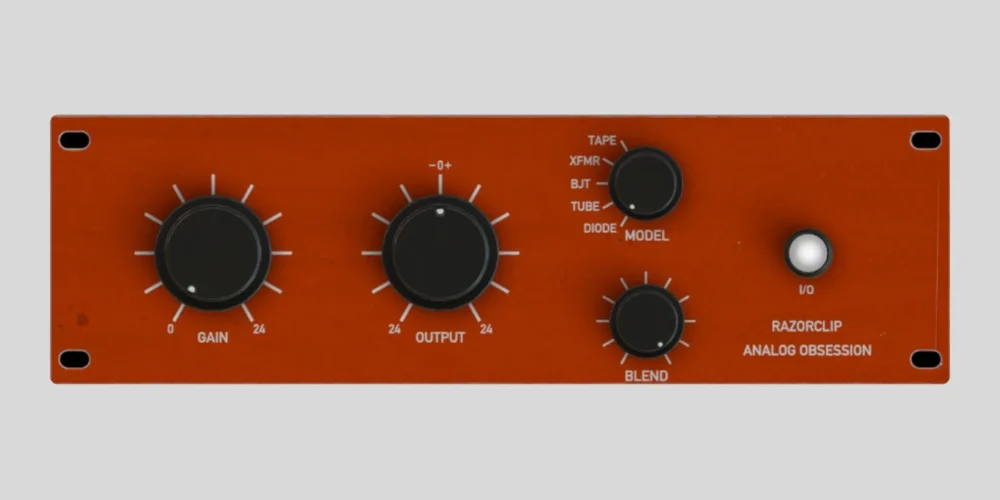
Analog Obsession, a developer renowned for its high-quality, freeware audio plugins, has announced the release of RazorClip, a new analog-based clipper plugin now available for Mac and Windows operating systems. This latest offering is designed to provide music producers and audio engineers with a versatile tool for shaping dynamics, adding character, and achieving desired sonic textures through various forms of signal clipping and saturation, all without any financial cost. The plugin’s immediate availability underscores Analog Obsession’s continued commitment to democratizing access to professional-grade audio processing tools within the digital audio workstation (DAW) environment.
RazorClip distinguishes itself through its offering of five distinct clipping modes, each meticulously modeled after a specific analog circuit type. This fundamental design philosophy provides users with a spectrum of distortion characters, ranging from subtle warmth to aggressive crunch, enabling precise tonal manipulation across various audio sources. The inclusion of multiple modes is a key feature, allowing for greater flexibility than single-mode clipping tools and catering to diverse production needs, from mastering engineers seeking to add glue and loudness to sound designers exploring new timbres.
The Foundational Principles of Audio Clipping and Saturation
To fully appreciate RazorClip’s capabilities, it is essential to understand the underlying principles of audio clipping and saturation. In audio engineering, clipping occurs when an audio signal exceeds the maximum amplitude that a system can handle, resulting in the flattening of the waveform peaks. This process, while often associated with undesirable distortion, can be intentionally employed as a creative effect or a means of loudness enhancement. Saturation, closely related to clipping, involves the introduction of harmonic content and gentle compression through non-linear processing. Unlike harsh digital clipping, analog saturation tends to be more musically pleasing, adding warmth, fullness, and perceived loudness without sacrificing transient detail as severely.
Historically, clipping and saturation were inherent characteristics of analog recording and playback equipment. Tube amplifiers, tape machines, transformers, and solid-state preamps all exhibit non-linear behaviors when pushed beyond their nominal operating levels. These "imperfections" often contributed to the coveted "analog sound" – a quality characterized by harmonic richness, subtle compression, and a certain sonic glue that digital systems, in their pursuit of pristine linearity, initially lacked. The emulation of these analog phenomena in the digital domain has become a cornerstone of modern plugin development, aiming to bridge the gap between the transparency of digital audio and the desirable sonic artifacts of analog gear.
RazorClip’s Diverse Analog Circuit Emulations
RazorClip’s five clipping modes—Tape, XFMR, BJT, Tube, and Diode—represent a curated selection of these classic analog saturation and clipping behaviors. Each mode offers a unique sonic fingerprint, making RazorClip a comprehensive toolkit for shaping audio.
- Tape Mode: This mode emulates the characteristics of analog tape saturation. When an audio signal is recorded onto magnetic tape, the tape medium itself introduces non-linearities, particularly at higher signal levels. This results in a gentle compression, a subtle rolloff of high frequencies, and the generation of harmonic overtones (primarily even-order harmonics). The Tape mode in RazorClip is ideal for adding warmth, cohesion, and a vintage feel to individual tracks or entire mixes. It excels at smoothing out harsh transients and imparting a sense of "glue" to percussive elements or entire drum buses.
- XFMR (Transformer) Mode: XFMR models transformer-based saturation, a phenomenon that occurs when audio signals are passed through high-quality audio transformers, particularly when driven hard. Transformers, typically found in high-end preamps and outboard gear, can introduce subtle harmonic distortion and a unique form of soft clipping when their magnetic cores become saturated. This often results in a thickening of the low-mid frequencies, a subtle "bloom" around transients, and an overall sense of weight and depth. The XFMR mode is particularly praised for its ability to add a rich, warm character to synth basslines, making them feel more substantial and present in a mix without overtly distorting them. It’s also effective on drums and guitars where a subtle, organic thickening is desired.
- BJT (Bipolar Junction Transistor) Mode: BJT clipping is based on the non-linear characteristics of bipolar junction transistors, a common component in many solid-state audio circuits, including various distortion pedals and preamplifiers. This circuit topology typically produces asymmetric harmonic content, which can lead to a slightly harder and more aggressive edge compared to transformer saturation. The BJT mode offers a more pronounced and distinct form of distortion, suitable for adding grit, aggression, and harmonic richness to guitars, vocals, or drums where a more cutting presence is required.
- Tube Mode: This mode emulates the highly sought-after sound of vacuum tube saturation. Vacuum tubes are known for their non-linear gain characteristics, which introduce primarily even-order harmonics (octaves) as they are driven. This results in a smooth, rich, and harmonically complex form of saturation often described as "warm," "fat," and "musical." Tube saturation is revered for its ability to add depth, sustain, and a pleasing sense of compression to a wide array of instruments, from vocals and guitars to pianos and strings. RazorClip’s Tube mode aims to capture this classic character, offering a means to infuse tracks with the iconic warmth associated with vintage tube equipment.
- Diode Mode: Diode clipping is a more aggressive and often sharper form of distortion, commonly found in classic guitar overdrive and fuzz pedals. Diodes, when used in clipping circuits, tend to "hard clip" the waveform more abruptly than tubes or transformers, introducing a significant amount of odd-order harmonics. This results in a more pronounced, sometimes buzzy or aggressive, distortion character. The Diode mode in RazorClip provides a tool for adding distinct bite and edge, making it suitable for creative sound design, experimental music, or for pushing instruments like electric guitars or synthesizers into more extreme sonic territories.
It’s worth noting that the Tape, Tube, and Diode modes found in RazorClip share lineage with those available in Analog Obsession’s free BPB Saturator Plus plugin, which was released in collaboration with Bedroom Producers Blog. This consistency in modeling philosophy provides users of both plugins with a familiar sonic palette while RazorClip introduces the unique XFMR and BJT options, expanding the available clipping textures.
Intuitive Controls for Precision Sound Sculpting
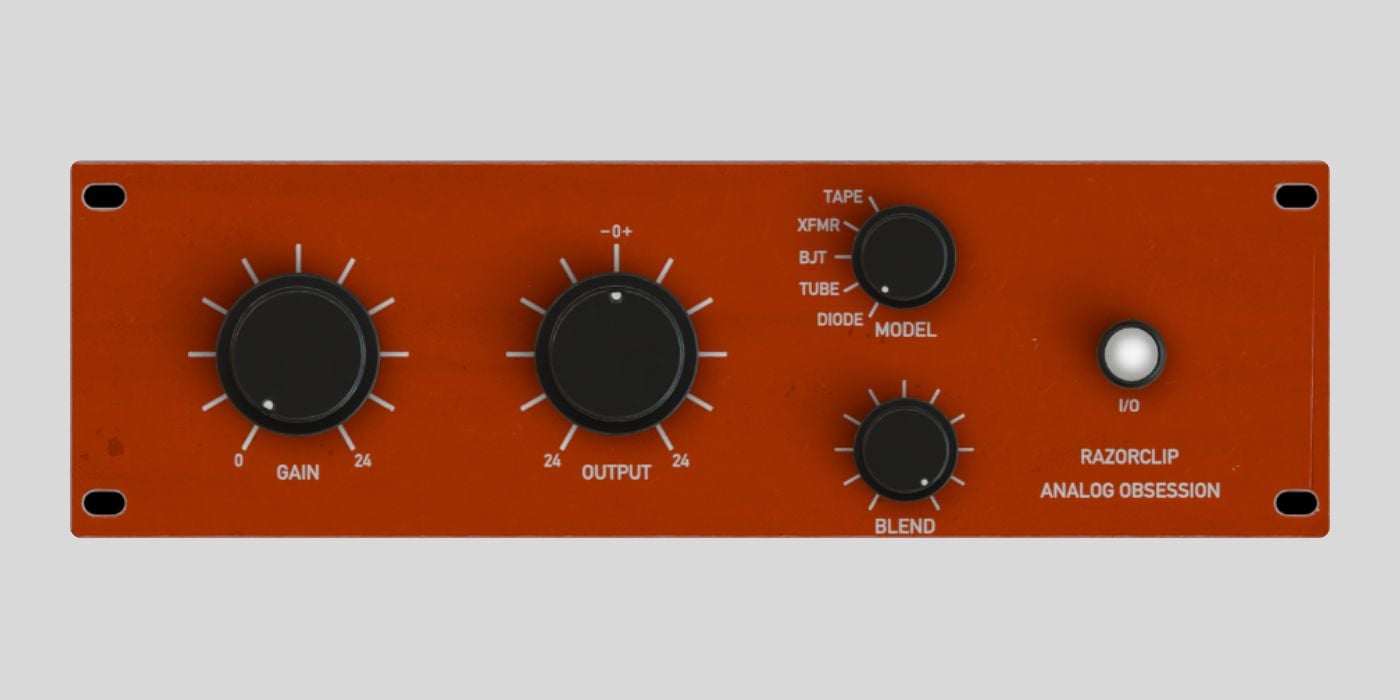
In keeping with Analog Obsession’s signature design philosophy, RazorClip features a straightforward and highly intuitive control set, ensuring ease of use without compromising on sonic depth.
- Gain Knob: This primary control allows users to drive the input signal into the plugin’s clipping stage. With a generous range of 24 dB of gain compensation, the Gain knob provides ample headroom to push the signal hard, exploring the full spectrum of each clipping mode’s character. Effective gain staging prior to and within the plugin is crucial for maximizing its impact and achieving desired results.
- Output Knob: Ranging from -24 dB to +24 dB, the Output knob serves as a vital tool for post-clipping gain staging. After the clipping stage has imparted its harmonic content and dynamics processing, the output level can be precisely adjusted to maintain consistent loudness within the DAW, prevent overloading subsequent plugins, or to perform A/B comparisons with the bypassed signal without level differences influencing perception.
- Blend Knob (Dry/Wet Control): The Blend knob is a powerful feature that allows users to mix the processed (clipped) signal with the original dry (clean) signal. This parallel processing technique is particularly useful when applying heavier amounts of gain, as it enables the preservation of transient information and dynamic range from the clean signal while still incorporating the grit, warmth, and harmonic richness from the clipped side. This allows for more nuanced saturation and clipping effects, making RazorClip versatile for both subtle enhancement and more aggressive tonal shaping.
User Experience and Technical Specifications
Beyond its sonic capabilities, RazorClip also prioritizes user experience. The plugin’s interface is fully resizable, offering flexibility from 50% to 200% via a convenient drag handle located in the bottom right corner. Analog Obsession recommends saving a preferred size as a default preset within the DAW, allowing new instances of RazorClip to open automatically at the desired scale, streamlining workflow. This attention to ergonomic design reflects a broader industry trend towards customizable interfaces that adapt to various screen sizes and user preferences.
RazorClip is available as a direct free download from the Analog Obsession Patreon page, notably requiring no prior registration, further lowering the barrier to entry for prospective users. Mac users benefit from a single installer package, while Windows users have the choice between a dedicated installer and a ZIP archive containing the plugin files, catering to different installation preferences.
The plugin boasts broad compatibility across modern operating systems and plugin formats. For macOS, RazorClip supports versions 10.11 and higher, operating natively on both Intel and Apple Silicon architectures. Mac users are required to have a graphics card with Metal support for optimal performance. Windows users on Windows 10 and 11 are supported, with a requirement for OpenGL. In terms of plugin formats, RazorClip is available in VST3, AU (Audio Units), and AAX Native formats, including Audiosuite for Avid Pro Tools users, ensuring seamless integration into most professional and home studio setups.
The Broader Impact of Freeware from Developers like Analog Obsession
Analog Obsession has carved out a significant niche in the audio plugin market by consistently releasing high-quality, analog-modeled plugins for free, often funded through a Patreon model. This approach challenges traditional commercial models and offers immense value to the music production community. The release of RazorClip exemplifies this commitment, providing a tool that would typically carry a significant price tag from other developers, making advanced sound design and mixing techniques accessible to a broader audience.
The availability of professional-grade freeware like RazorClip has several profound implications:
- Democratization of Production: It empowers aspiring producers, students, and hobbyists with limited budgets to access sophisticated tools that were once exclusive to high-end studios. This levels the playing field and fosters creativity across all levels of experience.
- Innovation and Experimentation: By removing financial barriers, users are more likely to download and experiment with new tools, fostering a culture of innovation and encouraging producers to explore different sonic possibilities without risk.
- Industry Standards: High-quality freeware raises the bar for all plugin developers, encouraging competition and innovation across the entire market.
- Community Building: The Patreon model allows for a direct relationship between developers and users, fostering a supportive community where feedback can directly influence future development.
Conclusion
RazorClip stands as a testament to Analog Obsession’s ongoing dedication to delivering exceptional audio tools to the global music production community. By offering five distinct analog clipping modes, an intuitive control scheme, and broad compatibility, RazorClip provides a powerful, versatile, and—crucially—accessible solution for adding warmth, grit, presence, and character to any audio signal. Its release not only enriches the producer’s toolkit with diverse sound-shaping capabilities but also reinforces the significant impact that high-quality freeware continues to have on the accessibility and evolution of modern music production. For anyone looking to infuse their digital productions with the coveted sonic qualities of analog hardware, RazorClip presents an indispensable and cost-free opportunity.
