

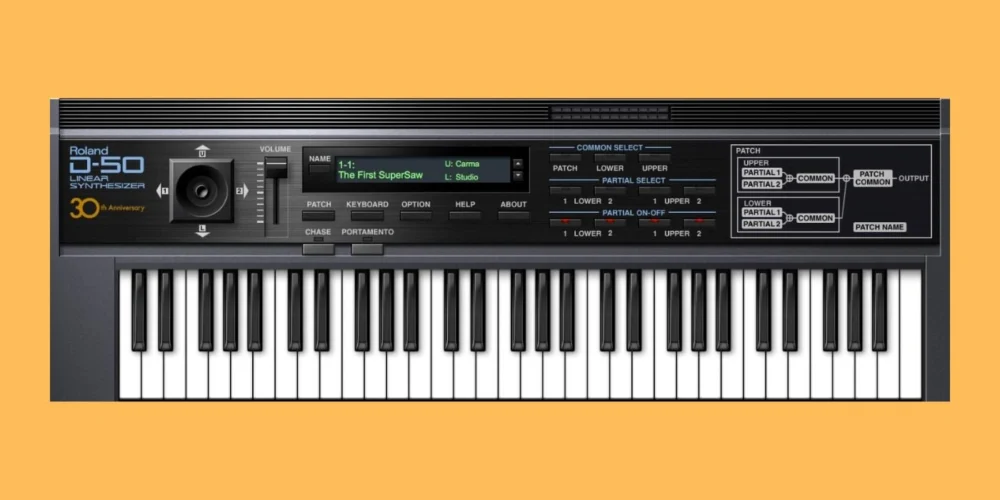
Plugin Boutique, a prominent digital marketplace for music production software, has announced an unprecedented sales event, offering historically low prices on three of Roland’s most revered synthesizer plugins. Headlining the promotion is the Roland D-50, available at a remarkable 67% discount, reducing its price from $149 to just $49. This significant offer for the D-50 plugin is set to conclude on March 3rd. Concurrently, the Roland JV-1080 and XV-5080 plugins are also available at 50% off, priced at $64.50 each, with their respective deals expiring on March 1st. This limited-time opportunity provides musicians, producers, and sound designers with an accessible entry point into the meticulously recreated digital versions of these legendary instruments, each having profoundly shaped distinct eras of music production.
Roland’s Enduring Legacy and the Dawn of Digital Synthesis
To fully appreciate the significance of these offerings, one must consider Roland’s monumental impact on the landscape of electronic music and the pivotal role these specific synthesizers played in technological evolution. Established in 1972, Roland Corporation quickly ascended to become a global leader in electronic musical instruments, revolutionizing sound production with groundbreaking innovations. Prior to the D-50, Roland had already cemented its legacy with analog titans like the Jupiter series, renowned for its rich, warm tones and complex modulation capabilities, and the iconic rhythm machines such as the TR-808 and TR-909, which defined genres from hip-hop to techno. The TB-303 Bass Line synthesizer, initially a commercial failure, later became the cornerstone of acid house, demonstrating Roland’s unwitting influence on future musical movements.
The mid-1980s marked a crucial turning point in synthesizer technology, characterized by a rapid shift from analog to digital architectures. This transition was driven by several factors: the increasing demand for greater polyphony, more complex timbres, and the ability to reproduce realistic acoustic instrument sounds—all at more accessible price points. Yamaha’s DX7, released in 1983, spearheaded this digital revolution with its Frequency Modulation (FM) synthesis, offering sharp, metallic, and crystal-clear sounds that profoundly contrasted with the analog warmth of previous generations. The DX7’s commercial success underscored a clear market appetite for new sonic palettes and the efficiencies of digital design. It was into this competitive and rapidly evolving digital arena that Roland prepared its own definitive response, seeking to blend the best of both worlds and carve out a unique sonic identity.
The Roland D-50: A Paradigm Shift in Sound Design
The Roland D-50, launched in 1987, was not merely Roland’s first fully digital synthesizer but a groundbreaking instrument that introduced Linear Arithmetic (LA) synthesis to the world. This innovative synthesis method was Roland’s direct answer to FM synthesis, offering a unique sonic character that quickly captivated musicians and became one of the most influential instruments of the late 1980s and early 1990s. LA synthesis ingeniously combined short, harmonically complex sampled attack waveforms with more conventional subtractive synthesis elements (sawtooth and square waves), layering these components to create rich, evolving sounds. This hybrid approach allowed the D-50 to produce sounds that were simultaneously organic and ethereal, cutting-edge and evocative, bridging the gap between realistic acoustic emulations and fantastical synthetic textures.
The D-50’s distinctive sound defined an era, becoming ubiquitous across a diverse range of genres. Its iconic presets, such as "Fantasia" (famous for its atmospheric pad sound), "Pizzagogo" (a unique plucked string texture), "Glass Voices," and "Soundtrack," became instantly recognizable staples in synth-pop, new wave, R&B, new jack swing, new age, and countless film scores and television productions. Artists from Michael Jackson and Enya to Jean-Michel Jarre and The Orb incorporated the D-50 into their seminal works, solidifying its place in music history. Its ability to generate atmospheric pads, shimmering bells, punchy basses, and expressive leads with unprecedented clarity and depth made it an indispensable tool in professional studios and live setups worldwide. The physical D-50 unit itself featured a unique joystick controller for real-time parameter manipulation, an intuitive interface for its time, and integrated digital effects like reverb and chorus, which further enhanced its lush soundscapes.
The D-50 Plugin: Authentic Recreation with Modern Enhancements
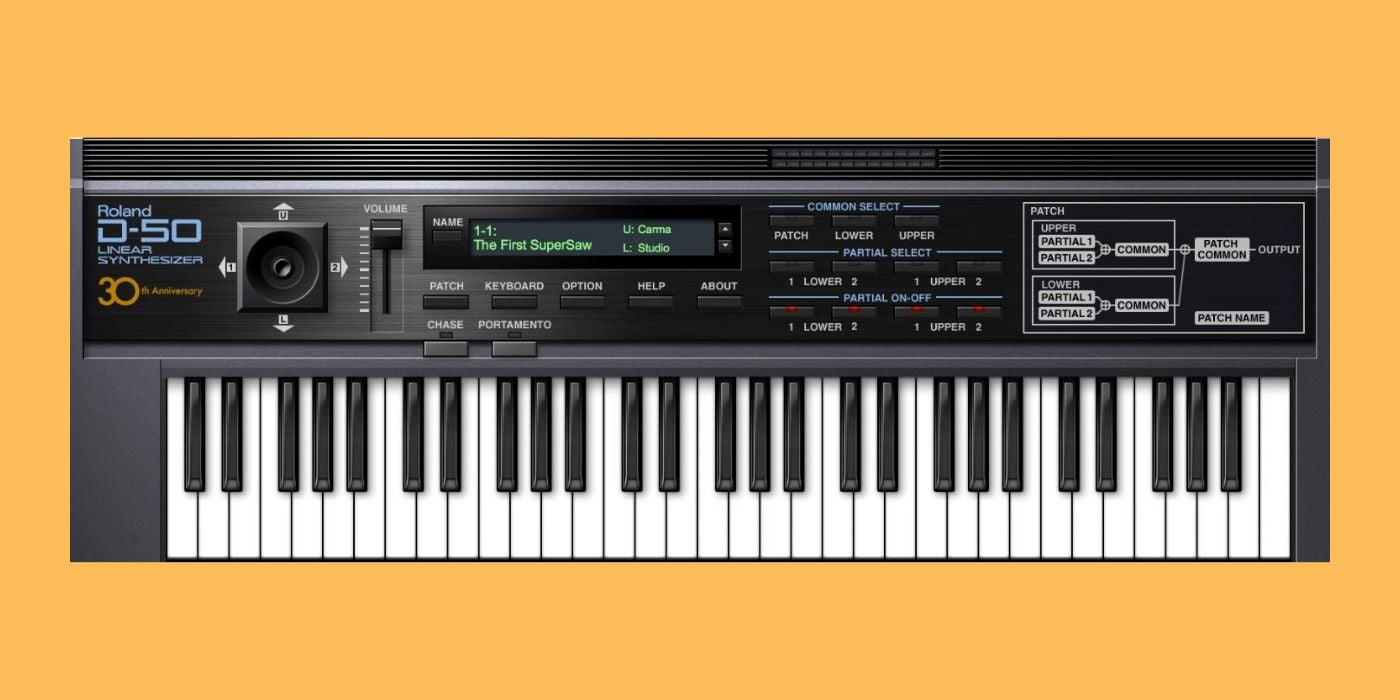
Roland’s commitment to faithfully preserving its sonic heritage is exemplified in its D-50 plugin. The company proudly asserts this software recreation to be the only 100% authentic digital reproduction of the original hardware. This claim is substantiated by Roland’s proprietary Digital Circuit Behavior (DCB) modeling technology, which meticulously analyzes and emulates the intricate circuitry and sonic characteristics of the original D-50, down to subtle nuances like the "overtone noise" that contributes to its unique textural richness. The plugin utilizes the exact same sampled waveform set as the 1987 hardware, ensuring that the core sound elements are identical.
Beyond mere replication, the D-50 plugin enriches the user experience with several significant modern additions. It includes the complete original factory preset library, instantly transporting users back to the sonic heart of the late ’80s. The iconic joystick interface is virtually implemented, allowing for intuitive real-time sound manipulation just like the original. Furthermore, the plugin expands on the original’s capabilities with a collection of extra waveforms, providing an even broader palette for sound design. A tempo-syncing LFO offers enhanced rhythmic modulation possibilities, crucial for contemporary production workflows. Perhaps one of the most significant improvements for sound designers is the inclusion of a virtual PG-1000 controller. Based on the optional hardware programmer for the original D-50, this virtual counterpart transforms the deep, sometimes complex, LA synthesis engine into a more intuitive and enjoyable sound design environment, offering direct access to parameters that were previously buried in menus.
The D-50 plugin also boasts impressive interoperability. Users can import SysEx files from original D-50 hardware units or third-party libraries, allowing them to access a vast ecosystem of existing patches. Moreover, it facilitates seamless patch swapping with the Roland Boutique D-05, a hardware recreation of the D-50, providing flexibility for musicians who integrate both software and hardware into their setups. The plugin supports Windows 10 and 11, and macOS 11 and higher, available in VST3, AU, and AAX formats, ensuring broad compatibility with modern digital audio workstations. Installation and activation are managed via the Roland Cloud platform, requiring an internet connection.
The Roland JV-1080: The Workhorse of 90s Production
Following the digital revolution initiated by instruments like the D-50, the 1990s saw a new wave of synthesis, dominated by sample-based ROMplers and powerful rack modules that offered vast sound libraries and extensive polyphony. Among these, the Roland JV-1080, released in 1994, emerged as a quintessential instrument that profoundly shaped the sound of ’90s R&B, pop, hip hop, and dance music. Marketed as a "super JV" module, it offered a staggering 64 voices of polyphony and a vast internal wave memory, making it an indispensable tool for professional studios and home setups alike. Its extensive array of high-quality sampled waveforms, covering everything from realistic pianos and orchestral instruments to classic synth sounds and drums, provided producers with an unprecedented palette of sounds in a single rack-mountable unit. The JV-1080’s success was further amplified by its expandability through SR-JV80 expansion boards, which added specialized sound sets like "Vintage Synth," "Orchestral," and "Techno Collection," making it incredibly versatile for any genre.
The JV-1080 became the sonic backbone for countless hits, its clean, polished, and versatile sounds perfectly aligning with the production aesthetics of the era. Its presence in the studios of producers like Rodney Jerkins, Dallas Austin, and Teddy Riley cemented its status as a foundational instrument for the sound of contemporary R&B and hip-hop. Its ease of use, robust sound engine, and expansive library allowed for rapid prototyping and production, contributing to its widespread adoption across various music scenes.
The JV-1080 Plugin: Expanding a Classic
Roland’s software emulation of the JV-1080 builds upon the original’s strengths while introducing significant enhancements for the modern producer. The plugin version dramatically expands the original’s sound library, boasting over 1,000 waveforms, a substantial increase from the hardware’s 448. This expanded waveform set, combined with double the polyphony of the original and 78 MFX types (up from 40), provides an even richer and more flexible sound design environment. The addition of a Step LFO further enhances its modulation capabilities, allowing for complex rhythmic and evolving textures that were not possible with the original hardware. This plugin offers an opportunity to experience the iconic sounds of the JV-1080 with the convenience and power of contemporary software, making it a valuable asset for producers seeking to infuse their tracks with the authentic ’90s vibe or explore new sonic territories.

The Roland XV-5080: The Pinnacle of PCM Synthesis
As the millennium approached, Roland continued to refine its sample-based synthesis technology, culminating in the release of the XV-5080 in 2000. This instrument represented Roland’s flagship PCM (Pulse Code Modulation) sound module, embodying the apex of their experience in waveform synthesis. The XV-5080 pushed the boundaries of polyphony and sound quality even further than its predecessors, offering 128 voices and an even more expansive internal waveform ROM. It was designed for the most demanding professional applications, from film scoring and game audio to high-end studio production. Its sound engine was exceptionally powerful, providing deep editing options, multi-effects processing, and sophisticated routing capabilities. Crucially, the XV-5080 was fully compatible with the new SRX Expansion Boards, which superseded the earlier SR-JV80 series, offering even larger and more detailed sound collections, including orchestral libraries, world instruments, and contemporary synth sounds. This made the XV-5080 an incredibly versatile and future-proof sound module for its time, securing its place in major production facilities around the globe.
The XV-5080 Plugin: Unlocking a Sonic Universe
The XV-5080 plugin meticulously recreates this powerhouse sound module, bringing its vast sonic capabilities to the digital realm. With over 900 presets, the plugin immediately provides users with an immense library of high-quality sounds suitable for virtually any musical genre. Its deep editing options allow for intricate sound sculpting, mirroring the flexibility of the original hardware. A key feature of the XV-5080 plugin is its compatibility with Roland SRX Expansion Boards, which are now available as virtual expansions within the Roland Cloud ecosystem. This means producers can access the full breadth of sounds that made the original XV-5080 so revered, expanding its already extensive sonic palette with highly specialized and professionally crafted instrument collections. For those looking to capture the polished, expansive sounds of the early 2000s or to integrate a highly versatile PCM synthesis engine into their DAW, the XV-5080 plugin represents an unparalleled opportunity.
Broader Implications: The Digital Renaissance of Vintage Hardware
The offering of these iconic Roland synthesizers at historically low prices on Plugin Boutique is indicative of several broader trends within the music technology industry. The proliferation of powerful digital audio workstations (DAWs) and high-performance computing has fueled a significant "digital renaissance" of vintage hardware. Developers, including the original manufacturers themselves, are increasingly leveraging advanced modeling technologies to accurately recreate classic instruments in software form. This trend addresses several key demands from modern musicians:
- Accessibility and Cost-Effectiveness: Owning and maintaining original vintage hardware can be prohibitively expensive and logistically challenging, often requiring specialized technicians and significant investment. Software emulations provide a significantly more affordable and convenient alternative, democratizing access to sounds that were once exclusive to professional studios and top-tier artists.
- Workflow Integration: Plugins seamlessly integrate into modern DAW workflows, offering instant recall of settings, automation capabilities, and the flexibility to use multiple instances without the space constraints, power requirements, or maintenance issues of physical hardware. This integration streamlines the creative process, allowing for more experimentation and faster production cycles.
- Modern Enhancements: As seen with the D-50, JV-1080, and XV-5080 plugins, software versions often go beyond mere replication, introducing modern features like increased polyphony, expanded waveform libraries, advanced modulation options, and enhanced user interfaces (e.g., the virtual PG-1000 controller). These additions often surpass the capabilities of the original hardware, making them even more powerful tools for contemporary production without sacrificing authentic sonic character.
Roland’s strategy, particularly through its Roland Cloud platform, underscores a commitment to preserving and reintroducing its sonic heritage to new generations of producers. By offering these plugins as part of a subscription service and through individual purchases, Roland ensures that its legacy instruments remain relevant and creatively inspiring. Industry observers note that flash sales, such as those currently running on Plugin Boutique, are a common and effective strategy to drive adoption, engage the user base, and introduce these powerful tools to a wider audience. For Plugin Boutique, these promotions not only generate sales but also reinforce its position as a leading
